First of all, this cycle is indeed very difficult, don't let anyone pretend to tell you it's not. But the reality is, each cycle is more difficult than the last. You are competing with a larger pool of participants, and more and more participants are becoming more sophisticated, and ultimately there are more losers.
If you don't have the majority of your holdings in BTC or SOL during the bear market, then you may not have made money, and may even be tearing your hair out.
If I didn't have SOL as my unit of account, I would also be struggling a lot. Yes, we do have some big individual winners, but I guess if you speculate heavily on these assets, you may end up giving back a portion or even a large portion of your gains in the end. Especially because people don't just retire after a big win.
They'll say "there's still time in the cycle" and then think they can keep going up, and that's how they give their gains back. "Play stupid games, win stupid prizes" - this truth never fails. Sometimes, this is just played out over a longer time frame for traders and gamblers.
So why is this cycle so difficult?
PTSD (Post-Traumatic Stress Disorder)
We have two examples showing that in major Altcoin cycles, most tokens have dropped 90-95%. Add to that the collapse of Luna and FTX, which has caused a chain reaction across the industry, with asset prices potentially falling lower than they should have.
Many big players have been wiped out, and we haven't seen the return of crypto lending platforms in this cycle yet. This PTSD deeply affects the crypto natives. Especially the way the Altcoin market trades, mainly because "everything is a scam" has become the mainstream view of this cycle.
In the previous two cycles, the belief that "this technology is the future" was more prevalent, but now it has become a minority view, or on par with "everything is a scam". No one wants to hold anything long-term, because they simply don't want to lose the majority of their portfolio again.
This creates a "max jeet cycle". This sentiment is also amplified on Crypto Twitter, as participants constantly seek the top of the cycle.
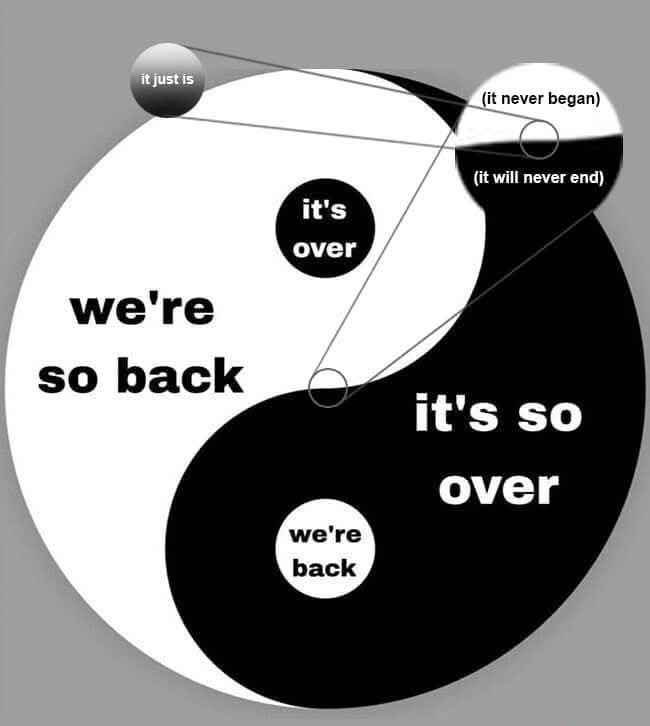
This psychological impact is not limited to trading behavior - it also affects the ecosystem's attitude towards building and investing. Projects now face higher scrutiny and the threshold of trust has doubled. This has both positive and negative aspects: while it helps filter out obvious scams, it also makes it harder for legitimate projects to gain attention.
Innovation
While innovation is still ongoing and infrastructure is constantly improving, there are no longer any 0 to 1 breakthroughs like DeFi that are jaw-dropping.
This makes arguments like "crypto hasn't made progress" more acceptable, and leads to more "crypto has achieved nothing" narratives.
The landscape of innovation has shifted from revolutionary breakthroughs to incremental improvements. While this is the natural evolution of any technology, it poses challenges for a narrative-driven market.
We also still lack the breakthrough applications that are necessary to bring crypto to hundreds of millions of on-chain users.
Regulation
The corrupt U.S. Securities and Exchange Commission (SEC) has caused chaos. They have hindered the industry's progress and prevented certain areas (such as DeFi) from further developing product-market fit (PMF) with a wider audience.
They also prevent all governance tokens from conveying any value to holders, thus creating a "all these tokens are useless" narrative, which is true to some extent. The SEC has driven away developers (see Andre Cronje's description of the SEC forcing him to exit), prevented traditional finance (TradFi) from interacting with the industry, and ultimately forced the industry to raise funds from venture capitalists. This has led to poor supply and price discovery dynamics, with value being captured by the few.
However, we are now seeing some positive changes, such as Echo, Legion, and more public sales.
Financial Nihilism
All of the above factors have led to financial nihilism becoming an important factor in this cycle.
The "useless governance tokens" and the high FDV (fully diluted valuation) and low liquidity dynamics caused by the SEC have pushed many crypto natives towards memecoin (meme coin) in search of a "fairer" opportunity. This is indeed the case, as in today's society, due to the soaring asset prices and the endless devaluation of fiat currencies, which outpace wage growth, young people have no choice but to gamble to improve their status, making memecoin lotteries very attractive. The appeal of lotteries lies in the hope they provide.
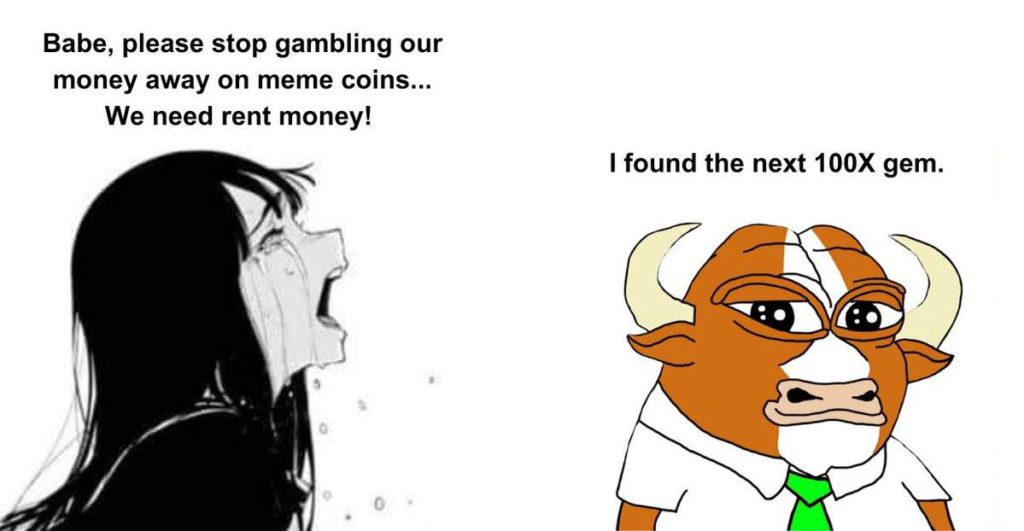
Due to the product-market fit (PMF) of gambling in cryptocurrencies, and the fact that we have better technology for gambling (such as Solana and Pump.fun), the number of tokens issued has skyrocketed. This is because many people want extremely high-risk gambling, and where there is demand, there is supply.
The "trenches" have always been a part of cryptocurrencies, but in this cycle, it has become a widely known term. This nihilistic attitude manifests in various ways:
- The rise and mainstreaming of the "Degen" culture
- Shorter investment time horizons
- Greater focus on short-term trading rather than long-term investing
- Normalization of extreme leverage and risk-taking
- An "I don't care" attitude towards fundamental analysis
The experience of previous cycles has become an obstacle
The past few cycles have taught people that they can buy some Altcoins during bear markets and ultimately get returns by outperforming BTC.
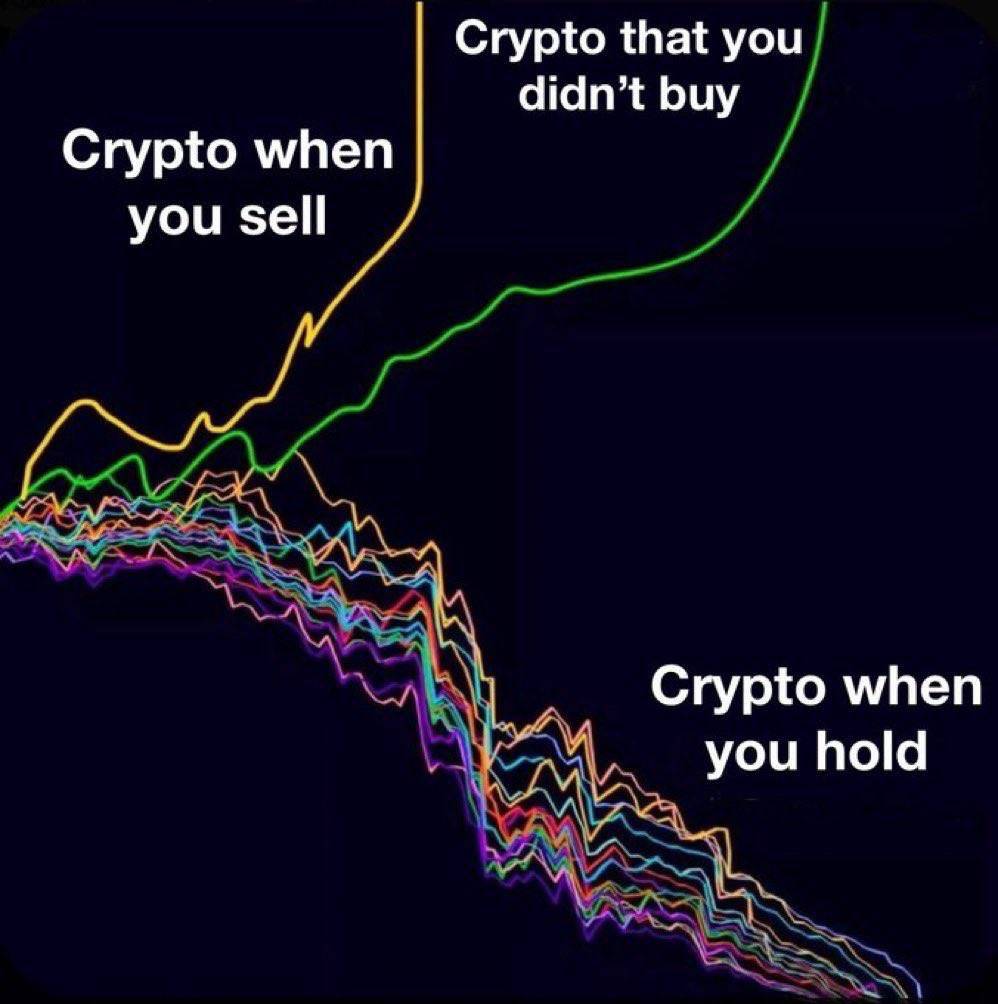
Almost no one is a good trader, so this has been the best path for most people. Overall, even the worst Altcoins had a chance.
But this cycle is a trader's market, more suitable for sellers than holders. Traders have even managed to get the biggest gains of this cycle through HYPE airdrops. The narratives in this cycle don't last long, and there are few compelling narratives. There are more seasoned participants in the market who are better at extracting value efficiently, so the mini Altcoin bubble hasn't been particularly large.
The first hype cycle of AI agents is an example. This may be the first time people feel "this is what we've been looking for." But this is still an early stage, and the long-term winners may not have emerged yet.
Bitcoin has new buyers, while Altcoins mostly don't
The divergence between Bitcoin and other assets has never been more pronounced. Bitcoin has unlocked the demand from traditional finance. It has a remarkably new source of passive demand for the first time, and now even central banks are discussing adding it to their balance sheets.
Altcoins, on the other hand, are even more difficult to compete with Bitcoin, which is reasonable, as Bitcoin has a very clear target - the market capitalization of gold.
Altcoins really don't have new buyers. Some retail investors have returned when Bitcoin hit new highs (but they're buying XRP  ), but overall, there is not enough new retail capital inflow, and cryptocurrencies still have a poor reputation.
The changing role of Ethereum
The decline in Bitcoin's dominance is largely due to the growth in Ethereum's market capitalization. Many have seen Ethereum's rise as the "trigger" for the "Altcoin season," but in this cycle, this rule of thumb has not worked, as Ethereum has underperformed due to fundamental reasons.
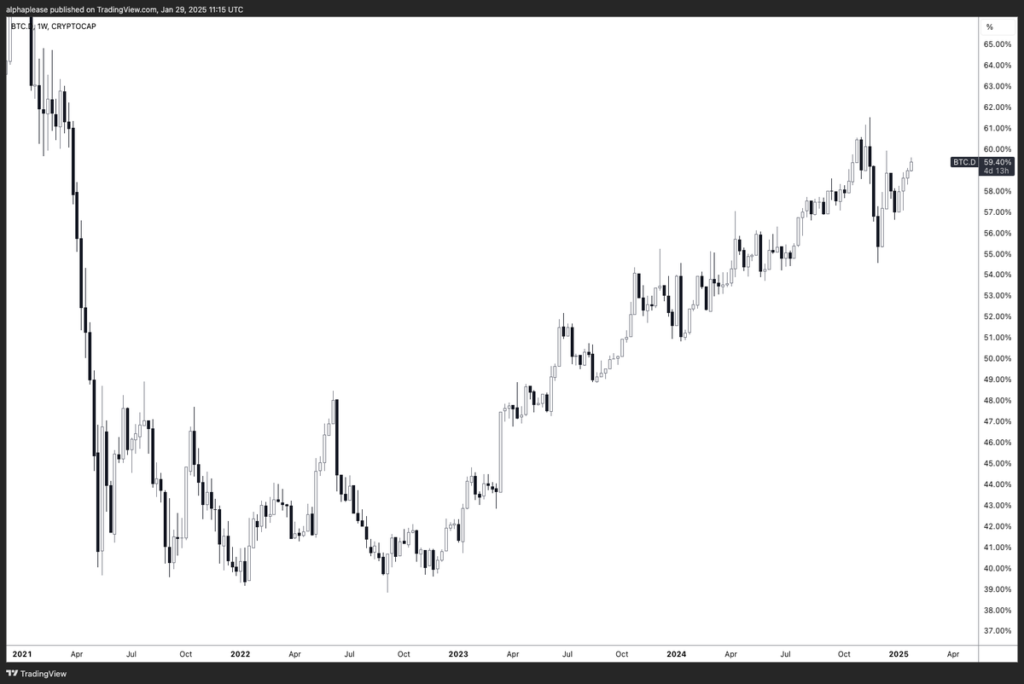
Many traders and investors have struggled to accept that Ethereum has failed to drive higher risk appetite, and in fact, it has continued to play the role of ending the mini Altcoin season, contrary to the past.
While there is evidence that certain narratives and sectors can perform without Ethereum's involvement, many traders still believe that Ethereum needs to rise for a true Altcoin season to arrive.
What should I do?
So, what should you do from here?
Work hard, or work smarter. I still believe that fundamentals will ultimately prevail in the long run, but you must truly understand the projects you are supporting and how they can actually outperform Bitcoin. Currently, only a few candidates meet this criteria.
Look for projects with the following characteristics:
- Clear revenue models
- Actual product-market fit
- Sustainable token economics
- Strong narratives that complement the fundamentals (I think AI and RWA fit this)
I believe that due to the unlocking of US regulation, those projects with stronger fundamentals and product-market fit (PMF) will finally be able to realize the value accumulation of their tokens, and these projects have also become lower-risk choices. Protocols that can generate revenue are now ready to perform well. This is a significant shift from the "greater fool theory" that has dominated many token models in the past.
If your strategy is to "wait for retail to come in and then sell," I think you will run into a lot of trouble. The market has moved beyond cycles driven solely by retail, and the seasoned participants are likely to front-run this obvious strategy.
You can choose to become a better trader, try to cultivate your own edge, and focus on doing more short-term trades, as this market does provide many consistent short-term opportunities. On-chain trading may bring greater multiplier returns, but it will also be more ruthless during downturns.
For most people without a clear edge, the "barbell portfolio" is still the best choice. Allocate 70-80% of your funds to BTC and SOL, and then set aside a smaller portion for more speculative investments. Rebalance regularly to maintain these proportions.
You need to understand how much time you can invest in the cryptocurrency space and adjust your strategy accordingly.
If you are a normal person with a regular job, competing with those young people who sit there 16 hours a day is not going to work. The passive hold-and-wait strategy for underperforming Altcoins is no longer effective in this cycle either.
Another strategy is to try to combine different fields. Establish an investment portfolio based on stable assets, then look for opportunities like airdrop mining (now more difficult, but still low-risk opportunities), or identify some emerging ecosystems that are on the rise (such as HyperLiquid, Movement, Berachain, etc.) and get in early, or focus on a specific field.
I still believe the Altcoin market will grow this year. The conditions are in place, we are still correlated with global liquidity, but only a few sectors and a smaller number of Altcoins will be able to significantly outperform BTC and SOL. Faster Altcoin rotation will continue to occur.
If we encounter some crazy money printing, we may see something closer to the past traditional Altcoin season, but I think the likelihood of this is lower than we would hope. Even in such a scenario, most Altcoins will only provide market average returns. We still have many important Altcoins that will be launched this year, and liquidity will continue to be diluted and dispersed.

It's not easy, but I'll give you some hope: I've never seen someone who has seriously invested in the cryptocurrency field for years without making a considerable amount of money.
This asset class still has many opportunities, and there are many reasons to be optimistic about its growth.
Ultimately, I don't know more than others, I'm just adapting to the situation I see in this cycle.
Additionally, I want to add one point: we are not at the beginning of the cycle. This is clear. The bull market has been going on for a long time, and this fact will not change whether you make money or not.
"Control the downside risk, and the upside returns will take care of themselves."
This famous saying will always be true.