Author: Three Sigma
Compiled by: TechFlow

Traders are being liquidated, with billions of dollars vanishing into thin air. But what if the actual scale of liquidations is 19 times higher than reported? We have delved into the data and found that the situation is even more dire than you might imagine.
1. Liquidation
Nowadays, the trading threshold is becoming lower and lower, allowing ordinary people to easily participate. Whether it's through the so-called "mentor" providing glamorous courses, or as an alternative to traditional work, trading seems to offer an ideal lifestyle: with just a computer, you can work comfortably from home and potentially earn a substantial income.
But the reality is far from that simple. If trading were really that easy to succeed in, everyone would be a winner. However, the truth is that most people who try trading end up losing money, and even get liquidated. So, what is it that causes these losses? The answer often points to a word that every trader fears: liquidation.
Liquidation is a core mechanism in leveraged trading. When a trader's collateral or margin is insufficient to cover the unrealized losses of their open positions, the exchange will automatically intervene, forcibly closing the positions to prevent further losses for the trader or the platform.
Depending on the severity of the margin deficiency and the platform's risk management mechanisms, liquidation usually takes one of the following two forms:
Partial Liquidation: Only a portion of the trader's positions are reduced, with the remaining part still kept in the market. This method can reduce risk while allowing the trader to continue participating in the market.
Full Liquidation: All positions are closed, completely eliminating the trader's risk exposure. This is more common in high-leverage trading, as even small price fluctuations can wipe out the trader's entire collateral.
Main Causes of Liquidation
Liquidation typically occurs due to an imbalance between risk and margin, and the following are some key factors that can lead to liquidation:
Leverage: Leverage allows traders to control larger positions with less capital, but it also amplifies the risk. The higher the leverage, the smaller the price movement required to trigger a liquidation. For example, with 50x leverage, a mere 2% price movement can cause the trader to lose all their collateral. Therefore, risk management is crucial in leveraged trading.
Maintenance Margin: Each exchange sets a minimum margin requirement that traders must maintain to keep their positions open. Maintenance margin serves as a "safety buffer." When losses cause the margin to fall below this threshold, the exchange will forcibly liquidate the positions to prevent further losses. If traders ignore or fail to monitor these requirements, they can quickly find themselves in a forced liquidation predicament.
Market Volatility: Violent price fluctuations are the biggest enemy of high-leverage traders. Volatility can quickly consume the margin, leaving traders with almost no reaction time. Furthermore, during periods of high volatility, the market may experience "cascading liquidations": one liquidation can trigger a chain reaction, further pushing the price in an unfavorable direction and exacerbating the losses.

Market Squeezes
One of the most dramatic and fastest-acting triggers for liquidations is "squeezes." Squeezes occur when violent price movements force traders who are positioned on the wrong side of the market to close their positions. Squeezes are typically driven by high leverage and low liquidity, creating a "snowball effect" that accelerates price changes and increases market volatility.
When prices rise rapidly, Short traders face immense pressure as their collateral is no longer sufficient to support their positions. To avoid even greater losses, they are forced to buy back the assets to close their positions, and this buying activity further drives the price up. This cycle often evolves into a cascade of liquidations: one trader being forced to close their position pushes the price higher, triggering the liquidation of other traders.
Conversely, when prices suddenly plummet, Long traders also face similar risks. As the value of their collateral shrinks, they are forced to sell their positions to meet margin requirements, and this selling pressure exacerbates the downward price trend. The increased selling further drives the price lower, triggering more liquidations, ultimately forming a "downward spiral."
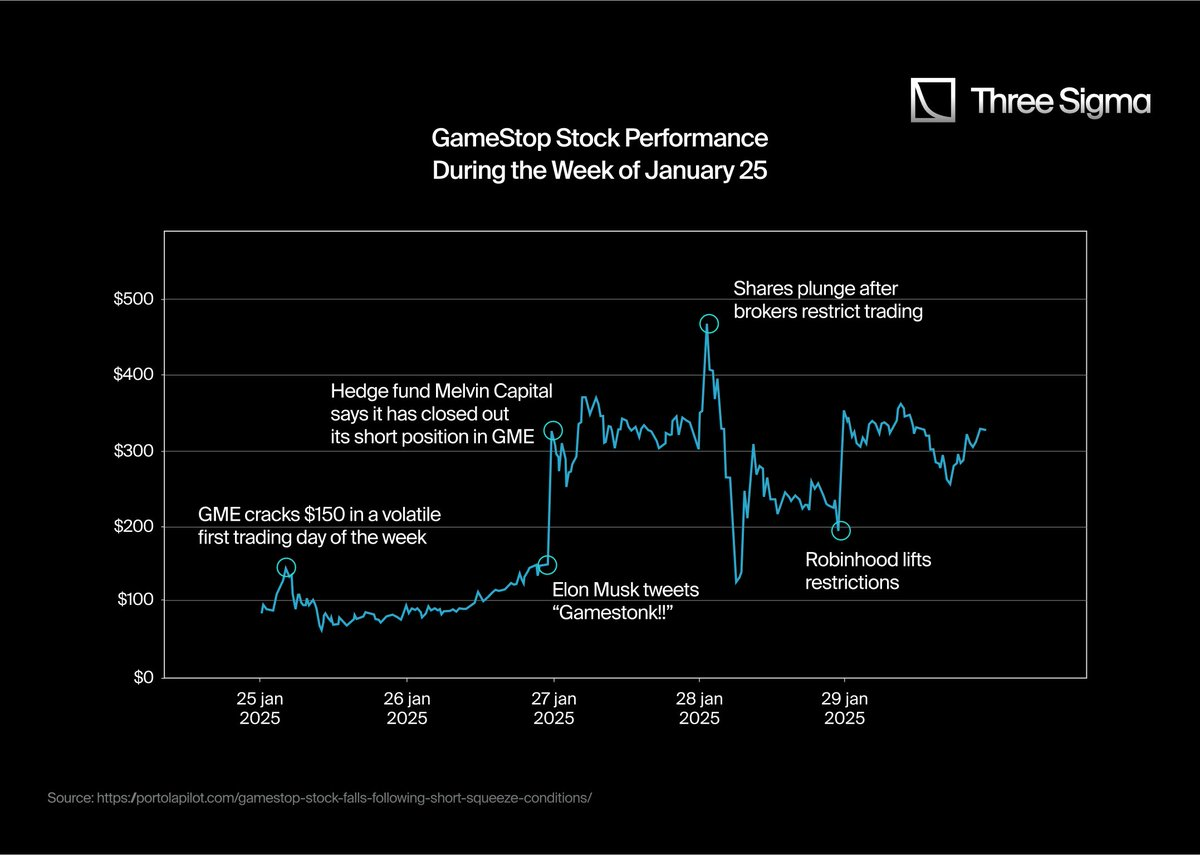
It's worth mentioning that the "short squeeze" on GameStop in early 2021 is a classic case. The coordinated buying action by retail traders in the Reddit community WallStreetBets unexpectedly drove the stock price up significantly. As the price soared, Short traders were forced to buy back the stock at higher prices to close their positions, further pushing the price higher.
This feedback loop ultimately evolved into a historic event: GameStop's stock price skyrocketed from around $20 in early January 2021 to a mid-session high of $483 by the end of the month. This squeeze resulted in billions of dollars in losses for institutional investors with Short positions.
2. API and Liquidations
In the history of the cryptocurrency market, there have been many notable liquidation events. However, the most impactful are often the "Long squeezes" - liquidations triggered by price declines. These events are typically larger in scale and have more far-reaching consequences for traders and the market.
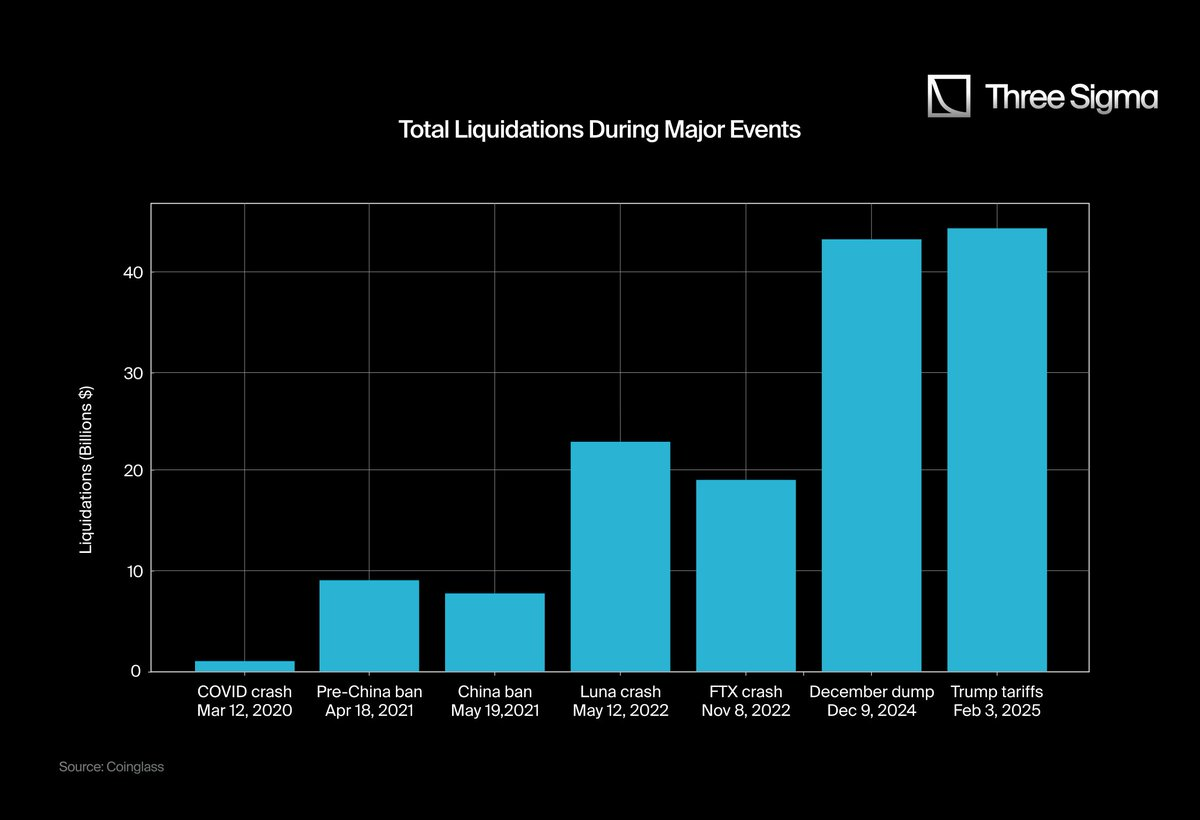
Here are some of the largest liquidation events in cryptocurrency history:
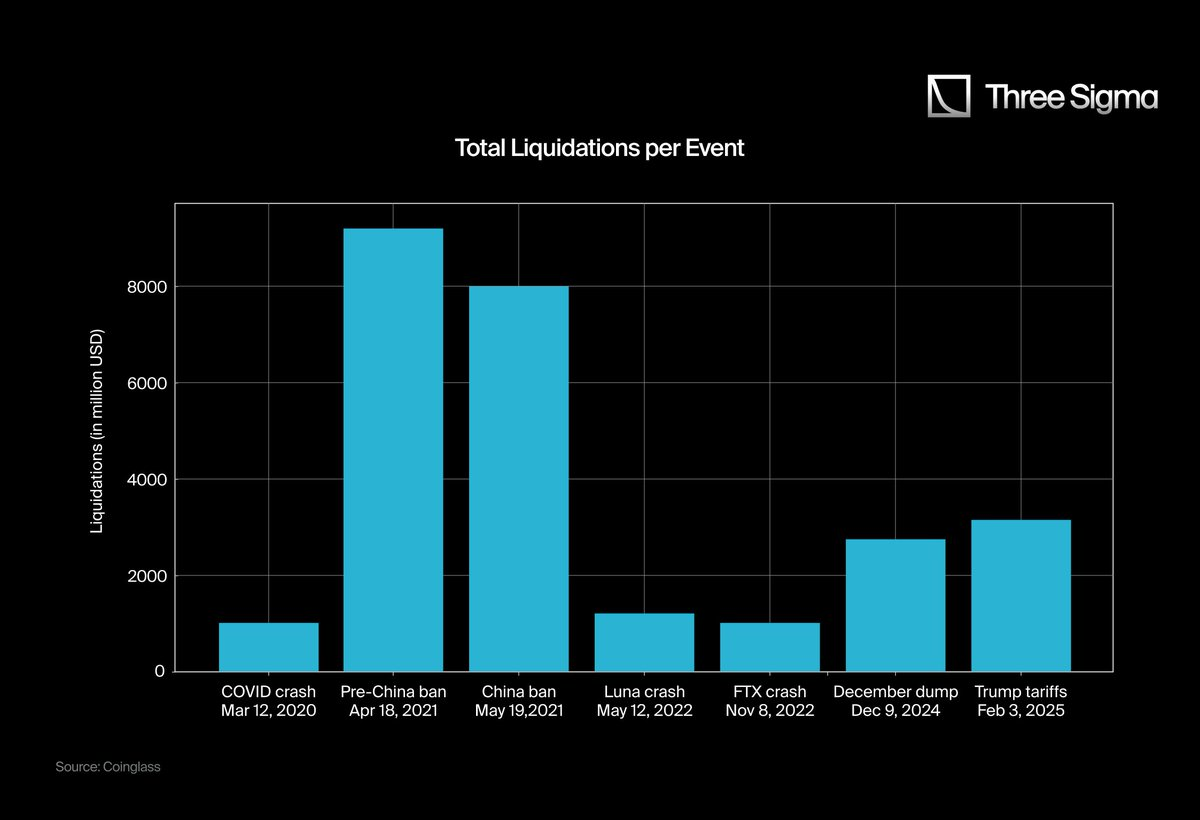
Have you noticed any anomalies? Don't you feel that the impact of the FTX collapse or the Luna collapse was far greater than the liquidation events that occurred this year? Your intuition is correct.
The reason why the recent liquidation events may appear more severe than the FTX or Luna collapses is due to three core reasons:
2.1 Growth in Total Market Cap and Liquidation Scales
In March 2020, the total cryptocurrency market cap reached a peak of $266 billion, while by 2025, this figure had skyrocketed to a historic high of $3.71 trillion. To accurately assess the scale of liquidations, we need to focus on the "liquidation-to-market cap ratio" rather than just the absolute liquidation amount. Relying solely on raw data may make the recent liquidation events appear larger than they actually are.
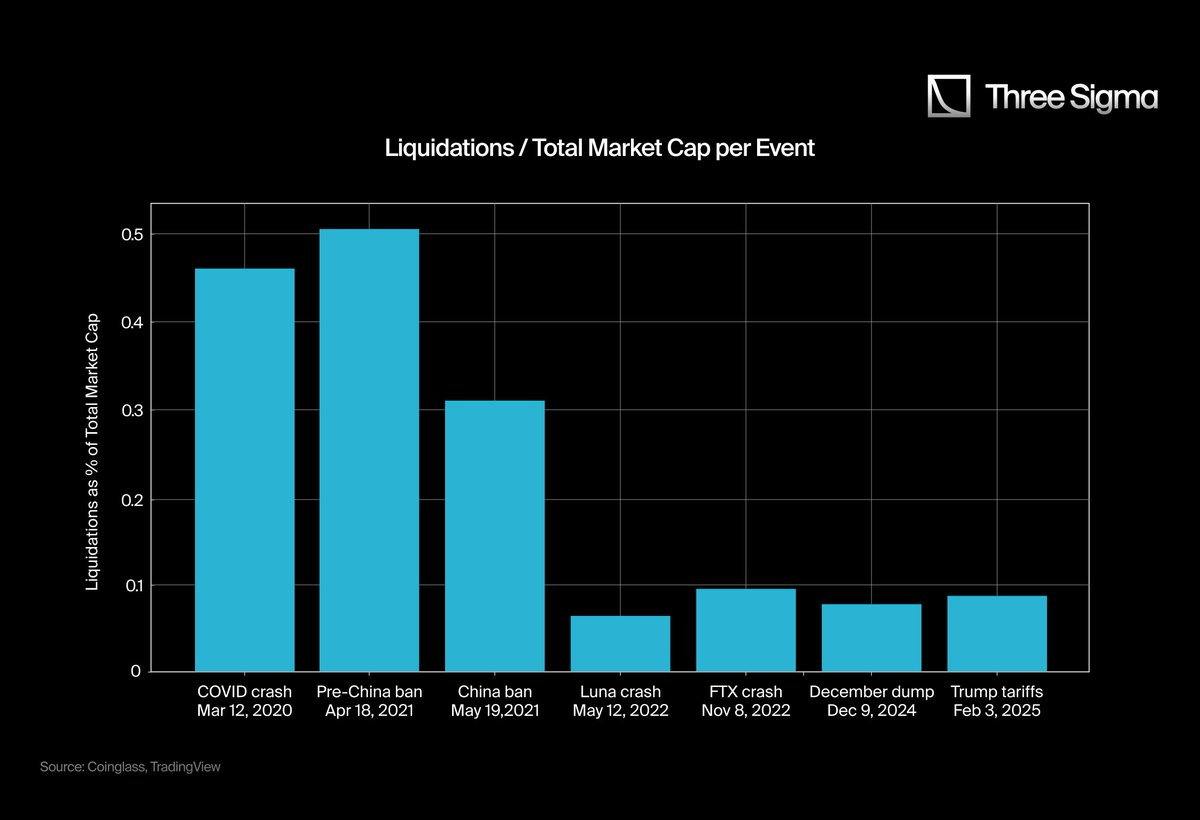
Although the chart can help us better understand the scale and impact of liquidations from a holistic perspective, there are still some data biases, which leads to the next key issue.
2.2 Limitations of Centralized Exchange (CEX) WebSocket API Data
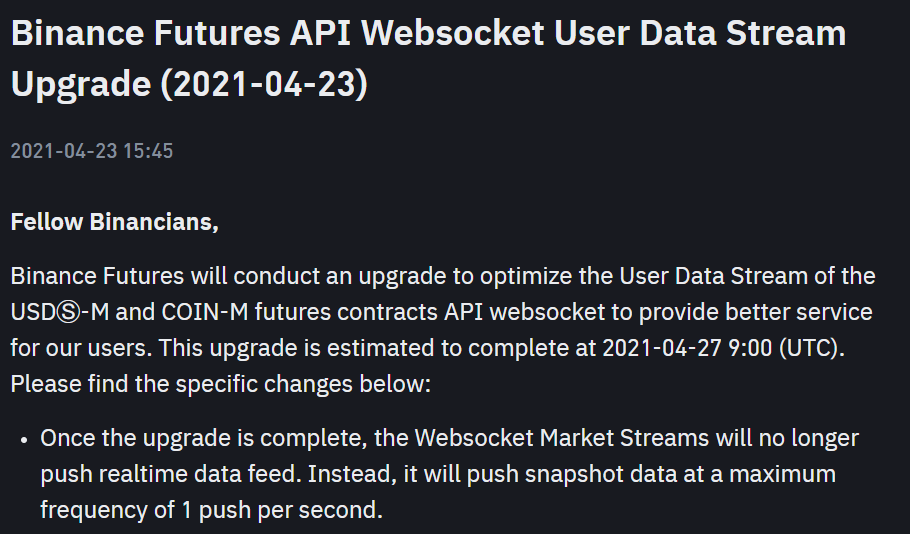
Prior to the second quarter of 2021, most centralized exchanges provided detailed liquidation data through their APIs, allowing them to record and report every single liquidation. However, since 2021, many exchanges have started to limit the liquidation data, capping the API to report a maximum of one liquidation record per second, regardless of the actual number of liquidations that occurred.
The introduction of this data cap has significantly reduced the transparency of liquidation data, making the liquidation data after 2021 appear less severe and impactful than the more comprehensive data from earlier periods.
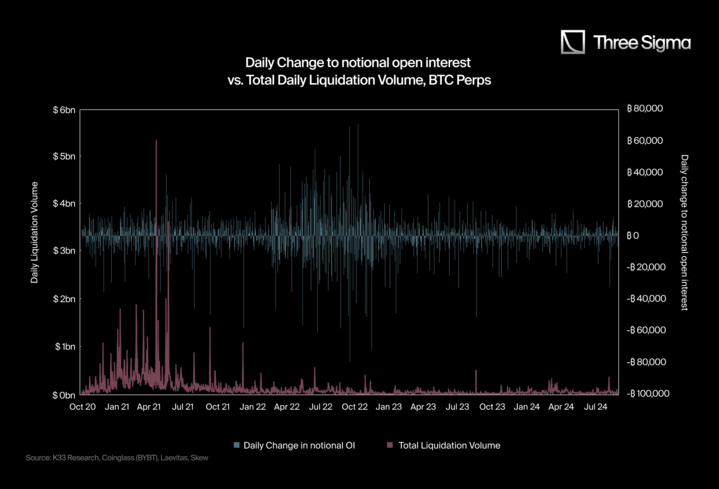
@K33Research clearly illustrates this issue in their research through two charts:
The first chart shows that after the API change, the number of liquidations has dropped significantly, even as the total market cap has grown substantially since 2021.
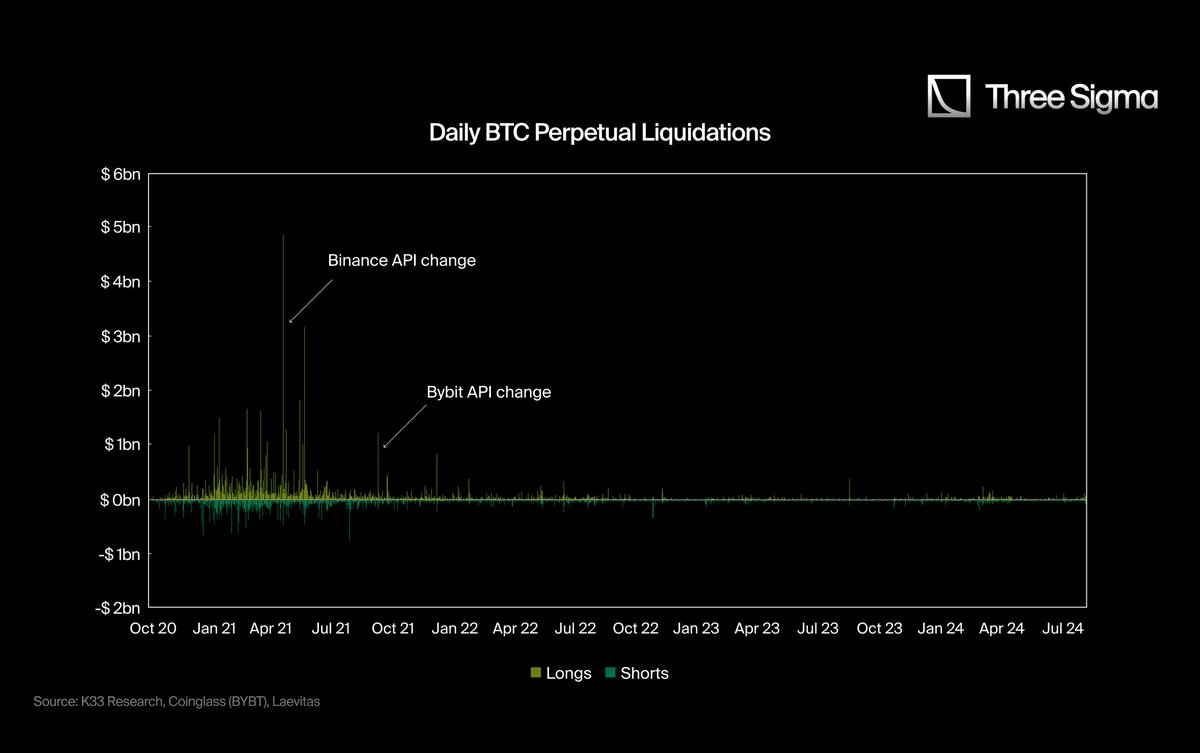
The second chart compares the daily changes in total liquidations and notional open interest (OI). Typically, violent fluctuations in notional open interest would trigger large-scale liquidations, but since the second quarter of 2021, there have been no obvious peaks in liquidations even on days when notional open interest fluctuated violently.
The official reason given for the API changes is "to provide a fair trading environment" (Bybit, September 2021) and "to optimize user data flow" (Binance, April 2021). However, there is a view that this may be a public relations strategy to avoid triggering excessive panic (FUD) and keeping the real data within the exchanges.

Hyperliquid: A Trustworthy Transparent Trading Platform
Hyperliquid is the first perpetuals DEX built on a Layer 1 blockchain, and its trading volume has reached a level that can rival centralized exchanges (CEXs). Unlike traditional CEXs, Hyperliquid provides completely transparent and unlimited liquidation data reporting, with all data open to the public for anyone to query at any time.
This transparency has brought unique changes to the market: on the one hand, the reporting mechanism of CEXs has limitations, and their liquidation data is often artificially capped; on the other hand, Hyperliquid's liquidation data is completely open and unconstrained. This difference has led to a significant increase in the overall reporting volume of liquidation data driven by Hyperliquid.
This transparency has far-reaching implications for the entire trading ecosystem. In traditional centralized exchanges, liquidation data is often selectively disclosed or aggregated, making it difficult for traders to analyze market dynamics in real-time. Hyperliquid's on-chain liquidation data ensures that every liquidation event is visible to the public, providing traders with more accurate and comprehensive leverage trading information.
For traders, this transparency means they can have a clearer understanding of market conditions, such as identifying potential "squeeze" opportunities, monitoring risk levels, or assessing market sentiment. Researchers and analysts also benefit from the unfiltered on-chain data, which provides deep insights into market volatility, risk behavior, and the impact of liquidations on the market.
This unrestricted data access not only promotes a fairer and more efficient trading environment, but also ensures that all market participants have equal access to information.
By establishing a new standard of transparency for perpetuals trading, Hyperliquid not only challenges the data opacity of CEXs, but also significantly improves the reliability of liquidation data, allowing traders to gain deeper market insights on a stronger foundation of trust.
3. Actual Liquidation Data and the Hyperliquid Ratio
3.1. Calculating the Hyperliquid Ratio
Hyperliquid's transparency and rich indicator system allow us to clearly observe the real dynamics of the market. However, due to API limitations, the derivative trading segment of CEXs has not been able to provide data that corresponds to the actual situation. Although the open interest and trading volume of CEXs are far higher than those of decentralized exchanges, their reported liquidation data is exceptionally low. This data discrepancy is particularly evident in the charts, further validating the limitations of CEX data reporting.
Thanks to Hyperliquid's transparency, we now have a verifiable and accurate dataset that can be used to compare the degree of deviation in the liquidation reports of centralized exchanges (CEXs).
The liquidation data cited in traditional media is usually based on restricted APIs, which are unable to capture the full picture of liquidation activity, and therefore the numbers provided are often incomplete. In contrast, Hyperliquid's unrestricted on-chain data reporting provides a transparent and comprehensive record of all liquidation activity, which also proves that the liquidation activity on CEXs may far exceed their publicly disclosed levels.
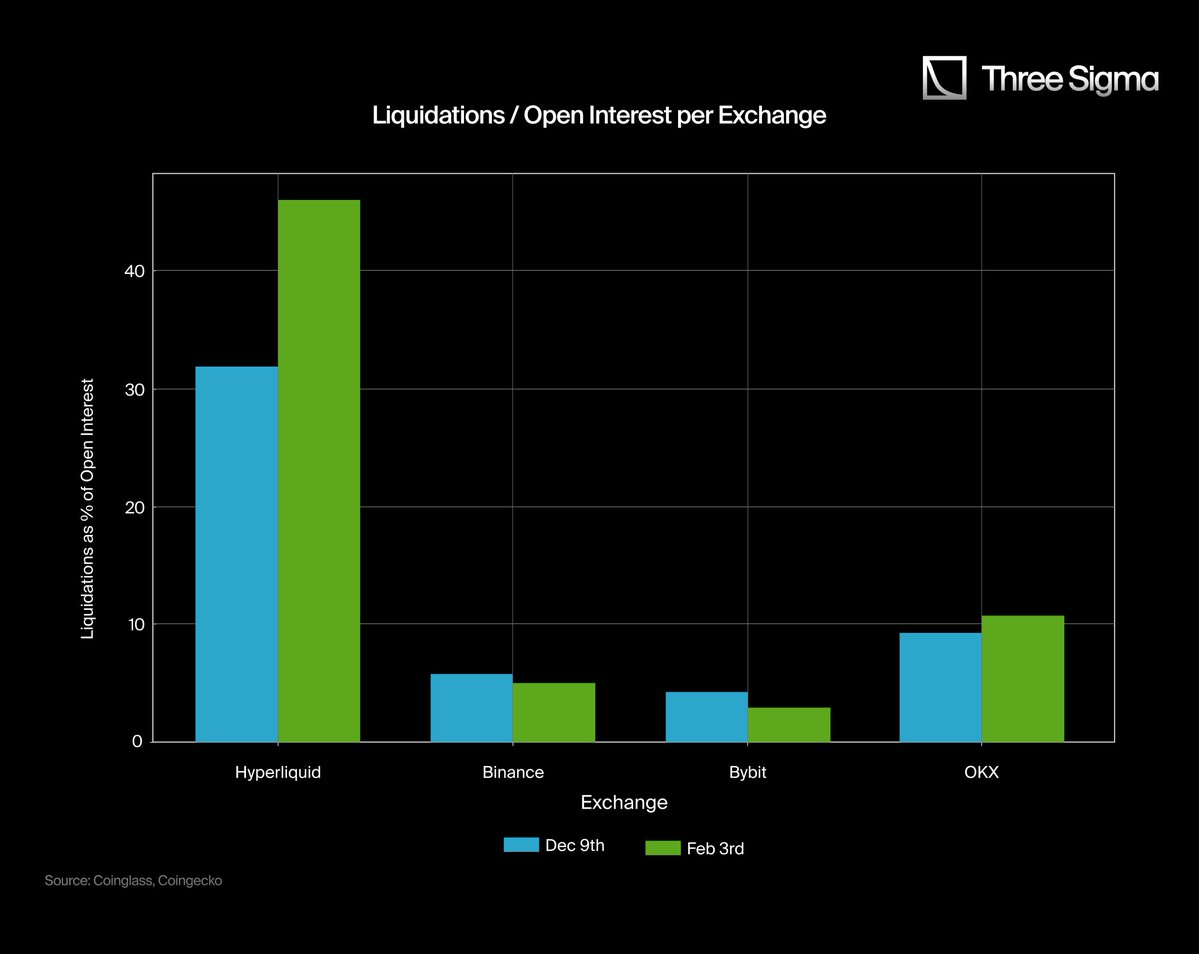
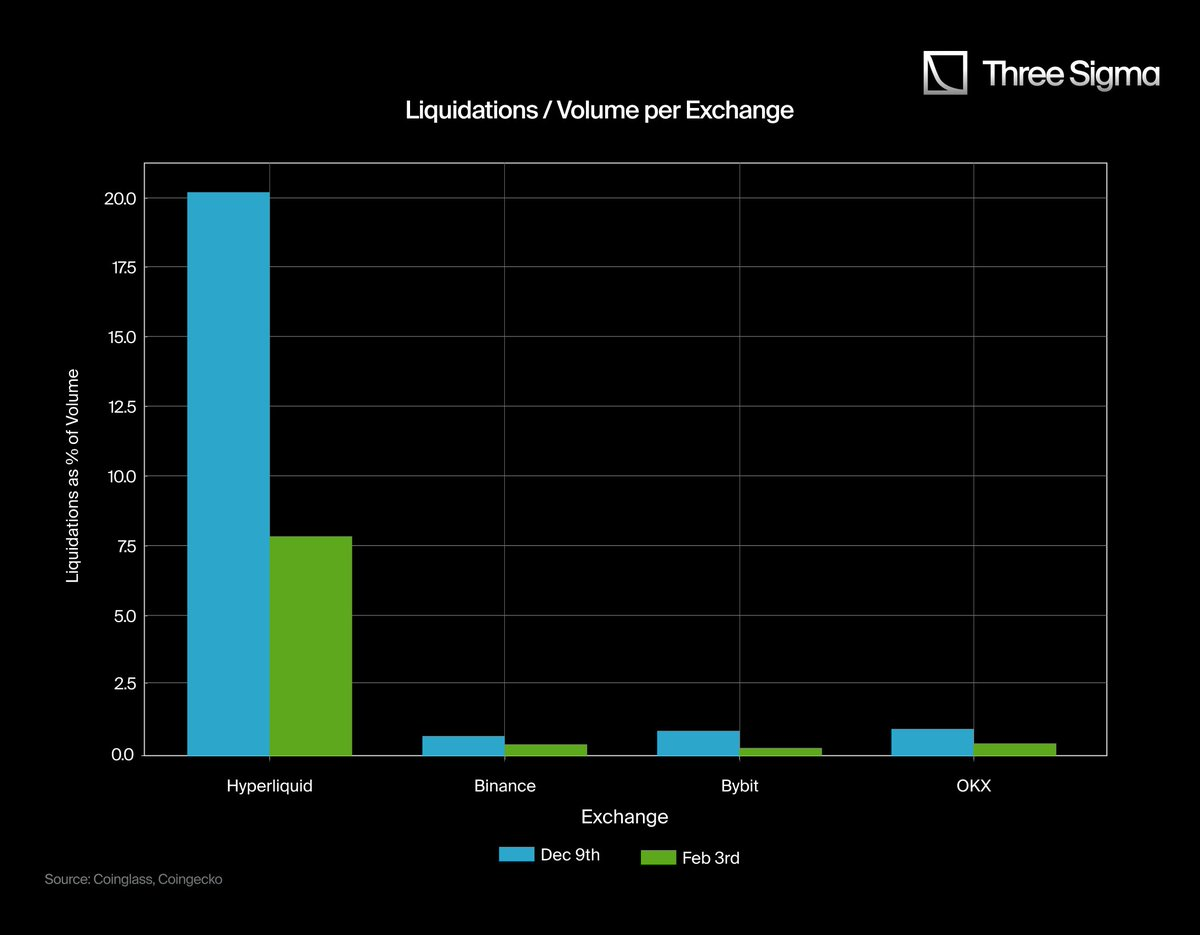
The two charts clearly show a significant difference between the liquidation data of Hyperliquid and CEXs, revealing a core issue in the current liquidation reporting. On exchanges like Binance, Bybit, and OKX, the scale of open interest and trading volume is far higher than Hyperliquid, but their liquidation ratios are disproportionately low. This obvious contradiction suggests that the liquidation data of CEXs may be underreported or subject to data concealment, as it does not correspond to the active leverage trading on their platforms.
In the chart on the left, Hyperliquid's liquidations as a proportion of open interest are significantly higher than CEXs, while the ratio for CEXs is exceptionally low, even though they have a massive derivatives market. Similarly, in the chart on the right, the liquidations as a proportion of trading volume for CEXs are almost negligible, which is clearly at odds with their leverage-driven trading activity.
These charts clearly demonstrate that Hyperliquid provides a more real and transparent view of liquidations. Unlike the CEXs' practice of restricting public access to complete liquidation data, Hyperliquid's on-chain data reporting ensures that every liquidation is fully recorded and publicly available, accurately reflecting the liquidation activity in the market.
It is important to note that the "low values" of the liquidation ratios in the Binance, Bybit, and OKX charts do not mean that liquidation activity is low, but rather reflect the low transparency of CEX liquidation data reporting and potential statistical deficiencies.
3.2. Adjusting CEX Liquidation Data Based on the Hyperliquid Ratio
To estimate the "true" liquidation data of CEXs, we use the Hyperliquid Liquidations-to-Volume ratio and Liquidations-to-Open Interest (OI) ratio as benchmarks. We then compare these ratios to the liquidation data reported by CEXs on two specific dates (December 9 and February 3) to calculate an adjustment factor.
Hyperliquid Ratio Calculation and CEX Liquidation Data Adjustment
Liquidations / Open Interest (OI) Ratio
December 9: 1.07B / 3.37B ≈ 0.3175
February 3: 1.42B / 3.08B ≈ 0.461
Average ≈ 0.389 (38.9%)
Liquidations / Volume Ratio
December 9: 1.07B / 5.30B ≈ 0.2021
February 3: 1.42B / 18.0B ≈ 0.0789
Average ≈ 0.14 (14%)
We use these 38.9% and 14% figures as reference points to estimate the liquidation scale of other exchanges, assuming they follow a similar ratio to Hyperliquid.
We then apply these ratios to Binance, Bybit, and OKX:
For each centralized exchange (CEX), we calculate two types of "adjusted" liquidation data:
One based on the Hyperliquid Liquidations/Volume ratio
The other based on the Hyperliquid Liquidations/Open Interest (OI) ratio.
Finally, we take the average of these two adjustment results for each date to obtain a more comprehensive estimate.
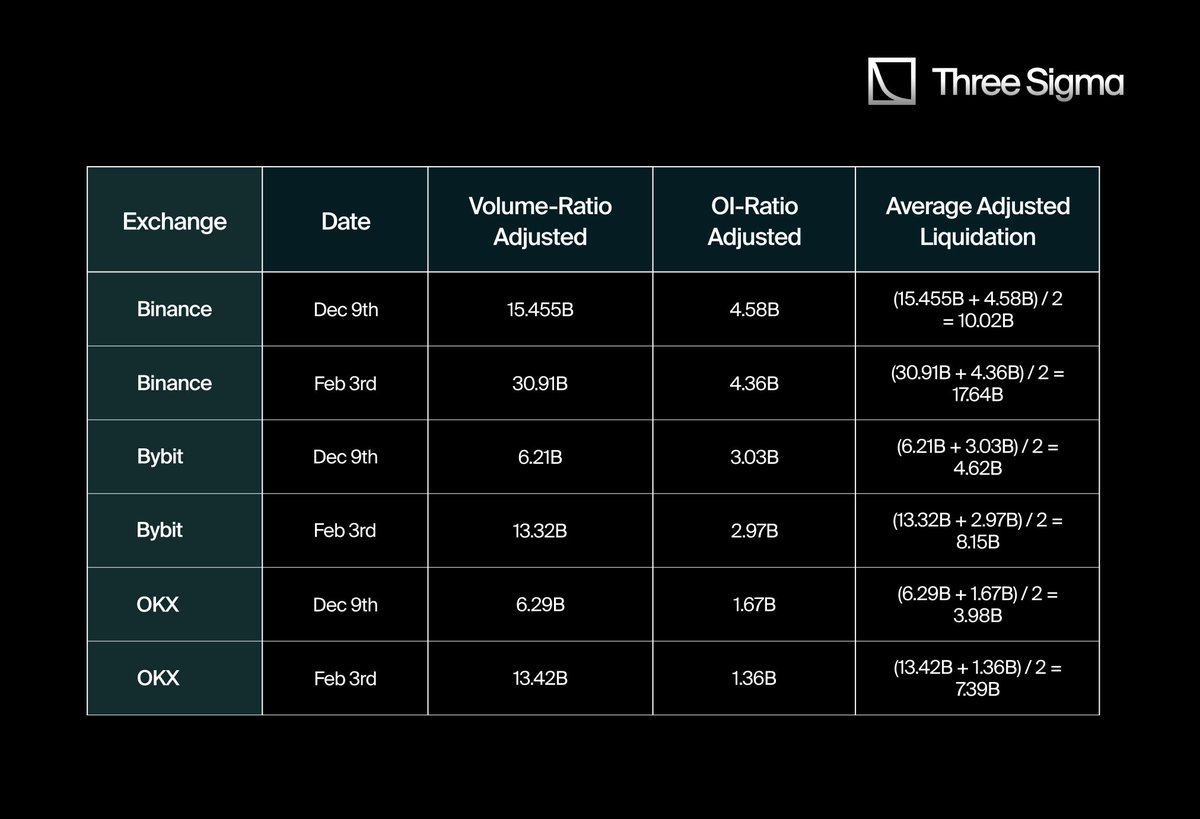
Therefore, the liquidation amounts reported by centralized exchanges (CEXs) (usually in the hundreds of millions of dollars) are actually far lower than the billions of dollars level estimated based on the Hyperliquid ratios.
The following is a comparison chart of "reported liquidations and adjusted liquidations" on December 9 and February 3. For each exchange, the chart contains two sets of bars: the light blue and light green represent the reported liquidation amounts, while the dark blue and dark green represent the adjusted liquidation amounts.
Adjusted Liquidation Value is calculated based on the average of Hyperliquid's Liquidation-to-Volume ratio and Liquidation-to-OI ratio. Although this method can more intuitively reveal potential liquidation disparities between different exchanges, the adjusted values may still have certain deviations due to differences in market structure, retail trading proportion, and market maker activities across exchanges. For example, some exchanges may report lower liquidation data due to higher retail participation, while others may underestimate liquidation amounts due to active market maker activities.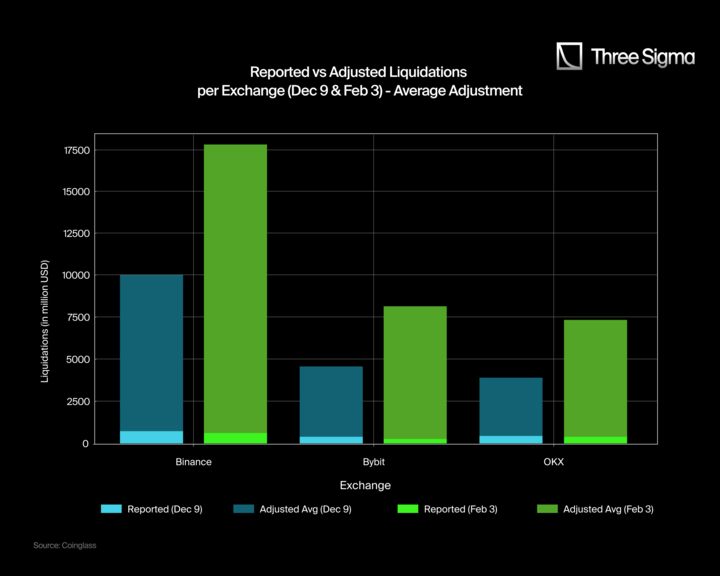
Key Findings
Binance, Bybit, and OKX's liquidation amounts are significantly underestimated: The reported liquidation amounts (light Bit/light green) are much lower than the adjusted values (dark Bit/dark green), indicating that the actual liquidation amounts may be much higher than the publicly disclosed data.
The difference in Binance's liquidation amount is particularly prominent: According to the adjusted data, Binance's actual liquidation amount on February 3 should be close to $17,640 million, rather than the reported $611 million, highlighting the huge data discrepancy. Similarly, on December 9, Binance's liquidation amount should be $10,020 million, rather than the reported $739 million.
Bybit and OKX exhibit similar trends: Bybit's adjusted Liquidation amount on February 3 is estimated at $8,150 million, while the reported value is only $247 million; on December 9, the adjusted amount is $4,620 million, while the reported value is only $370 million. The difference for OKX is also significant, with its adjusted Liquidation amount on February 3 being $7,390 million, while the reported value is only $402 million; on December 9, the adjusted amount is $3,980 million, while the reported value is only $425 million.
3.3. "True" Estimation of Significant Liquidation Events
By comparing Hyperliquid's liquidation data with the data reported by major Centralized Exchanges (CEXs), we found a huge gap between the two. To quantify this difference, we collected data from Binance, Bybit, and OKX on December 9 and February 3, focusing on their Liquidations-to-Volume and Liquidations-to-OI ratios.
To more accurately estimate the true scale of liquidation at these exchanges, we first calculated Hyperliquid's average liquidation ratio and used it as a benchmark to apply to the CEX data. In the calculation process, we did not use a simple average, but rather a weighted average, adjusting the liquidation ratio of each exchange based on its trading volume share on a specific date. This method can more comprehensively reflect the overall level of liquidation activity in the market.
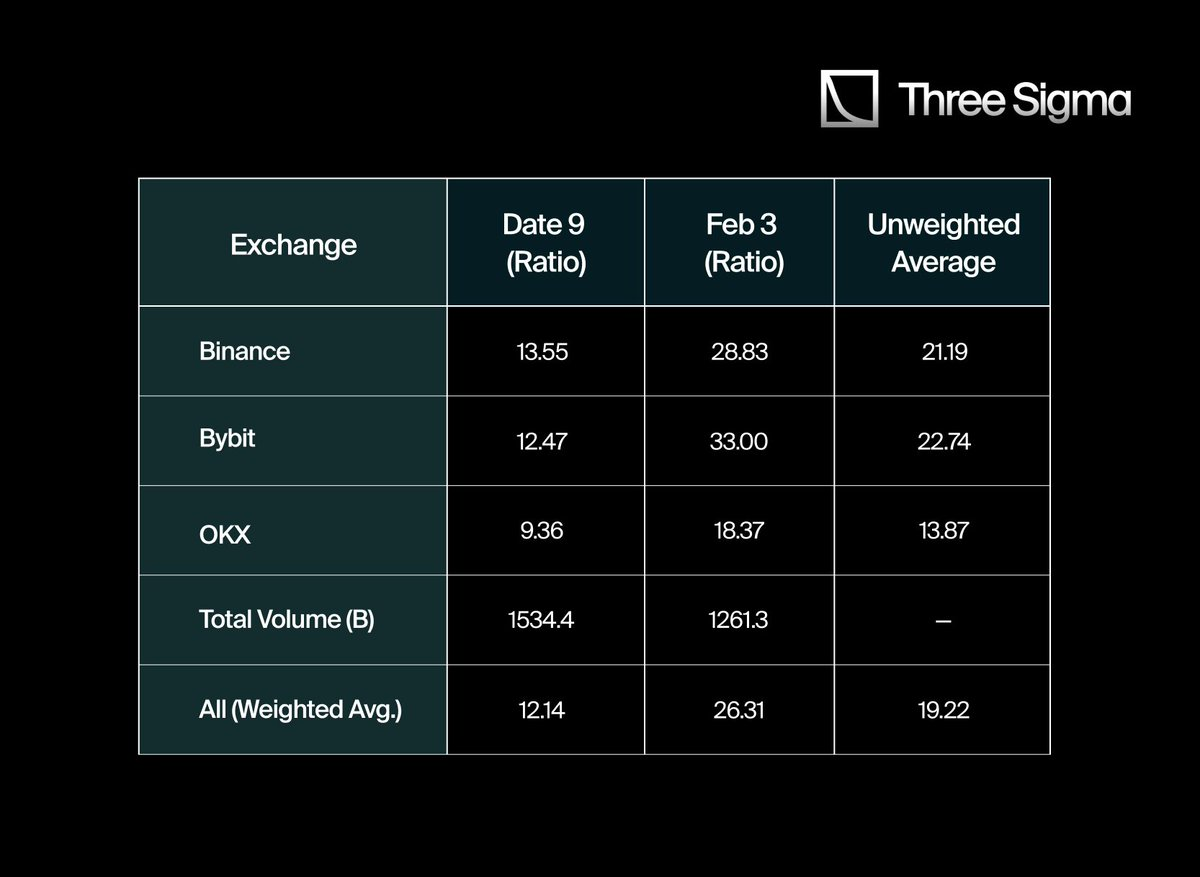
When we first calculated the liquidation multipliers for each exchange, the results showed that Binance was 21.19, Bybit was 22.74, and OKX was 13.87. If we simply take the average, the global liquidation coefficient would be 19.27 times. However, after adjusting for the weighted differences in trading volume between exchanges, the more accurate weighted average is 19.22 times.
This means that the actual Liquidation scale of Centralized Exchanges (CEXs) may be about 19 times higher than the officially reported data, or at least much higher than the data publicly available through their limited APIs.
Based on this 19.22x liquidation multiplier, we analyzed some of the most important Liquidation events in the history of cryptocurrencies, attempting to estimate the true Liquidation amounts of these events. If this data were disclosed as transparently as Hyperliquid, the actual Liquidation amounts could be closer to the adjusted results. The table below compares the commonly cited Liquidation amounts with the adjusted values using the 19.22x multiplier:
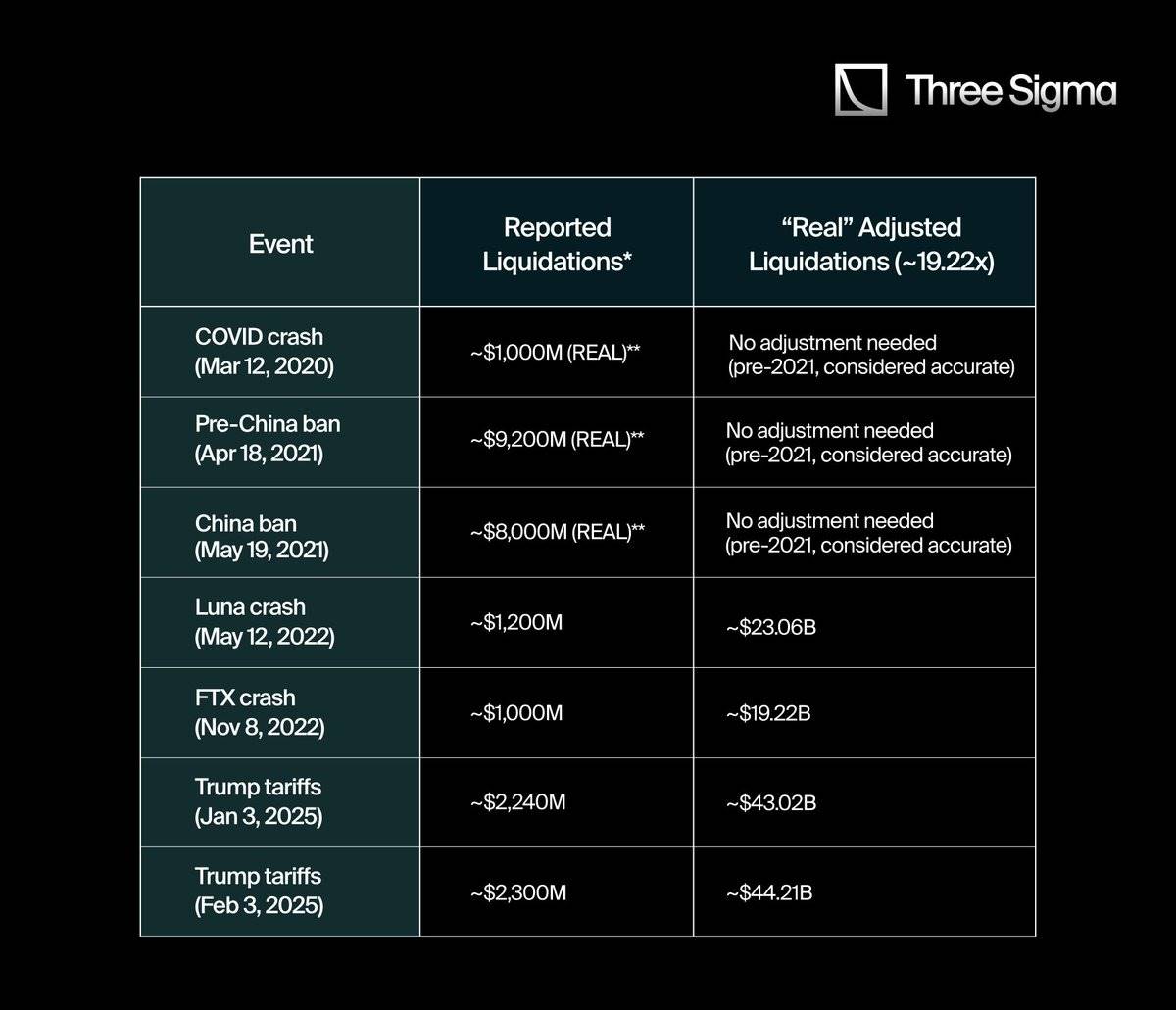
"Reported" refers to the figures published through data aggregation platforms, social media, or limited APIs.
Prior to the second quarter of 2021, the reliability of Liquidation data was relatively higher, as API restrictions had not yet been implemented.
By comparing the "true" Liquidation data with the broader cryptocurrency market capitalization, we can gain a more detailed understanding of the impact of each event on market dynamics. This not only reveals the scale of capital consumed in a short period, but also reflects the potential violent fluctuations in market sentiment during the deleveraging period.
In many cases, the Liquidation-to-market cap ratio appears more striking after adjusting for the underestimated data, indicating that market participants may have faced a more systemic risk than it appears on the surface.
Therefore, analyzing the Liquidation-to-market cap ratio can help us more clearly recognize how market psychology and liquidity conditions undergo significant changes during periods of extreme volatility.
3.4. Comparison of Liquidation Scale and Total Market Cap
To better understand the impact of major Liquidation events, we compared the "true" total Liquidation amount of these events with the cryptocurrency market capitalization at the time. The calculation formula is: Liquidation-to-market cap ratio = (Liquidation amount / market cap) × 100.
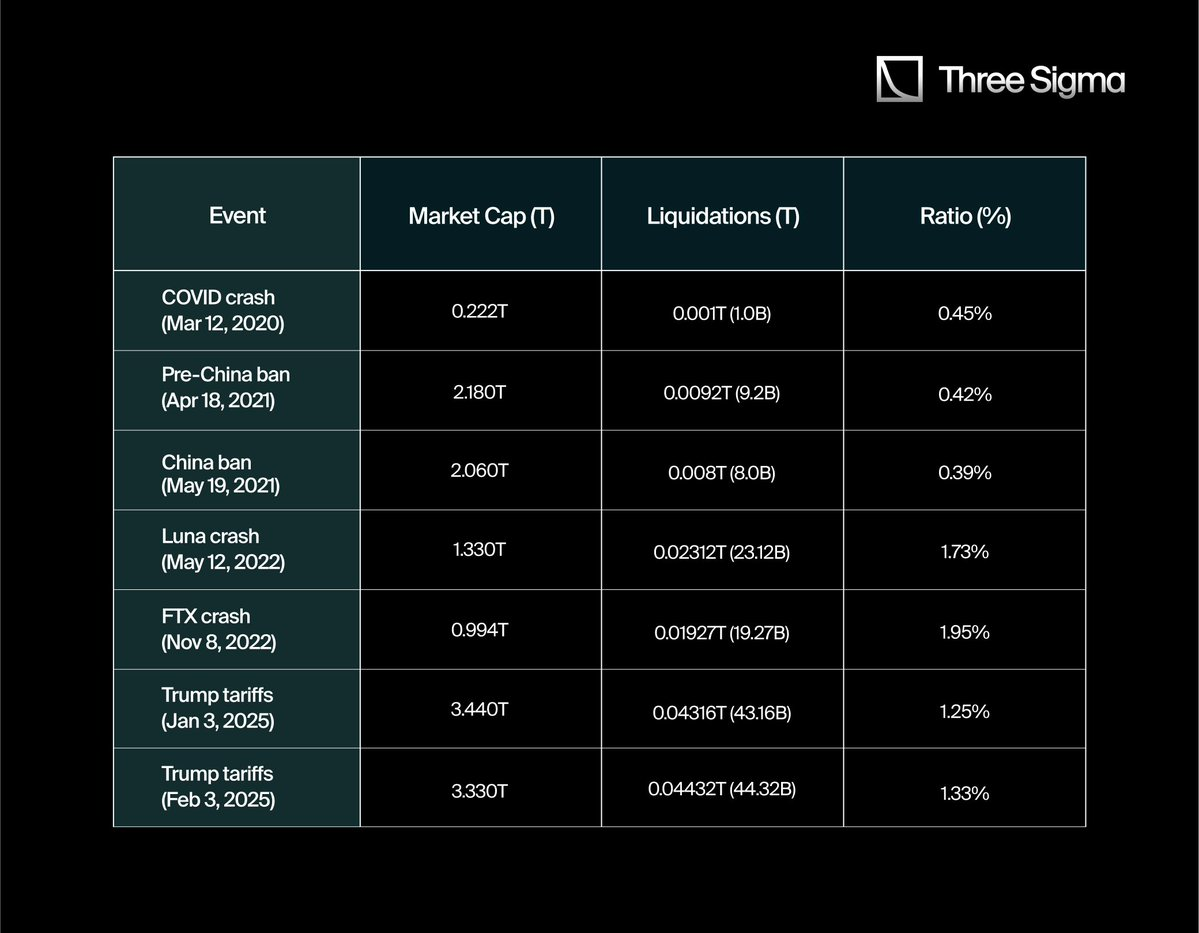
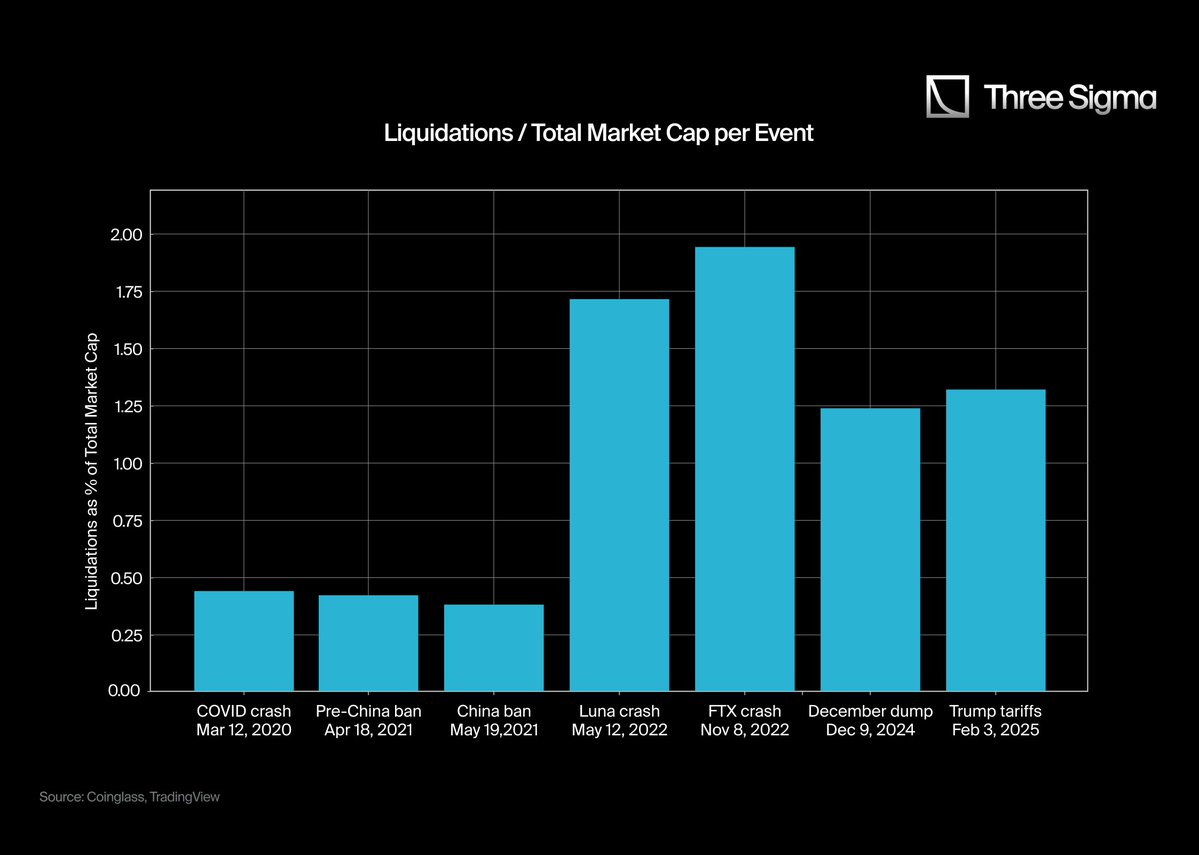
This ratio can help us analyze the degree of market impact of each Liquidation event more deeply. On the one hand, it shows the scale of capital being Liquidated in the market in a short period of time; on the other hand, it also reflects the violent changes in market sentiment during the deleveraging process.
After adjusting for the underreported data, we found that the Liquidation-to-market cap ratio becomes more significant. This suggests that market participants may face higher systemic risks than previously anticipated, and these risks may not have been fully perceived at the time of the events.
Therefore, analyzing the Liquidation-to-market cap ratio can help us better understand the psychological changes in the market and the transformation of liquidity conditions during periods of extreme volatility.
4. Conclusion
From the data and comparisons presented above, we can clearly see a trend: the Liquidation data published by CEXs is often significantly lower than the actual Liquidation activity that has occurred. After adjusting for the transparent ratios provided by Hyperliquid, events like the Luna collapse and the FTX collapse have shown market impacts far exceeding what the official data has indicated. This phenomenon further supports the view that CEXs may be underreporting Liquidation data to mitigate market volatility or influence public perception.
This comparison is particularly evident when analyzing historical events. For example, the COVID crash of 2020, although massive at the time, appears relatively small compared to the present, mainly because there were fewer participants in Longing trading back then. As Longing trading has become more prevalent, the scale of Liquidation, both in absolute and relative terms, has grown significantly. However, due to the limitations of official data streams, traders and analysts may not be able to fully understand the actual state of systemic risk.
Furthermore, exchanges often cite "data flow optimization" or "ensuring fair trading conditions" as reasons to restrict the disclosure of real-time Liquidation data, but in reality, this practice may serve broader interests. For example, underreporting Liquidation data can reduce the panic sentiment of new retail investors, while also giving exchanges more proprietary insights into the overall market risk exposure.
Nevertheless, transparency in the industry is gradually improving. For example, Bybit's Ben recently announced that Bybit has started to publicly disclose real Liquidation data, which may indicate a trend towards greater transparency in the industry. More details can be found here.
Although Bybit's move may help narrow the gap between reported and actual Liquidation activity, the fully on-chain, unrestricted reporting provided by Hyperliquid still highlights the importance of transparency. For those who wish to deeply understand the complexity of Longing trading in cryptocurrencies, true transparency is an indispensable tool.