Author: Chloe Zheng
According to a 2023 study by Sequoia Capital, 85% of developers prefer to fine-tune existing models rather than train from scratch. This is further verified by recent trends: DeepSeek open-sourced its model and introduced model distillation technology to pass the reasoning logic to the student model (small model) through the teacher model (large model) to optimize knowledge compression and performance retention. Similarly, OpenAI's ChatGPT O3 version also emphasizes post-training and reinforcement learning. Bittensor provides an open, decentralized platform that supports collaboration and sharing of AI models. In July 2024, Bittensor and Cerebras released the BTLM-3b-8k open source large language model (LLM), which has been downloaded more than 16,000 times on Hugging Face, fully demonstrating Bittensor's technical capabilities.
Although Bittensor was launched in 2021, it was barely visible during the AI Agent craze in Q4 2024, and the token price has remained stagnant. On February 13, 2025, Bittensor launched the dTAO upgrade, which aims to optimize token issuance, improve fairness, and increase liquidity. This change is similar to Virtuals Protocol's launch of the AI Agent LaunchPad, the impact of which caused $VIRTUAL's market cap to surge 50x in 2024.
The report "dTAO and the Evolution of Bittensor: Reshaping the Open Source AI Ecosystem through Market-Driven Incentives" deeply analyzes the impact of the dTAO upgrade completed on February 13 on the Bittensor ecosystem, focusing on its architectural innovation, economic model and overall ecological dynamics.
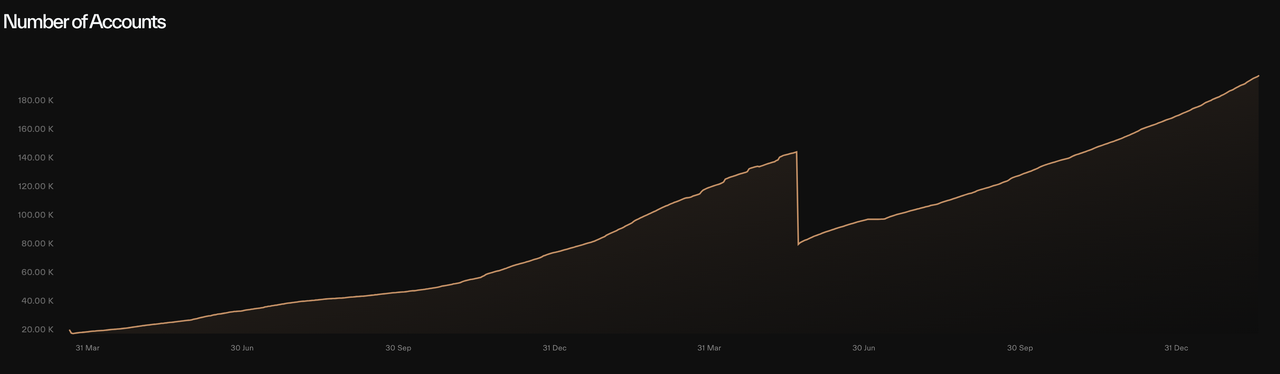
The number of accounts in the Bittensor system has increased by 100%, from 100,000 at the beginning of 2024 to nearly 200,000
1. Basic architecture of Bittensor
The Bittensor system consists of the following three main modules:
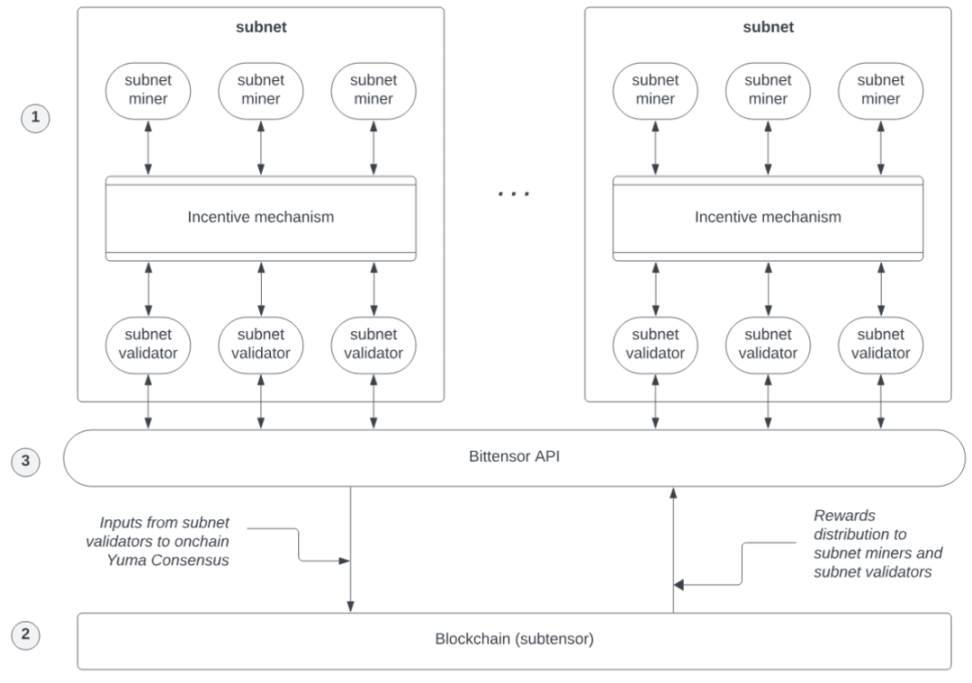
Subtensor parachain and its EVM compatibility layer (tao evm): Subtensor is a Layer1 blockchain developed based on Polkadot's Substrate SDK, responsible for managing the blockchain layer of the Bittensor network. Its EVM compatibility layer (tao evm) allows developers to deploy and run Ethereum smart contracts on the network, enhancing the scalability and compatibility of the system. The Subtensor blockchain produces blocks every 12 seconds, and each block generates a TAO token. In addition, Subtensor records key activities in the subnet, including the validator's scoring weight and the number of staked tokens. Every 360 blocks (about 72 minutes), the tokens (Emissions) obtained by 64 subnets are calculated through the Yuma consensus algorithm.
Subnets: The Bittensor network consists of 64 subnets, each of which focuses on a specific type of AI model or application scenario. This modular structure improves the efficiency and performance of the network and promotes the specialization of different AI models. The incentive mechanism for each subnet is established by the subnet owner, which determines how tokens are distributed between miners and validators. For example, Subnet 1 is operated by the Opentensor Foundation and the task is Text Prompting. In this subnet, validators provide prompts similar to ChatGPT, miners answer according to the prompts, and validators sort the miners' answers according to the quality, update the weights regularly and upload them to the Subtensor blockchain. The blockchain performs a Yuma consensus calculation every 360 blocks and allocates token releases for the subnets.
Root Subnet: As the core of the network, the root subnet is responsible for coordinating and managing the operations of all subnets to ensure the overall coordination and stability of the network.
In addition, the Bittensor API plays a role in transmission and connection between subnet validators and the Yuma consensus on the Subtensor blockchain. Validators in the same subnet will only connect to miners in the same subnet, and validators and miners in different subnets will not communicate and connect with each other.
This architectural design enables Bittensor to effectively integrate blockchain technology and artificial intelligence to create a decentralized and efficient AI ecosystem.
The Subtensor EVM compatibility layer tao evm was officially launched on December 30, 2024. It can be deployed and interacted on the Subtensor blockchain without modifying any Ethereum smart contracts. At the same time, all EVM operations are only executed on the Subtensor blockchain and will not interact with Ethereum. This means that smart contracts on Bittensor are limited to the Bittensor network and have nothing to do with the Ethereum mainnet. Tao evm is still in a fairly early stage, including the ecological project TaoFi, which plans to develop AI-based DeFi infrastructure, including the first TAO-backed stablecoin, decentralized exchanges, and a liquid staking version of the TAO token.

1.1 Account System
1.1.1 Coldkey-Hotkey Dual Key System
dTAO's account system uses a Coldkey-Hotkey dual key mechanism to ensure greater security and flexibility. When creating a wallet, users can choose to generate a wallet through a Chrome extension or locally. Wallets created through Chrome extensions are used to store, send, and receive TAO. The system generates a coldkey (48 characters, usually starting with 5) and a 12-word seed phrase. In addition to generating a coldkey, a locally created wallet also generates a hotkey, which is used to participate in subnet creation, mining, and verification.
The main reason for adopting the Coldkey-Hotkey dual key system is that hotkey is frequently used in the daily operation of the subnet and faces potential security threats; while coldkey is mainly used to store and transfer TAO, so it can effectively reduce the risk of TAO loss. This dual protection mechanism ensures the security and flexibility of account operations.
In terms of binding, a hotkey can be bound to a coldkey in the same subnet, but can also be bound to coldkeys in different subnets (not recommended). A coldkey can be bound to multiple hotkeys.
1.1.2 Subnet UID System
1.1.2.1 Subnet UID Generation
After paying a registration fee of at least 100 TAO, the system will generate a subnet UID and bind it to your hotkey. This UID is a necessary credential for participating in subnet mining or verification. To become a miner, you only need a hotkey, coldkey and subnet UID, and then run Bittensor to participate in mining.
1.1.2.2 Requirements for becoming a validator
To become a subnet validator, you must stake at least 1,000 TAO, and in each subnet, the staked amount must be ranked in the top 64. It should be noted that a validator can hold multiple UID slots at the same time, thereby validating in multiple subnets without increasing the amount of stake (similar to the concept of restaking). This mechanism not only reduces the risk of validators committing evil, but also increases the cost of evil, because staking high amounts of TAO (at least 1,000 TAO) greatly increases the cost of evil. In order to enhance their competitiveness in the subnet, each validator will strive to establish a good reputation and track record to attract more TAO delegated stakes, thereby ensuring a stable position in the top 64.
1.1.2.3 Subnet structure and capacity limitations
Subnet 1: There are 1024 UID slots, which can accommodate up to 128 validators; the total number of validators and miners is capped at 1024.
Other subnets: Each subnet has 256 UID slots and can accommodate up to 64 validators; the total number of validators and miners in each subnet does not exceed 256.
1.1.2.4 Subnet Competition and Incentive Mechanism
Within the subnet, the validator will assign tasks to miners. After all miners complete their tasks, they will submit the results to the corresponding validator. The validator will evaluate and rank the quality of the tasks submitted by each miner, and the miners will receive TAO rewards based on the quality of their work. At the same time, the validator will also receive incentive rewards for ensuring that high-quality miners receive better rewards, thereby promoting the continuous improvement of the quality of the entire subnet. This series of competition processes are automatically executed by the code incentive mechanism designed by the subnet creator to ensure that the system operates fairly and efficiently.
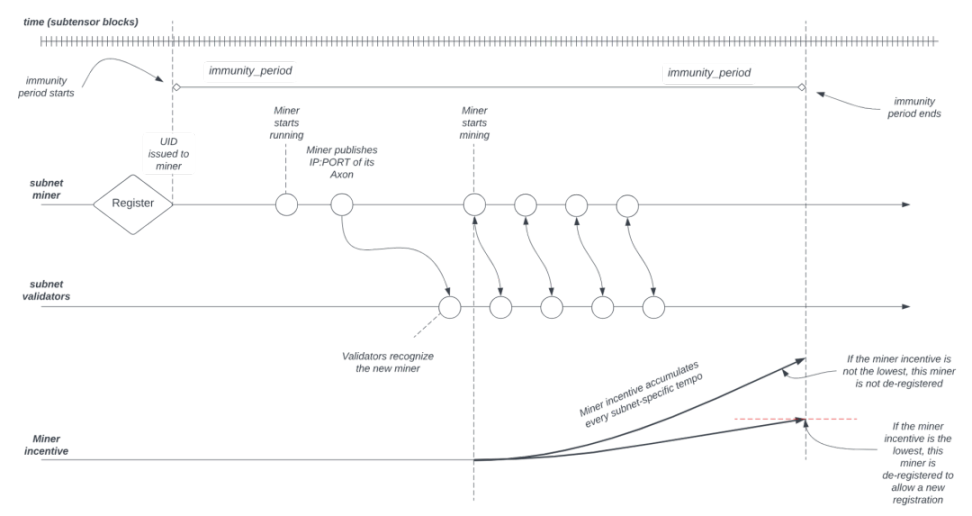
Each subnet has a 7-day protection period (immunity period), which starts from the time the miner registers the subnet UID. During this period, the miner will accumulate his rewards. If a new miner registers during the protection period and the UID slot of the current subnet is full, the miner with the least accumulated rewards will be eliminated and his UID will be reallocated to the newly registered miner.
1.2 Subnet builds a multi-level ecosystem
The Bittensor subnet builds a multi-layered ecosystem in which miners, validators, subnet creators, and consumers each play their own roles and work together to promote the generation of high-quality AI services.
Miners: As the core computing nodes of the network, miners host AI models and provide inference and training services. They compete in peer-to-peer scoring to obtain TAO rewards by minimizing the loss function. The success of miners depends on the quality and performance of the services they provide.
Validators: Validators are responsible for evaluating the results of tasks submitted by miners, building a trust matrix, preventing collusion and cheating, and ensuring that high-quality miners receive higher returns. They rank miners based on the quality of their responses. The more accurate and consistent the ranking, the more rewards the validators receive.
Subnet Creators: Subnet Creators design customized subnets and build independent consensus mechanisms, task processes, and incentive structures based on the needs of specific application areas (such as natural language processing, computer vision, etc.). They assume the role of network administrators and have the right to allocate incentives through their respective subnets.
Consumers: Consumers pay TAO tokens to call AI services to query APIs, obtain training data, or use computing resources for model training. They are the end users of the AI models provided by Bittensor.
The overall process is: the subnet verifier generates questions and distributes them to all miners. The miners generate answers based on the tasks and return them to the verifiers. The verifiers score the miners based on the quality of the answers and update the miners' weights, and then upload the weights to the chain regularly. Through fierce competition and the survival of the fittest mechanism, the technological progress and ecological optimization of AI models in the subnet are continuously promoted.
1.2.1 Miner Layer
Miners play the role of core computing nodes in the Bittensor network. Their main responsibilities include:
Hosting AI models and providing inference or training services: Miners provide prediction services to client applications by hosting local machine learning models. When a client needs a prediction, it sends a request to the Bittensor network, which routes it to a miner registered as a service provider. The miner processes the request and returns the prediction result to the client.
Earn TAO tokens as computing incentives by competing in the P2P ranking: Miners compete in the peer-to-peer ranking to receive TAO token rewards based on their model performance and contribution to the network. This incentive mechanism encourages miners to continuously optimize their model performance and provide high-quality AI services to the network.
Ensure high-quality AI model contributions: Miners are committed to providing high-quality AI models to meet network needs and ensure quality of service. This not only helps them get higher rankings and rewards in the network, but also improves the overall performance and reliability of the entire Bittensor network.
By fulfilling these responsibilities, miners make important contributions to the efficient operation and development of the Bittensor network.
Each miner fix is trained on the dataset D to minimize the loss function Li=EDQfix
in:
Qfix is the error function
ED represents the expectation of dataset D.
For example, if miner A provides a speech recognition model fAx, its loss function may be:
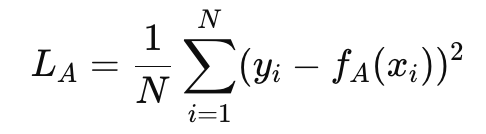
Lower LA (i.e., better model performance) leads to higher ranking in the P2P evaluation.
The contribution of each miner is measured by the Fisher Information Metric (FIM): Ri=WT⋅S
in:
W is the weight matrix representing the P2P score between miners.
S is the amount of stake (holding) held by the miner in the network.
If miner A and miner B rate each other, the weight matrix is:
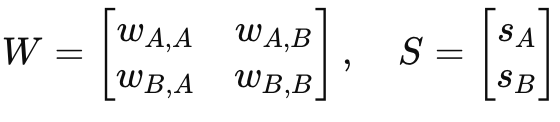
The final ranking of Miner A is:

If miner A has a high-quality AI model, wB,A will be high, resulting in higher RA and thus more rewards.
Validator Layer
Validators ensure fair evaluation of miners’ AI models, preventing collusion and malicious behavior. They act as “referees” in the network to ensure high-quality AI services.
The validator ranks the miners by calculating the trust matrix:
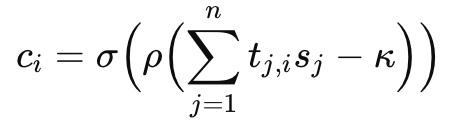
ci is the trust score of miner i.
tj,i represents the trust of miner j in miner i.
sj is the stake of miner j.
is the Sigmoid function, used for smooth scaling.
For example, suppose there are three miners A, B, and C in the network, and the trust matrix is:
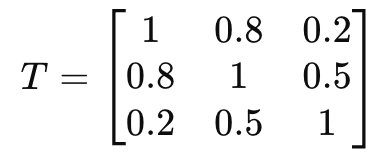
If miner A has a well-performing model, miners B and C both trust A highly.
If miner C's model is average, then miner B only slightly trusts C.
Therefore, miner A will get a higher trust score cA and thus receive more rewards, while miner C will have a lower score.
1.2.2 Consumer Layer
In the Bittensor network, consumers refer to end users or businesses who access artificial intelligence (AI) services provided by miners by paying TAO tokens. This model allows consumers to utilize the AI capabilities within the network without owning or maintaining their own AI models, reducing AI computing costs.
Specific application scenarios for consumers include:
Developers query AI API: Developers can call the AI interface provided by Bittensor to obtain the required intelligent services for application development or function integration.
Research institutions can access AI training datasets: Research institutions can use resources within the network to access and analyze large AI training datasets to support scientific research projects and experiments.
Enterprises use Bittensor's computing resources to train AI models: Enterprises can use Bittensor's decentralized computing resources to train and optimize their own AI models and improve the level of business intelligence.
In this way, Bittensor provides consumers with a flexible and efficient way to obtain AI services, promoting the popularization and application of artificial intelligence.
1.2.3 Consensus Mechanism Based on Staking
Bittensor's staking-based consensus mechanism mainly solves the following problems:
Prevent malicious rating manipulation and ensure fair rating: Iteratively correct w==fw to adjust any weight that deviates too much from the consensus (i.e., the stake-weighted average w), thereby reducing the impact of the counterparty's excessive self-rating score.
Reward high-quality AI contributors: Validators who consistently contribute high-quality outputs will maintain a high ranking even after weight corrections because their reported weights are close to the consensus value.
Game model based on pledge
We view the consensus model as a two-player game:
Honest party (protagonist) pledge: SHwith 0.5<SH≤1
Adversary (opponent) pledge: 1-SH
Both parties compete for a fixed total reward: eH+eC=1, where eH and eC are the rewards for the honest party and the adversarial party respectively.
After the rewards are distributed, the stake amount is updated to:

The honest party assigns an objective weight wH to itself and assigns 1-wH to the adversary.
In contrast, the adversary is free to choose its self-assigned weight wC at no cost to maximize the honest party’s weight expenditure:

Imagine the judges in a competition. Honest judges give fair scores, while malicious judges (adversaries) might give artificially high scores to their preferred contestants, forcing the honest party to work harder to stay competitive.
Since the honest parties have the majority stake (sH>0.5), they can implement an anonymous consensus strategy π, which adjusts all weights without knowing the identities of the players to optimize the Nash equilibrium:

The goal is to adjust the weights so that the modified weights satisfy:
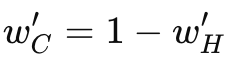
To correct the error

The basic consensus strategy is defined as:
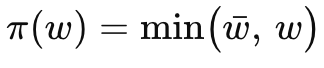
Among them, the consensus weight w is the equity-weighted average:
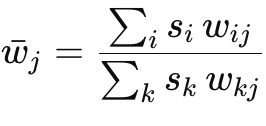
Then iterate on this strategy:

Where is the number of iterations.
It can be likened to a precisely calibrated balance. If one side is too heavy, the system will adjust repeatedly until the balance is restored. For example, when SH=0.6 and the initial wH=1, after many iterations, even if the opponent still reports a high wC (such as wC=0.8), the effective expenditure of the honest party will drop to less than 0.75.
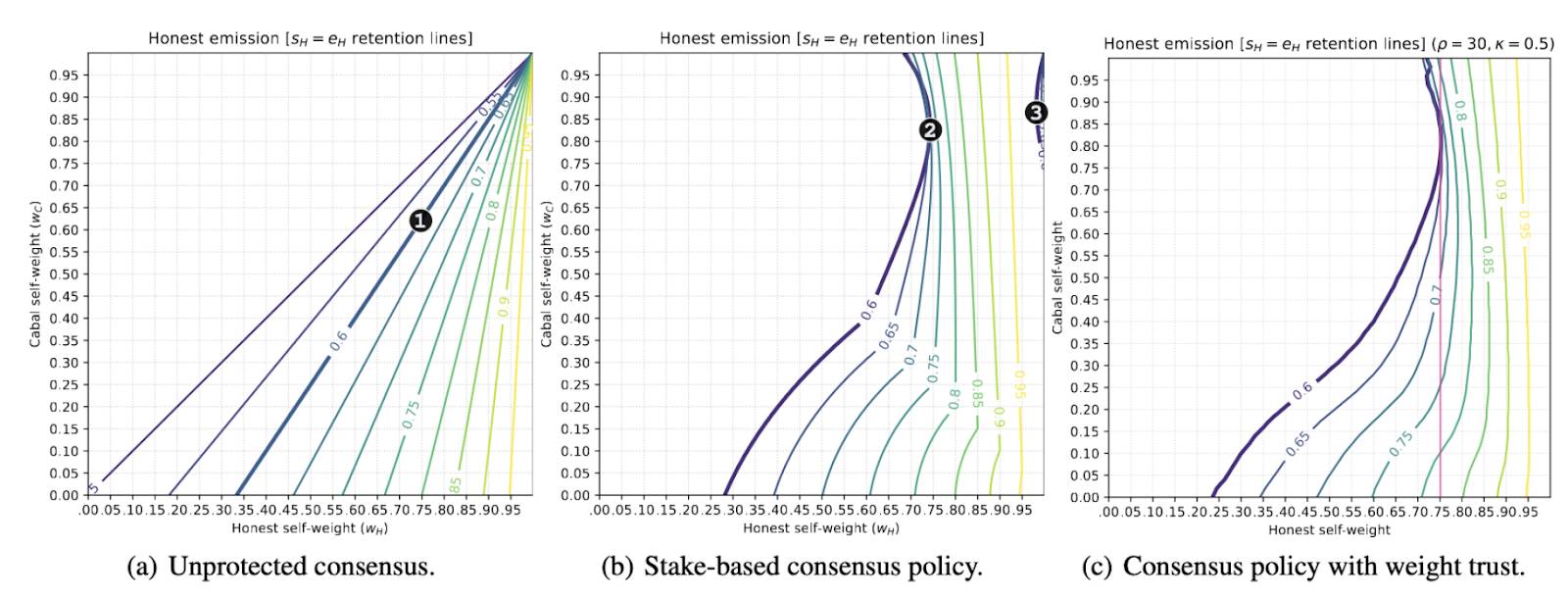
1.2.3.1 Smoothing and Density Evolution
In order to avoid abrupt corrections that may cause system instability, the correction function uses "smoothing". We define the average absolute deviation weighted by equity as:
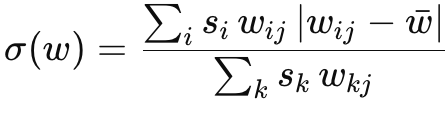
The smoothing correction is then given by:

where (controlled by the parameter (0≤α<1)) determines the degree of smoothing.
This smooth adjustment is similar to a driver braking smoothly into a turn, rather than slamming on the brakes. This gradual correction ensures that small weight differences are adjusted gently, maintaining the overall stability of the system.
When extended to a two-team game (where |H| is an honest player and |C| is an adversarial player), the weight distribution of each team can be described by the density function pw. For example, for honest players, assuming that the weight follows a normal distribution:

The distribution of adversarial players is similar. The overall density distribution of honest and adversarial teams is:

Then apply the density evolution function:

Where gw=f-1w. After η rounds of iterations, the final ranking of each player is: r_i = \int f^\eta\Bigl(p_i(w)\Bigr)\, dw .
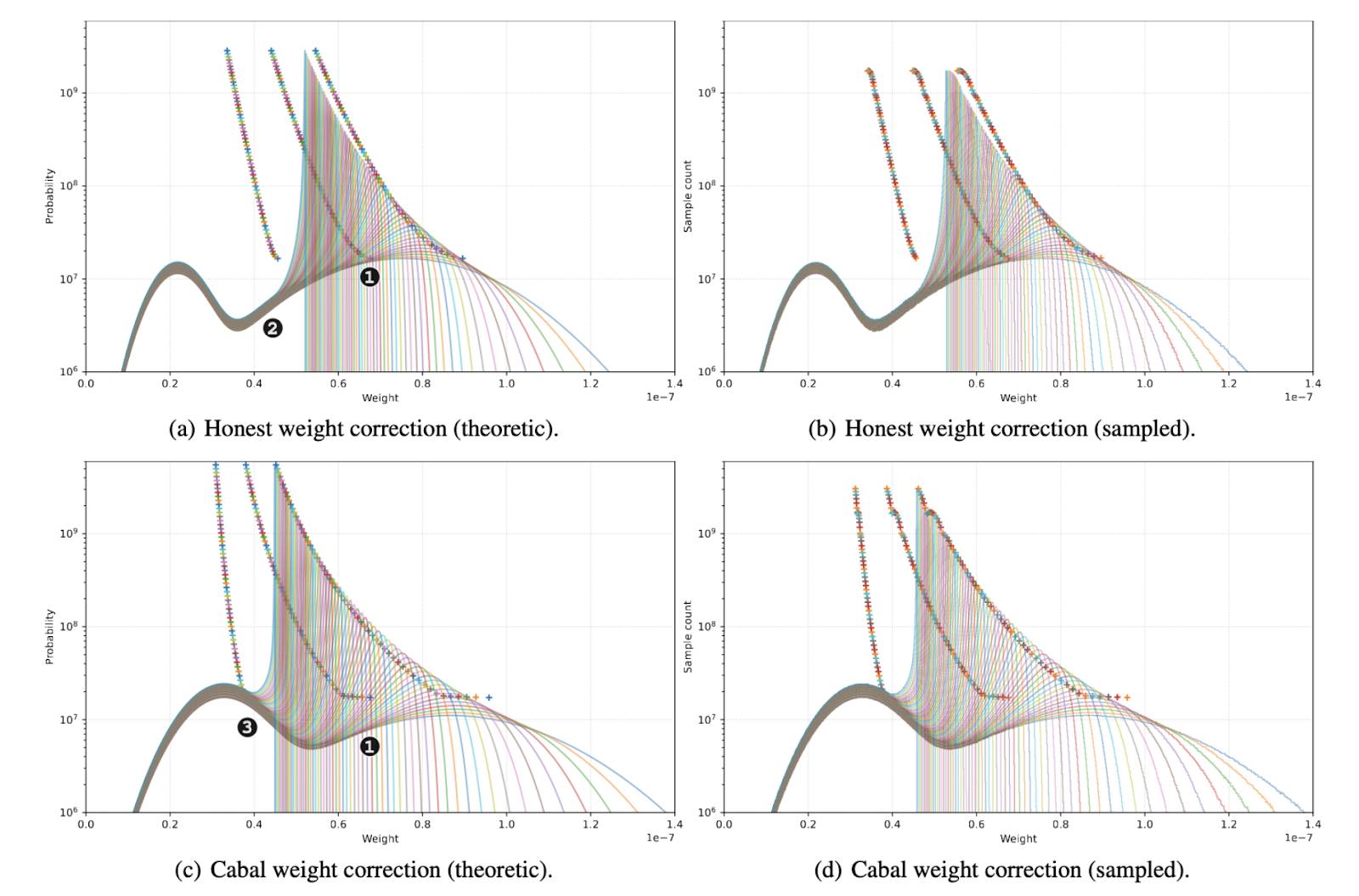
This process is similar to statistical smoothing of large data sets. After multiple rounds of "smoothing", the true ranking of each player is revealed. The key is that density evolution can compress abnormal weights (i.e., excessive weights of malicious players) to a greater extent, while having less impact on honest players.
1.2.3.2 Weighted Trust Mechanism and Zero-Weight Vulnerability Prevention
In order to prevent adversarial players from reporting weights close to zero to avoid punishment, a weighted trust mechanism is introduced. Define the trust value Tas: T=(W〉0)S
That is, the total equity of all those assigned non-zero weights. Then, a smoothing threshold is applied:
C = \Bigl(1+\exp\bigl(-\rho (T-\kappa)\bigr)\Bigr)^{-1}.
This mechanism ensures that if the majority determines that a node’s weight is zero, its rewards will be slashed.
Similar to a community reputation system - only when the majority of members recognize someone as trustworthy can that person receive full benefits; otherwise, attempts to manipulate the system by reporting zero weight will be punished.
Current challenges include:
Zero-weight vulnerabilities: Adversarial players may report extremely low or zero weights to exploit loopholes in reward distribution.
Unbalanced corrections: In some cases, corrections may be too aggressive or too mild, leading to consensus bias.
High computational complexity: Density evolution and multiple iterations involve On2 computational effort, which may burden the blockchain environment.
The dtao upgrade has made improvements to the above issues, including:
Optimize iterations and smoothing: Increase the number of iterations η and fine-tune the smoothing parameters α or δ to reduce zero-weight holes and prevent overcorrection.
Enhanced weight trust mechanism: More accurate detection of non-zero weights and application of stricter thresholds so that only nodes recognized by the majority can receive full rewards.
Reduce computational overhead: Reduce computational costs by optimizing algorithms to adapt them to blockchain computational constraints without compromising theoretical accuracy.
Bittensor's equity-based consensus mechanism combines mathematical models and game theory tools. Through methods such as updating formulas, weighted average consensus, iterative correction, and density evolution, the system can automatically calibrate abnormal weight deviations to ensure fair final reward distribution.
This process is similar to a smart balancing system or reputation mechanism that continuously self-calibrates to ensure fair scoring, incentivize good contributors, and prevent malicious collusion and vote manipulation.
On this basis, the dtao upgrade adopts more sophisticated smoothing control and improved weight trust strategy, further improving the robustness and fairness of the system. Therefore, in an adversarial environment, honest contributors can always maintain a competitive advantage, while the overall computing resource consumption is optimized and reduced.
2. Yuma Consensus: Dynamically Programmable Incentives and Consensus
Bitcoin has built the world's largest peer-to-peer computing network, where anyone can contribute local computing power to maintain the global ledger. Its incentive rules are fixed in design, causing the ecosystem to develop in a relatively static way.
In contrast, Yuma Consensus (YC) is a dynamic, programmable incentive framework. Unlike Bitcoin's static incentive mechanism, YC integrates the objective function, staking rewards, and weight adjustment mechanism directly into the consensus process. This means that the system does not rely solely on fixed rules to operate, but dynamically adjusts according to the actual contribution and behavior of the nodes, thereby achieving a fairer and more efficient reward distribution.
The YC consensus algorithm runs continuously on the Subtensor blockchain and operates independently for each subnet. Its main workflow includes the following components:
Subnet validator weight vector: Each subnet validator maintains a weight vector, where each element represents the scoring weight assigned by the validator to all subnet miners. The weight is based on the validator's historical performance and is used to rank miners. For example, if a validator's scoring vector is w=wn, the resulting ranking reflects the validator's evaluation of each miner's contribution level.
The impact of the stake amount: Each validator and miner on the chain will stake a certain amount of tokens. YC consensus combines the weight vector and the stake amount to calculate the reward distribution. That is, the final reward depends not only on the score weight, but also on the stake amount, thus forming a closed loop of "stake → weight → reward".
Dynamic Subjective Consensus: Each participant assigns a local weight to its machine learning model. These local weights are adjusted by the consensus policy and then aggregated into global metrics on the blockchain. In other words, YC is able to achieve large-scale consensus even in adversarial environments and dynamically adapt to changes in node behavior.
Reward calculation and distribution: Subnet validators collect their respective ranking results and submit them as collective input to the YC algorithm. Although the rankings of different validators may arrive at different times, Subtensor processes all ranking data approximately every 12 seconds. Based on this data, the system calculates the reward (in TAO) and deposits it into the wallets of subnet miners and validators.
This comprehensive mechanism enables YC to continuously and fairly distribute rewards in the decentralized network, dynamically adapt to the quality of contributions, and maintain the security and efficiency of the overall network.
2.1 Knowledge Distillation and Mixture of Experts (MoE): Collaborative Learning and Efficient Contribution Evaluation
2.1.1 Knowledge Distillation (Digital Hivemind)
Bittensor introduces the concept of knowledge distillation, which is similar to the collaborative work of neurons in the human brain, where nodes learn collectively by sharing knowledge, exchanging data samples and model parameters.
During this process, nodes continuously exchange data and model parameters, forming a network that optimizes itself over time to achieve more accurate predictions. Each node contributes its knowledge to the shared pool, ultimately improving the overall performance of the entire network, making it faster and more suitable for real-time learning applications such as robotics and autonomous driving.
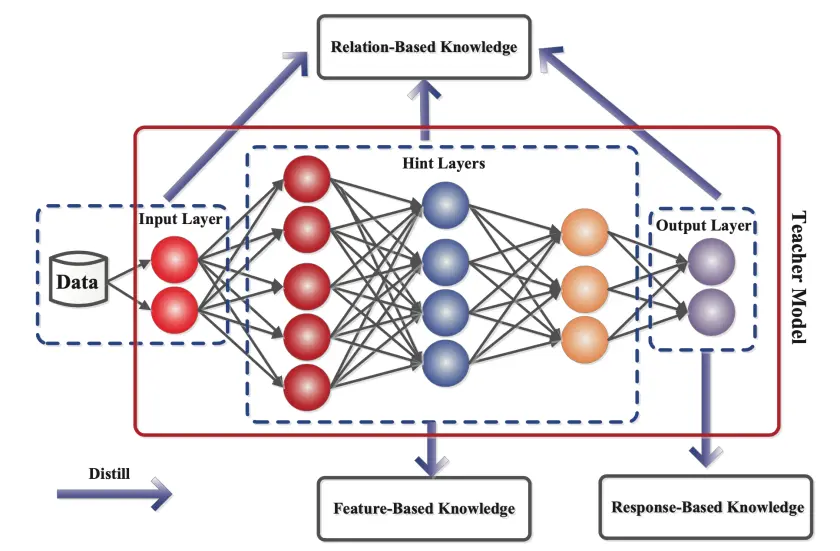
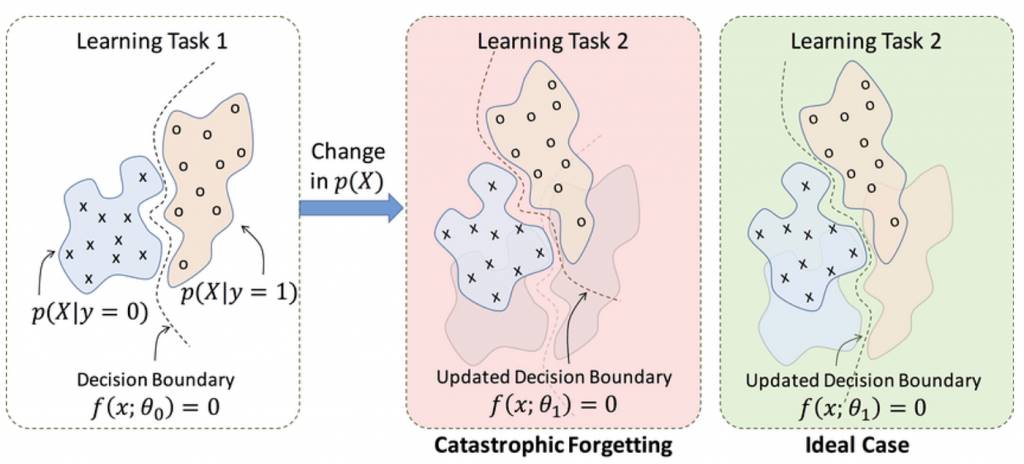
Crucially, this approach effectively mitigates the risk of catastrophic forgetting—a common challenge in machine learning. Nodes can incorporate new insights while retaining and expanding their existing knowledge, thereby increasing the network’s robustness and adaptability.
By distributing knowledge across multiple nodes, the Bittensor TAO Network becomes more resilient to interference and potential data leaks. This robustness is particularly important for applications that process highly secure and privacy-sensitive data, such as financial and medical information.
2.1.2 Mixture of Experts (MoE)
Bittensor uses a distributed expert model (MoE) to optimize AI predictions. Through the collaboration of multiple specialized AI models, the accuracy and efficiency of solving complex problems have been greatly improved. For example, when generating Python code with Spanish annotations, multilingual models and code expertise models can work together to produce high-quality results that are far superior to a single model.
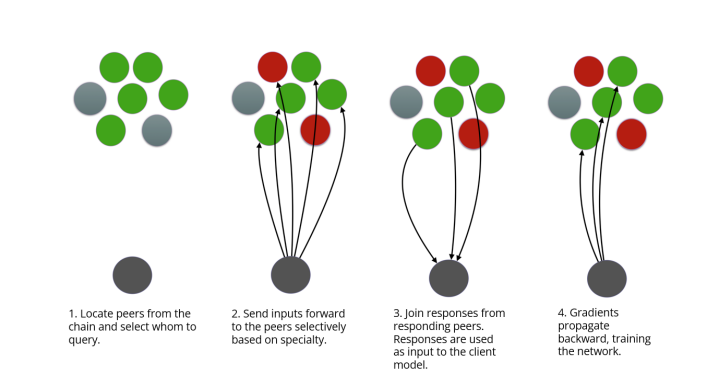
The core of the Bittensor protocol consists of parameterized functions, commonly called neurons, which are distributed in a peer-to-peer manner. Each neuron records zero or more network weights and trains a neural network to evaluate the value of neighboring nodes by ranking each other, and then accumulates the ranking scores on a digital ledger. Nodes with higher rankings not only receive monetary rewards, but also additional weights, which establishes a direct connection between node contributions and rewards, improving the fairness and transparency of the network. This mechanism builds a market that enables other intelligence systems to price information in a peer-to-peer manner over the Internet and incentivizes each node to continuously improve its knowledge and expertise. To ensure the fair distribution of rewards, Bittensor borrows the Shapley value from cooperative game theory and provides a method to efficiently distribute rewards among parties based on node contributions. Under the YC consensus, validators score and rank each professional model and fairly distribute rewards based on the Shapley value principle, further improving the security, efficiency and continuous improvement capabilities of the network.
3.dtao upgrade
The Bittensor project has the following major problems in its resource allocation and economic model design:
Resource Overlap and Redundancy: Multiple subnetworks focus on similar tasks, such as text-to-image generation, text prompts, and price prediction, resulting in duplication and waste of resource allocation.
Lack of real-world use cases: Some subnetworks, such as price prediction or sports outcome prediction, have not yet proven their usefulness in real-world scenarios, which may lead to a mismatch between resource investment and actual demand.
"Bad money drives out good money" phenomenon: high-quality subnets may find it difficult to obtain sufficient funds and development space. Due to the seven-day protection period, subnets that fail to obtain sufficient support from root validators may be eliminated prematurely.
Validator centralization and insufficient incentives for new subnets:
Root validators may not fully represent all TAO holders, and their evaluation results may not reflect a broad range of views. Under Yuma consensus, top validators dominate the final score, but their evaluations are not always objective. Even if bias is discovered, it may not be corrected immediately.
In addition, validators lack the incentive to migrate to new subnets, as moving from an old subnet with high issuance to a new subnet with low issuance may result in an immediate loss of rewards. The uncertainty of whether the new subnet will eventually match the token issuance of the established subnet further reduces their willingness to migrate.
The main problems with the economic model:
A major problem in Bittensor's mechanism design is that although all participants receive TAO, no one actually pays TAO, which leads to continuous selling pressure. Currently, the questions answered by miners are not asked by real users, but provided by subnet owners - either simulating real user queries or based on historical user demand. Therefore, even if the miners' answers have value, these values are captured by the subnet owners. Whether the miners' answers help the subnet owners improve their model algorithms or are directly used by the subnet owners for model training to improve their products, the value generated by the work of miners and validators is owned by the subnet owners. In theory, subnet owners should pay for this value.
In addition, not only do subnet owners incur no costs, they also enjoy 18% of the subnet issuance. This means that the Bittensor ecosystem is not tightly connected - participants are loosely connected based on development and collaboration. Projects on subnets can exit at any time without suffering any losses (because subnet registration fees are refunded). Currently, the main mechanism for recovering tokens in the Bittensor system is the registration fees paid by subnet miners and validators; however, these fees are small and insufficient to support effective value capture. Although staking has become the main mechanism, the amount of TAO recovered through blockchain transaction fees and registration fees is still limited.
There are two forms of staking:
Validator Staking: Participants stake TAO to support network security and receive rewards, accounting for 75% of all issued TAO. Validators currently receive approximately 3,000 TAO per day, an annualized return of more than 15%. However, after the first halving, this allocation will drop to 1,500 TAO per day, reducing the attractiveness of staking and weakening its effect in balancing token supply and demand.
Subnet Registration Staking: The addition of new subnets significantly affects TAO supply. This poses a challenge because the total issuance of TAO is fixed; an increase in the number of subnets will dilute the rewards of all subnets, making it difficult for existing subnets to maintain operations, and may cause some subnets to exit the network.
These issues indicate that Bittensor’s resource allocation and economic model design need to be further optimized to ensure sustainable development and fair incentives for the network.
3.1 What is dtao
dTAO is an innovative incentive mechanism proposed by the Bittensor network, which aims to solve the problem of inefficient resource allocation in decentralized networks. It abandons the traditional way of manually voting by validators to determine resource allocation, and instead introduces a mechanism based on market dynamic adjustment, which directly links the distribution of TAO issuance among subnets with the market performance of subnet tokens. Through the design of embedded liquidity pools, it encourages users to pledge TAO in exchange for subnet tokens, thereby supporting subnets with outstanding performance.
At the same time, a fair issuance model is adopted to ensure the gradual distribution of subnet tokens, prompting the team to obtain token shares through long-term contributions, and balancing the roles of validators and users. Validators strictly evaluate the team's technology and market potential like venture investors, while users further promote the formation of subnet value through staking and market transactions.
3.1.1 Core Mechanism of dTAO
3.1.1.1 Strongly bind the validator and the team to the ecosystem: To gain benefits, you must first invest in subnet tokens
The design of dTAO is driven by both market and technology. Each subnet is equipped with a liquidity pool consisting of TAO and subnet tokens. When $TAO holders (validators and subnet owners) perform a pledge operation, it is equivalent to using $TAO to purchase the corresponding $dTAO. The amount of $dTAO that can be exchanged is calculated according to the following formula:

When exchanging, the pricing mechanism of $TAO and $dTAO follows the same constant product formula as Uniswap V2: τ*α=K
Where τ represents the amount of $TAO and α represents the amount of $dTAO. Without additional liquidity injection, no matter how much $TAO is used to exchange for $dTAO or how much $dTAO is exchanged for $TAO, the value of K will remain unchanged. Vice versa, when a $dTAO holder performs a pledge removal operation, which is equivalent to using $dTAO to purchase $TAO, the amount of $TAO that can be exchanged is calculated according to the following formula:

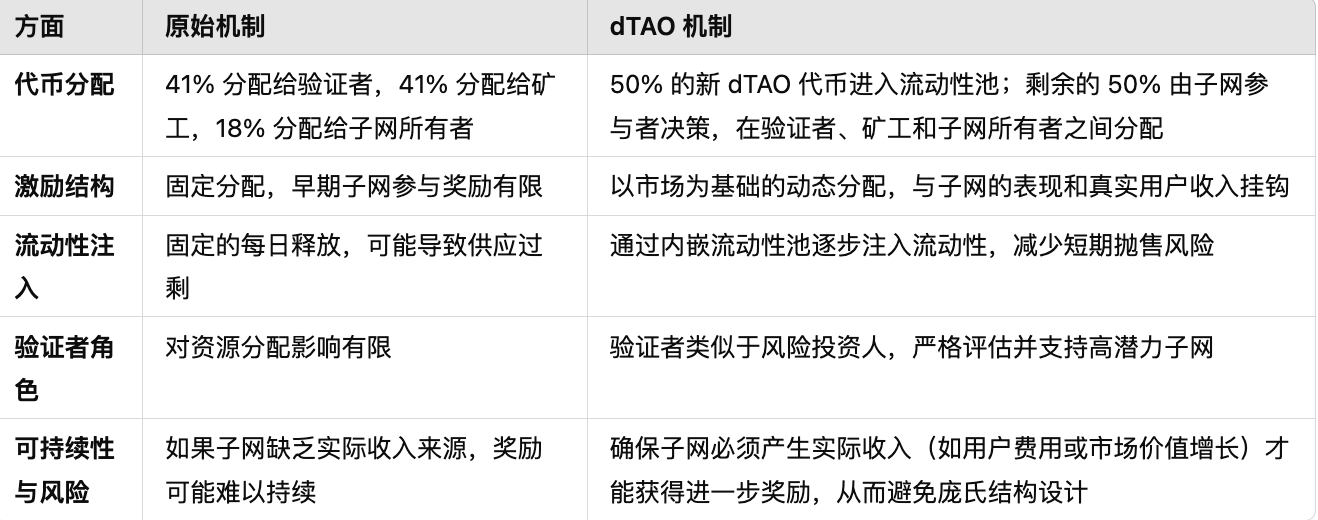
Unlike Uniswap V2, $dTAO's liquidity pool does not allow for direct addition of liquidity. Except when a Subnet Owner creates a Subnet, all newly injected liquidity comes entirely from the $TAO allocated to it and 50% of the total $dTAO issuance. In other words, the newly issued $TAO allocated to each Subnet is not directly allocated to the Validator\Miner\Owner of the Subnet, but is all injected into the liquidity pool for redemption; at the same time, 50% of the newly issued $dTAO is also injected into the liquidity pool, and the remaining 50% is allocated to the Validator\Miner\Owner according to the incentive mechanism agreed upon by the Subnet itself.
This prevents the team from quickly selling off a large amount of coins initially, and encourages the team to continue to contribute and iterate technology. Validators need to play a role similar to venture capitalists and conduct strict evaluations of the subnet’s technology, market potential, and actual performance.
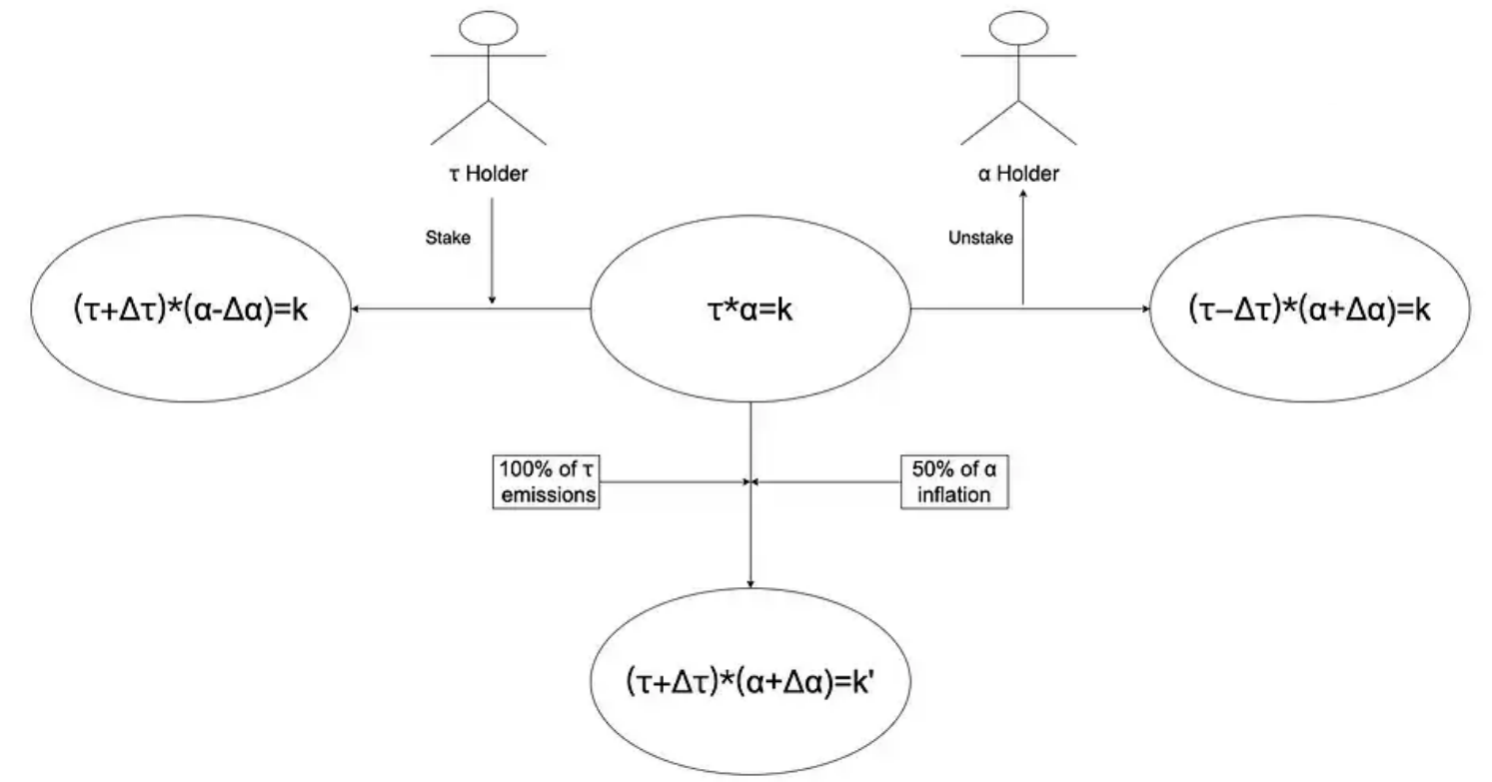
Stake\Unstake will not change the size of K, while liquidity injection will increase K to K'
3.1.1.2 The Subnet Token with the highest market price will receive the most $TAO emissions
In the previous scheme, the proportion of newly issued $TAO that each Subnet can obtain is determined by the Validator of the Root Network. This scheme exposes some potential problems. For example, since the power of the Root Network is concentrated in the hands of a few Validators, even if the Validators collude to distribute the newly issued $TAO to low-value Subnets, they will not be punished.
Dynamic TAO terminates the privileges of the Root Network and gives the power to decide how to distribute the newly issued $TAO to all $TAO holders. The specific approach is to use the new Yuma Consensus V2 to perform a softmax operation on the price of each Subnet Token to obtain the corresponding release ratio, namely:
|
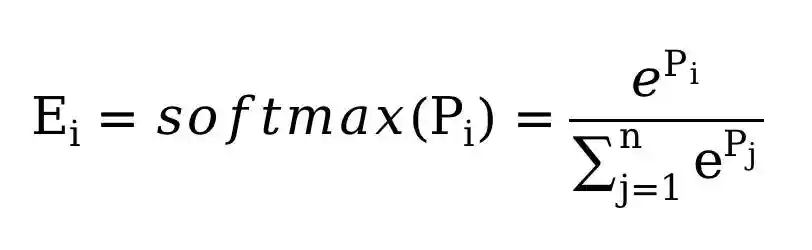
Softmax is a commonly used normalization function that can convert each element in a set of vectors into a non-negative value while retaining the relative size relationship between the elements and ensuring that the sum of all elements after conversion is 1.
Where P is the price of $dTAO relative to $TAO, calculated by dividing the amount of $TAO in the liquidity pool by the amount of $dTAO.
According to the formula, the higher the price of a Subnet Token relative to $TAO, the higher the release ratio of newly issued $TAO will be.
3.1.1.3 Decentralize the power to set incentive mechanisms to each Subnet
The $TAO incentives previously obtained by the Subnet are distributed to Validator\Miner\Owner at a fixed ratio of 41%-41%-18%.
Dynamic TAO gives each Subnet the power to issue its own "Subnet Token" and stipulates that in addition to 50% of the additional issuance amount that must be injected into the liquidity pool, the remaining 50% will be distributed to Validators\Miners\Owners according to the specific mechanism, which is decided by the Subnet participants themselves.
This mechanism also ensures that only subnets that continuously improve products and attract users can obtain more incentives, preventing the emergence of a Ponzi scheme to drive short-term profits.
3.1.2 Example Analysis
After the Dynamic TAO network upgrade, all subnets have now minted corresponding $dTAOs, and the number of $dTAOs created is equal to the number of $TAOs that the Subnet Owner has locked when creating the Subnet. Among them, 50% of the $dTAOs are injected into the liquidity pool of the Subnet, and the remaining 50% are allocated to the Subnet Owner.
Assuming that the owner of Subnet #1 has locked 1,000 $TAOs, the creation quantity of $dTAOs is also 1,000. Among them, 500 $dTAOs and 1,000 $TAOs are added to the liquidity pool as initial liquidity, and the remaining 500 $dTAOs are allocated to the owner.
Next, when a validator comes to Subnet #1 to register and stake 1,000 $TAO, the validator will receive 250 $dTAO. At this time, there will be 2,000 $TAO and 250 $dTAO left in the liquidity pool.
Assuming that Subnet #1 can obtain 720 $TAO block rewards every day, then 720 $TAO will be automatically injected into the liquidity pool every day. The amount of $dTAO injected every day depends on the issuance rate set by the Subnet.
3.2 Impact of dtao
The introduction of dTAO fundamentally reshapes the distribution and staking mechanism of TAO. First, the newly issued TAO is no longer arbitrarily allocated by a few validators, but is indirectly jointly determined by all TAO holders through market behavior, which makes staking TAO more like "buying" a certain Subnet's token rather than simply a guaranteed return. Under this mechanism, the impact of staking and unstaking on the price of dTAO in the short term far exceeds the effect of the actual number of TAOs obtained by the Subnet, which makes the staking income full of uncertainty.
The benefit is that the absolute control of top validators over the allocation of block rewards disappears, greatly increasing the cost for potential attackers to attack the network through the amount of staked tokens; at the same time, late-developing high-quality subnets have a greater chance of standing out, and the return potential of early validators supporting high-quality subnets is extremely high, and may even achieve several times the return of the principal. In addition, the intensified competition between subnets will drive stakers to become more rational investors, and select the subnets with the best prospects through rigorous due diligence.
In general, the implementation of the dTAO mechanism will drive the entire ecosystem towards a more efficient, competitive and market-oriented direction.
3.3 How will the Bittensor ecosystem evolve after the dTAO upgrade?
To analyze the impact of dTAO upgrades, we need to focus on two key questions:
How does subnet demand translate into demand for subnet tokens?
Will the introduction of subnet tokens create a “TAO Summer” and accelerate innovation within the TAO ecosystem?
3.3.1 How does subnet demand translate into demand for subnet tokens?
Initially, all subnet tokens will have the same price, and each subnet’s liquidity pool will contain only a small amount of TAO and dTAO tokens. Therefore, any trading activity may cause significant price fluctuations.
In order to participate in a subnet and receive rewards, users must first purchase dTAO subnet tokens and stake them to validators, a demand that drives up the price of dTAO within that subnet. As the price of dTAO rises, the total value of dTAO in the liquidity pool increases, and the system automatically allocates more TAO rewards to that subnet, enabling miners and stakers to receive higher returns.
This creates a positive feedback loop: users buy dTAO, pushing up the price ➡️ the price increase leads to more TAO issuance for the subnet ➡️ more rewards attract additional users ➡️ further pushing up the dTAO price
On the contrary, if users start to sell off dTAO in large quantities, its price will drop, resulting in a decrease in the issuance of TAO for the subnet, thereby reducing user participation. In general, the fluctuation of subnet token prices is mainly affected by market supply and demand, the size of the liquidity pool, and the system's automatic incentive mechanism.
This mechanism is similar to the AI Agent Launchpad model, where users first need to purchase platform tokens to invest in AI Agent tokens. In the AI Agent Launchpad ecosystem, once the price of an AI Agent token rises rapidly and generates a wealth effect, a large number of users will flock in, further pushing up the demand for platform tokens.
However, there are some key differences between the dTAO mechanism and the AI Agent Launchpad:
In the AI Agent Launchpad ecosystem, users typically use platform tokens to purchase these AI Agent tokens only when the market value of AI Agent tokens is low (i.e. in the project's internal market).
Once the AI Proxy Token reaches a certain valuation, users can sell it for ETH/SOL to realize a profit, and new users can also directly use ETH/SOL to purchase AI Proxy Tokens.
In contrast, in the dTAO system:
When the price of dTAO increases and users want to cash out or migrate to another subnet with higher potential, they can only redeem dTAO for TAO.
This process may lead to large fluctuations in the dTAO price within the liquidity pool.
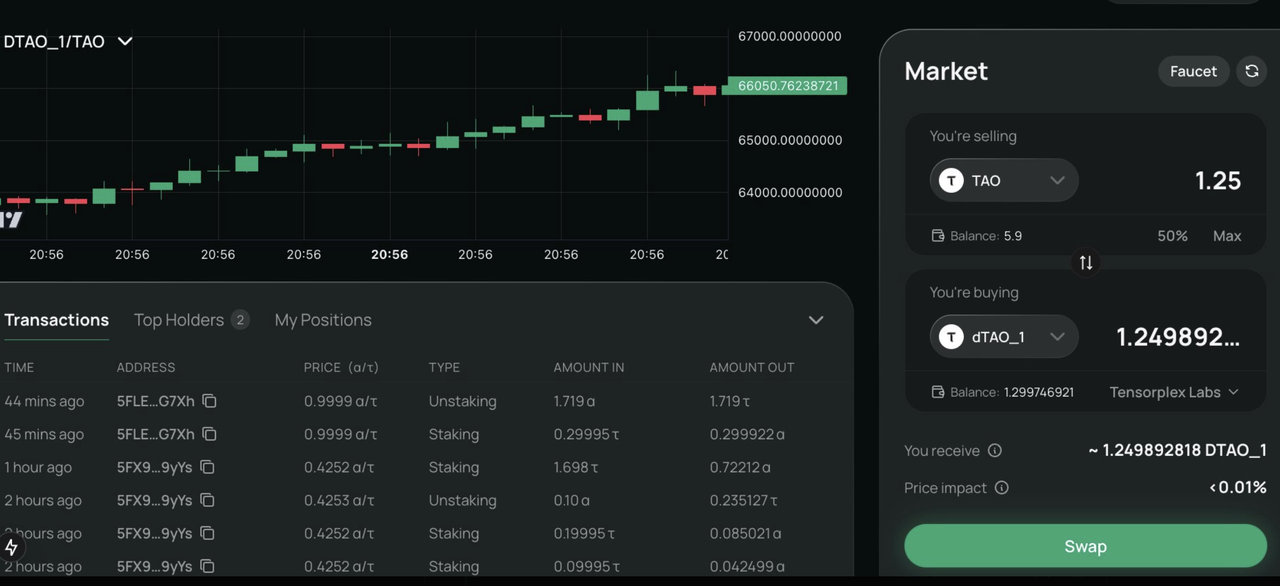
Currently, users can trade dTAO tokens on Backprop Finance, providing secondary market liquidity for subnet tokens.
3.3.2 Unique issuance mechanism of dTAO ecosystem
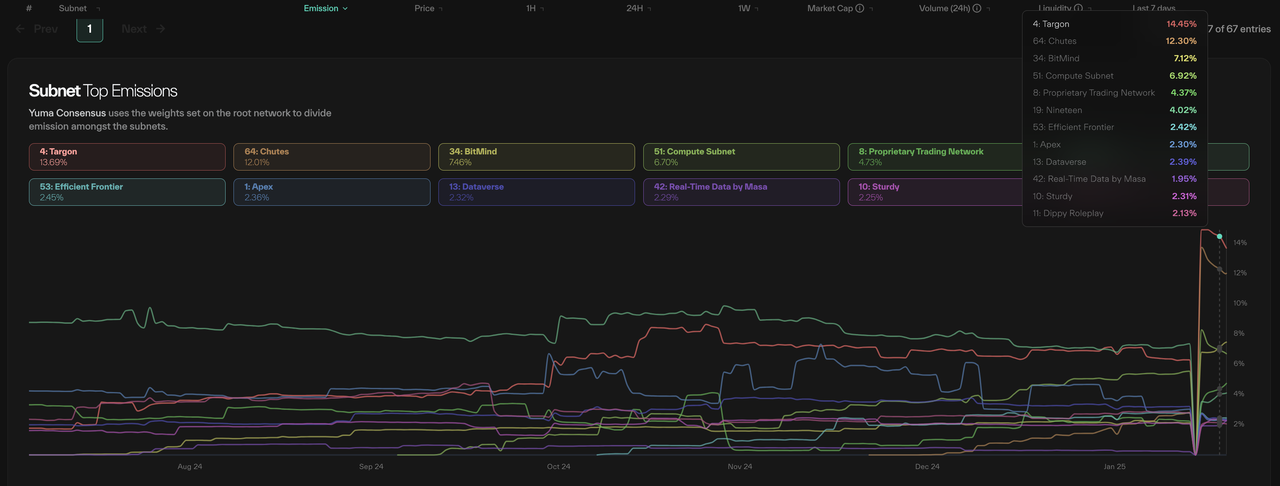
Another key aspect of the dTAO ecosystem is its unique token issuance mechanism. As shown in the figure below, after the dTAO upgrade, the issuance is highly concentrated in the first few subnet projects. The first five subnet projects currently receive 40% of the total issuance.
Currently 7,200 TAO are distributed every day, which, based on the TAO price on February 18, 2025, means that the top five subnet projects will receive approximately $1 million worth of TAO each day individually.
If the dTAO ecosystem develops in a similar way to the Virtual ecosystem, where certain projects gain significant market attention, then the high-market-cap subnets will account for the vast majority of new TAO issuance.
For new projects to win the competition, they must demonstrate strong potential to attract stakers, miners, and validators. This usually means:
Participants need to migrate from other subnets and exchange their TAO for dTAO of the new subnet.
This may involve selling off subnet tokens in existing liquidity pools, thereby increasing the market value of the new subnet.
This competition model may make the subnet token market more active and further promote the innovation and development of the entire TAO ecosystem.
3.4 Does dTAO solve the problems in the Bittensor subnet model?
3.4.1 Mechanism issues still exist
The dTAO upgrade links TAO issuance to the market performance of subnet tokens, shifting resource allocation decisions from a few root validators to a market-driven approach designed to incentivize broader user participation and interaction. While this mechanism partially alleviates the inefficiency caused by resource overlap, ensuring that only high-performance subnets with strong token price performance can receive more TAO rewards, it does not fundamentally address the following key issues:
Resource overlap and redundancy: If multiple subnetworks focus on similar tasks (such as text generation, image generation, or price prediction), even with market-driven adjustments, resource duplication and inefficient utilization are still not fundamentally resolved.
While all participants can earn TAO, no external users pay miners and validators for their contributions. This leads to continued selling pressure on TAO as rewards continue to be issued without a sustainable demand mechanism to support TAO prices.
Some subnets may have problems with fake models and imperfect evaluation standards: Bittensor is evolving into an "outsourcing layer" in the AI technology stack, where token incentives quickly attract resources and drive the allocation of specific AI tasks. For example, Kaito AI outsourced the development of its search engine to a subnet, using collective intelligence to reduce costs. However, while this incentive-driven model can attract developers in the short term, long-term success still depends on real demand and quality assurance. When testing the Cortex.t subnet, it was found that its answers came directly from the OpenAI API, rather than being generated by Bittensor miners. This shows that some subnets are just "wrapped applications" and do not really utilize Bittensor's decentralized AI computing power. Some subnet validators rely on OpenAI results for comparison, which may lead to centralization risks. At the same time, some price prediction subnets have low accuracy and are difficult to apply in practice.
Improvement direction: Improve practicality and transparency:
Miners should submit intermediate data or hash proofs to verify their model training and inference process, ensuring that the output does come from the Bittensor network rather than an external API.
Standardized test datasets should be established for benchmarking different types of subnetworks (e.g., predictive models, generative AI models).
Benchmark rankings are published regularly to promote healthy competition among subnetworks and improve model quality.
3.4.2 dTAO still faces problems of adoption, lack of application scenarios and declining pledge rate
Currently, dTAO is mainly limited to the Bittensor network and has not yet gained sufficient adoption in the wider crypto market. Although dTAO introduced EVM compatibility, it did not generate the same level of popularity on social media as the AI Agent token of the Virtual ecosystem. At the same time, almost no projects have incorporated dTAO into their core token economic model, resulting in dTAO still lacking real application demand. At present, purchasing subnet tokens is more like a one-time investment behavior, which may cause large price fluctuations when users choose to cash out. This problem is particularly evident in AI infrastructure outsourcing subnets, such as Kaito's dTAO tokens, which are almost unrelated to its core business, making its tokens lack market value support.
Despite this, dTAO still has certain advantages over AI Agent Launchpad. According to the dTAO economic model, 50% of newly issued dTAOs must be injected into the liquidity pool, and the remaining 50% is allocated by subnet participants (including validators, miners, and subnet owners). This mechanism ensures that only subnets that continue to improve products and attract users can get more rewards, thereby avoiding the proliferation of low-quality AI agents and promoting technological innovation in the TAO ecosystem. However, since the dTAO ecosystem is still in its early stages, the audience range has not yet expanded, and there is a lack of large-scale application scenarios, so its market recognition is still low.
Currently, the expansion speed of the Bittensor ecosystem fails to match the demand for token economic growth. According to the latest data, the staking rate of TAO has dropped from a peak of 90% to 71%. This shows that some holders lack confidence in the long-term incentive mechanism of the network and may turn to other DeFi or AI ecological projects with more attractive returns.
3.5 Pay attention to subnet projects that are closely integrated with the Bittensor ecosystem and have practical use cases
The healthy development of the Bittensor ecosystem depends on whether it can attract and support high-quality subnets. To evaluate the long-term potential of a subnet, it is necessary to focus on its application scenarios, incentive mechanisms, team background, and the actual use of tokens.
First, the subnet must have clear and practical application scenarios. A successful project not only needs to solve real-world problems, but also obtain feedback from real users. The technical architecture needs to be robust and innovative, capable of supporting distributed AI model training and reasoning. In addition, the subnet should utilize on-chain data and adopt a transparent evaluation mechanism to demonstrate its contribution to the Bittensor ecosystem.
Secondly, a reasonable incentive mechanism is the key to maintaining the long-term operation of the subnet. The incentive structure should be fairly distributed to miners, validators, and subnet owners to avoid market selling pressure due to lack of sustained application demand. The subnet needs to be able to generate its own blood through the business model, rather than relying solely on TAO issuance for incentives.
In addition, a successful subnet project often has a strong team background, ecological integration capabilities, and community support. Prioritizing Bittensor native subnets rather than simply AI outsourcing subnets can ensure the long-term stability of the entire ecosystem. For outsourcing projects, the key is whether its subnet tokens are truly integrated into the core token economic model, rather than just an incentive tool.
Finally, the actual use of subnet tokens is the core of determining their long-term value. At present, almost no projects have actually incorporated subnet tokens into their operating systems, and dTAO is still in its early stages. If subnet tokens can be used for payment, access to AI services, participation in governance, or to provide additional incentives, real market demand can be established to ensure long-term value and ecological health. Otherwise, subnet tokens will still be purely speculative assets, prone to market fluctuations, and ultimately difficult to attract long-term users and developers.
4. Economic Model
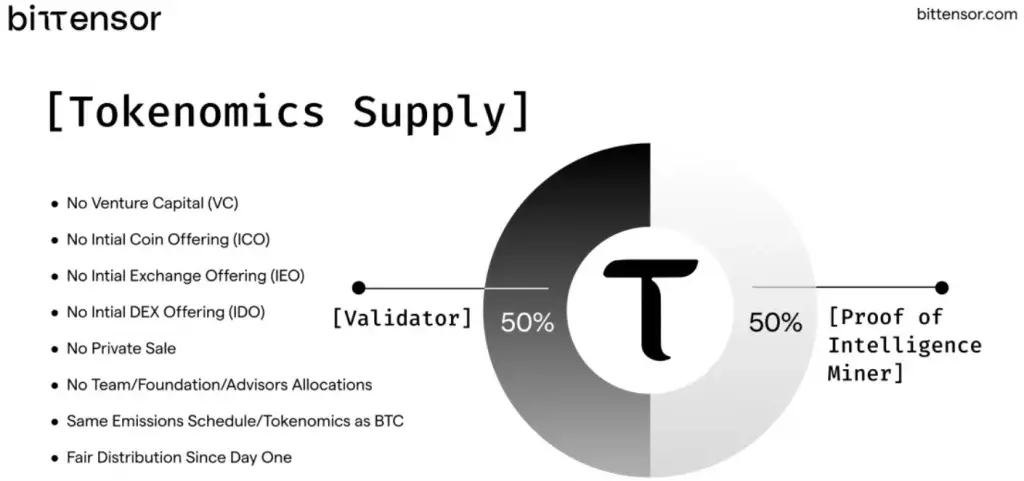
All TAO token rewards are newly minted, and similar to Bitcoin, Bittensor's TAO uses the same token economics and issuance curve as Bitcoin, with a total supply cap of 21 million, which is halved every 4 years.
Bittensor uses a fair launch method, no pre-mining or ICO, and every circulating token must be earned through active participation in the network. The network currently generates 7,200 TAOs per day (1 TAO per block, about one every 12 seconds), following a programmatic issuance schedule: when half of the total supply is distributed, the issuance rate is halved, and this process occurs approximately every 4 years and continues at half the nodes each time until all 21 million TAOs are in circulation.
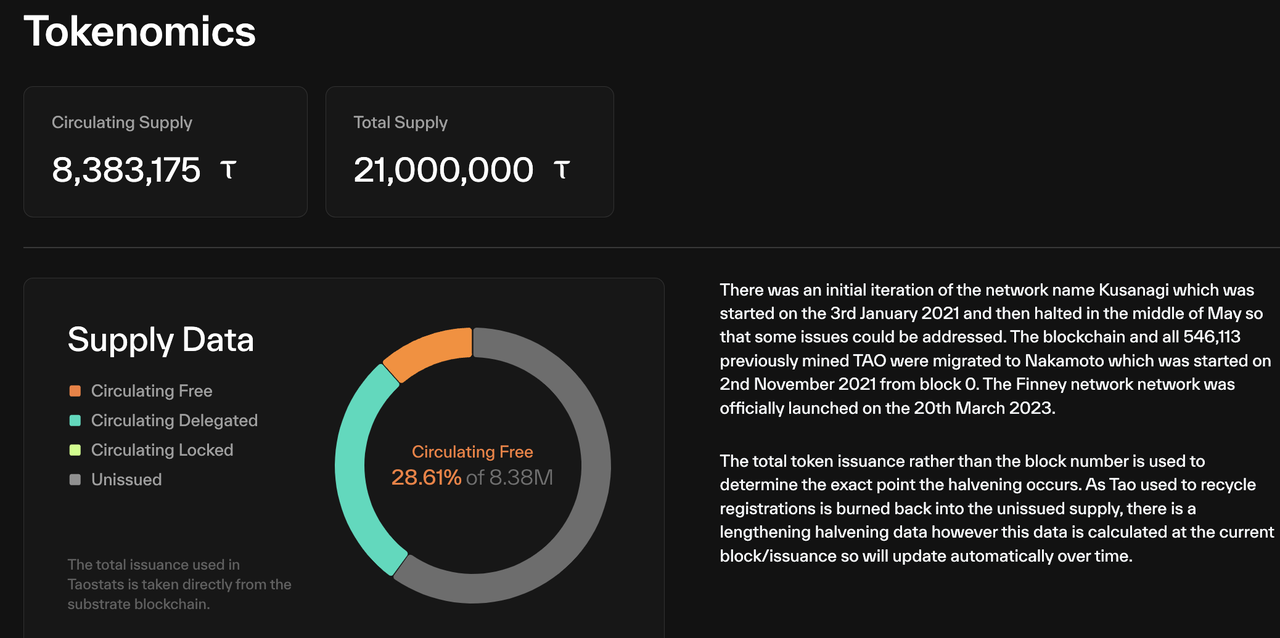
Although TAO's issuance curve is similar to that of Bitcoin, due to the introduction of a recycling mechanism, the planned halving date of the Bittensor network (launched on January 3, 2021) is expected to be postponed to December 2025 according to taostats' token recycling data.
About HTX Research:
HTX Research is the dedicated research division of HTX Group, responsible for in-depth analysis, comprehensive reporting, and professional evaluation of a wide range of areas including cryptocurrencies, blockchain technology, and emerging market trends. HTX Research is committed to providing data-based insights and strategic foresight, playing a key role in shaping industry perspectives and supporting informed decision-making in the digital asset space. With rigorous research methods and cutting-edge data analysis, HTX Research always stays at the forefront of innovation, leading the development of industry thought, and promoting a deeper understanding of changing market dynamics.
refer to:
https://bittensor.com/content/consensus_v2
https://learnbittensor.org/subnets
https://taostats.io/subnets