Another year's carnival, but the conference has already deteriorated.
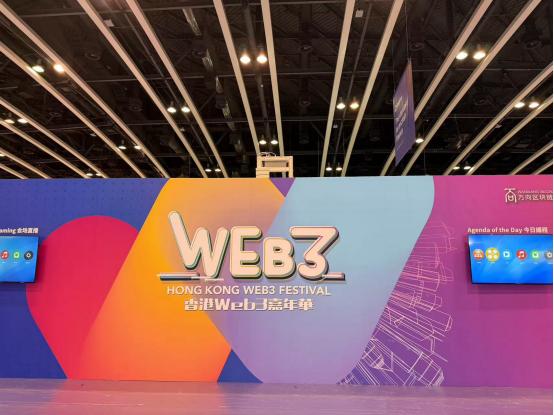
From April 6th to 9th, the "2025 Hong Kong Web3 Carnival" hosted by Wanxiang Blockchain Laboratory and HashKey Group was held at the Hong Kong Convention and Exhibition Centre. This is the third carnival since the declaration was issued in 2022. According to the official press release, this four-day industry event gathered nearly 400 top experts and industry leaders from global technology, finance, security, and entertainment fields. With government support and high standards, the exhibition area increased by 50% compared to last year. However, from the on-site perspective, except for a slight increase on the third day, the overall conference seemed to lack popularity.
Multiple attendees reported that the overall foot traffic was almost halved compared to previous years, with fewer than 100 booths, a significant reduction from over 150 last year and far behind the 300 booths at last year's Singapore Token2049. Some even joked about inviting elderly local Hong Kong residents to boost attendance, dubbing it "the coldest conference ever". The reasons are multifaceted: first, the conference coincided with a tariff war with poor market performance, highlighting the bear market nature and reducing participation enthusiasm; second, the Consensus conference in February somewhat preempted the event, with many previous attendees not returning to Hong Kong; third, the lack of highlights and innovation in the industry, with participants more focused on prices than technology, making attendance merely a social gathering for ordinary users.
Booths are a symbol of strength, and booth popularity reflects concentrated attention. Among this year's conference booths, OKX undoubtedly had the most prominent and largest booth. Exchanges remain the main sponsors, with OKX being the core contributor to foot traffic, followed by the Chinese MEME sensation GMGN. In terms of hot topics, Payfi remained the center of attention. Traditional funds have made significant contributions in this area, with discussions involving HSBC, ZAbank, and booths from Shanghai Data Exchange and Bosera Fund. The former focused on RWA, while the latter is closely related to current digital currency funds, possibly inspired by Huaxia Fund's (Hong Kong) "Huaxia Hong Kong Dollar Digital Currency Fund".
Interestingly, apart from Payfi and MEME, previously popular concepts seemed quiet at the main venue. The DePin track was neglected, with only a mechanical dog representing AI concepts. Solana and Sui, which were highly popular at the Consensus conference, had minimal exposure at the main venue, possibly due to low token prices. TON, after experiencing founder controversies, no longer claimed to be on the "eve of explosion", returning to the exhibition area with reduced popularity. This aligns with reality, as rumors suggested multiple chain game projects abandoning TON. The BTC ecosystem was completely ignored, with BTCFi achieving nothing, seemingly becoming a "false proposition" in the market.
From the participants' perspective, KOLs became the primary attendees, with some netizens joking that the "Hong Kong conference is a KOL talent market". In contrast, VCs took a backseat, reminiscent of their absence at the Hong Kong Consensus conference and their previous high-profile stance, reflecting rapid changes in the industry ecosystem.
While the main venue lacked popularity, side events were bustling. Among over 100 side events, besides technical forums and hackathons, various yacht parties and nighttime events attracted crowds. Binance, OKX, and Bitget pulled out all stops to gather crowds. After socializing and networking, WeChat connections were made, with many discussing resource exchanges, get-rich dreams, and rumors. Consistently, Chinese participants remained the core group, with overseas attendance further declining this year.
Overall, the most talked-about aspect was the gathering of Chinese industry leaders.
At the BUIDL 2025 event, CZ, Justin Sun, and Li Lin - ancient Chinese OGs - gathered together, showcasing a rare "burying the hatchet" moment. Just two months ago, Justin Sun accused Li Lin of concealing due diligence materials, engaging in a public war over Huobi's alleged $30 million financial hole. Two months later, photos of them toasting and embracing went viral. CZ and Justin Sun, as founders of Binance and Tron respectively, also maintained a subtle competitive relationship. Recently, Justin Sun complained that First Digital Trust (FDT) was insolvent, though unrelated to Binance, it reignited discussions about protecting large holders at the expense of small investors. Regardless, their friendly interaction and warm embrace were surprising. Besides these OGs, Shen Bo, Cai Wensheng, and others also appeared, leaving the market to speculate about the purpose of these ancient leaders' collective comeback.
Unlike the popular Chinese leaders, Vitalik represented a completely different state. With ETH dropping below $1,500 and token prices in dire straits, Vitalik received nothing but criticism and blame. In a magical scene, while Vitalik confidently presented Ethereum as the world's computer on stage, the audience was collectively thinking about when the price would rise. The conflict between the technical and price-focused factions was barely contained. Interestingly, some industry insiders on X noted that CZ was more popular than Vitalik when they appeared simultaneously. The flow of crowds follows liquidity, indirectly reflecting shifting beliefs. Perhaps, compared to Vitalik, CZ, with more of a "internet celebrity" feel, currently has greater crowd influence. After all, in the on-site price predictions, 800 had become a common figure for ETH, while BNB still had shilling potential.
Overall, from the ambitious spirit of 2023 to the crowded scene of 2024, and now the cooling atmosphere, Hong Kong has witnessed BTC's journey from $17,000 to $100,000 and then falling back to $82,000, experiencing the entire process from bear market to bull market and the intersection between them. The conference perfectly reflects the industry's current status. Lack of hot spots and innovation, and insufficient real applications seem to have been deliberately overlooked. The bear market has initially taken shape, with exchanges anxiously attracting new users, project teams lamenting, retail investors stubbornly holding onto Altcoins, and VC's bullets nearly exhausted. However, the bear market is not without advantages - less noise, lower costs, and a crucial period for product refinement, which is conducive to outstanding projects emerging. On the other hand, the circulation of new assets and money flow are key, with traditional and emerging sectors converging, and regulation continuously improving, presenting both opportunities and challenges. But returning to the conference itself, gossip flying everywhere and social interactions being paramount still represent the current situation, with mysteries like Justin Sun's girlfriend and viral "egg literature" spreading, and the bustling crowd with diverse thoughts, with mismatches seemingly reflecting the industry's development.
Turning to Hong Kong, although Web3 development has not been entirely satisfactory for various reasons, the ecosystem has initially taken shape. From a policy perspective, whether it's RWA pilot programs or stablecoin regulation, Hong Kong remains at the forefront of Web3 openness globally. At the conference, Christopher Hui stated that the Hong Kong Financial Services and the Treasury Bureau and the Hong Kong Monetary Authority are establishing regulatory frameworks for stablecoin issuers. The second policy statement regarding virtual asset development will be published this year. To date, the government has allocated 50 million Hong Kong dollars to support Cyberport in building the Web3 ecosystem and attracting numerous Web3 enterprises to settle in Hong Kong.
According to Christopher Hui, the deputy secretary of the Hong Kong Financial Services and the Treasury Bureau, as of September last year, Hong Kong had over 1,100 fintech enterprises, with an annual growth of over 15%, covering diverse fields including digital banks, virtual insurance, and virtual asset education platforms, including 8 licensed digital banks, 4 licensed virtual insurance companies, and 10 licensed virtual asset education platforms.
Policies have followed suit. On April 7th, the Hong Kong Securities and Futures Commission officially issued a circular, explicitly allowing virtual asset spot ETFs to participate in on-chain staking activities under a prudent regulatory framework. Simultaneously, restrictions on virtual asset trading platforms were relaxed, permitting licensed platforms to provide staking services to clients.
Although Hong Kong's window effect is currently limited, in the long term, if breaking through traditional institutions is the goal, Hong Kong, which combines regulation and openness, remains the most suitable developmental soil. From this perspective, observers should perhaps be more patient with Hong Kong.
[The rest of the text continues in the same professional translation style, maintaining the specified terminology translations.]
The dog-killing tool track is still very hot. Recently, several new tools have been discussed, but their overall functionality and UI are quite similar. Even some large institutions are starting to develop such tools with a mindset of not missing out. This indirectly suggests that many still believe there is potential for meme to continue exploding. However, the timing for tool-type products is not good now, and it's difficult to differentiate, basically relying on early ecological positioning, mid-to-late marketing promotions, and the team's own network resources. The cost-effectiveness of the meme track remains: casino > tool facilities > plate.
RWA and AI are the two most discussed topics. RWA was unexpected; I originally thought people would talk about meme AI and other Alpha. Overall, the RWA track is basically difficult to falsify, but its essence is not closely related to crypto. It can be simply understood as a new direction that traditional old money is seeking, which can satisfy compliance requirements and enable faster and simpler fundraising. The business is mainly B2B and B2G, with basically no way for retail investors to participate.
After asking around about market expectations, most basically see it after June, but I personally think June is indeed a bit early, and the certainty in the second half of the year might be greater, so patience is key.




