Translated by | Aki Chen Wu Blockchain
Original Link:
https://vitalik.eth.limo/general/2025/03/29/treering.html
According to Vitalik's article, people believed that "China is a country that values closure and control, and US technology is generally more inclined towards open source" compared to Chinese technology. However, it now seems they were completely wrong. This is because it is difficult to change a culture's way of dealing with existing things and attitudes that have already been solidified. The appeal of the crypto space is that it provides an independent technological and cultural foundation to do new things without being overly burdened by existing status quo biases.
This article will bring Vitalik's proposed "tree ring model of culture and politics" and his profound analysis of the current global AI and technology regulatory landscape.
Core logic: A culture's attitude towards new things is shaped by the social atmosphere at the time of formation, while its attitude towards old things is determined by inherent inertia. Once these "cultural tree rings" are formed, they become extremely difficult to change.
Increasing Regulatory Reality Under the Name of Neoliberalism
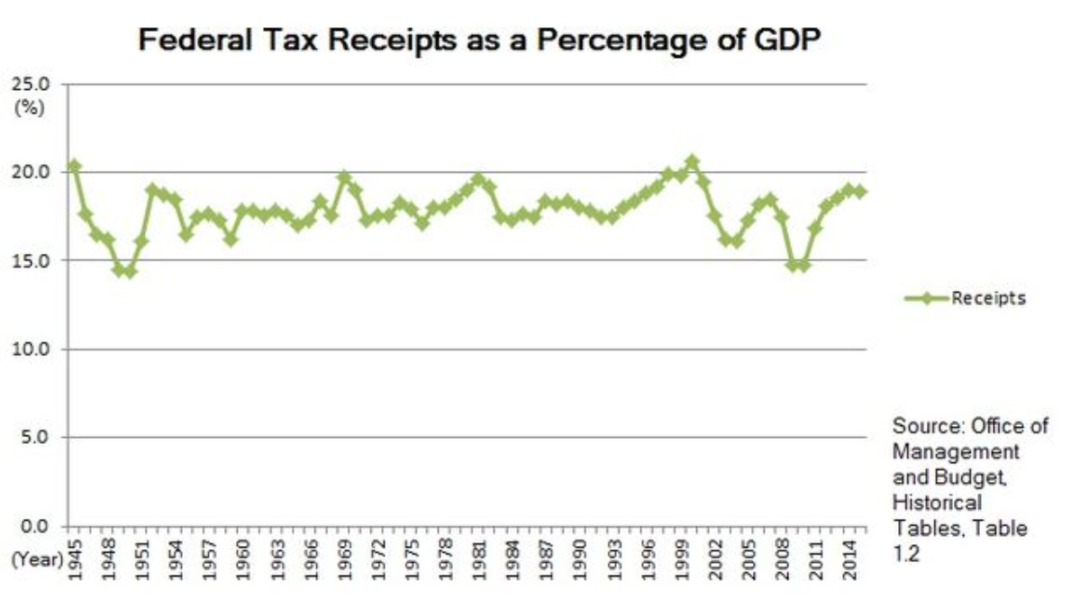
During my growth process, something often puzzled me: people repeatedly claimed that we live in a "deeply neoliberal society" that highly advocates "deregulation". However, what confused me was that despite some people advocating for neoliberalism and deregulation, the government's actual regulatory policies were far from these ideals. The total number of federal regulatory regulations has not decreased but increased, with increasingly strict regulations such as KYC (Know Your Customer), copyright laws, and airport security measures. Additionally, since World War II, the proportion of federal taxes to GDP in the United States has remained relatively stable.

1) Intuition Meets Reality: "Tree Ring Model" Reveals the Reversal of US-China AI Landscape
If you told someone in 2020 that five years later, one country between the US and China would lead in open-source AI while the other would dominate closed-source AI, and asked them who would lead in which domain, they might stare at you suspiciously, thinking you're posing a trick question. Because the US has always been a country emphasizing openness, while China tends to be more closed and controlled. From the overall technological trend, US tech companies seemed far more inclined towards open-source models. However, this intuition proved completely wrong.
What exactly happened? In this article, I will propose a simple explanation that I call the "tree ring model of politics and culture":

The specific content of the model is as follows:
A culture's approach to new things depends on the prevailing attitudes and incentive mechanisms at a specific time.
A culture's approach to old things is primarily driven by the inertia of maintaining the status quo (i.e., "status quo bias").
Each era carves a new "tree ring" on the tree of culture, and when this new ring forms, society also produces a series of concepts about emerging things. However, once these concepts form, they quickly become fixed and deeply rooted, difficult to shake. Subsequently, a new ring continues to be superimposed on this basis, driving society to shape the next wave of cultural attitudes and responses to new topics.
Next, we can analyze the previous situation and similar cases through this model:
2) From the Internet to AI: How US and China are Guided by Cultural Inertia in Technology Regulation
[The rest of the translation follows the same professional and accurate approach]