The growth of crypto stocks listed in the US this year has far surpassed 90% of Altcoin and dogecoins.
After the sluggish market in the first quarter of this year, cryptocurrencies finally saw an upswing in May. Bitcoin rose slightly by about 9.7% amid volatility, but what many people don’t know is that this year’s batch of “crypto upstarts” that landed on Nasdaq have completely outperformed Bitcoin and even most Altcoin in the past few months. Antalpha triggered a circuit breaker on its first day of listing, eToro closed up 23%, Amber Premium soared nearly 8 times in the first quarter, and Strive, which completed a reverse merger, soared more than 10 times in five months.
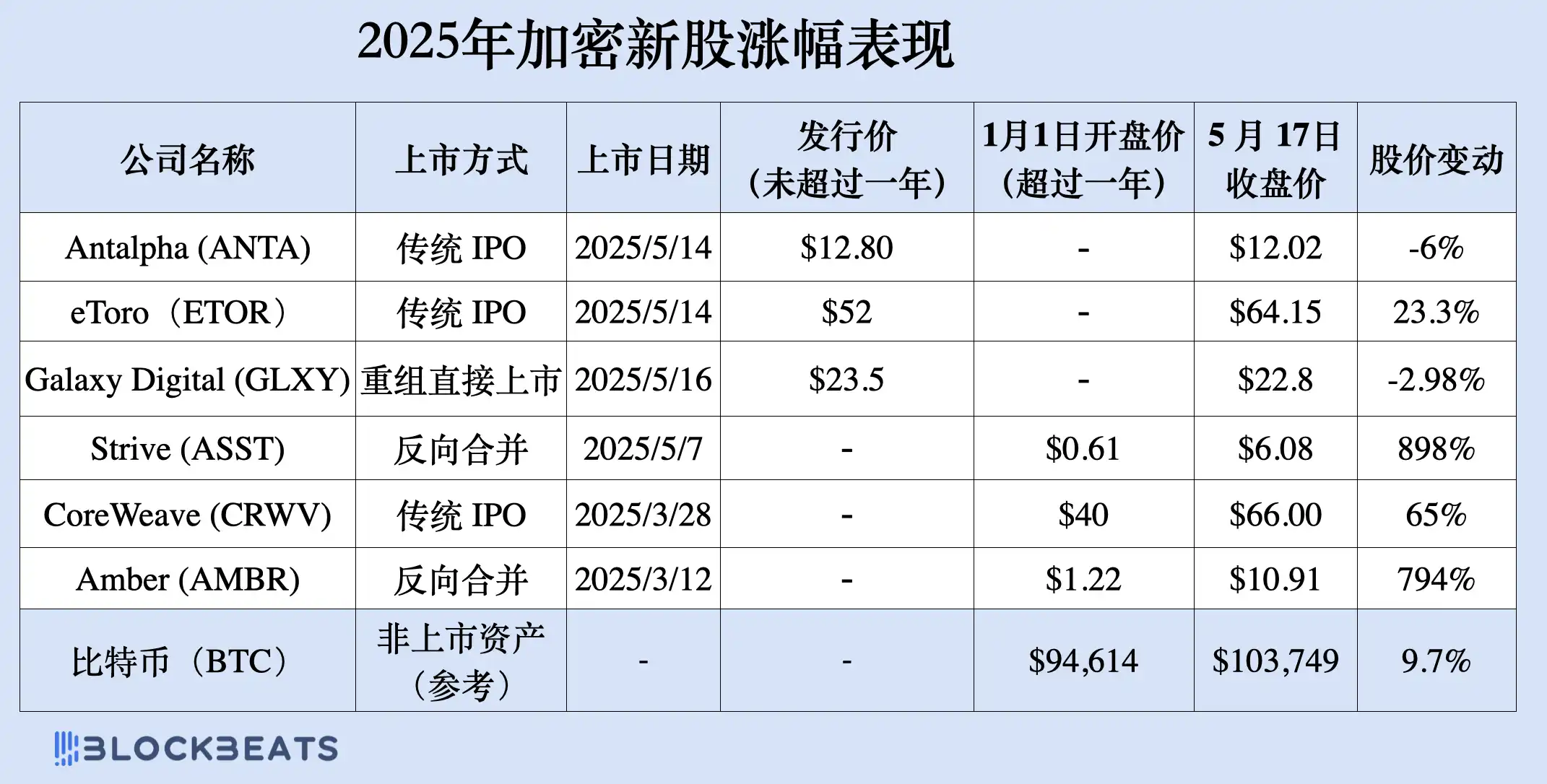
In this article, BlockBeats will analyze the most representative crypto listed companies in 2025 based on financial report data, stock price performance and business model.
Antalpha
On May 14, 2025, Antalpha officially landed on the Nasdaq Global Market through an initial public offering (IPO), with the stock code "ANTA". The IPO price is $12.80 per share, with a total of 3,850,000 common shares issued. On the first day of listing, the stock price soared by 73.59% and triggered the circuit breaker mechanism, becoming one of the most watched new stocks in the market in recent times.
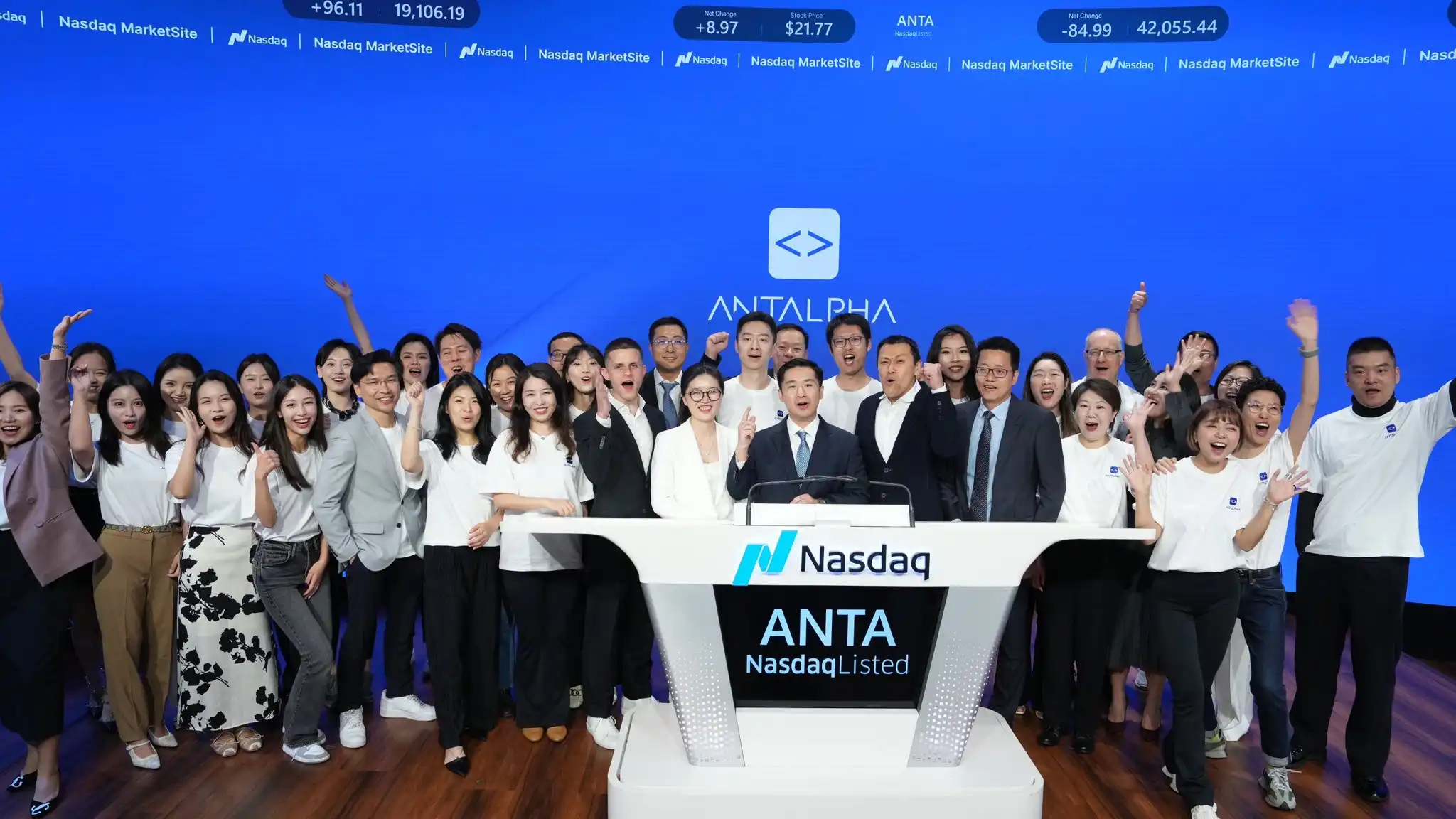
Antalpha is a crypto fintech company focused on Bitcoin mining financial services. Its core positioning is to provide structured financing and risk management solutions for the global Bitcoin industry chain. The company mainly serves miners, mining machine manufacturers and their upstream and downstream ecosystems. Its business system includes supply chain financing, clearing network, risk control platform and technical service output. Specifically, Antalpha provides Bitcoin miners with equipment purchase and operating capital loans, and uses its Antalpha Prime technology platform to achieve real-time monitoring of collateral positions, enhancing asset security and liquidity management. In terms of industrial cooperation, Antalpha is also Bitmain’s core lending partner and is deeply embedded in the mining ecosystem. In addition, the company has teamed up with Mantle to launch the EVM-compatible Bitcoin-pegged asset FBTC, and in 2023 cooperated with Cobo to establish standardized solutions in the fields of custody and asset security.
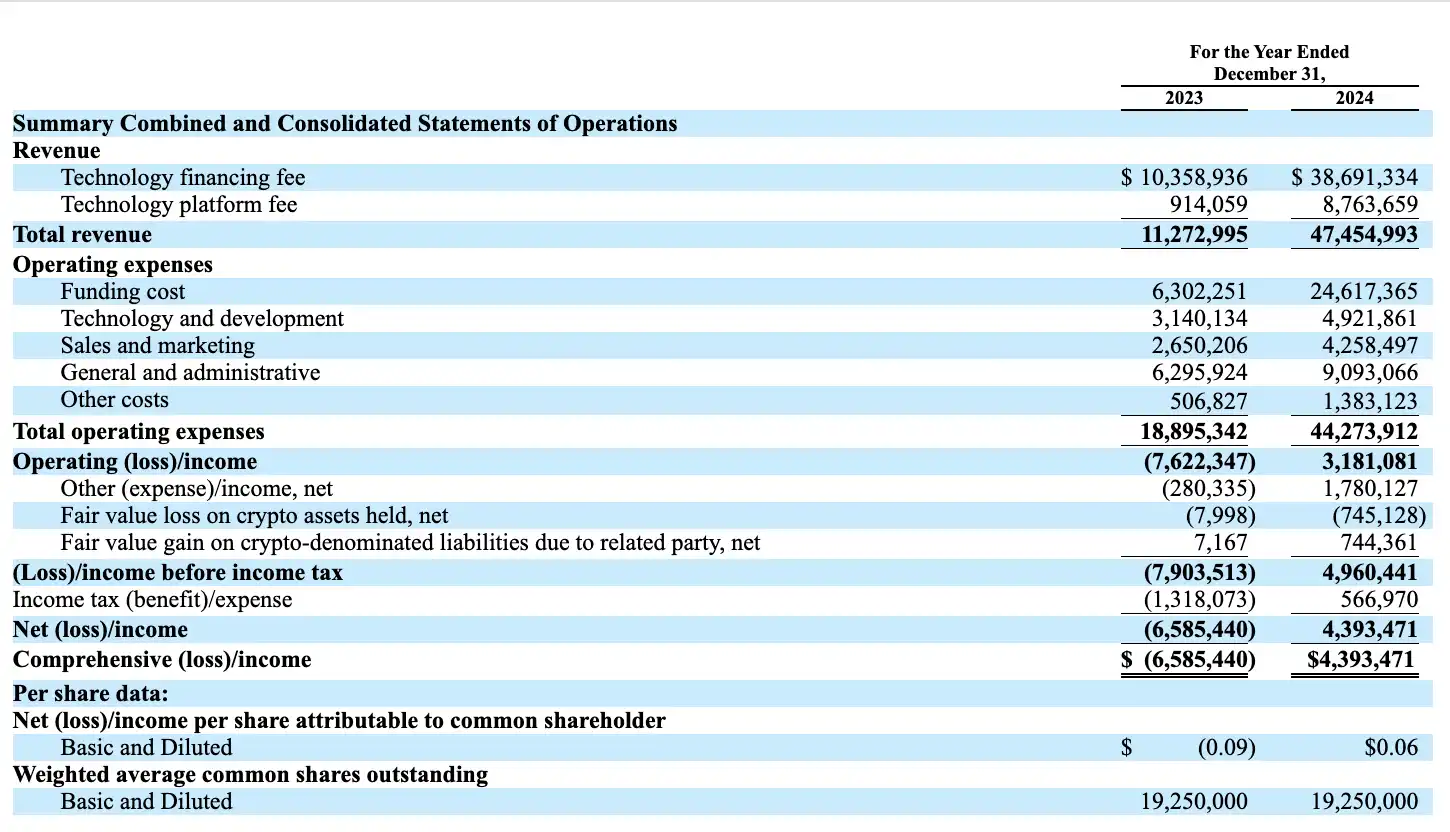
In 2024, Antalpha achieved total revenue of US$47.45 million, an increase of 321% compared to US$11.27 million in 2023, demonstrating strong business expansion capabilities. Its revenue structure also shows increasingly clear characteristics of a dual-engine model:
On the one hand, Technology Financing Fee revenue jumped nearly three times from US$10.35 million to US$38.69 million. This part mainly comes from the structured financing, mortgage lending and clearing business in which the company participates as an institutional funder, reflecting the continued increase in market acceptance of its role as a "Bitcoin financial plumbing."
On the other hand, Technology Platform Fee revenue also achieved a leap, increasing from US$910,000 to US$8.76 million, a year-on-year increase of 859%. This growth mainly comes from Antalpha's packaging and export of its core capabilities such as its fund scheduling system, risk monitoring API, and SaaS platform, showing that it not only has financial execution capabilities, but is also gradually building a scalable technology service business.
These two types of revenue together constitute Antalpha's basic business closed loop as a compliant crypto infrastructure service provider: on the one hand, it provides liquidity to the industry through structured financing and is regarded as the "plumber of Bitcoin finance"; on the other hand, it exports its technical capabilities in a platform-based manner to create a programmable and integrable "infrastructure as a service" tool chain.
Along with the rapid growth in revenue scale, the company's operating expenses also increased significantly. Total operating costs for the full year 2024 reached US$44.27 million, an increase of approximately 135% from US$18.89 million in 2023. Among them, financing costs increased from US$6.3 million to US$24.62 million, which is highly consistent with the expansion of the platform's asset scale; technology research and development expenditures reached US$4.92 million, a year-on-year increase of 57%, showing the company's continued investment in technology stack construction; and marketing and administrative management expenses totaled approximately US$13.35 million, mainly used for business expansion, compliance structure construction and listing-related preparations.
Despite the rapid growth in costs, thanks to the release of economies of scale, the company has turned losses into profits at the operational level in 2024, with an operating profit of US$3.18 million for the whole year, compared with a loss of US$7.62 million in the same period last year.
Based on operating profit and after considering other income and expenses, the company achieved a net profit of US$4.39 million, successfully achieving the key turning point from loss to positive profit. Among them, the performance of non-core business also played a supporting role: other net income recorded US$1.78 million, mainly including interest income and valuation gains on currency-based liabilities; at the same time, due to price fluctuations of some crypto assets, the company recognized a fair value loss of US$740,000, but also obtained an equivalent valuation hedging gain from the related party's currency-based liabilities. Overall, these non-operating projects did not pose a substantial threat to profits, but instead provided a certain financial buffer amid fluctuations.
From the perspective of asset-liability structure, as of the end of 2024, Antalpha's total assets have reached US$1.25 billion, an increase of 71% from US$730 million in 2023. Among them, crypto asset collateral receivables jumped from US$370 million to US$737 million, reflecting the rapid expansion of on-chain collateral assets held by the platform as a loan matchmaker. At the same time, the loan receivable balance also increased to US$429 million, indicating that the activity on the capital supply side has significantly increased.

On the liability side, total liabilities increased from US$719 million to US$1.208 billion, mainly consisting of platform customer currency-based loans and mortgage obligations. This growth is basically matched with the asset side, and there is no obvious liquidity mismatch risk. At the same time, the company's shareholders' equity increased from US$12.71 million to US$46.38 million, reflecting that driven by business growth and sustained profitability, the company's net assets have steadily accumulated, laying a solid foundation for subsequent financing and capital operations.
In terms of cash flow, Antalpha's operating cash flow net outflow in 2024 was US$11.69 million, and its investment cash flow outflow was US$76.17 million, indicating that the company is still in a stage of high investment and high growth. However, through active financing activities, the company obtained US$93.35 million in net financing funds that year, with a net increase of US$5.48 million in cash for the whole year. The balance of cash and cash equivalents at the end of the year was US$5.92 million, and liquidity remained sound.

In order to further reflect operational efficiency and true profitability, Antalpha disclosed a non-GAAP financial indicator - Adjusted EBITDA. After excluding income tax, depreciation and amortization, and equity incentives, this indicator improved significantly from -US$7.57 million in 2023 to +US$5.91 million in 2024, showing that the company's core business model is continuously being optimized and has successfully entered the stage of profit release.
Galaxy Digital
Galaxy Digital is a comprehensive digital asset service company spanning crypto finance and traditional capital markets. It was founded in 2018 by former Goldman Sachs partner Mike Novogratz. Since its inception, Galaxy has attempted to build a "new generation of Morgan Stanley" whose main businesses cover asset management, cryptocurrency trading, market making and lending, investment banking services, structured products, and emerging sectors such as data centers and AI high-performance computing power leasing that have grown rapidly in recent years.
Galaxy's listing path is quite representative. As early as 2018, Galaxy completed a backdoor listing on the Toronto Stock Exchange Venture (TSX Venture) through a reverse acquisition with a Canadian shell company Bradmer Pharmaceuticals. The stock code is GLXY. As the regulatory environment matured and a compliance framework was established, Galaxy began to undertake a structural reorganization in 2022, initiating a complex Up-C structure design, moving its registered place from the Cayman Islands to Delaware, U.S., and establishing a new holding entity, Galaxy Digital Inc., as a publicly traded company that will be listed on the Nasdaq.
This Up-C model allows the company to retain the flexibility of the existing partnership structure while achieving transparency of public shareholders’ interests and optimizing the voting rights structure. It is a standard restructuring path often adopted by US new economy companies such as Coinbase and Robinhood before going public. It reflects how companies in the crypto industry have circumvented traditional regulatory barriers and gradually moved towards mainstream capital markets in the past few years.
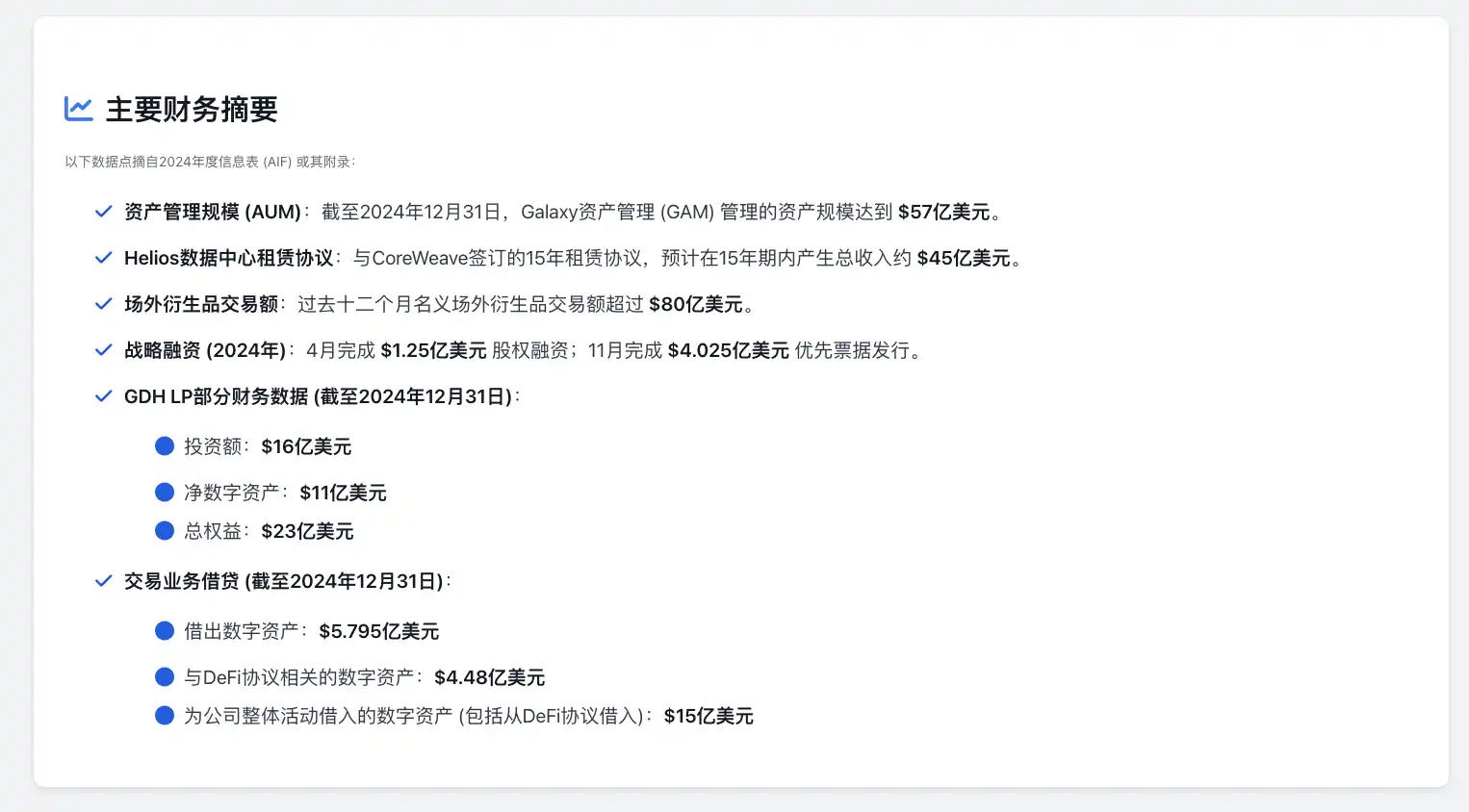
The asset management business is one of Galaxy's most outstanding performing sectors in 2024. Assets under management (AUM) grew to $5.7 billion for the full year, a record high. Among them, US$3.5 billion came from ETF products issued in cooperation with global traditional financial giants such as Invesco and State Street, and US$2.2 billion was made up of alternative investment portfolios such as its hedge funds and venture capital funds. The spot Bitcoin ETF (BTCO) and spot Ethereum ETF (QETH) jointly launched by Galaxy and Invesco were launched at the beginning of the year and the middle of the year respectively, and quickly entered the mainstream market in the United States; at the same time, Galaxy also cooperated with State Street to launch three crypto-ecological theme ETFs, covering decentralized technology and Web3 technology-related indexes.
Not only that, Galaxy also launched a multi-asset hedge fund product, Galaxy Absolute Return Fund, this year. This is a fund portfolio designed specifically for institutional investors that emphasizes non-coin positions. In terms of trading and derivatives business, the annual report did not disclose detailed annual trading revenue information, but Galaxy emphasized its continued investment in product diversity, institutional service depth and compliance capabilities, introduced multiple new currencies and leveraged trading products, and continuously enriched the trading tools of the derivatives platform.
At the same time, Galaxy continues to deploy underlying blockchain services, including node hosting services, RPC interface products, multi-chain verification services, etc., gradually building a "financial infrastructure as a service" product system and exploring opening it to project parties and developers in a SaaS model. As of the end of 2024, Galaxy's organizational scale continues to expand. In addition to its headquarters in New York, the company has local teams in London, Tokyo, Hong Kong, Singapore and other places. The total number of employees remains in the hundreds, and recruitment focuses on asset management, infrastructure operations and compliance teams.
Starting from Q1 2025, Galaxy also completed the reorganization of its financial reporting structure, integrating the original three business lines into two operating segments and one corporate segment to better fit its ongoing strategic focus. Among them, the "Digital Assets" section brings together all services related to crypto-native businesses, such as trading, investment banking, asset management and infrastructure construction (including staking, tokenization and custody technology); the "Data Centers" section independently presents the long-term value and transformation progress of the Helios project, and is expected to start recognizing revenue in early 2026; the "Treasury and Corporate" section mainly includes the impact of investment holdings on the balance sheet, as well as the remaining mining business and other non-operating projects.
In its first quarter 2025 financial report, Galaxy Digital disclosed that its total revenue under GAAP was US$12.98 million. This figure comes from the "gross-up" treatment of digital asset transactions under the US Generally Accepted Accounting Principles (US GAAP), which requires that the total amount of purchases and sales between customers be recorded as income and expenses separately, rather than just recording the actual difference or fees earned. Although this accounting method complies with regulatory requirements, it does not truly reflect a company’s profitability. Instead, it tends to exaggerate revenue. This is particularly true for a company like Galaxy that has asset management, financial services, and digital infrastructure.

In order to present its operating performance more accurately, Galaxy simultaneously disclosed the non-GAAP indicator - Adjusted Gross Profit, which serves as the main reference for its internal management and external communication.
In the first quarter of 2025, Galaxy's non-GAAP operating income totaled $87 million, including $65 million from digital asset-related businesses and $22 million from asset management. This part of revenue mainly comes from proprietary trading, Prime brokerage, structured credit, ETF management fees and fund income, which constitutes a stable and sustainable source of cash flow for the company, further demonstrating that its "trading-asset management-infrastructure" three-in-one operating system is continuing to play a role.
After deducting corresponding costs, Galaxy recorded a net operating profit of US$3.5 million, mainly contributed by the digital asset business. This demonstrates the resilience and scale advantages of its core business in the context of the overall crypto market still being in a period of volatility and adjustment.
However, the GAAP report showed that the net loss attributable to shareholders for the quarter was US$295 million. This loss was not caused by the decline in the main business, but was caused by two non-recurring items: first, the prices of core holdings such as BTC and ETH experienced a phased pullback in Q1, resulting in a paper loss; second, Galaxy retired and reorganized the old mining machines of the Helios project, and made a one-time large asset impairment provision for this. Although such non-operating losses lower profit performance at the financial statement level, they do not affect Galaxy's cash flow and core operating quality.
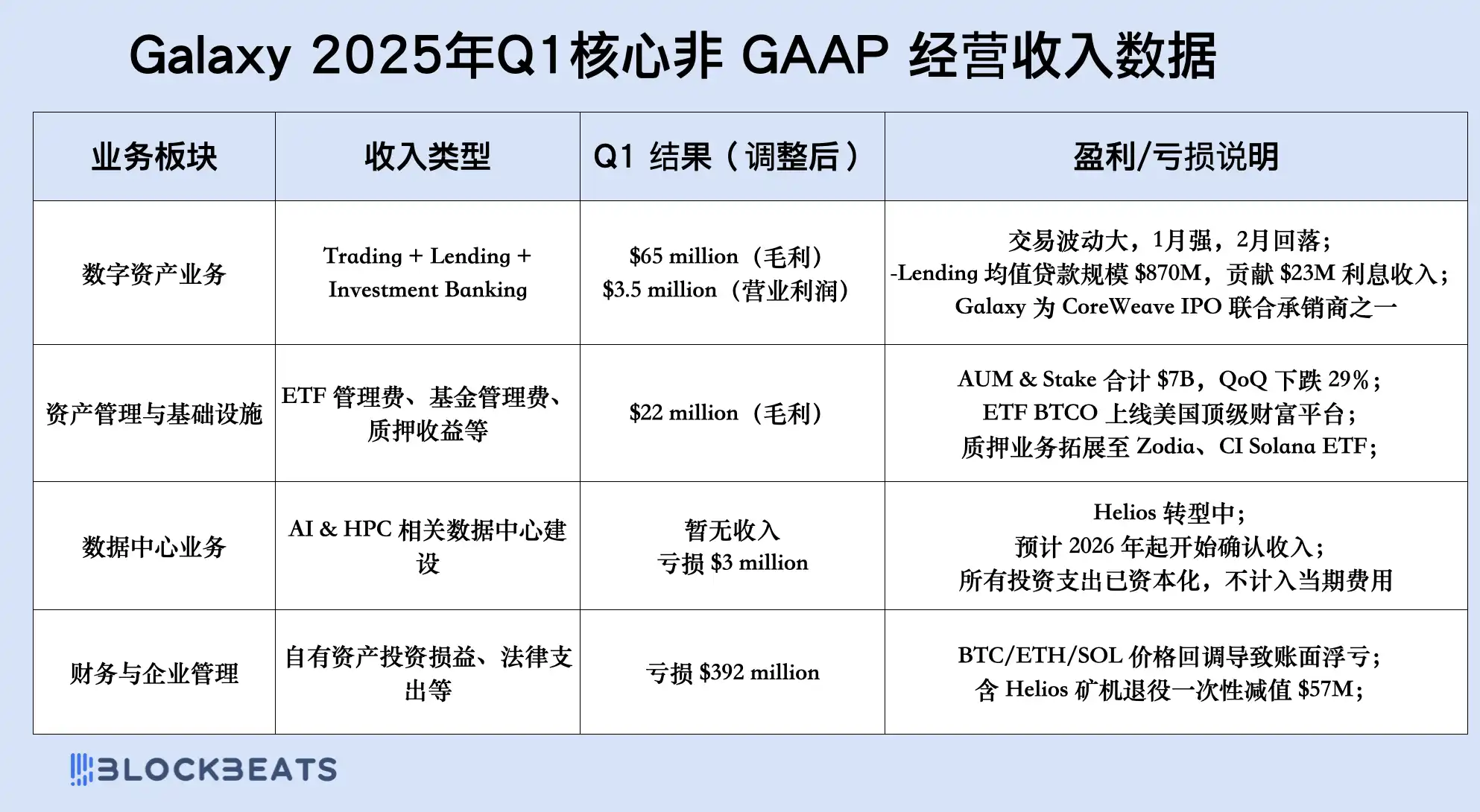
Galaxy Digital's revenue structure in the first quarter of 2025 shows its increasingly mature diversified operating framework. Trading and Lending businesses continue to play a core cash flow generating role. The market rebounded strongly in January, and Galaxy's proprietary trading and client matching business achieved considerable returns. However, after entering February, the price of crypto assets stabilized, volatility decreased, and trading volume declined accordingly, which had a certain inhibitory effect on the trading business. Despite this, its lending segment continued to maintain steady growth, with total loan balances reaching US$870 million, up 25% from the previous quarter, mainly due to increased demand for structured financing and liquidity from institutional clients. The lending business brought in a total of US$23 million in interest income this quarter, reflecting Galaxy's significant success in its layout of stable income assets.
In terms of asset management, although the market decline caused the total size of managed and pledged assets to drop to US$7 billion, a decrease of nearly 30% month-on-month, management fee income remained stable, demonstrating good customer stickiness and product moat. BTCO, the Bitcoin spot ETF jointly issued with Invesco, successfully entered several top wealth management platforms of traditional finance in the first quarter, covering a total asset system of more than US$2 trillion. This marks that Galaxy's ETF products have truly penetrated into mainstream compliant funds. In addition, its crypto venture capital fund Galaxy Crypto Venture Fund II also completed fundraising of more than US$160 million this quarter, demonstrating that it still has considerable capital appeal in the primary market.
Worthy of attention is the AI data center business that Galaxy is building, the Helios project in Texas. Although the company has not started to recognize this portion of revenue this quarter, its transformation process has entered a critical stage. The first two phases of the project have deployed a total computing power of 393 megawatts, and have signed a 15-year long-term lease agreement with CoreWeave, a leader in AI infrastructure. According to the agreement, the data center will generate cumulative revenue of approximately US$1.3 billion or more for Galaxy in the next fifteen years. Currently, this expenditure is considered a capitalized investment and does not affect current profits, but it is obviously a key component of Galaxy's next stage of growth curve.

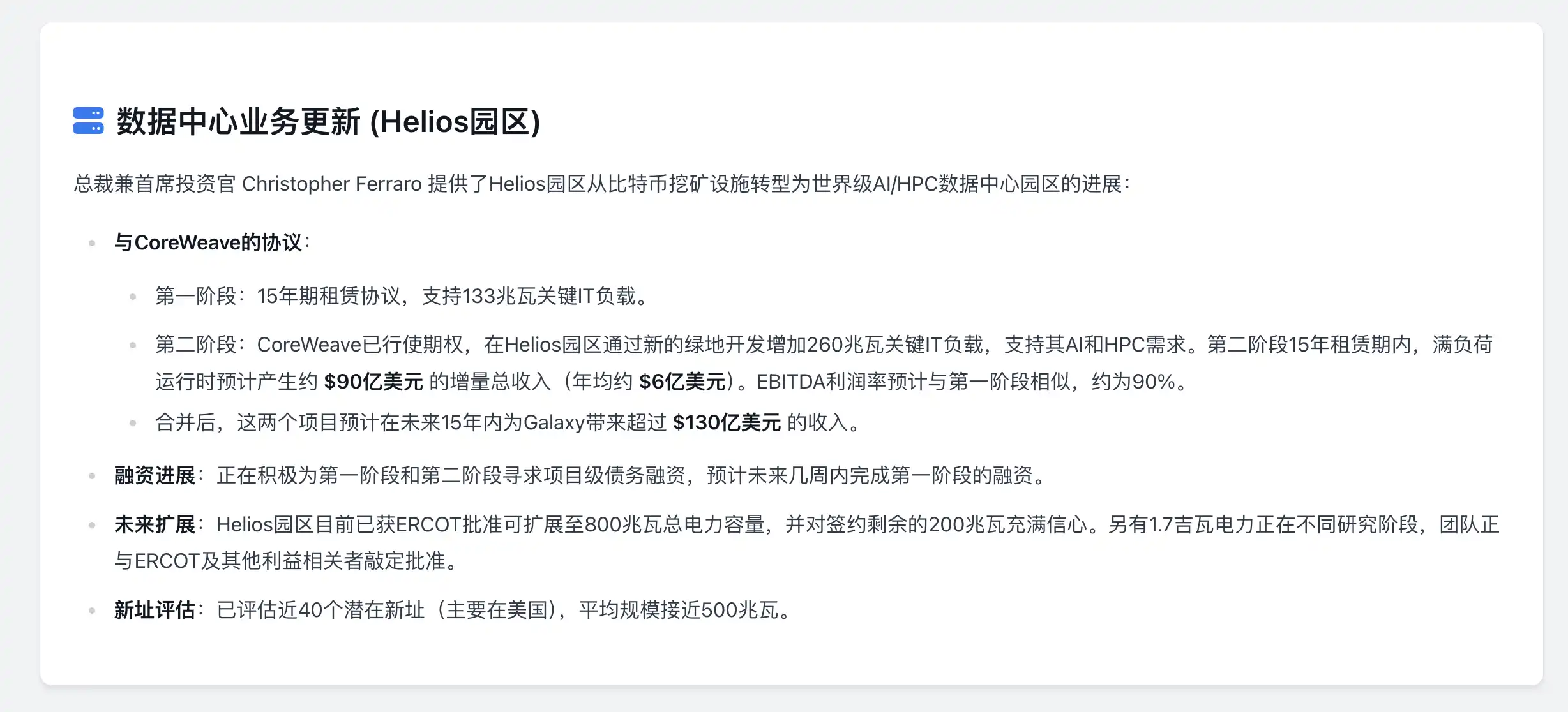
At the same time, Galaxy reported a net loss of $295 million this quarter, which was mainly not from its core business, but from book losses caused by the price correction of digital assets and asset impairment caused by the retirement of old mining machines in the Helios project. These floating items totaled US$392 million, which, although suppressing GAAP net profit, did not actually affect its operating income and cash flow performance. From a non-GAAP perspective, Galaxy's main operating profit remains stable, and its asset management, deal matching, lending, fund issuance and other sectors continue to generate structural returns.

It can be said that this quarter's financial report is a window into Galaxy's transformation from operations to accounting systems to fully "connect with Wall Street." From the GAAP report, it is a company under pressure in the market fluctuations; but from a non-GAAP perspective, Galaxy is steadily building a global multi-asset platform with stable cash flow, a wide range of financial product lines, and an AI data center as a mid- to long-term fulcrum.
eToro
eToro completed IPO pricing on May 14, 2025, and was officially listed on the Nasdaq on May 15 (stock code ETOR), selling 6 million shares at $52 per share and raising approximately $312 million from investors. The listing values the company at $4.2 billion. . The platform was founded in Israel in 2007. Its core business is to provide multi-asset social trading services such as cryptocurrencies, stocks, ETFs, etc., positioning itself as a competitor of Robinhood.
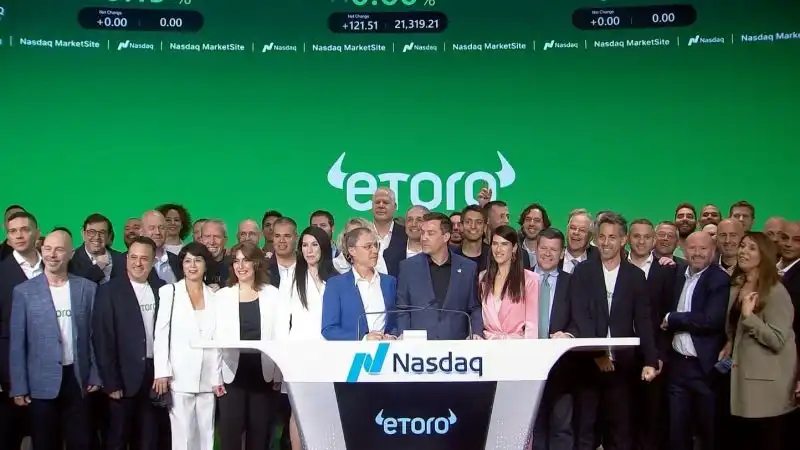
Previously, eToro attempted to go public through a SPAC merger (valued at $10.4 billion in 2021), but terminated the plan in 2022 due to changes in the market environment. It is worth noting that BlackRock's fund has pledged to subscribe for $100 million worth of shares at the issue price before the IPO, showing the high attention of institutional investors to the Web3 track.
eToro's total revenue and other income in 2024 will reach US$12.64 billion, more than three times that of 2023 ($3.89 billion) and far exceeding the US$6.33 billion in 2022. Among them, crypto asset trading revenue is the main source of contribution, reaching US$12.147 billion, accounting for more than 96%, while this revenue in 2023 was only US$3.431 billion. It can be seen that the platform's market share in this round of crypto market has increased significantly.
In terms of non-crypto asset business, eToro also maintained steady development: net income from stock, commodity and foreign exchange trading reached US$329 million; net interest income from users was US$197 million, an increase of approximately 25% year-on-year; exchange rate conversion and other income was US$81.41 million; other interest income was US$16.65 million.
At the same time, it is worth noting that the crypto derivatives trading segment recorded a net loss of US$131 million in 2024, which is related to its risk position management and some volatility trading strategies, and also reflects the double-edged sword nature of the crypto leverage market.
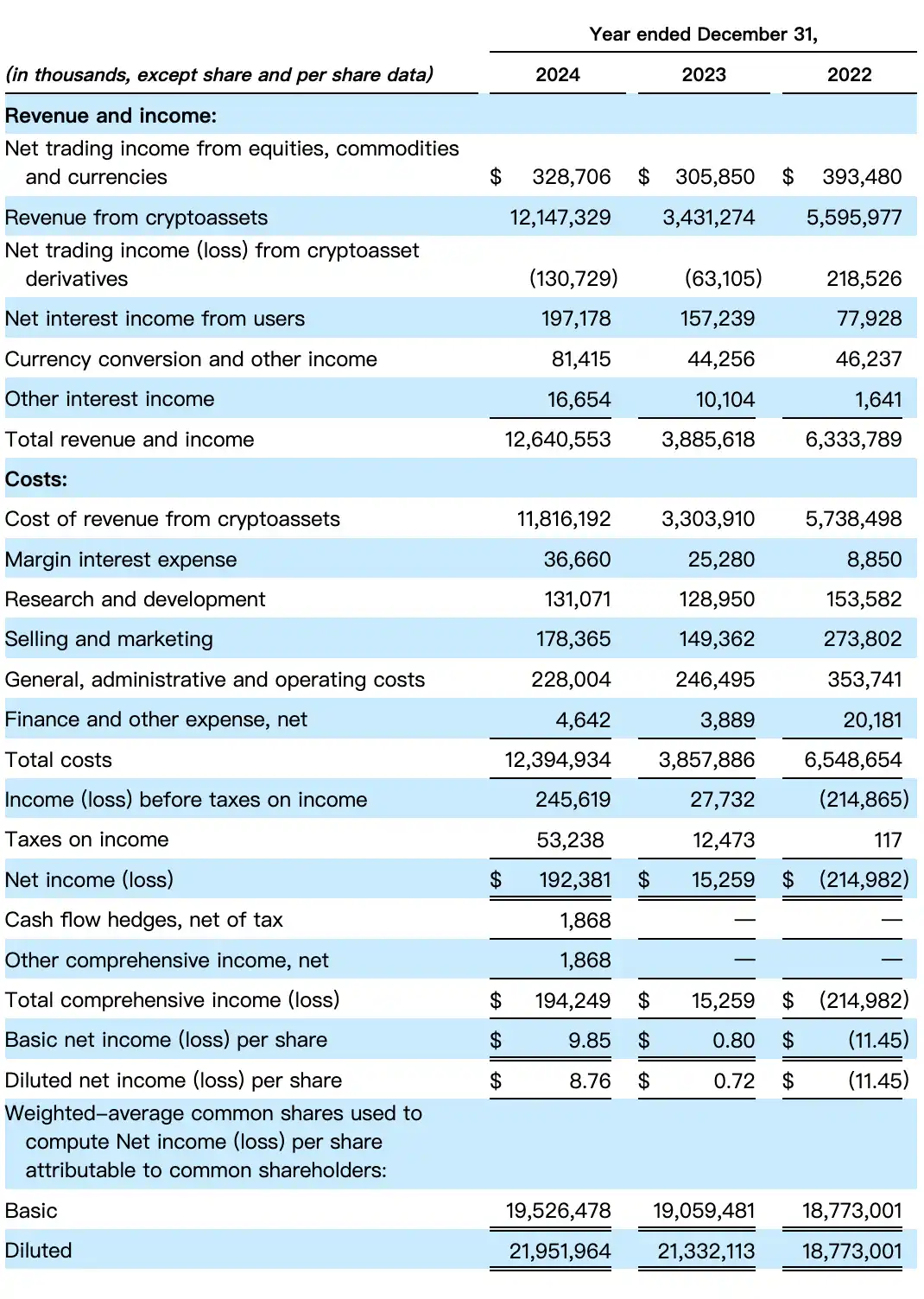
While eToro's revenue has grown significantly, its expenses have also expanded significantly. The total cost for the whole year of 2024 reached US$12.39 billion, of which: the revenue cost of crypto assets (i.e. counterparty and market execution fees) was US$11.816 billion, nearly three times the same period last year; sales and marketing expenses reached US$178 million, an increase of about 20% year-on-year, mainly used for user growth, brand expansion and pre-IPO market investment; general and administrative expenses were approximately US$228 million, slightly lower than US$246 million in 2023; R&D expenses were US$131 million, maintaining a relatively stable level; margin interest expenses, financial expenses, etc. were minor cost items, totaling approximately US$49 million.
Despite the sharp increase in total costs, eToro's profitability leapt forward this year as revenue growth far outstripped cost growth.
Driven by strong revenue, eToro achieved a pre-tax profit of US$245 million, nearly nine times that of 2023 ($27.73 million). After deducting US$53.24 million in income tax, the net profit was US$192 million, while the net profit in the previous year was only US$15.25 million, and in 2022 it suffered a loss of US$215 million.
CoreWeave
CoreWeave was formerly known as Atlantic Crypto (founded in 2017), and its early focus was on providing GPU mining infrastructure for cryptocurrencies such as Ethereum. As Ethereum switched to the PoS consensus mechanism in 2022, it quickly adjusted its strategy, shifting the GPU clusters originally used for mining to graphics rendering and AI training, seizing the opportunity of the generative AI explosion and becoming a company focused on AI cloud computing services, with hosting cooperation with multiple mining companies in the crypto.
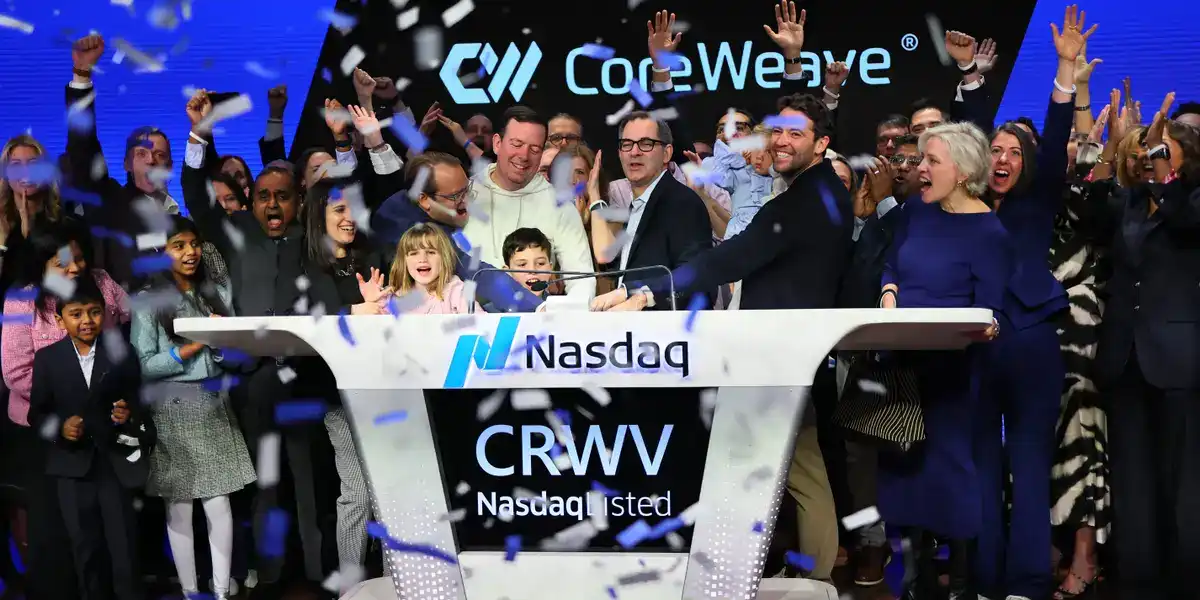
CoreWeave was listed on the Nasdaq on March 28, 2025, with the stock code "CRWV", raising US$1.5 billion and the company's valuation was approximately US$23 billion. Although the stock price did not perform well on the first day of listing, the company's layout in the field of AI infrastructure has attracted much attention. NVIDIA, as a strategic investor, subscribed for $250 million in shares and is known as "NVIDIA's own son" in the U.S. stock circle.
On May 14, CoreWeave released its first financial report after its listing, and the data showed that its revenue growth rate far exceeded analysts' expectations.
Revenue: In the quarter ended March 31, revenue reached $981.6 million, a surge of 420% year-on-year (US$188.7 million in the same period last year), far exceeding the market expectation of US$853 million;
Earnings per share: Net loss of $1.49, a net loss of $314.6 million from $129.2 million in the same period last year, partly due to $177 million in stock-based compensation expenses related to the IPO;
Business growth rate: The revenue growth rate for the whole year of 2024 is 737%. Although it has slowed down this quarter, it still maintains a high triple-digit growth.
In terms of business model, CoreWeave provides computing services by leasing NVIDIA graphics processing units (GPUs) to enterprises. Its competitors include technology giants such as Amazon Cloud, but industry leaders such as Google and Microsoft have become its dependent customers, with Microsoft contributing 62% of its revenue (US$1.92 billion) in 2024.
It is worth noting that OpenAI signed a five-year cooperation agreement with CoreWeave this quarter with a value of up to US$11.9 billion. Combined with its dependence on Microsoft (Microsoft contributed 62% of CoreWeave's revenue in 2024), it highlights its key position in the field of AI computing power.
Strive Asset Management
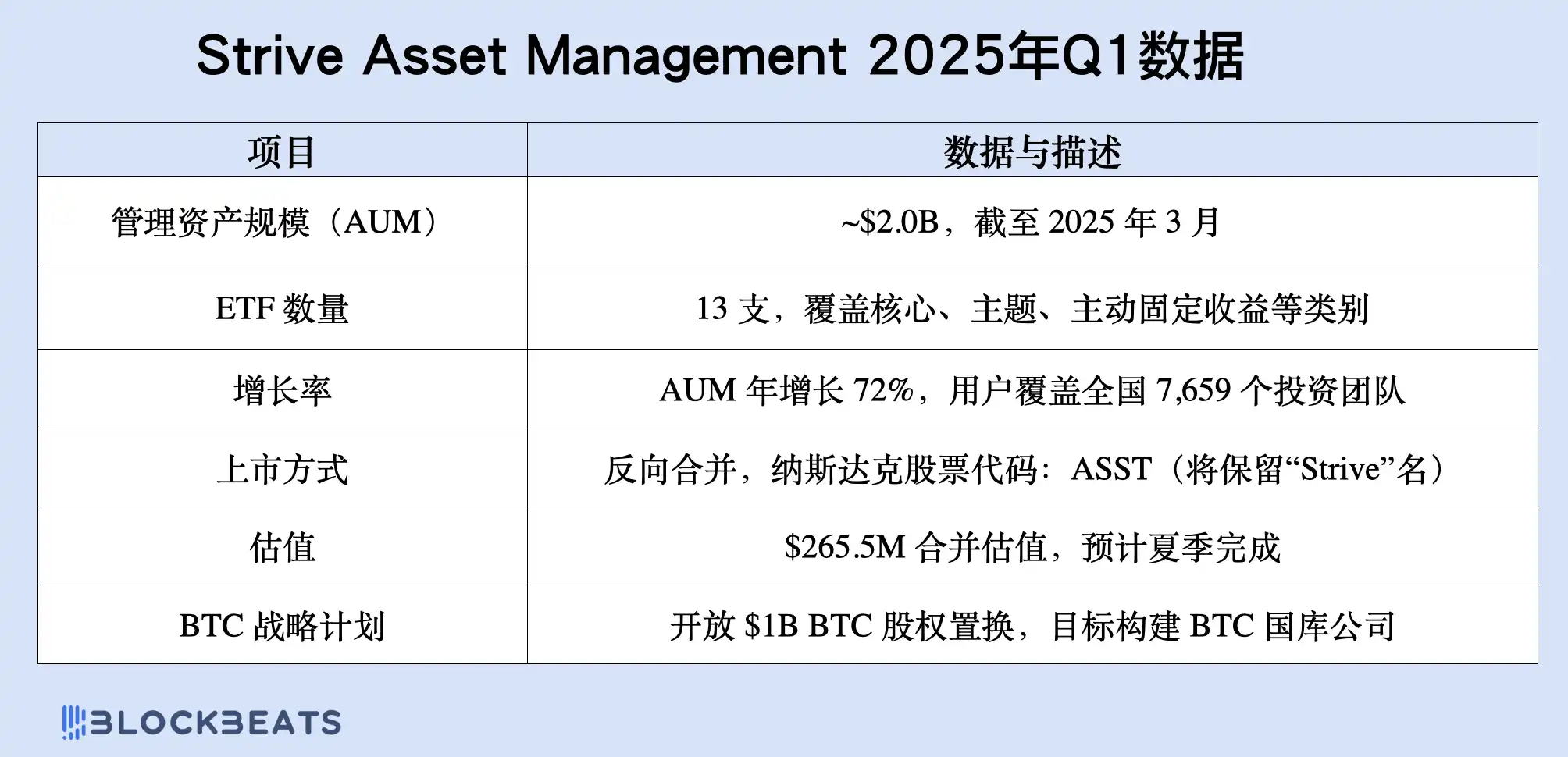
Strive Asset Management completed its listing on the Nasdaq through a reverse takeover merger on May 7. It reached a final merger agreement with Nasdaq-listed company Asset Entities Inc. (NASDAQ: ASST). After the merger, the company will continue to trade on the Nasdaq under the "Strive" brand. After the transaction is completed, Strive holds 94.2% of the shares of the new company, and former CEO Matt Cole becomes chairman and CEO.
Strive was founded by Vivek Ramaswamy, co-leader of DOGE, the U.S. government efficiency department. Its investors include vice presidential candidate JD Vance and it has close ties to the Trump camp. The company is seen as an important force in promoting the "Bitcoin Strategic Reserve".
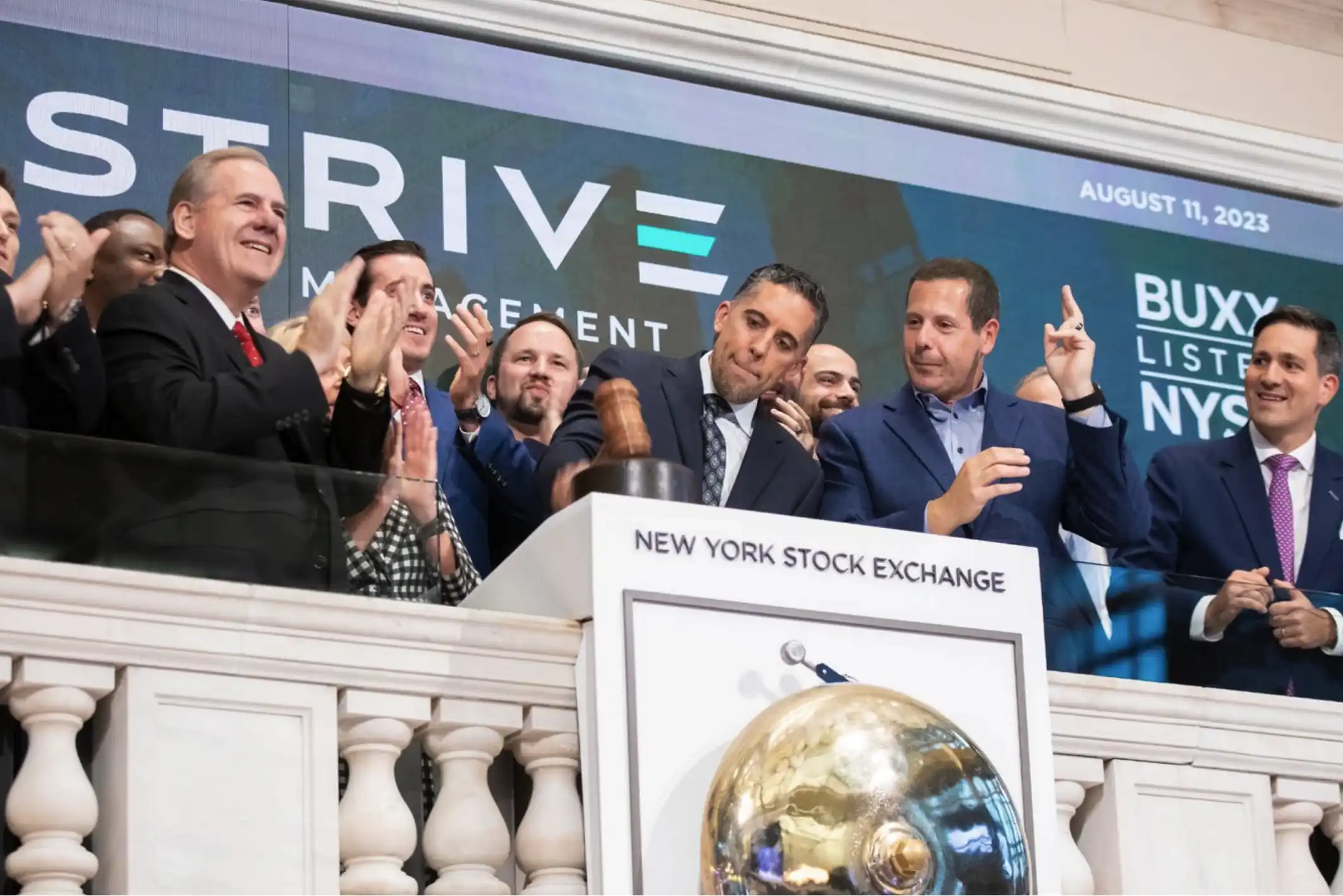
Strive Asset Management has applied to U.S. regulators for approval to list an exchange-traded fund (ETF) that would invest in convertible bonds issued by MicroStrategy and other companies. The ETF aims to provide exposure to “Bitcoin bonds,” which are described as “convertible bonds issued by MicroStrategy or other companies” that plan to “use all or a substantial portion of the proceeds to purchase Bitcoin.”
As of the first quarter of 2025, Strive's total assets under management (AUM) have reached approximately US$2 billion, an increase of more than 70% year-on-year. Strive's main business structure is built around ETF products. In less than three years, the company has launched 13 exchange-traded funds, covering multiple dimensions such as core index strategies, thematic investments, and actively managed fixed income funds.
These ETF products became its main source of recurring revenue, especially after gaining recognition in the retail market, and quickly expanded its suite to more than 7,000 registered investment advisor (RIA) teams and entered multiple corporate 401 (k) pension platforms. At the same time, the company has also made breakthroughs in technology platform services, and began to provide "technology platform fees" income to high-net-worth clients and institutions through direct investment portfolios, customized index services and tax optimization tools, which has also become its new revenue growth curve.
Although the company has not yet released complete GAAP financial statements, judging from its investor filings released in May 2025, the revenue structure is becoming increasingly clear, and the focus of expenditure is on organizational expansion and marketing. It relies heavily on social media and content operations for market penetration, with more than 200,000 users in the TikTok and Discord communities and tens of millions of annual interactions. In addition, as Strive prepares to enter the public markets, the company's spending on compliance, human resources and listing architecture has also increased significantly, constituting its main operating cost items.
In conjunction with the completion of the merger, Strive launched a groundbreaking financial engineering initiative: opening a window for up to $1 billion in Bitcoin equity purchases. Through IRS Section 351, the company allows Bitcoin holders to exchange BTC for Strive equity without triggering capital gains taxes. This mechanism is called "Bitcoin balance sheet engineering". Its purpose is not just to hoard coins, but to transform BTC into a basic anchor point for company value pricing and to create a capital allocation platform with BTC as a reserve asset and supported by a stable income stream.
Furthermore, Strive has officially established Bitcoin as the company's internal "Hurdle Rate", meaning that any investment decision, M&A transaction or financing activity must be based on "whether it outperforms BTC's long-term annualized return" as the basic judgment criterion. Behind this philosophy is the company’s firm belief in the Bitcoin-based economy: if it cannot achieve a capital appreciation return better than BTC, it is not worth doing.
From a new ETF issuer to a compliant listed platform that is building a "Bitcoin asset treasury" model, Strive's transformation speed can almost be described as "radical." But judging from its capital structure, business performance and the stickiness of its user community, it is redefining the boundaries of asset management companies in a way that is different from traditional Wall Street.
Amber Premium
Founded in 2017 and headquartered in Hong Kong, Amber Group is a global crypto financial services provider. On March 12, 2025, Amber International (brand name: Amber Premium), a crypto financial institution service and solution provider under Amber Group, completed its merger transaction with iClick Interactive Asia Group Limited and began trading on the Nasdaq Global Market with the stock code "AMBR".

As a core subsidiary of Amber Group, Amber Premium will make full use of its proprietary blockchain and financial technology, AI-enabled risk management, and Amber Group's years of market experience and influence to continue to strengthen its execution services, expand compliance products, and promote the large-scale development of institutional-grade digital asset finance by deepening institutional cooperation and strengthening compliance security.
In 2024, Amber International is still in a critical transition period of large-scale strategic transformation. From the perspective of financial performance, although the company is still in a loss-making state overall, signs of improvement in multiple core indicators are beginning to emerge, especially the growth potential of the new business segment is being initially released.
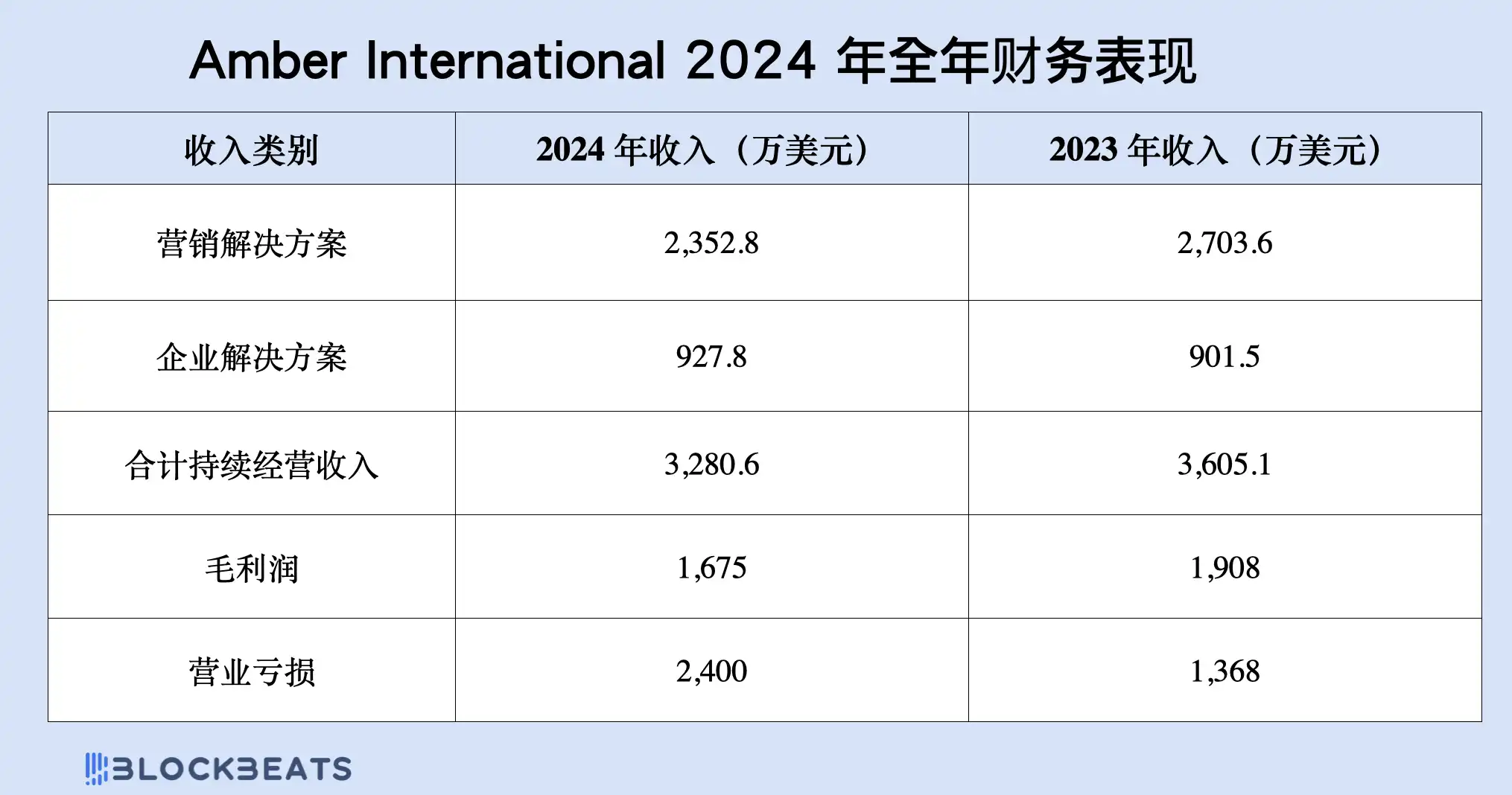
First, looking at the revenue side, Amber achieved continuing operating revenue of $32.806 million that year, down about 9% from $36.051 million in 2023. The decline was mainly due to the pressure of the macro-economic environment, especially the tightening of marketing budgets by advertisers, which caused marketing solutions, one of the company's main sources of revenue, to fall by 13% year-on-year. However, its enterprise solutions segment still recorded a slight increase in revenue, showing that demand for digital services has to some extent hedged the risk of decline in traditional advertising business. At the same time, the company maintained good cost control capabilities, with a full-year gross profit of US$16.747 million and a gross profit margin of approximately 51.0%, which was basically the same as 52.9% in the previous year, indicating that while revenue fluctuated, the company's overall profit quality remained stable.
But on the expense side, Amber's operating costs have increased significantly, with total operating expenses increasing from US$30.725 million in 2023 to US$34.107 million, an increase of approximately 11% year-on-year. The change in cost structure was quite drastic: sales and marketing expenses dropped sharply from US$17.28 million to US$7.118 million, a compression ratio of more than 59%, indicating that the company consciously cut down on traditional promotion expenses and transformed to more efficient marketing methods. However, the marketing cost savings have not been fully converted into profit margins. The largest expense increase occurred in general and administrative expenses, which soared from $10.838 million to $26.058 million, a year-on-year increase of approximately 140%. The main reason behind this is the one-time expenses such as legal, auditing, compliance, and human resource costs brought about by the Amber DWM acquisition. R&D expenditure was relatively stable, at US$8.78 million for the full year, a slight decrease from the previous year, indicating that the company maintained rational control over its technological investment.
In the non-operating segment, the company also suffered other net losses of $72.1 million, significantly higher than the $22.99 million in 2023. This loss may involve the impairment of long-term investments, losses caused by exchange rate fluctuations, and additional expenses incurred during the Amber DWM acquisition process. After accounting for interest income and expenses, Amber's operating loss before income taxes widened to $24.07 million for the year ($13.03 million in 2023). Ultimately, the net loss attributable to ordinary shareholders was US$23.935 million, equivalent to a loss of US$2.61 per ADS. The loss margin widened year-on-year, reflecting that the financial pressure brought about by the M&A transformation is being released in a concentrated manner.
In addition, the company has gradually withdrawn from the Chinese mainland market since 2023, and the related terminated businesses will still be a drag in 2024, with a net loss of US$5.104 million. Although it is a significant reduction from US$25.187 million in the previous year, it still poses a certain burden on the group's finances as a whole. Although a one-time disposal gain of US$2.585 million was recorded that year for partial hedging, the combined impact resulted in Amber's full-year net loss attributable to shareholders reaching US$29.007 million, equivalent to a loss of US$3.17 per ADS. This is an improvement compared to the loss of US$3.78 per ADS in 2023, but overall it is still in the "pain stage" of deep transformation.
It is worth noting that Amber recorded a foreign currency translation gain of US$37.49 million in 2024, mainly from the appreciation of Asian local currencies against the US dollar. This exchange gain effectively offset part of the book loss, allowing the company to control its comprehensive loss to US$22.593 million, significantly better than US$38.673 million in the previous year. This shows that after excluding the impact of exchange rates and one-time accounting items, Amber's operating quality is steadily improving.
It is worth noting that Amber DWM, the business entity that the company officially completed the merger in 2025, had very impressive independent financial performance in 2024. Although it has not yet been consolidated, Amber separately disclosed in its annual report that the segment's full-year revenue has exceeded US$42 million, with significant profit growth in the second half of the year. This business entity operates under the Amber Premium brand and is the core segment of the company's comprehensive transformation to compliant crypto financial services. It covers services such as institutional crypto asset custody, OTC liquidity matching, portfolio management, and payment solutions for high net worth clients, all of which have high added value and high growth potential.
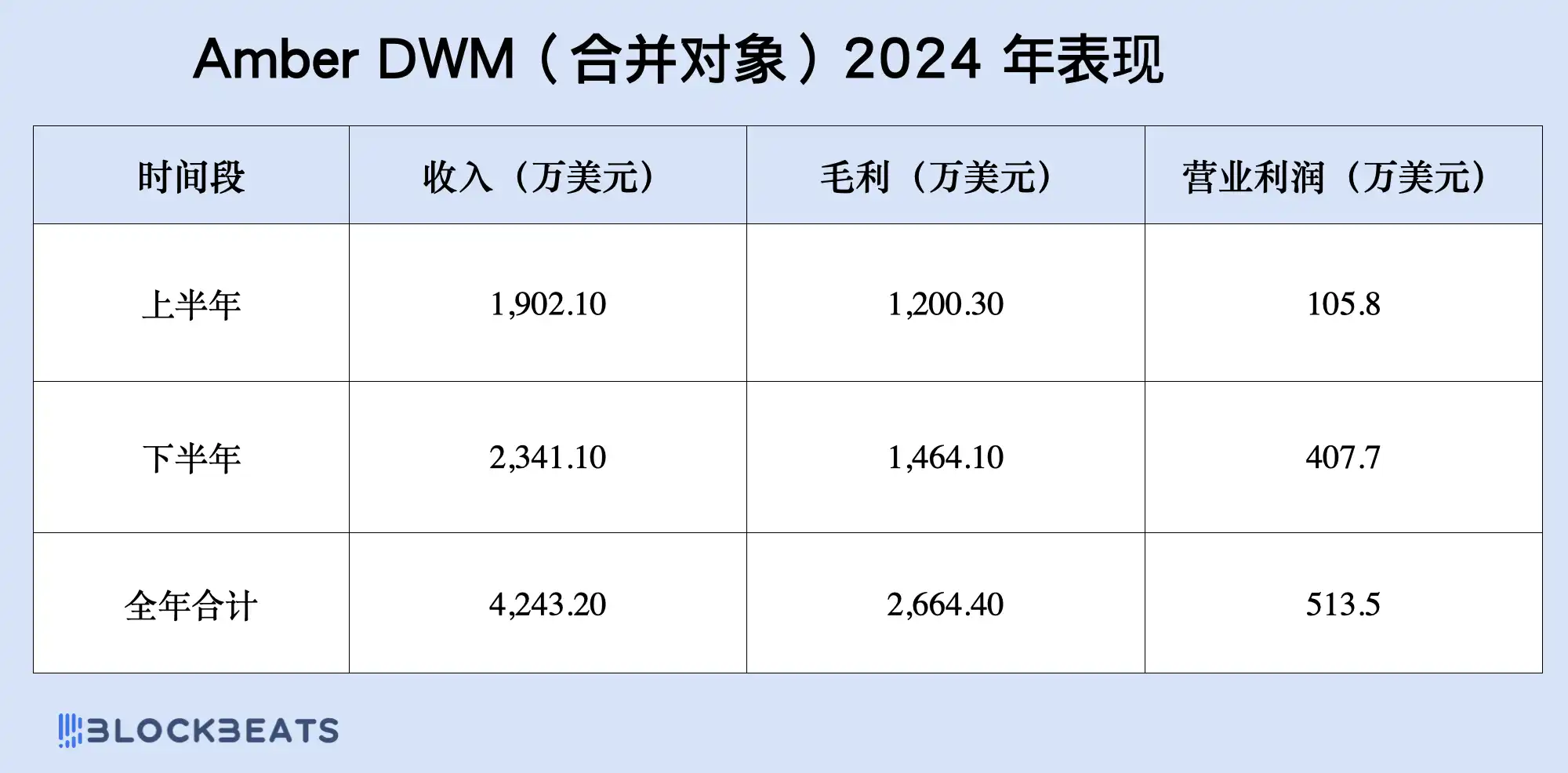
Looking ahead to 2025, Amber Premium is expected to have great success. The company expects its revenue in the first quarter of 2025 to reach US$12.5 million to US$13.5 million, which means it will reach 30% of DWM's revenue last year in just one quarter, and its expansion speed is very rapid. At the same time, Amber has announced the establishment of a $10 million crypto asset reserve fund, officially incorporating crypto assets into the company's balance sheet for the first time. This not only represents that its financial system has begun to evolve towards the Web3 financial model, but also indicates that Amber is breaking away from the old model and transforming into a fully encrypted technology financial platform.