Original Author: Yue Xiaoyu (X: @yuexiaoyu111)
I have discussed the leading decentralized computing power track project Aethir multiple times, and it is a project I am focusing on.
Aethir's recently launched Eigen ATH Vault allows community users to participate in the revenue sharing of its decentralized GPU network by staking ATH tokens.
This time, I will analyze the project from a data perspective to help everyone assess whether it is worth participating in.@AethirCloud @AethirMandarin
1. Breakdown of Aethir's Core Data
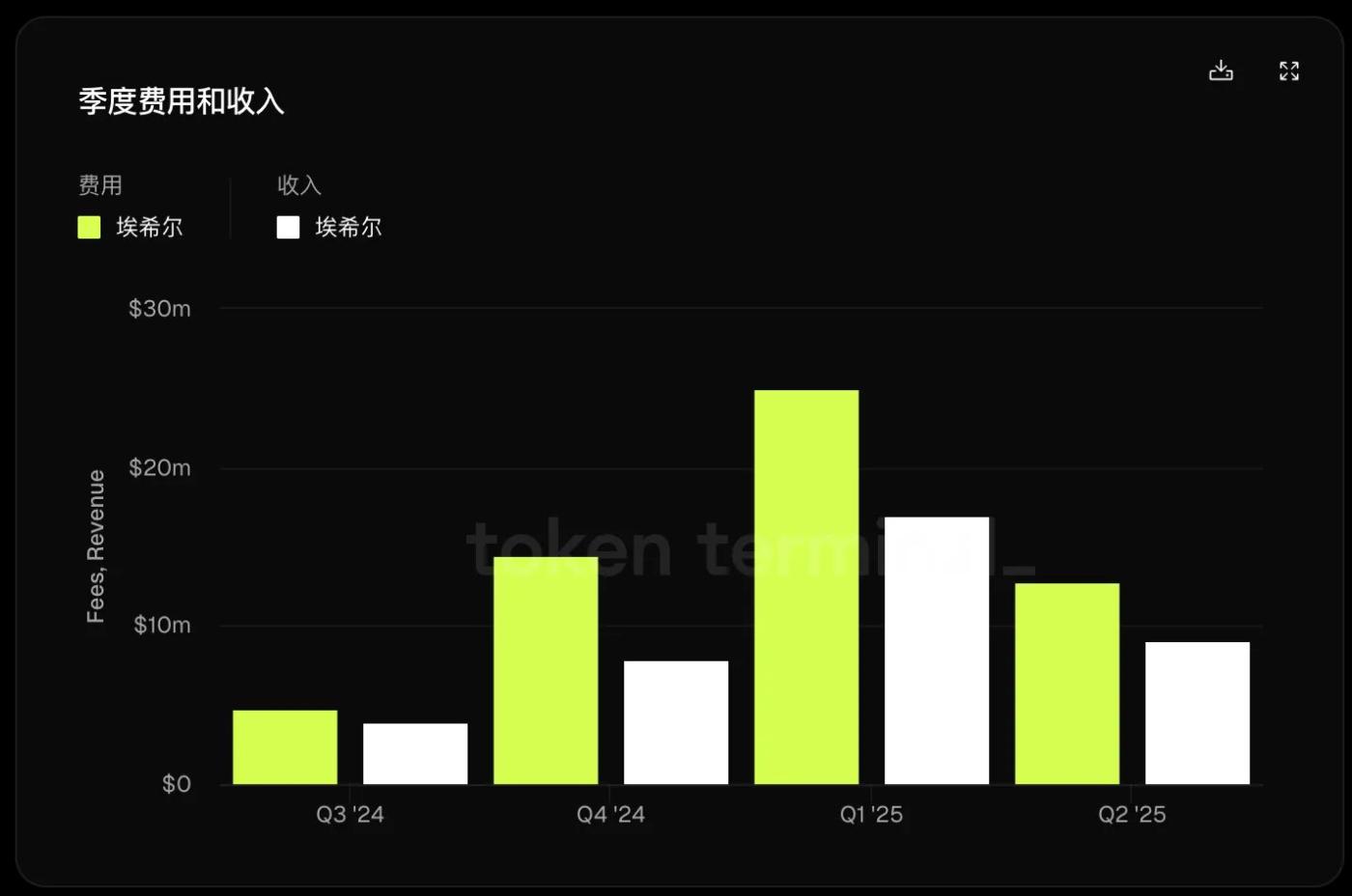
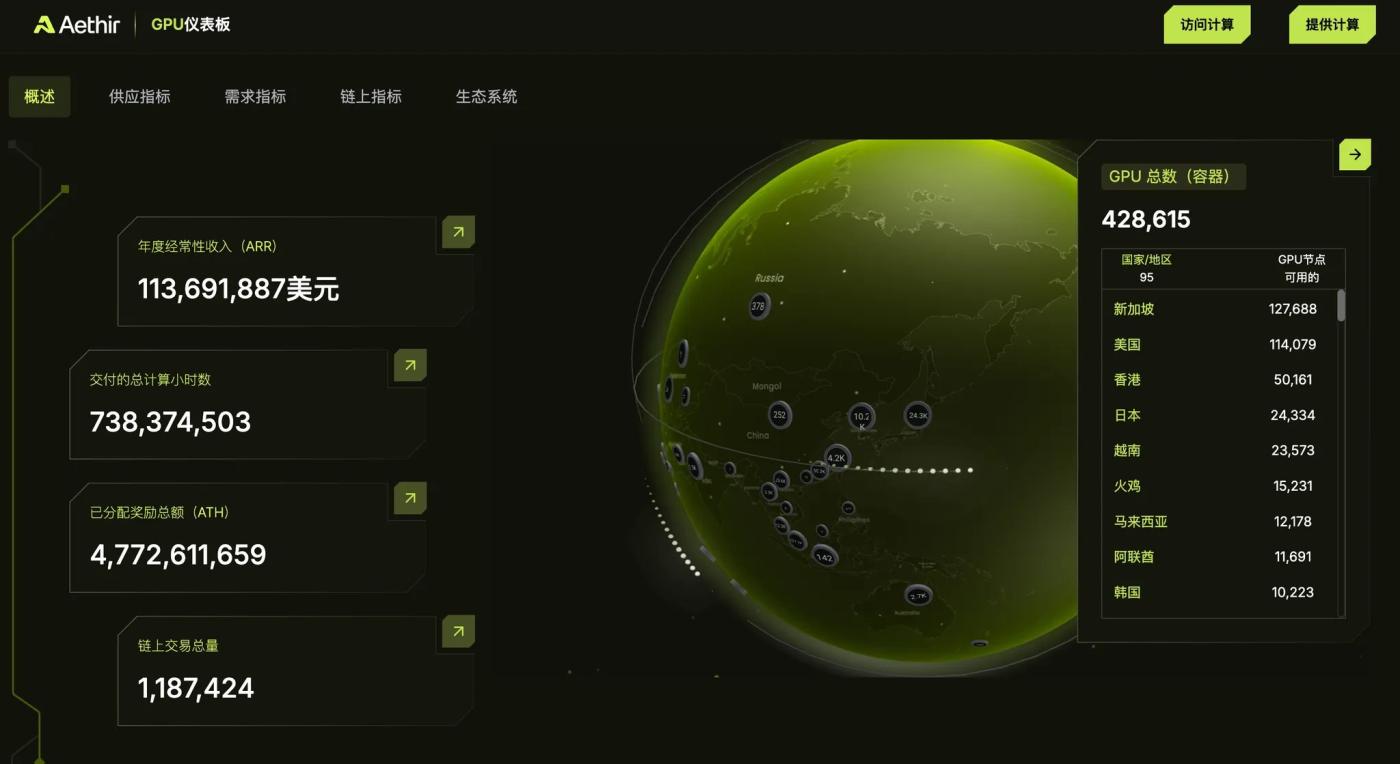
According to information disclosed by Token Terminal, Aethir's cumulative fees have reached $55 million, with an annualized income of approximately $110 million.
This income level is impressive in the Decentralized Physical Infrastructure Network (DePIN) field. In comparison, competitors like Render Network have an annual income of only around $40 million.
Aethir's network covers 95 countries and has 425,000 enterprise-grade GPU containers, with a very obvious scale advantage.
Let's look at a few core data points:
(1) Quarterly Revenue and Fee Conversion Rate:
From the quarterly fees and income chart provided by Token Terminal, in the second quarter of 2024, Aethir's fees were $25 million, and income was $20 million, with a fee-to-income conversion rate of 80%.
This conversion rate indicates that Aethir has good profitability, with 20% of fees used for network maintenance and community incentives.
In comparison, centralized cloud services like AWS typically have operating costs around 40%, so Aethir's decentralized model indeed has an advantage in cost control.
(2) Daily Active Addresses and User Growth:
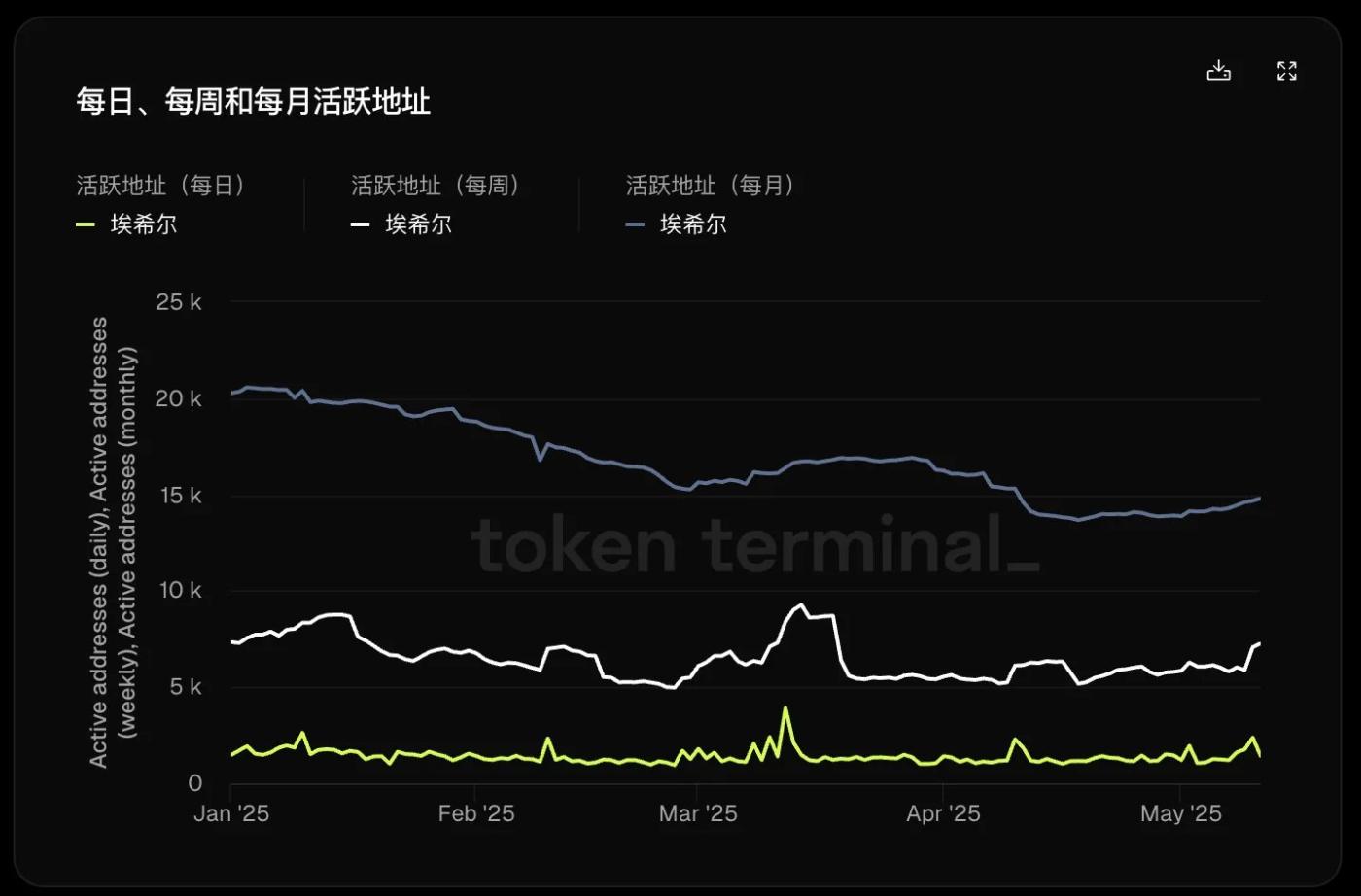
In early 2025, Aethir's daily active addresses stabilized between 5,000 and 7,000, growing approximately 30% year-on-year.
This growth trend is closely linked to the Web3 gaming and AI application boom.
In 2024, the global cloud gaming market grew by 20%, reaching $5 billion, while the AI training market grew by 25%, expected to reach $300 billion by 2027.
Aethir's user growth shows that it has seized opportunities in high-performance computing demand.
(3) Network Scale and Governance Structure:
Aethir's network has over 91,000 Checker Nodes, owned by more than 22,000 community members.
This decentralized governance approach reduces single point of failure risks, with operational risks approximately 15% to 20% lower compared to centralized cloud services.
Additionally, in 2024, Aethir added nodes in 10 new countries, expanding its coverage by 12%, which is much faster than centralized competitors.
2. Aethir's Cost Advantages
To judge a business model, one looks at income on one hand and cost items on the other.
(1) Cost Advantages of Decentralized GPU Network:
Aethir reduces computing costs by approximately 25% by integrating global idle hardware resources.
Comparing with NVIDIA's A100 GPU, which has a market price of around $10,000 to $15,000, Aethir's distributed model significantly reduces enterprise usage costs through the sharing economy.
For example, an AI enterprise training a 75 million parameter model might traditionally need to rent 10 A100 GPUs for a month, costing around $100,000, but through Aethir's network, this cost could drop to $75,000.
This cost advantage gives Aethir strong competitiveness in the AI training market.
(2) Smart Contract Deployment Strategy:
Aethir's smart contracts are deployed on Ethereum and Arbitrum, with Arbitrum as a Layer-2 solution reducing transaction costs by around 70%.
In early 2025, Ethereum's average gas fee was around $5 to $10, while Arbitrum's was only $1 to $2.
This choice not only reduces Aethir's operational costs but also makes its services more accessible to more users, especially better serving developing countries (50% of its covered countries).
This will help Aethir gain a larger market share among small and medium-sized enterprise clients.
(3) Competition with Centralized Cloud Services:
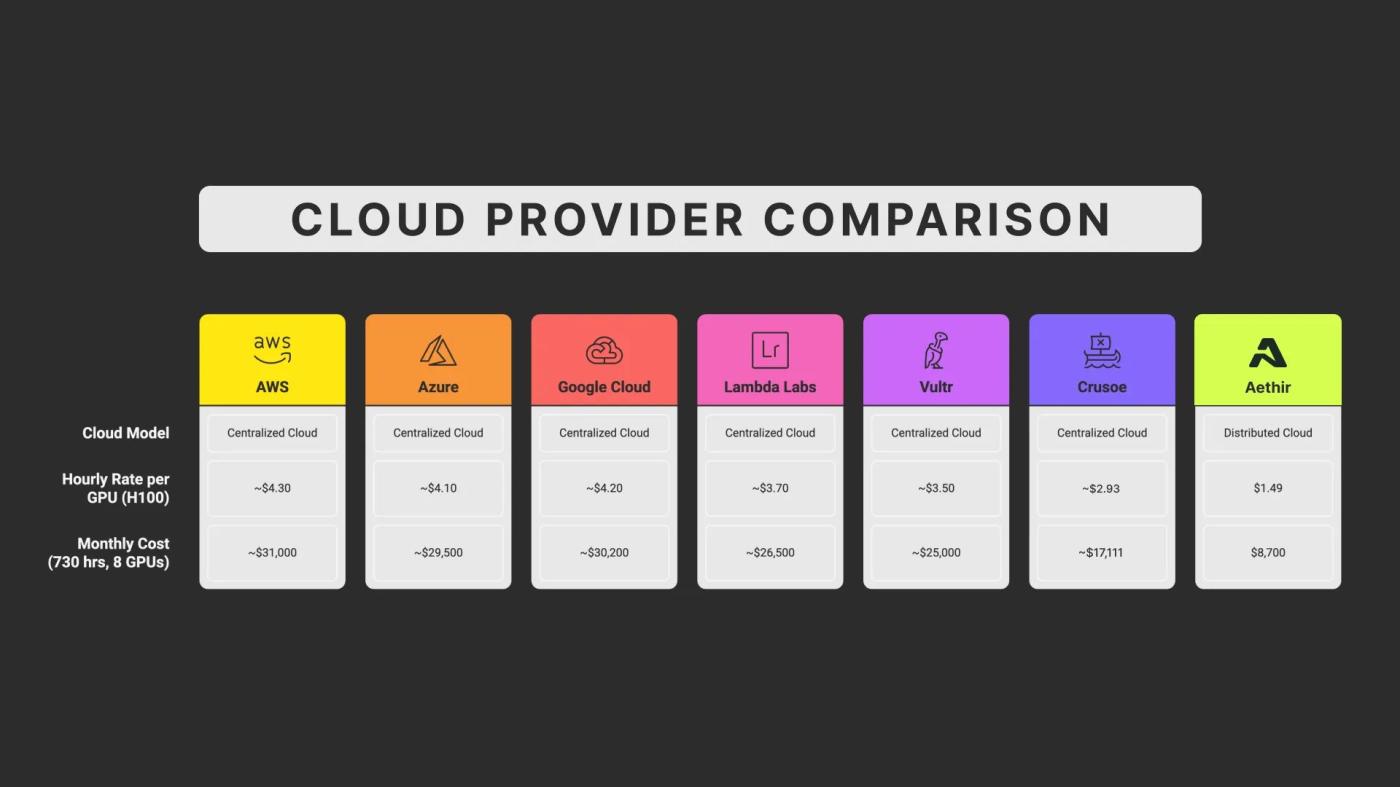
Compared to centralized cloud services like AWS, Aethir has advantages in cost and flexibility. AWS's GPU instances (like G5) are billed hourly at around $3 per hour, while Aethir's on-demand usage model could reduce costs to $2/hour.
Moreover, Aethir's community governance model allows it to respond to market demands faster, such as adding nodes in 10 new countries in 2024, while AWS's regional expansion typically takes several years.
3. Is Eigen ATH Vault Worth Participating In?
Let's first discuss some advantages:
(1) Passive Income: By staking ATH, users can obtain certain annual returns, which is a stable passive income source for users who are bullish on Aethir long-term.
(2) Ecosystem Support: Staking ATH supports Aethir's GPU network, helping it serve more AI and gaming enterprises, indirectly driving ATH's value growth.
(3) Low Barrier: Eigen ATH Vault lowers the threshold for participating in the Aethir network, allowing users to share profits without operating nodes themselves.
Overall, Aethir has secured a place in the high-performance computing market through its decentralized GPU network, cost advantages, and data transparency.
Eigen ATH Vault, as part of its ecosystem incentives, provides users with an opportunity to participate in revenue sharing while reflecting Aethir's strategic layout in attracting community support.
We can continue to pay attention to this project.