Original Author: Castle Labs
Compiled | Odaily (@OdailyChina)
Translator | Ethan (@ethanzhang_web3)
Translator's Note: In the Web3 world, nothing is more scarce and realistic than "attention" - you might not carefully study the whitepaper, but you will definitely notice the current hot topics amid the bombardment of social media.
This article is an open letter to crypto Twitter, almost like an experimental memo of "decentralized chatterbox economics", focusing on new narratives driven by emotions and the emerging paradigm shift of attention commercialization.
We should rethink how the Web3 world should assess "influence". After all, KOLs, COLs, project parties, creators, and even spectators are being drawn into this battle for discourse power.

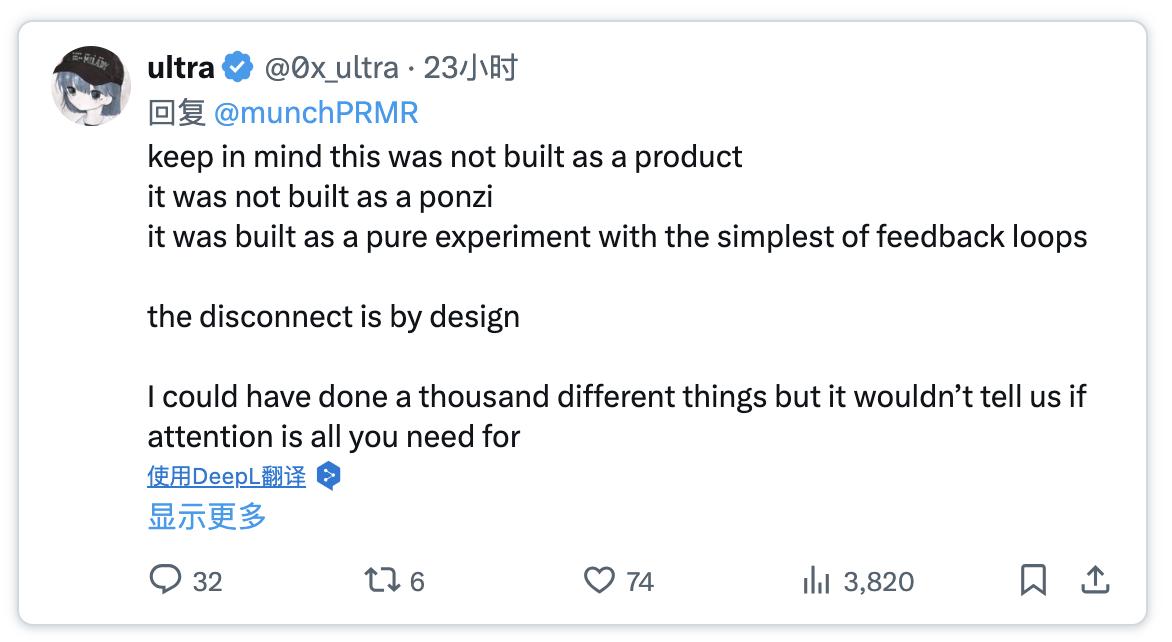
With a touch of mystery and in-depth research on "viral propagation", @0x_ultra has made the crypto Twitter community frequently discuss @stayLoudio. So far, Loudio has occupied over 70% of the "mind share" in English crypto Twitter.
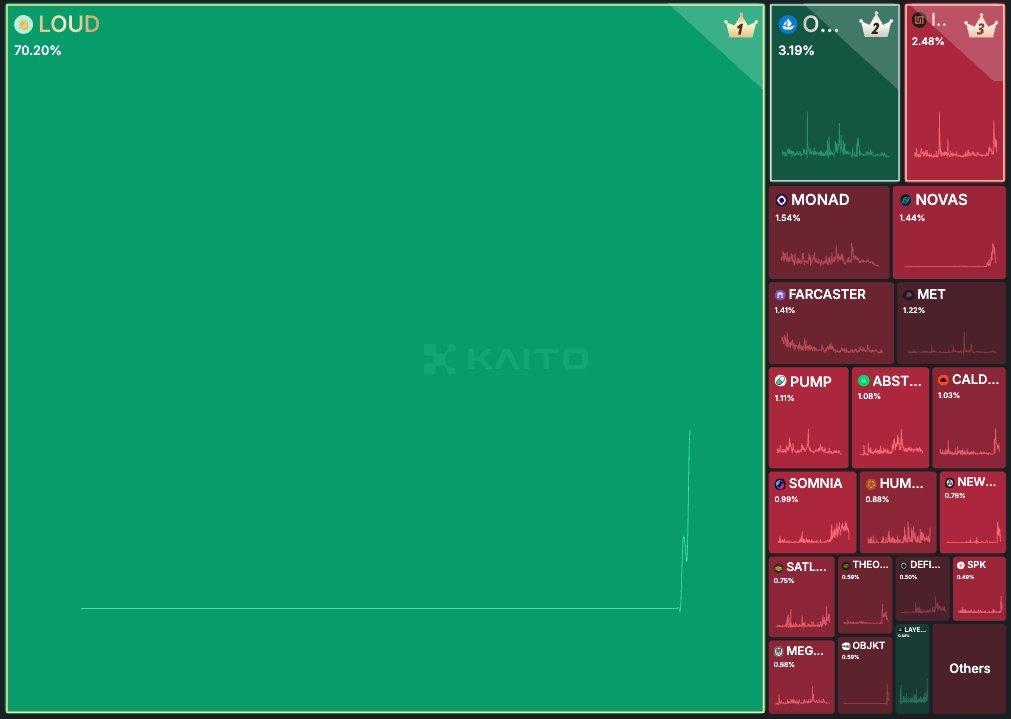
This phenomenon perfectly fits the evolving trend of attention and mind share's role in current narratives, which was touched upon in the article I wrote for Kaito.
In short, Kaito reshaped the connection between protocols and KOLs to enhance brand awareness and expand crypto Twitter distribution capabilities. We all know that the KOL track has long been manipulated: a few large accounts control the "entry ticket" for content distribution.
Meanwhile, many KOLs use bots and fake interactions to "inflate numbers". Projects often spend money but can't buy real attention.
Kaito effectively decentralized the attention market, turning "attention" into a quantifiable commodity through a universal reputation system.
This system can also serve as a screening mechanism, ranking KOLs based on their smart fan base and actual contributions. In that article, I predicted that the attention structure would shift from KOLs to COLs.
Through Kaito, protocols can bypass marketing and KOL intermediaries, rewarding based on community contributions.
Loudio goes further, becoming a brand new experiment about attention and user interaction. It integrates the following elements:
@KaitoAI: Attention economic model
@Believeapp: Distribution platform aligned with creator interests
The most attractive point of this project is that it borrows the "3, 3" mechanism initiated by OlympusDAO, but applies it to the reputation dimension: connecting those who need interaction and content with KOLs and "chatterboxes" (louders).
The "3, 3" here should not be understood traditionally, but also means an unconventional louders collaboration mechanism. To continuously lead the leaderboard, they might need to form alliances, create secondary markets, share rewards with community members, and achieve collaborative warfare.
Compared to Olympus, Loudio has more social attributes: you might sell your OHM, but what if what you're betting on is reputation?
For KOLs, your "value" is your "reputation".
Building on Kaito, Loudio further extends a new social contract framework where KOLs can monetize their attention by continuously competing for top leaderboard positions and seeking rewards.
Without further ado, here's the basic architecture of the Loudio system:
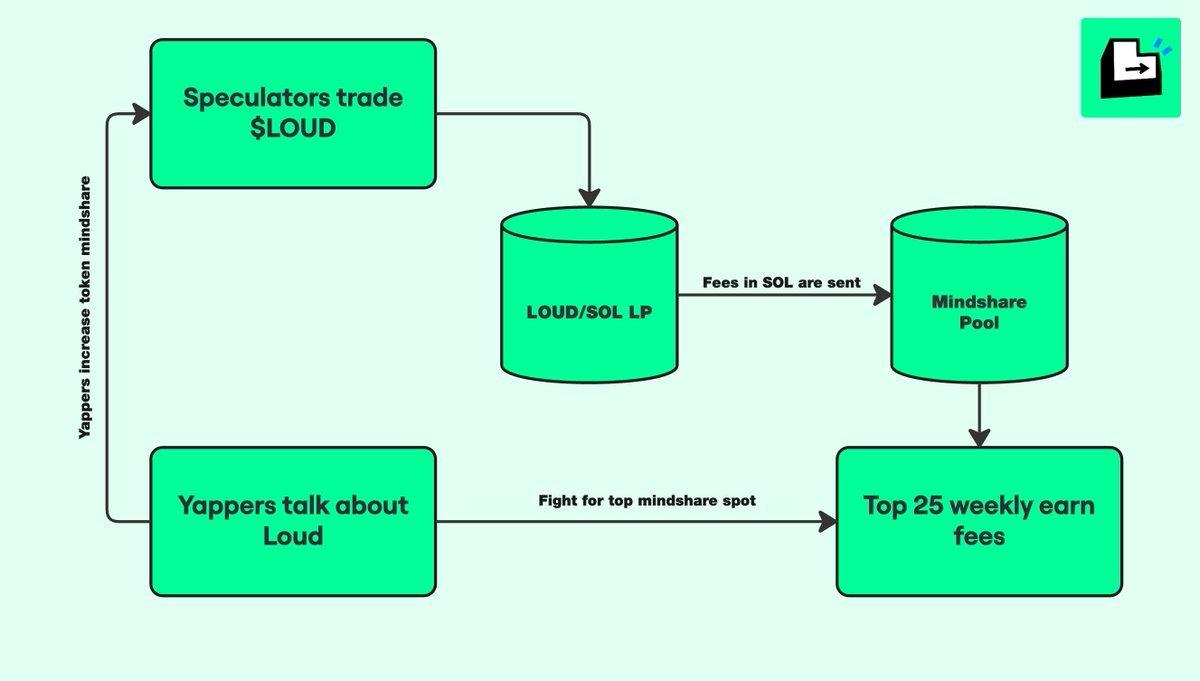
How does the LOUD flywheel mechanism work?
Each LOUD token exchange generates a 4% fee;
Weekly fees are collected in SOL into the "Mindshare Pool", distributed proportionally among the top 25 contributors;
18% of fees are allocated to KAITO stakers;
The strict screening threshold for the top 25 is intentional to incentivize loyalty, content quality, and competitive motivation.
This "gamification" mechanism is crucial: Users are incentivized to speak as "noisily" as possible, competing for maximum attention to win entry to the Mindshare reward pool.
The LOUD token should not be "over-deconstructed" by crypto analysts on X. As Ultra said, it should be viewed as a tool for measuring and pricing attention.
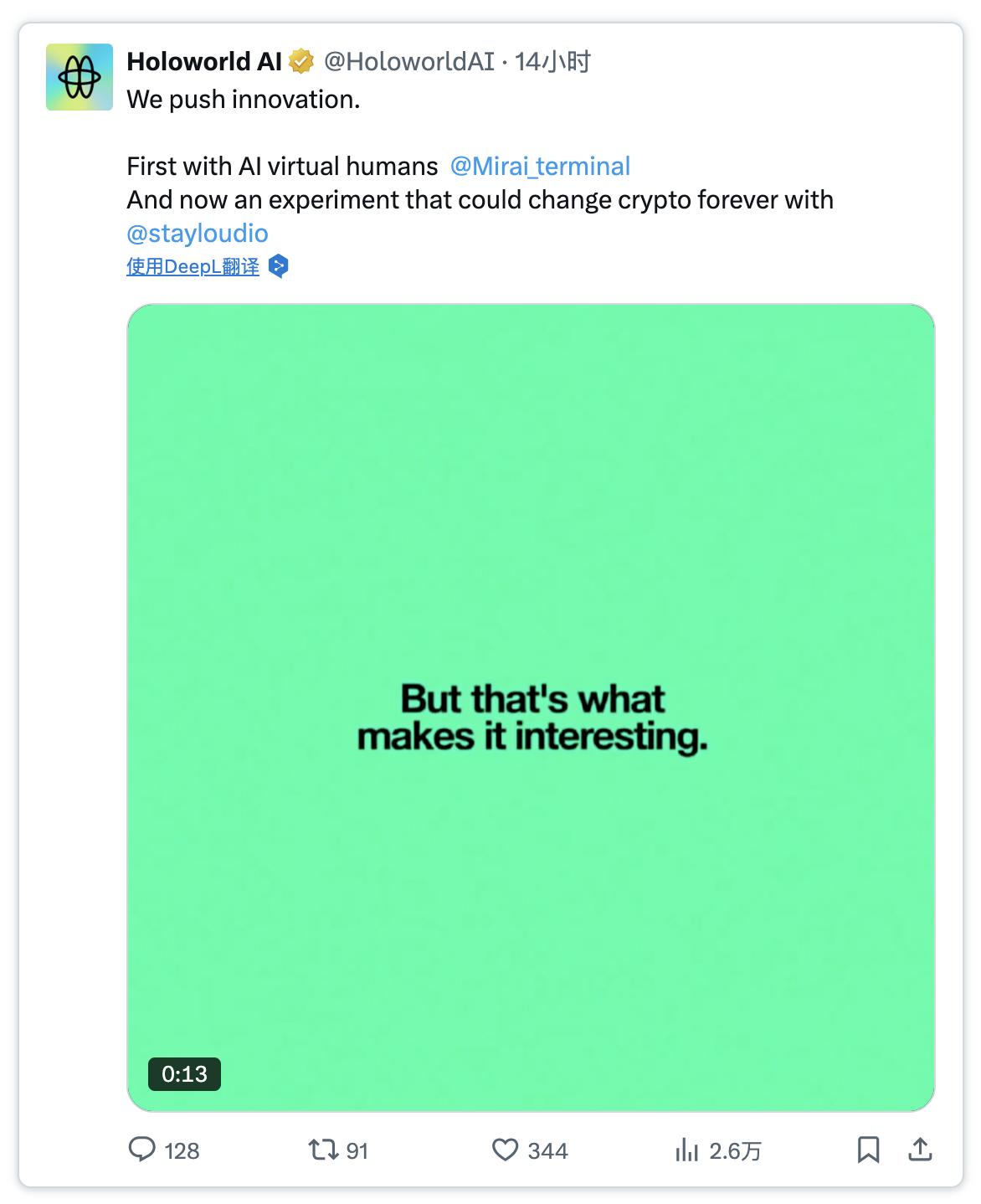
Loudio will officially launch tomorrow on the @HoloworldAI Launchpad.
Team worth watching:
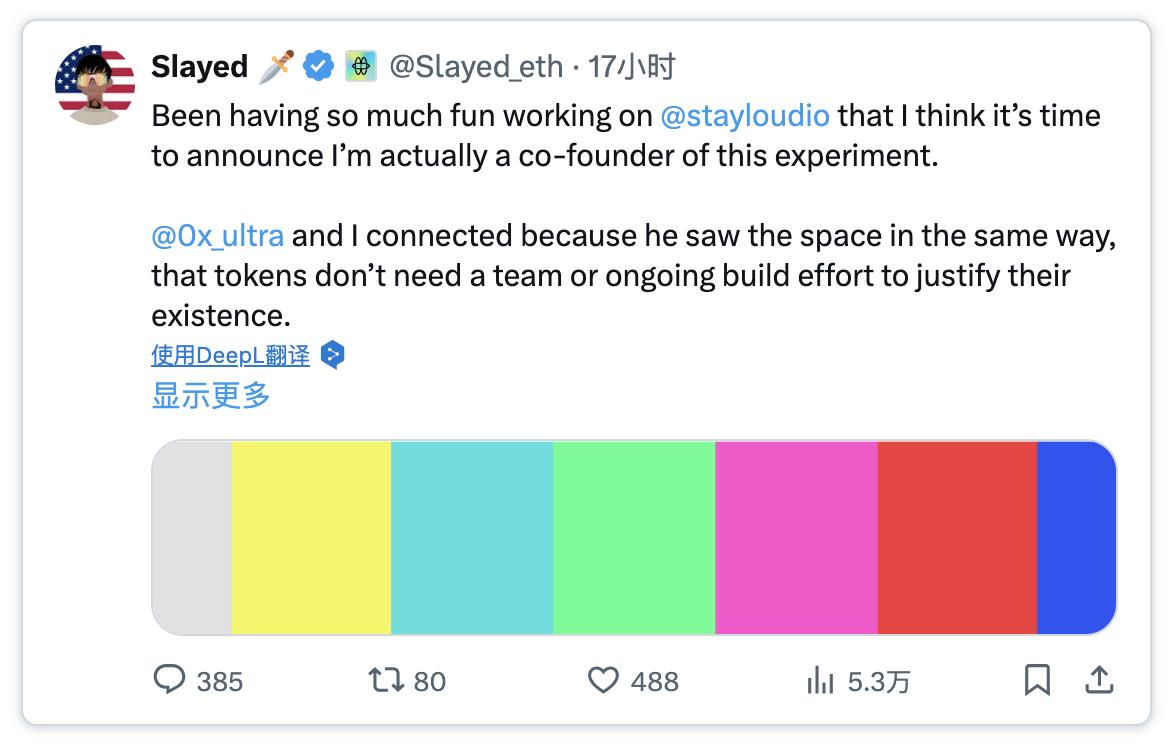
Slayed, one of Loudio's core members and co-founder:
Loudio Player's Handbook
Why will Loudio go viral?
Hitting deep human emotions: Am I really as cool as I think I am? Can I break into the top 25 by tweeting? This is the ultimate narcissism test for KOLs. Getting big V's to personally compete for attention resources is no joke. This is crucial to Loudio's current attention level.
Limited information sparking speculation: Not many details are published, causing everyone to wildly guess. This uncertainty actually sparked discussion enthusiasm. The community trusts Ultra, believes in the narrative, and believes in the connection with Kaito.
Extremely simple mechanism: Completely uncomplicated. People just need to "blah blah" talk, without needing to mine or farm.
Riding Kaito's momentum: How should project parties use Kaito? It's not yet entirely clear, and Loudio is among the first to try, enjoying "early bird dividends", market curiosity, and potential value. If successful, Kaito will establish its position as infrastructure and an analytical component, not just for Web3, but potentially expandable to broader fields.
Kaito continues to reap victory fruits:
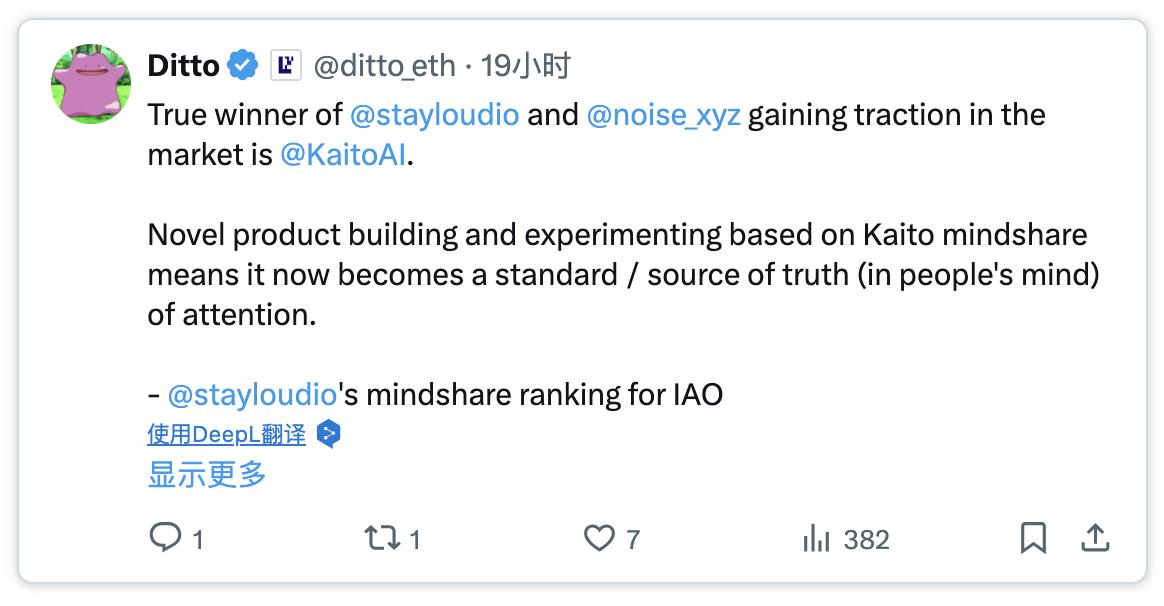
If Loudio succeeds, forms like "Initial Attention Offering" might become the 2025 version of ICO. This could be one of the breakthrough points for future narratives: (The view from @beast_ico is brilliant)
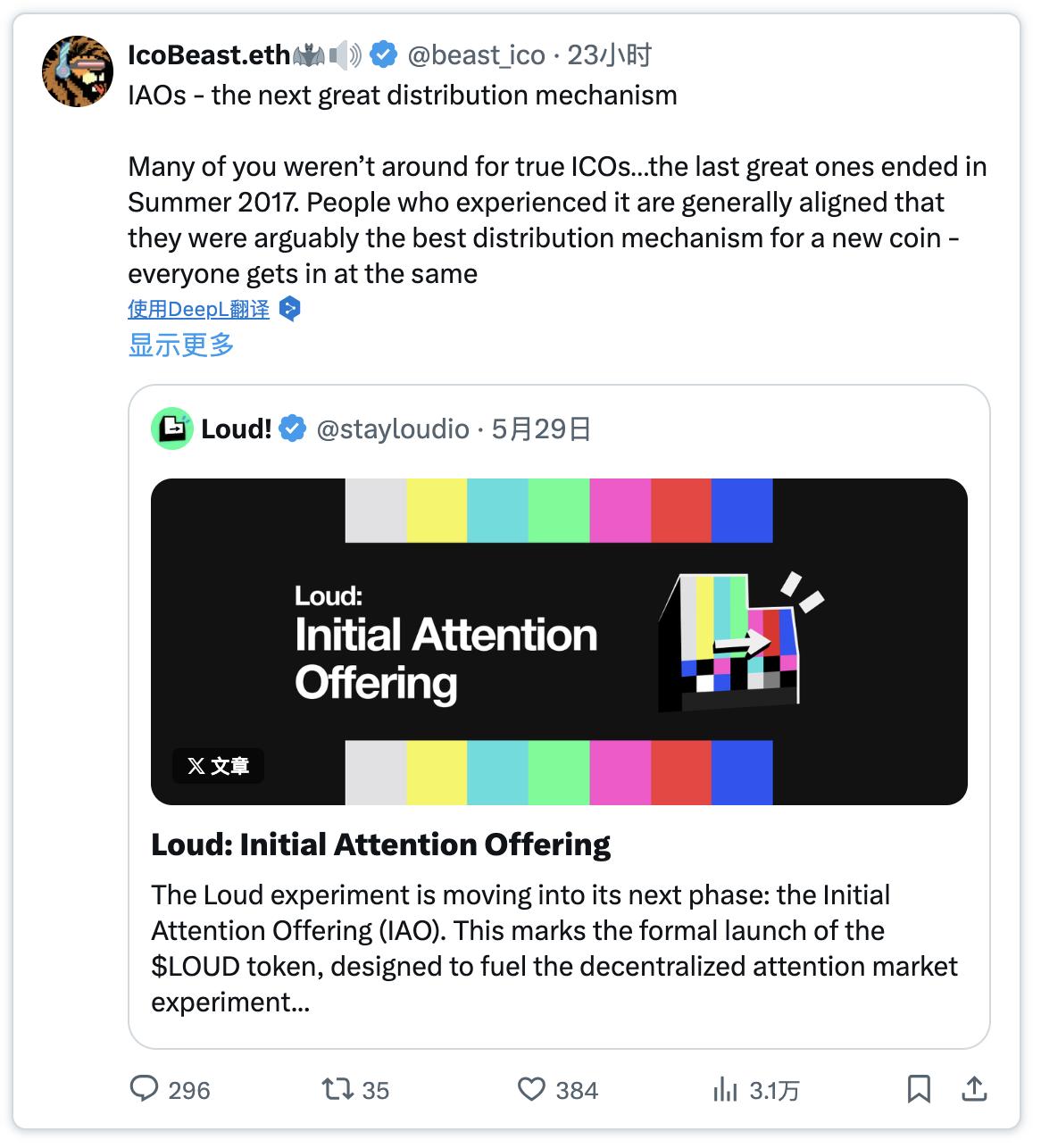
So... will Kaito launch its own IAO Launchpad?
Concerns and Reflections
When Kaito and Loudio are fully operational, will our timeline be filled with noise? Will those who pay more get retweeted and noticed?
Kaito has reconstructed the attention distribution model, becoming the "most dollar-efficient" distribution mechanism, accelerating attention transfer and information "screen flooding" trend.
But at the same time, don't hate the players, hate the game itself.
Social media has long been transformed by various nested monetization mechanisms, and this path will obviously continue.
However, this will ultimately reach the "inflation critical point" of attention.
At that time, how will social platforms act?
Will they actively filter out these noises?
Or will they let thousands of AI accounts further exacerbate the chaos?
These are all worth our deep contemplation.
Another concern: Is Loudio unfriendly to "small accounts"?
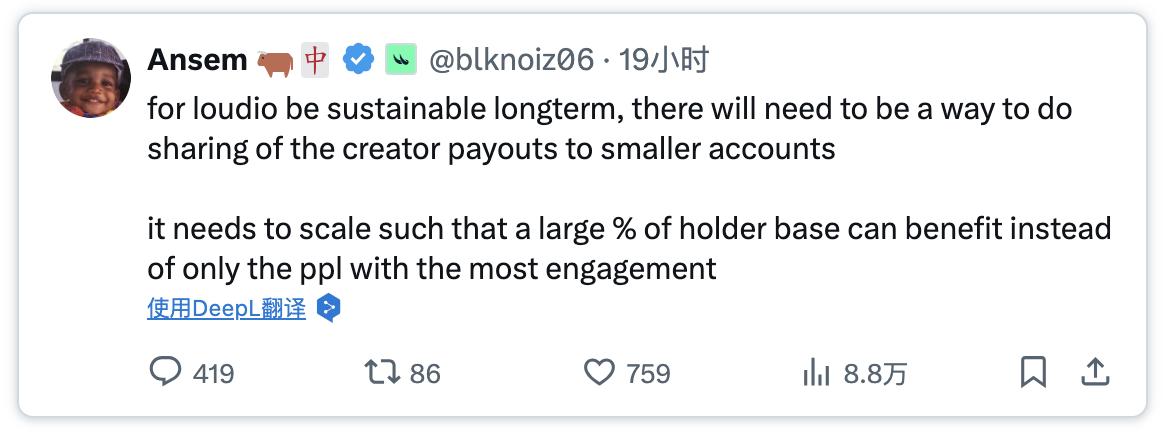
Loudio is essentially an "attention market". Project parties all want top-tier accounts to endorse them.
No one cares about Francescoweb3's Twitter threads. They only want @beast_ico and @blknoiz06 to speak up.
So do medium and small accounts still have a chance?
The answer is: they might participate through the following ways:
Receiving commission sharing from creators
Receiving airdrops from project parties
Participating in third-party markets led by the community
Otherwise, it's unrealistic for them to break into the top 25 of the ranking.
This has been partially alleviated in the broader participation threshold of IAO.
Summary
What is the ultimate form of Loudio? We still need to wait a bit longer.