This article is machine translated
Show original
In just a few days, we witnessed Matt's division and reunification, with the key being Trump's bill canceling electric car subsidies, followed by Musk announcing the formation of the "American Party" after voting, claiming to represent 80% of the silent moderates.
Pinning hopes on the Democratic Party reflects humanity's eternal pursuit of collective intelligence: optimizing social governance and solving problems through group decision-making.
People introduced collective intelligence into politics, thus creating political parties; into technology, thus creating the internet. Collective intelligence has repeatedly advanced society, and while history does not repeat, it rhymes.
Today's rapidly advancing AI similarly needs collective intelligence. A recent Columbia Digital Journalism Research Center survey showed that 8 mainstream AI searches have an error rate as high as 60%, revealing that systemic hallucination risks have been neglected on the path to strengthening individual models.
The current main contradiction lies in the AI individual's triple dilemma:
1. Knowledge blind spots, where even top professional models remain underperformers outside their training sets;
2. Delayed error tracing, with black box mechanisms always lagging behind disasters;
3. Misaligned incentive systems, where developers' commercial interests naturally conflict with truth-seeking.
As the industry desperately seeks a remedy, an AI infrastructure project @AlloraNetwork, funded with $35 million and completing 692 million inferences on its test network, has spent five years developing a Model Coordinating Network (MCN) to reconstruct intelligent production logic.
Saudi Telecom, Alibaba, TV Asahi, Exaion from EDF, and Amazon AWS have all established cooperative relationships with it.
The dilemma of human collective intelligence essentially stems from a lack of coordination mechanisms, with neither a truth anchor nor a correction economy.
Allora has constructed a human-machine hybrid collective intelligence framework through four network participant types: workers, reputation providers, validators, and consumers.
Workers include 280,000 specialized models, like academicians in various fields, engaging in rational collaboration around 55 specific topics such as predictive analysis, sentiment capture, and generative reasoning, driven by on-chain game theory mechanisms.
Reputation providers - letting heroes check heroes, letting good guys check good guys - can effectively avoid non-professional models generating fictional stories in mismatched scenarios.
This is far from a simple model stacking, but rather injecting predictive market game mechanisms into AI collaboration, aggregating 280,000 models to compete continuously in pursuit of truth, selecting the most appropriate model's answer to ultimately output a decision superior to individual models.
For instance, the predictive network would convene public opinion analysts, historical event comparison experts, and betting odds analysis experts to work collaboratively.
In this presidential election, with popular candidates withdrawing and market volatility, Allora's intelligent prediction entity Pauly still achieved good real-market performance:
Achieving a 13.79% TVL yield on Polymarket within 3 months, translating to an annualized rate of 67.65%.
This collaboration between Coinbase AgentKit, Allora, and Virtual happens to constitute AI's body, brain, and soul.
Moreover, Allora is not just a technical protocol, but a constitutional framework for a machine society.
History has proven that collective intelligence has always been accompanied by stubborn ailments: humans are driven by their "backsides," and majority consensus might actually strangle truth. AI without personal interests is precisely the best carrier for a utopian democratic experiment.
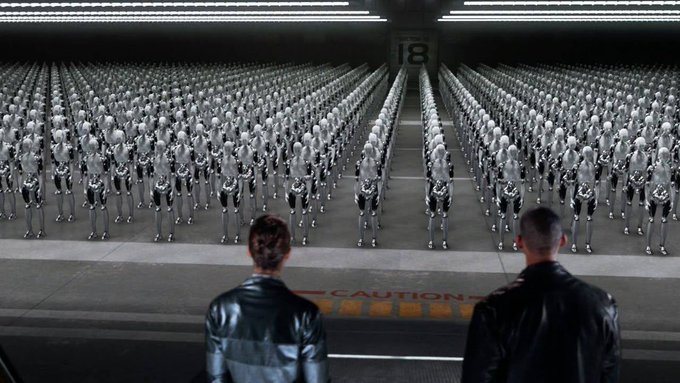
OpenAI taught AI to think, Allora teaches AI to debate. When machines learn humanity's deepest wisdom - believing in collective intelligence over individual genius, the true intelligent revolution has just begun.
Allora achieves dynamic error correction through a real-time reputation system, with reputation providers and network validators required to stake ALLO tokens, creating a perfect closed loop between pursuing accuracy and maximizing returns, potentially drawing a perfect conclusion in the entire collective intelligence evolution process.
While tech giants are still training trillion-parameter individual models, Allora has chosen a path of greater philosophical depth: not creating a super brain, but designing collaboration rules between brains.
This perhaps explains why top capitals like Polychain and Delphi Digital dare to bet millions - they see not just a technical breakthrough, but a paradigm shift in intelligent production relations.
In the future, we will witness competition between two AI evolution paths:
One is the centralized large model path pursued by big companies, seeking an omniscient god;
The other is Allora's collective intelligence collaborative network (MCN).
The future is unknowable, but history has long provided its answer.
Tomorrow I will qt this
🐮
@MirraTerminal
Looking forward to the Defai ecosystem brought by Allora

From Twitter
Disclaimer: The content above is only the author's opinion which does not represent any position of Followin, and is not intended as, and shall not be understood or construed as, investment advice from Followin.
Like
Add to Favorites
Comments
Share
Relevant content