REX-Osprey Solana Staking ETF recorded a trading volume of $33 million on its first day, exceeding many market observers' expectations. Its rapid launch is partly attributed to its choice of a "C-type company" registration format, which allowed the fund to bypass traditional ETF approval procedures and quickly go to market.

Author: Weilin, PANews
On July 3rd, the first US Solana Staking ETF - REX-Osprey Solana Staking ETF (ticker: SSK) was officially listed on the Cboe BZX and received a positive market response. The first-day trading volume was $33 million, with $12 million in inflows, performing better than many market observers anticipated.
The ETF not only tracks Solana (SOL) market prices but also provides investors with native Solana staking rewards, jointly managed by REX Shares and its sister company Osprey. Its first-day trading volume has already exceeded early Solana and XRP futures ETFs.
Compared to traditional crypto asset ETFs, the REX-Osprey Solana Staking ETF offers an innovative feature - variable monthly staking rewards dividend, with a current dividend rate of 7.3%. Bloomberg ETF analyst James Seyffart commented: "This is a healthy trading start," and noted that trading volume reached $8 million within the first 20 minutes of listing.
Providing Direct SOL Price Exposure and Staking Rewards
Reviewing recent SOL futures ETF performance, on March 17th, the CME Solana Futures ETF was listed with a first-day trading volume of $12.1 million, lower than market expectations. On March 20th, Volatility Shares launched two Solana Futures ETFs, The Solana ETF (SOLZ) and 2x Solana ETF (SOLT). According to Yahoo Finance, as of April 1st, both products maintained stable performance with average daily trading volumes of around 80,000 and 140,000 shares, respectively equivalent to $1.25 million and $2.16 million, indicating relatively small scale and insufficient market demand.
In contrast, in January 2024, multiple spot Bitcoin ETFs launched had a total trading volume of $4.6 billion on their first trading day.
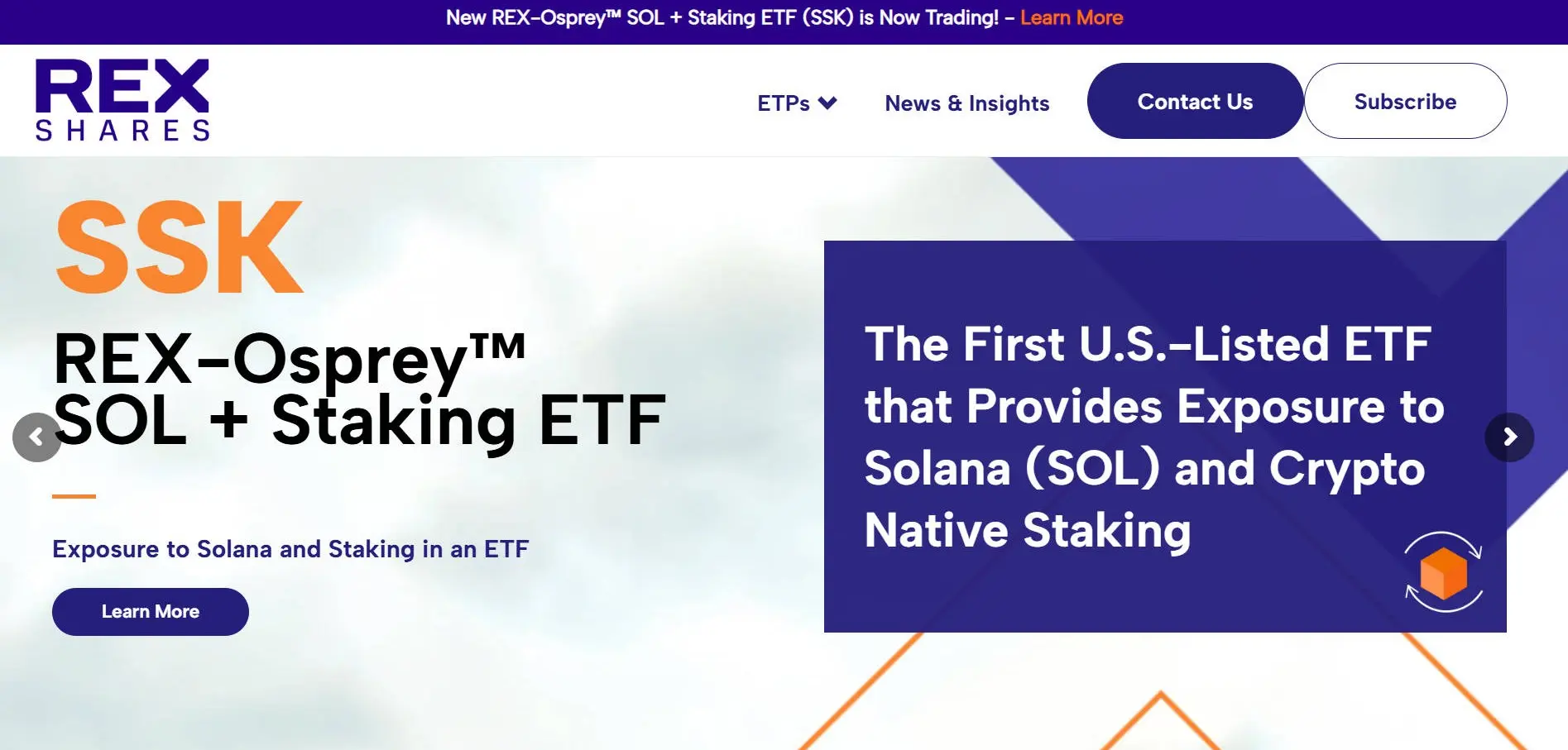
According to the official website, SSK aims to meet various investor needs:
- Retail investors seeking crypto exposure through brokerage accounts
- Crypto-native investors supporting blockchain innovation and mass adoption
- Financial advisors and registered investment advisors (RIA) seeking compliant blockchain income access
- Institutions requiring ETF transparency
According to official guidance, staking rewards are paid to the fund in kind and increase its net asset value (NAV), which may generate taxable income for shareholders. Depending on the fund's earnings and distributions, these incomes might be considered ordinary income, capital gains, or capital returns. Investors should consult tax advisors for guidance.
"C-Type Company" Structure, Bypassing Traditional Regulatory Frameworks
[Rest of the text continues in the same professional translation style]
Originally, staking methods typically meant giving tokens to a crypto exchange or configuring one's own validator setup, but the SSK ETF significantly lowered this threshold. Traditional investors can now obtain passive exposure to Solana and earn staking rewards through the same brokerage accounts they use for stocks or index funds. The approval of the Solana staking ETF now provides a roadmap. However, Ethereum's staking mechanism (such as slashing and longer unlock periods) may have more complexity.
Market perspectives suggest that under the current US government regulation, the SEC is not trying to completely block staking. It just needs an appropriate framework: one that can handle returns, taxes, custody, and compliance in a way traditional finance understands. Although REX and Osprey are not as well-known as BlackRock, they now have a first-mover advantage in what could become a multi-billion dollar ETF category.
Currently, multiple companies are competing for the opportunity to launch a Solana spot ETF, with Invesco and Galaxy joining the race at the end of June. Analyst Balchunas states that these funds may be approved within two to four months. At present, at least 60 other Altcoin ETF proposals are awaiting SEC review and potential approval.