Over the past three months, the crypto market has seen a significant rebound. The performance of mainstream public chains has become the market's focus, with Ethereum making a triumphant return under the dual push of ETF funds and listed company purchases. Prices of Solana, Sui, Hyperliquid, and others have also seen substantial increases. From the price trend, the market seems to be entering a long-awaited altcoin season. But behind the prices, how are these public chains actually developing?
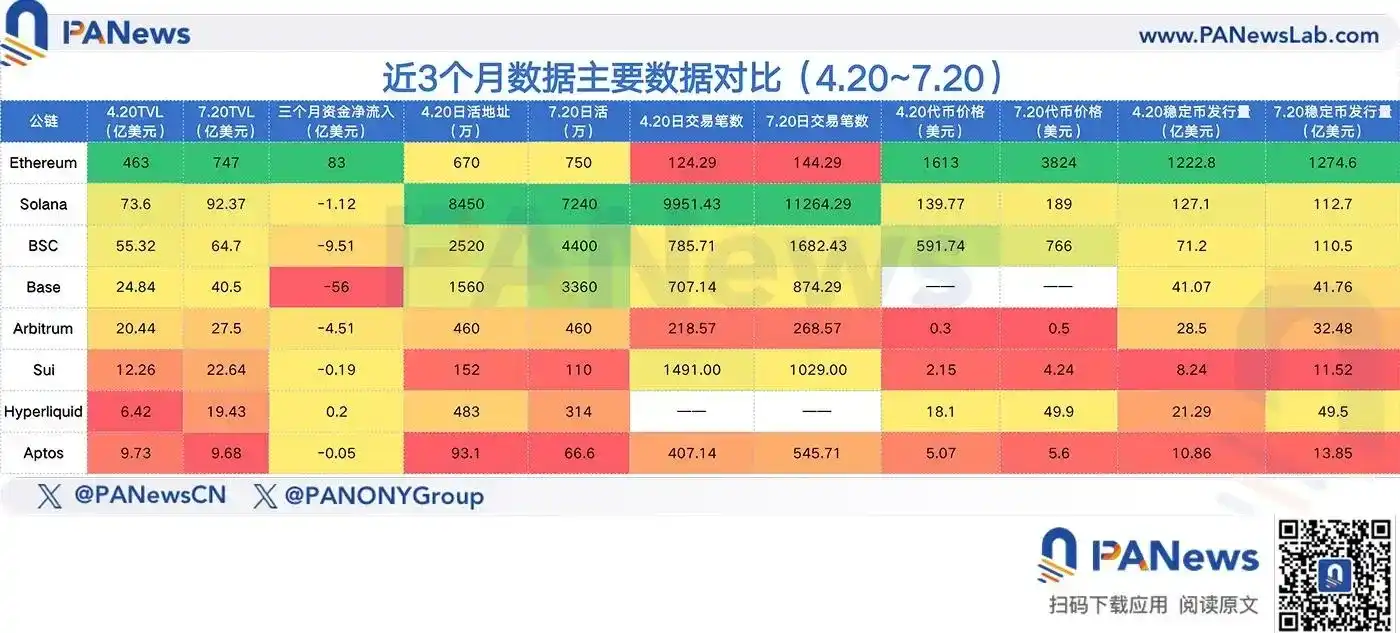
This article has sorted out the core metrics of 8 public chains with high TVL and popularity over the past three months - including price, TVL, capital flow, on-chain activity, and ecosystem progress - to outline the real race of this public chain competition. The data period is from April 20 to July 20.
Ethereum: A Triumphant Return Catalyzed by Capital
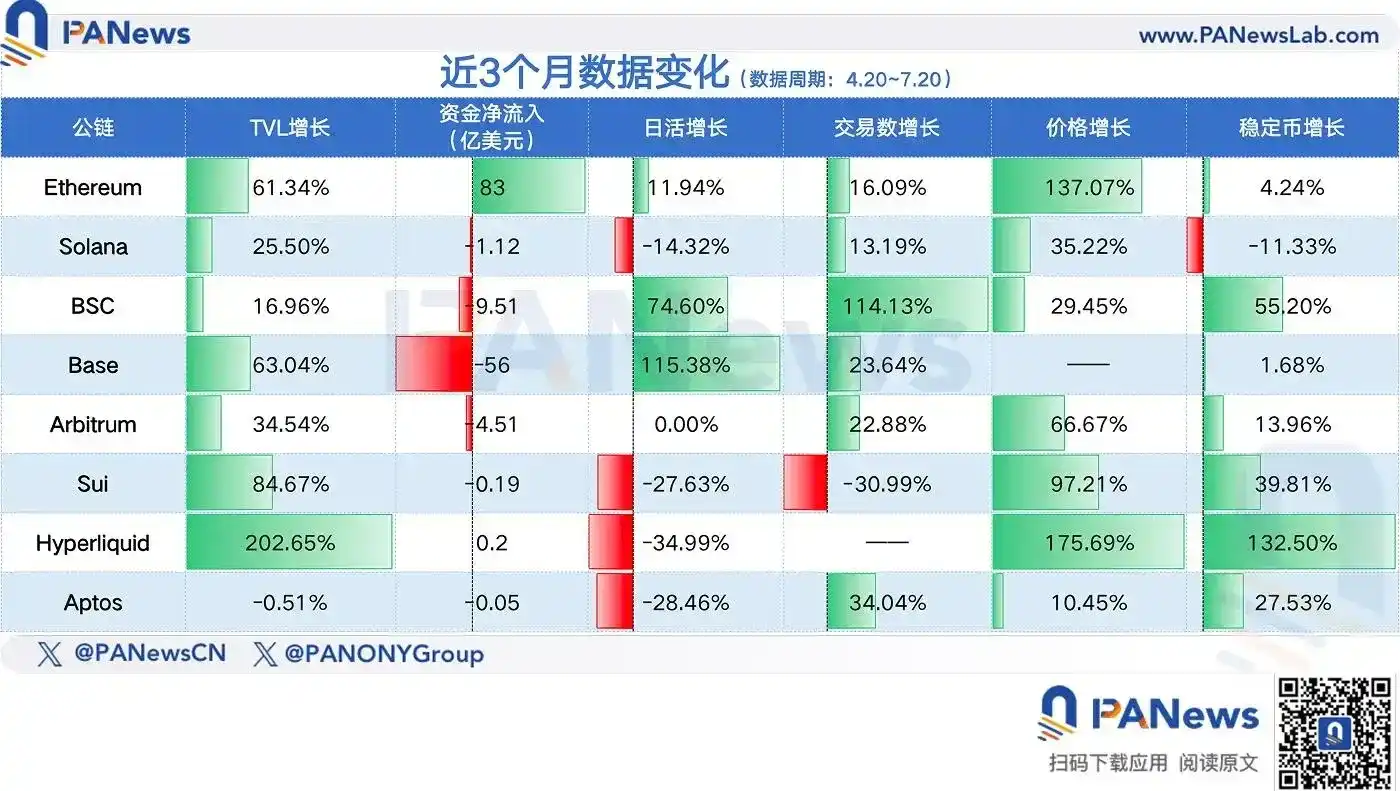
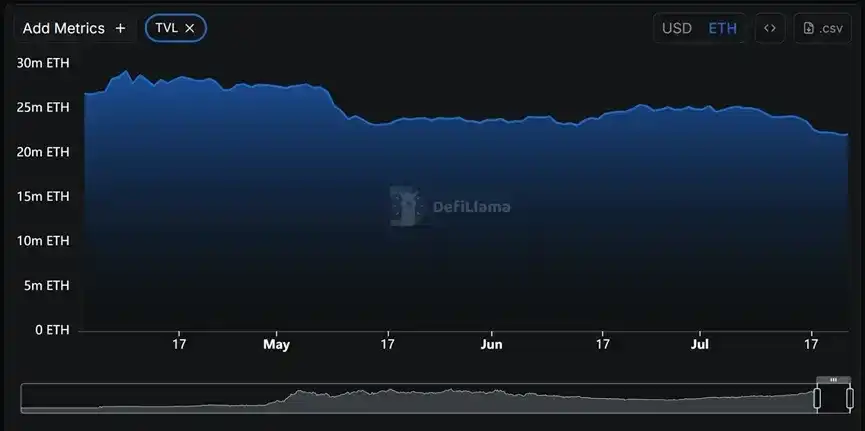
Ethereum has seen significant improvements across various metrics, which are largely synchronized with its price performance. Over the past three months, Ethereum's price grew from $1,600 to over $3,800, an increase of more than 130%. Behind the price surge, Ethereum's ecosystem TVL also grew by 61.34% during the same period, with a net inflow of $8.3 billion in on-chain funds, again becoming the public chain with the largest fund inflow. However, TVL growth is mainly due to the rise in ETH token price. In terms of ETH quantity, the Ethereum ecosystem's ETH amount has been in a downward trend, dropping from 28.39 million in April to about 22.28 million currently, a 21% decrease.

In terms of daily active addresses and transaction count, they increased by 11.94% and 16% respectively over the past three months, without particularly notable improvements. Additionally, Ethereum's spot ETF showed significant growth during these three months, with a net increase of about $5 billion. Combined with multiple US-listed companies following MicroStrategy's example and using Ethereum as a reserve token, this has provided more buying pressure and positive market sentiment. Overall, capital-driven factors may be the primary reason for Ethereum's significant price increase.
Solana: Market Cap Rebound and Reduced Activity Challenges
Unlike Ethereum, SOL's price has also seen a significant increase, rebounding from $139 to a high of $189. However, looking at Solana's ecosystem data, many metrics not only haven't improved but show a downward trend. In the past three months, the net on-chain fund outflow was about $112 million, and daily active addresses decreased by 14%. Stablecoin issuance also slightly declined, reducing by about $1.5 billion.
TVL increased during this period, from $7.3 billion to $9.237 billion. From the ecosystem's performance, Pump.fun remains the platform with the largest trading volume in the Solana ecosystem, contributing $234 billion in trading amount in the past month. Additionally, among the top-ranked DEXs, OKX DEX ranked in the top ten with a monthly trading volume of $4.6 billion, which was unexpected.
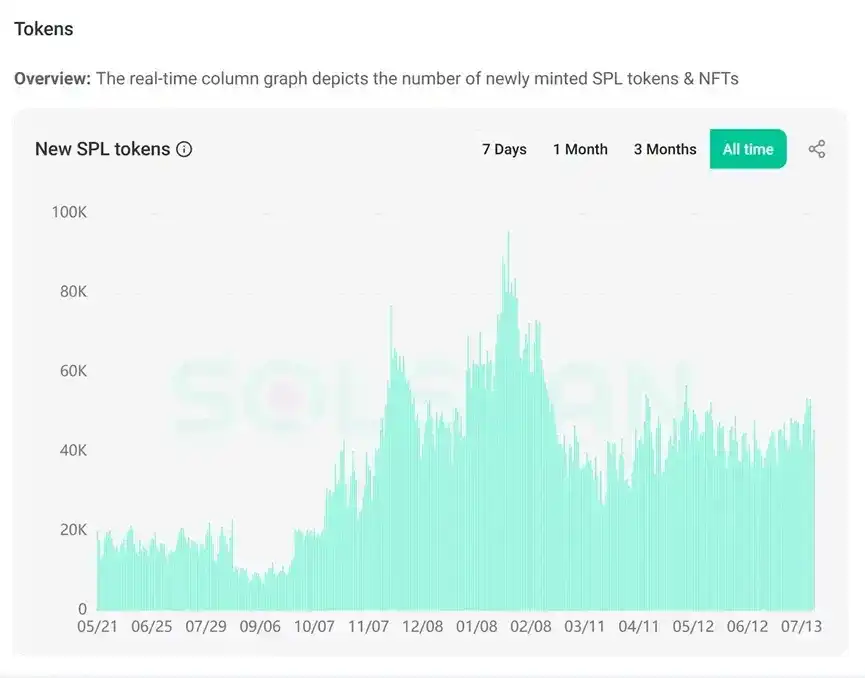
In terms of MEME coins, the current daily new token issuance on Solana is about 40,000 to 50,000, a significant decline from the 90,000 to 100,000 level in January. However, it remains relatively stable overall, without a cliff-like drop.
Currently, Solana's staking rate is about 66%, but it's clearly visible that the number of validators is declining, which means larger validators are gradually replacing smaller ones.
[The translation continues in the same manner for the rest of the text...]Looking at on-chain data, the TVL increased from $640 million to $1.943 billion, a growth of 202%. The stablecoin issuance increased from $2.1 billion to $4.9 billion, quickly becoming the fifth-largest public chain in terms of issuance. After experiencing a previous decentralized trust crisis, Hyperliquid's vault HLP revenue recently climbed again and broke through $68 million, creating a new historical high. After entering July, Hyperliquid's daily new user count also rose to over 3,000.
Aptos: A Latent Performer in Data Deceleration
Compared to other public chains, Aptos appears somewhat underwhelming in both on-chain data and price. The price increased by 10% in 3 months, while key metrics like TVL, capital inflow, and daily active addresses were negative. The most significant change might be a 34% increase in daily transaction count and a $300 million increase in stablecoin issuance. Compared to Sui, another MOVE language chain, Aptos seems to be lagging in multiple data dimensions.
Overall, recent public chain data performance does not appear as intense as token prices. Although networks like Sui, Hyperliquid, and Base have shown clear improvements in data driven by the market, these improvements are obviously lower than token price increases. Clearly, this is a stage where capital recovers ahead of the ecosystem. Behind this recovery, whether token price performance can be transformed into prosperity across public chain ecosystems, and even drive actual application tracks like DeFi and chain games as in previous bull markets, might be the core factor in sustaining this altcoin season. Therefore, although current prices and on-chain data seem out of sync, these data may become decisive factors for prices in subsequent developments.
Click to Learn About BlockBeats Job Openings
Welcome to Join BlockBeats Official Community:
Telegram Subscription Group: https://t.me/theblockbeats
Telegram Communication Group: https://t.me/BlockBeats_App
Official Twitter Account: https://twitter.com/BlockBeatsAsia