After two years, the domestic eSIM business may be about to "restart"! On June 18, according to industry chain sources, the three major telecom operators will fully open eSIM business handling in the second half of this year, and the commercial year of smartphone eSIM is about to begin.
Although the official has not yet formally issued a unified notice, from the current information, China Unicom has first resumed eSIM business in 25 provinces and cities including Beijing, Tianjin, and Hebei; China Mobile is optimizing the system and will gradually open nationwide business support; China Telecom, while not yet restored, also acknowledges that it is conducting related system upgrades.
Domestic eSIM Implementation is Inevitable
eSIM stands for Embedded Subscriber Identity Module, which abandons the physical form of traditional SIM cards and directly embeds the SIM card into the device. Users do not need a physical card or card swapping, and all operations such as card activation, card replacement, and number portability can be completed online, greatly simplifying user operations.
Compared to traditional SIM cards, eSIM has obvious advantages:
- Space Saving: Canceling the card slot releases about 70% space, facilitating thin design and improving water and dust resistance.
- Free Carrier Switching: No card replacement needed, can change plans anytime, supports multiple number standby, and avoids high roaming fees abroad.
- Low Power Consumption and High Security: Embedded chips have lower power consumption, with SE-level encryption, suitable for high-security scenarios like payments.
- Eco-friendly and Durable: No physical card used, reducing plastic waste, and encryption technology lowers identity theft risks.
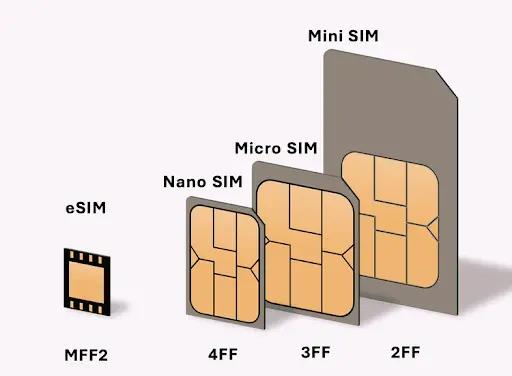
Data shows that the global eSIM market size reached $1.22 billion in 2023, expected to exceed $2.2 billion by 2025, with a CAGR of 20% before 2034. In China, the basic eSIM industrial chain has basically formed, covering a complete ecosystem from chip manufacturing, module R&D, to platform services, terminal devices, and basic telecom operators, with conditions for rapid volume expansion. Meanwhile, according to related leaks, the iPhone 17 Air's 5.5mm ultra-thin body cannot accommodate a physical card slot, and Apple is negotiating eSIM commercial plans with domestic operators. If negotiations succeed, the domestic iPhone will first support eSIM.
Behind the accelerated eSIM opening in China is not only a market trend response but also a realistic reply to 5G development and digital transformation. As a key infrastructure, eSIM can effectively support terminal lightweight, seamless connection, and intelligent services, aligning with the evolution direction of the new generation of networks.
Meanwhile, operators themselves are facing the challenge of "traffic dividend peaking", and the traditional "pipeline provider" role is difficult to sustain. Fully opening eSIM not only helps activate new market demand but is also an important opportunity for operators to move from "stock competition" to "incremental co-creation".
Roam: Innovation of Decentralized Telecom Operators
Whether for 5G development or operators' own breakthrough pressure, facing the impact of global informatization and the inevitable requirements of the AI era, the telecom industry needs a bottom-up transformation. And Roam stands at the forefront of this transformation.
By utilizing Web3 technology combined with telecom services, Roam creates a "Web3 operator in users' pockets". Its smart eSIM product Global eSIM currently covers over 160 countries, easily obtained and activated through the Roam App without changing SIM cards or paying high roaming fees, achieving "instant connection" and breaking traditional telecom service boundaries defined by countries, promoting communication infrastructure from centralization to open collaboration.
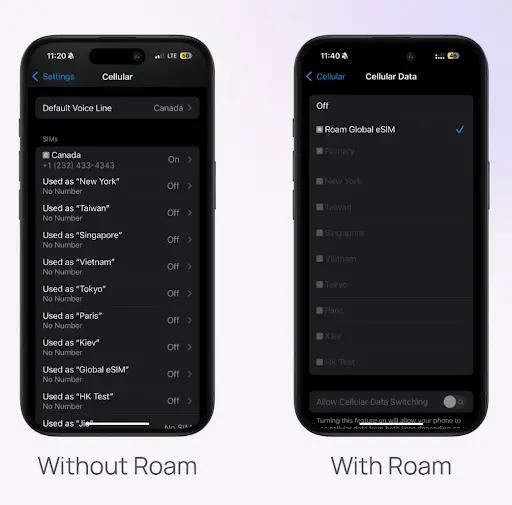
Roam Global eSIM is backed by the massive node data of the Roam network - self-built WiFi nodes have exceeded 5.5 million; moreover, as the only Web3 IDP project in the Global Wireless Network Alliance (WBA) OpenRoaming™ Enterprise Alliance, Roam stands alongside giants like British Telecom, Comcast, Cisco, and Google, playing a crucial role in promoting the OpenRoaming™ plan. Based on this, Roam users can connect to over 4.5 million OpenRoaming™ network nodes in more than 190 countries. With continuous efforts from 3 million registered users, Roam's node data continues to grow. Roam is committed to building a global open wireless network, now providing users with flexible network switching and seamless connection experiences through its globally distributed network exceeding millions of nodes.
Additionally, Roam offers diverse Web3 incentive models, rewarding network participants. For Roam Global eSIM users, first-time collection includes a 50MB traffic gift, and users can obtain more free traffic by checking in WiFi hotspots and completing tasks through the Roam App. By checking in WiFi hotspots, users can receive up to 50MB traffic daily, stored in their personal account, never expiring, and usable anytime.
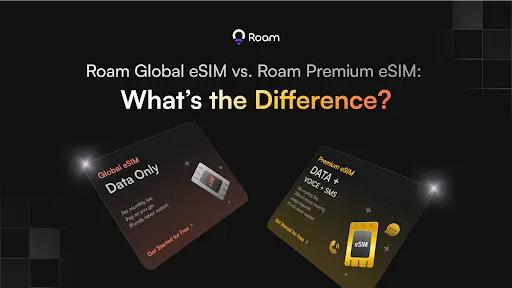
The recently launched Premium eSIM completes a comprehensive upgrade on the Global eSIM's focus on traffic services, is a new mobile communication solution integrating calls, SMS, and 5G traffic, with the following advantages:
- Equipped with International Number, Global Connectivity
Each user will get an Austrian-attributed phone number (starting with +43), can make calls, send SMS, and high-speed internet in over 160 countries and regions, and can also be used to register for TikTok, YouTube, Microsoft Office, Grab, and other software, truly achieving integrated communication & life experience.
- Voice Calls + SMS + Traffic Integration
No longer limited to internet access, Premium eSIM simultaneously supports voice calls (dialing and receiving), SMS services (sending and receiving), and high-speed traffic connection, realizing a truly integrated communication experience. - Instant Activation, No Roaming Fees
No physical SIM card needed, one-click activation through Roam App, with rates achieving "local upon arrival", completely eliminating high roaming fees, experiencing instant convenient communication.
- Multiple Payment Methods, Continuous Connectivity
Supports credit card auto-renewal, also supports Alipay, USDC/USDT and other payment methods, with ROAM token recharge soon to be opened, ensuring communication services remain online through multiple channels.
- Free Traffic Retrieval, Permanent Validity
Free eSIM traffic can be obtained through check-ins and ROAM token locking in the Roam App, and all purchased or reward-obtained traffic never expires, allowing worry-free use.
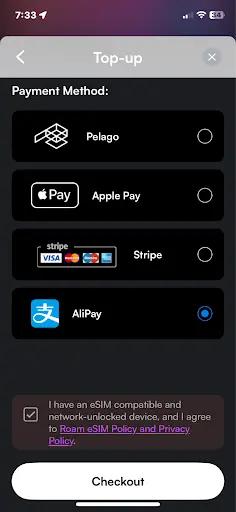
Users can view account balance and usage details in real-time through the Roam App, with all account management and function operations completed within the App, without contacting customer service or offline processes, simple and convenient, transparent and reliable, helping users easily control communication costs globally. For users who frequently travel or attend conferences abroad, communication costs can be reduced by up to 80%, particularly cost-effective and practical.
Roam Leads Telecom Industry Innovation, Reshaping Global Connection Paradigm
With domestic eSIM commercial restart imminent, the communication industry is ushering in a structural transformation. Roam, as a representative of decentralized communication services, is driving fundamental industry model shifts through technological innovation and global deployment.
Unlike traditional operators' model focused on tariffs and card slot boundaries, Roam has built a global communication platform integrating eSIM, OpenRoaming network, chain-based identity authentication, and Web3 incentive mechanisms, breaking national and operator barriers, achieving "instant connection, no roaming, cardless usage" user experience.
On the basis of serving individual users, Roam is also actively expanding the enterprise communication market by launching an enterprise version of eSIM designed specifically for institutional scenarios. Currently, Roam has established partnerships with well-known Web3 enterprises such as Bybit and MEXC, providing stable, secure, and remotely configurable communication capabilities for their cross-border employees and global teams, setting the standard for a new generation of enterprise communication solutions.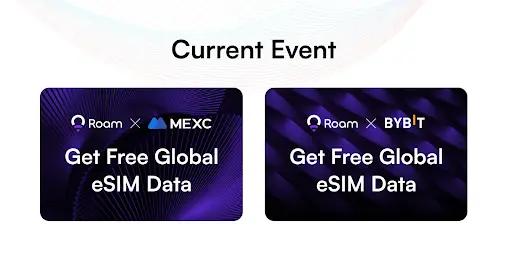
It is worth noting that Roam's enterprise collaboration network is also extending to the Web2 ecosystem. In addition to native crypto institutions, Roam has recently established connections with multiple Web2 enterprises and is about to make official announcements, demonstrating its multi-scenario compatibility and commercial flexibility as a communication infrastructure platform.
In the future, Roam will continue to focus on the Japanese, Korean, and Southeast Asian markets, and promote distribution and integration cooperation with vertical industries such as exchanges, DeFi protocols, digital wallets, OTA platforms, and airlines. At the same time, leveraging Web3 incentive mechanisms, on-chain behavior recording systems, and diversified payment capabilities (supporting both cryptocurrencies and fiat currencies), Roam is building an open, sustainable communication service ecosystem covering global users and enterprises.
From building a decentralized identity system to promoting enterprise-level communication standards, from personal connection experiences to global node collaboration, Roam is reshaping the structural logic and value chain of the communication industry. It not only fills the gaps left by traditional operators in global flexible access and user privacy protection but is also opening a transformative path towards the next-generation internet infrastructure.
During the transformation window of traditional telecommunications, the innovative paradigm represented by Roam not only demonstrates the broad imagination of eSIM in the new technology stack but also points out a decentralized development direction of "open collaboration and user-driven" for the entire industry.