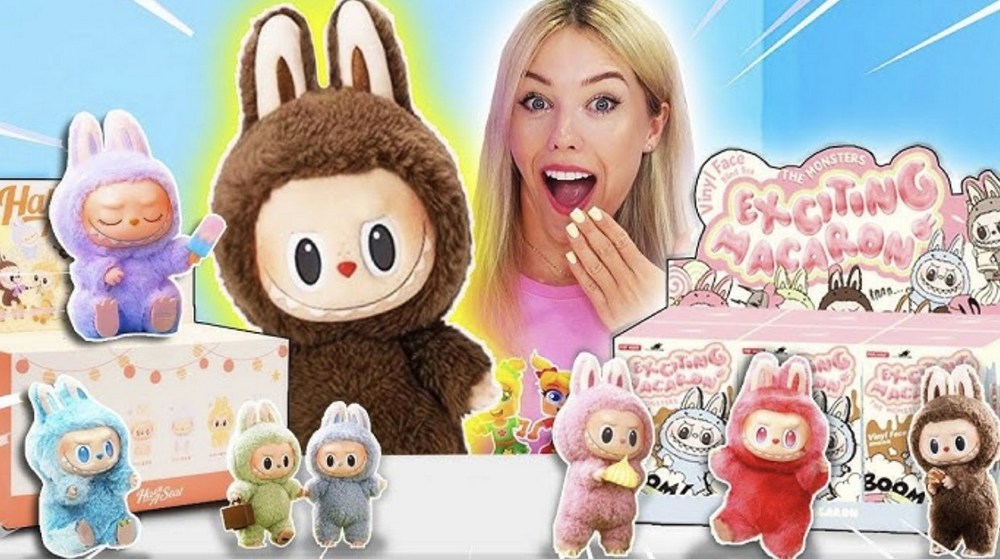
A girl bought 3 Pop Mart blind boxes and filmed a relaxed unboxing video on TikTok. She whispered softly, "I hope I get the sleepy bear... but honestly, any cute one will do."
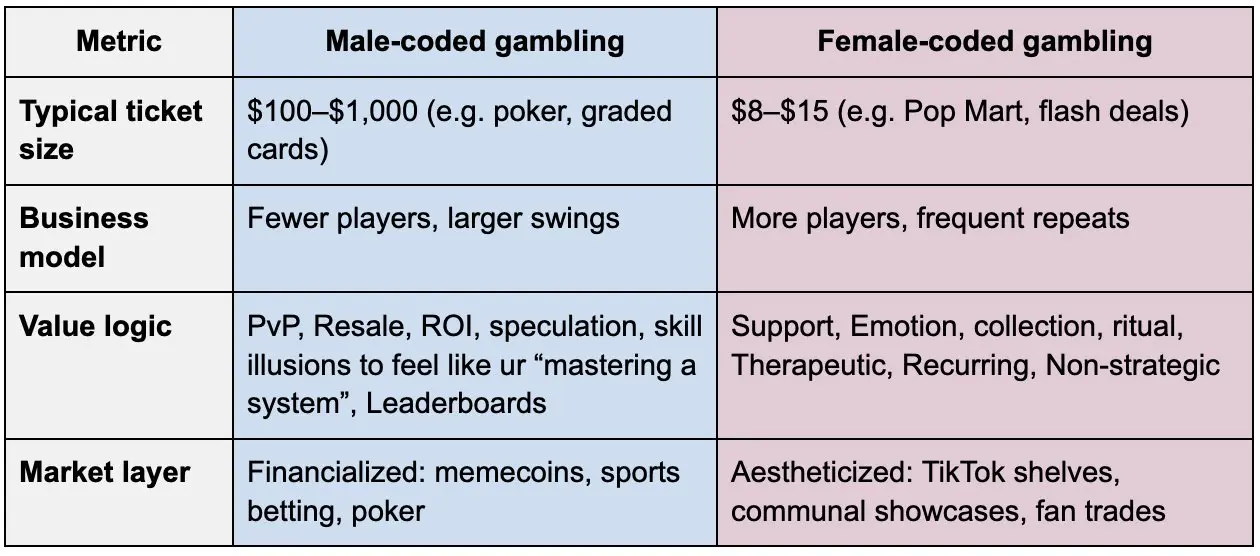
A boy tears open a Pokemon booster box worth $500, staring intently at the camera. "If I don't pull a PSA 10 Charizard, this entire box is worthless," he mutters.
Gambling isn't always about poker chips and slot machines. Sometimes it looks like a pink rabbit, blind boxes, and whispered TikTok videos. Between shopping therapy and roulette, a new behavioral habit targeting female consumers is beginning to circulate. The same random reward mechanism, but with completely different stakes, atmosphere, and psychology.
"Soft Gambling" is becoming a gentle casino aimed at ease rather than conquest.
1. Women are the Primary Target Group
Look at the user composition of the largest "soft gambling" brands:
- Pop Mart blind box toys: 75% female, with a repurchase rate of 50% (absolutely crazy)
- Cross-border e-commerce platforms Shein and Temu: 63% - 66% female, while Amazon is primarily male users
- Social casino app Slotomania: 72% of active players are female, mainly concentrated in the 35 to 55 age group
In comparison, female participants in the 2025 World Series of Poker are only 4%. The further away from real money gambling and closer to pure surprise, the larger the female audience.
2. What is "Soft Gambling"?
- Pop Mart. Each series has 12 cute dolls, with one or two being "hidden" editions. Each box costs $10, guaranteed to have a prize, but not necessarily the one you want. Collectors film unboxing videos, exchange duplicates, and continuously repurchase. According to the company, nearly half of customers will buy again within a year.
- E-commerce platforms Shein and Temu. Lottery boxes are spin wheels or two-hour limited-time rush purchases. Shopping becomes an electronic game cycle like 'Candy Crush': click to draw, reveal the result, stimulate dopamine, and repeat.
- Social casino apps (like Slotomania or Bingo Blitz) press the same buttons digitally (free spins, ribbon rewards, zero actual risk), earning billions through in-app virtual item purchases.
All three follow the variable reward mechanism familiar to casino designers, but the stakes are emotional rather than monetary. Unlike poker or slot machines, these systems rarely publish odds, creating a softer atmosphere. This is a low-risk, soft feedback loop gambling designed to cultivate habitual participation, not seek thrills.
3. Why is the Effect so Significant?
- Never completely losing. Whether it's a rabbit doll or a $2 lipstick, you always get something. This sense of security drives participation.
- Ritual over high risk. Opening the box, clicking the wheel, displaying the haul: these small rituals punctuate the day. A Pop Mart fan might whisper while unboxing to TikTok music: "Hope it's that sleepy bear..." Compared to GTO expected value calculations and poker high stakes, the former is self-comfort, the latter a zero-sum game.
- Aesthetics over conquest: Rewards are not about resale value, but how the item fits the atmosphere, shelf, or mood. Pop Mart fans don't boast about price but decorate scenes with playful Lalabui and Sanrio plush toys. Male collectors often chase a single item's powerful charm (I pulled a mini rocket!), while female collectors tend to seek complete series that reflect personal taste (I finally got the pink rabbit, completing my zodiac series).
- Sharing joy, not player battles: Memecoin traders flaunt 1000% profit charts. Pokemon unboxers showcase $400 rare editions. Pop Mart unboxers show duplicate items on TikTok and ask, "Does anyone want this pink rabbit?" The former is comparison, the latter sharing and resonance.
- Saving over earning: Shein shoppers spin wheels for 20% discounts and invite friends to unlock coupons. The thrill is in the dopamine rush of unlocking discounts, not beating the market.
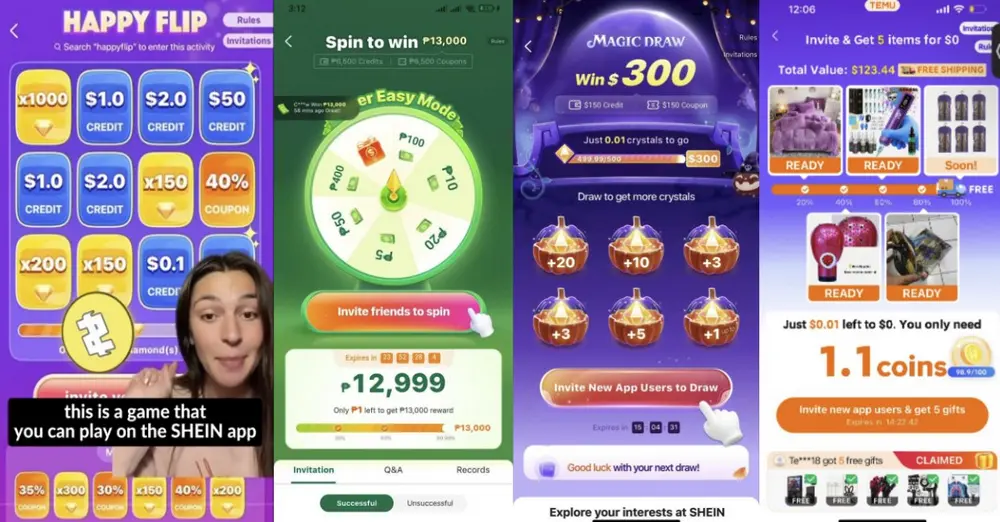
Temu and Shein's apps are half used for shopping, and the other half are "social gambling" mini-games that can be used to unlock product discounts. This is very real and easily addictive.
4. Gambling Motivation
Academic research confirmed these behavioral differences:
A study in the 2024 "Addictive Behaviors" journal found that men gamble more for money and competition, while women do so to escape, regulate emotions, and establish social connections.
Another study showed that women respond more strongly to low-risk reward cycles, while men have higher participation rates in situations with higher risks and potential rewards.
Men gamble for glory; women gamble for pleasure.

5. Crazy Retention Rate Business Model
Low price and high sales volume are the driving engine. Bubble Mart's gross profit margin is about 60%; Shein makes users open the app more than 100 times per month. This casino doesn't need big players, but rather billions of 10-dollar bets.
User lifetime value is not driven by big prizes or leaderboards. It is built on emotional attachment, soft rituals, and the desire for a complete set. This is why Bubble Mart's retention rate far exceeds traditional toy brands and mainstream retail.
6. Shopping Has Become Gambling
Whether called blind box retail, fashion lottery, or soft slot machine, its mechanism contains gambling elements, just without gambling's wildness.
Shein, Temu, and TikTok Shop have all adopted the same dopamine stimulation framework and expanded it into a complete retail ecosystem:
- Shein: Daily wheel spin lottery, app-exclusive flash gift packages, recommendation push instead of search, over 100 app opens per month
- Temu: Limited-time rush purchases, social invitation coupon wheel, first-day "wheel spin lottery" mechanism (female click-through rate is 1.4 times that of males)
- TikTok Shop: Unboxing videos with "mystery package" labels, with engagement 2-4 times that of regular goods. This "surprise premium" is real.
Each platform has turned shopping into a gamified cycle: view → lottery → possible win → repeat. Contrary to intuition, the prize is not the product itself, but the dopamine rush when opening the box.
7. Conclusion
For women who rarely appear at gambling tables, these softer venues offer the same suspense without a hint of shame.
The feminine side of gambling is not about chasing big prizes. It's about chasing a feeling: that moment before the box opens, before the wheel stops spinning, or before a limited-time rush purchase appears. This effectively proves that happiness can be bought for ten dollars, making the "possibility economy" the most addictive casino on earth.