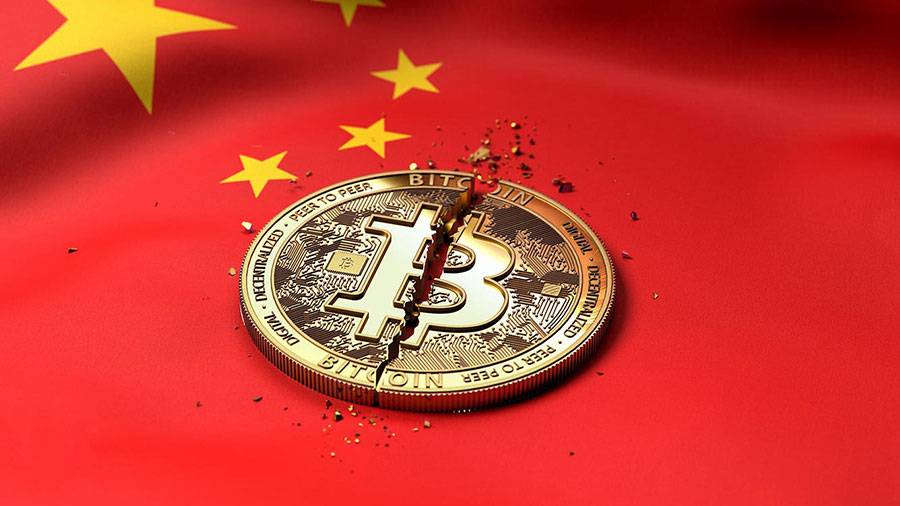
 China reaffirms its “absolute ban” stance on crypto. Photo: Fundfa
Mainland continues to issue warnings
China is sending its strongest message since its blanket cryptocurrency ban in 2021. The People's Bank of China (PBoC) recently reaffirmed that all activities related to digital assets - from trading, issuance to mining - are considered illegal on mainland territory.
The statement, issued after an inter-ministerial meeting of 13 government agencies, took direct aim at the resurgence of speculative activity in recent months.
“Cryptocurrencies do not have the legal status of fiat currencies and cannot be used as money in the market,” the PBoC stressed in a new statement. The central bank said it would crack down on any violations, calling it a necessary step to maintain national financial stability.
The new stance also puts stablecoins at the center of tension. The PBoC believes that these Peg assets do not meet KYC/AML standards, and pose risks of money laundering, fraudulent Capital , and uncontrolled cross-border payments – risks that directly affect the financial system that China prioritizes absolute control over.
Notably, in a closed-door conference in July, former PBoC Governor Zhou Xiaochuan also warned that stablecoins could be abused for speculation, create systemic instability and risk fraud if not closely monitored. This is one of the strongest statements from the person who ran the central bank for 16 years.
The market reacted immediately.
Just hours after the PBoC’s announcement, a slew of crypto-related stocks listed in Hong Kong saw a significant sell-off.
According to Reuters , the PBoC’s statement removes any remaining ambiguity about China’s stance on stablecoins, setting a clearer policy line than ever before. This shows that Beijing’s firmness is not only legal, but also has an immediate effect on Hong Kong’s market and businesses.
While the mainland has banned crypto outright, Hong Kong has pursued a different strategy, creating a legal framework for stablecoin exchanges and issuers. The stablecoin law has been in effect since August 1, 2025.
However, in just the past two months, Beijing has expressed dissatisfaction with the pace and scope of digital asset development in Hong Kong:
September: Requires major brokerages to pause real asset (RWA) Tokenize projects.
October: Intervention prevents several Chinese tech companies from issuing stablecoins in Hong Kong.
According to SCMP, Beijing is rebuilding an invisible wall of control over the digital asset space in Hong Kong. The level of policy risk is even more obvious when the HKMA has not yet licensed any stablecoins, despite the legal framework in effect.
A less talked about but equally important detail is that Bitcoin mining is surreptitiously resuming in some areas with cheap electricity, despite the blanket ban, putting pressure on the PBoC and local authorities.
In parallel with the crypto ban, China has expanded its pilot digital yuan ( e-CNY ) to a large scale. More than 225 million personal wallets have been opened, and many major cities have integrated e-CNY into their transportation, medical, and commercial systems.
Coin68 synthesis