Messari released "The Crypto Theses 2026," a report that predicts future trends in public blockchains, DeFi, AI, DePIN, and TradeFi. Messari views 2026 as a pivotal year for cryptocurrencies, marking a shift from "speculative" to "system-level integration."
Article by: Messari
Article compiled/translated by: ODIG Invest
Messari released "The Crypto Theses 2026," a report that predicts future trends in public blockchains, DeFi, AI, DePIN, and TradeFi. Messari views 2026 as a pivotal year for cryptocurrencies, marking a shift from "speculative" to "system-level integration."
To make it easier to read, we have simplified the original text, extracting the most core conclusions and viewpoints to help you quickly identify the next big trend.
Cryptocurrency is the foundation of the entire industry.
Bitcoin has clearly distinguished itself from all other crypto assets and is undoubtedly the most representative and mature cryptocurrency today.
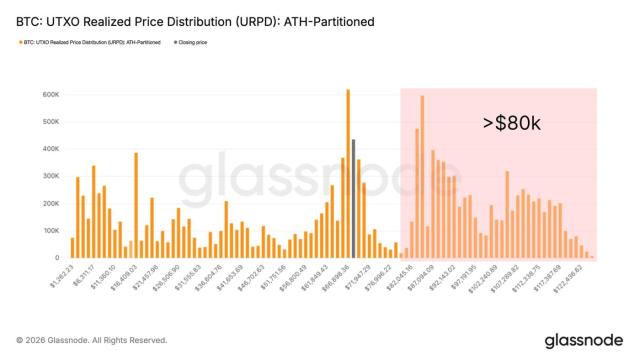
BTC's relative underperformance in the second half of this year was partly due to increased selling pressure from early, large-scale holders. We do not believe this underperformance will develop into a long-term structural problem, and Bitcoin's "monetary narrative" will remain robust for the foreseeable future.
L1 valuations are increasingly decoupling from fundamentals. L1 revenue has declined significantly year-over-year, and its valuation is increasingly reliant on an assumption of a "currency premium." With a few exceptions, we expect most L1s to underperform BTC.
ETH remains one of the most controversial assets. Concerns surrounding its value capture capabilities have not been completely dispelled, but market performance in the second half of 2025 suggests that the market is willing to view ETH to some extent as a cryptocurrency similar to BTC. If a crypto bull market returns in 2026, Ethereum's Data Availability (DATs) could experience a "second life."
ZEC is increasingly being priced as a "privacy cryptocurrency," rather than just a niche privacy coin. This makes it a complementary hedging asset to BTC in an era of increased surveillance, institutionalization, and financial repression.
Applications may begin to choose to build their own monetary systems, rather than relying on the native assets of the networks they operate on. Applications with social attributes and strong network effects are particularly likely to move in this direction.
The Convergence of TradFi x Crypto
The GENIUS Act redefined the role of stablecoins: from being a crypto-native transaction tool, stablecoins became an integral part of the U.S. monetary policy system, thus igniting competition among banks, fintech companies, and tech giants for control of the "digital dollar" infrastructure (payment and settlement rails).
Tether's valuation of approximately $500 billion reflects its strong profitability, but the GENIUS Act has also brought heavyweight players like JPMorgan and Google into the same arena. We expect Tether to maintain its dominance in economies with relatively lenient compliance requirements and characterized by "dollarization," while in developed markets, traditional institutions with advantages in brand, compliance, and distribution will hold the majority of the market share.
Banks are integrating stablecoins into existing payment systems, while Cloudflare and Google are building the underlying infrastructure for a virtually non-existent "agentic commerce." As AI agent-driven transactions scale on these tracks, the convergence of technology, finance, and AI is expected to become the dominant narrative by 2026.
Lower interest rates will drive capital flows to crypto-native yield opportunities, including funding spreads, token arbitrage, and GPU-collateralized lending. This yield cycle will rely more on real cash flow than token inflation, thus creating a more robust and sustainable yield structure.
By 2025, the tokenization of RWA (Real-World Assets) had reached $18 billion, primarily concentrated in US Treasury bonds and credit assets—the earliest areas to achieve Product-Market Fit (PMF). With the DTCC receiving SEC authorization to tokenize US securities, this scale will expand further, potentially bringing trillions of dollars of assets onto the crypto infrastructure.
Decentralized Internet Finance
Prop AMMs and CLOBs (Centralized Limit Order Books) will replace passive AMMs as the mainstream architecture for DEXs. As on-chain infrastructure expands, these architectures will offer better trade quality and narrower spreads.
Modular lending protocols (such as Morpho) will surpass monolithic lending platforms. By providing flexible, segregated vaults, they better align with the risk and compliance preferences of institutions and neobanks.
Equity perpetual contracts are expected to make a breakthrough in 2026, providing global users with highly leveraged, borderless equity exposure while avoiding friction caused by off-chain regulation.
Interest-bearing stablecoins will replace "passive" stablecoins as the core collateral assets in DeFi, narrowing the gap between reserve yields and actual user returns.
DeFi Banks will emerge as the crypto world's response to a new type of banking, packaging savings, payments, and lending functions into high-margin, fully self-custodied applications.
Decentralized AI
The continued surge in computing power demand, coupled with the improved capabilities of open-source models, is opening up entirely new revenue streams for decentralized computing networks.
Decentralized data foundries that can establish an absolute advantage in a single, cutting-edge, and critical application scenario will become the most profitable participants in the entire deAI technology stack.
DeAI Labs will foster a “faith-like” community following around medium-sized open-source models with distinct differentiation. This model size range consistently demonstrates a strong model-market fit.
Darwinian networks (referring to the mechanisms of "survival of the fittest" and "natural selection") will drive the destigmatization of the crypto industry through a positive cycle: attracting top talent and generating institutional demand, thereby continuously strengthening themselves.
AI Agent Co-pilots will package the DeFAI technology stack into a unified "terminal entry point," relying on a powerful data flywheel to directly challenge existing mainstream consumer-grade front-end entry points.
As prediction markets scale, AI agents provide a pathway to continuous information aggregation, more stable liquidity, and higher-quality pricing calibration—significantly reducing systematic bias without altering the fundamental market structure.
DePIN is the Frontier.
Vertically integrated DePIN networks (from underlying resources to finished products for businesses/consumers) are best positioned to achieve sustainable revenue and higher profit margins, fundamentally addressing demand-side issues.
With the rapidly growing demand for scarce real-world data, the DePAI data collection protocol is expected to achieve a breakthrough in 2026. Leveraging a DePAI-style incentive mechanism, its data collection speed and scale will significantly outperform centralized solutions.
InfraFi will become an explosive DePIN-adjacent track: by introducing on-chain capital into new infrastructure areas (such as debt financing) that are difficult to cover by traditional private lending, it will open up channels between funds and real infrastructure.
Clearer regulations will significantly expand the DePIN builder community and accelerate enterprise participation—reducing uncertainty in token design on the one hand, and making a deeply integrated DePIN business model feasible for enterprises on the other.
By 2026, DePIN is expected to generate over $100 million in on-chain verifiable revenue: on the one hand, the annualized revenue of mature protocols will jump from tens of millions of dollars to hundreds of millions of dollars; on the other hand, a new batch of blue-chip DePIN projects will complete TGE (token generation events).
The era of consumer-grade crypto has arrived.
The transaction fee value stack has shifted from the "chain" to the "application". As blockchain space is no longer a bottleneck, consumer-grade crypto is evolving into an application-centric economy: applications capture the main revenue and can finally be truly optimized around the user experience.
The consumer-level Product-Market Fit (PMF) is most clearly seen in the "market as product" scenario. Memecoin/NFT and prediction markets are established because they directly embed ownership and pricing mechanisms into cultural behaviors and information acquisition processes, rather than "rigidly grafting" cryptographic capabilities onto existing applications.
Prediction markets have completed their leap from election scenarios to sustained use. 2025 validated non-political demand (sports/crypto/culture), while distribution-level partners (such as Robinhood) became key accelerators for the surge in demand.
Financialized social networking is still in its early stages, but there is real room for design. The opportunity lies not in "decentralized social networking" itself, but in making content, creators, and interactive relationships tradable, thereby creating a completely new user experience.
“Atypical RWAs” are becoming a new entry point for the consumer market. Tokenization is beginning to improve the non-financial goods market (such as trading cards and gashapon) and is showing a clear path to on-chain liquidity, provenance, and composable financial layers, reshaping the collectibles sector.
Disruption Factor (DF): A proof-of-concept framework for evaluating Layer 2 (L2) protocols
The crypto world has never lacked activity. New chains, new tokens, new narratives—each cycle brings an explosive growth in innovation and noise. However, one question remains consistently difficult to answer: which projects truly have the potential to have a lasting impact?
In the development of Messari, we tried various best-practice frameworks, from traditional valuation methods to network and market structure models, striving to find a reliable and concise method for project evaluation. Each time, the same flaw emerged: the winning strategies of agreements differed from those of traditional companies, and no single traditional analytical perspective could reliably measure whether a project would accumulate a lasting advantage in the long run.
Messari introduces the conceptual framework of Disruption Factor (DF) to address this issue. The construction of Disruption Factor follows four guiding principles: transparency; customizability; long-termism; open source and evolution.
The Disruption Factor measures how deeply a crypto project integrates into the real world and mainstream user behavior. It assesses not only on-chain activity but also whether that activity effectively replaces traditional systems, attracts non-crypto native users, and translates into sticky, long-term adoption.
This proof-of-concept evaluated 13 L2 implementations. The results showed a clear “barbell” pattern: Arbitrum One (70) and Base (67) stood out as the leaders; OP Mainnet (58) was in the second tier; the remaining projects all scored below 49, indicating that many L2 implementations are still in their early stages, in vertical fields, or have yet to prove their durability.