


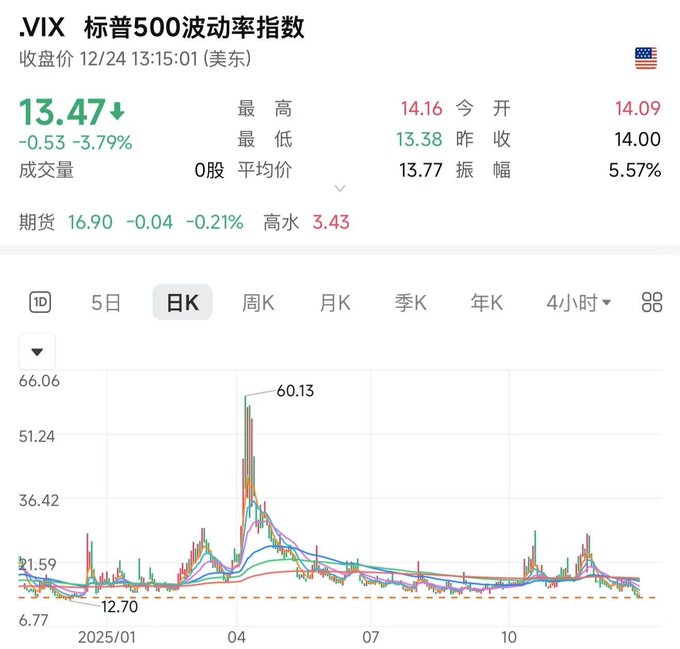
What does the VIX volatility index hitting a new low for the year mean? Last night, the S&P 500 volatility index fell to 13.4, the lowest level it reached since late November to mid-December 2024. What does this mean? 1. The VIX index is calculated based on S&P 500 option prices, reflecting the market's expectation of stock market volatility over the next 30 days (implied volatility). A higher VIX value indicates greater market volatility expectations and stronger investor panic; conversely, a lower VIX indicates a calmer market, stronger investor confidence, and lower risk aversion. Therefore, literally, a lower VIX means investors believe the likelihood of significant short-term stock market volatility is low, usually accompanied by a stock market rise or stability. 2. Furthermore, it reflects a decline in safe-haven demand. Currently, the demand for hedging (buying put options) in the US stock market has also weakened significantly. The underlying logic for this decline in safe-haven demand is that the Q3 GDP data released a few days ago greatly increased market expectations for a macroeconomic "soft landing," and there is a lack of significant negative catalysts in the short term. 3. Experts see that low implied volatility leads to low premiums for options (especially call/put options), making them cheap. This is precisely the time for option traders to "position long calls" (buy call options) because of the low cost and high potential returns should volatility recover or the stock market accelerate. The implied volatility of large-cap tech options has also fallen to its lowest level in the past year. 4. The market is currently in an extremely relaxed state of "no hedging." This state can last for weeks or even longer; for example, the last time the VIX was at such a low level was from late November to mid-December 2024, lasting for three to four weeks. Of course, it's important to note that the VIX has a very strong mean-reverting characteristic. When the VIX remains below 14 for an extended period, the market's defense against negative news is extremely poor. An unexpected event can trigger a surge in hedging demand, leading to a market sell-off. This is also what happened yesterday here x.com/qinbafrank/status/200366...…聊到的:从宏观角度看,美股圣诞行情其实可以持续到一月上旬到中旬,一月中宏观大事件又会多起来,届时可能波动又要来了。
This article is machine translated
Show original

qinbafrank
@qinbafrank
12-25
关注美股大盘走势那么最近两个月的相关推文逻辑值得看看。昨天标普创了新高,11月初市场悲观认为就此大跌崩盘了,当时明确提到这是杀估值的小级别调整而非崩盘式的大跌,个人这个推演在11月受到了不少质疑和嘲讽。转发引用的推文里有梳理了11月以来对大盘在关键时点的推文,美股大盘几次转折拐点时刻前 x.com/qinbafrank/sta…

From Twitter
Disclaimer: The content above is only the author's opinion which does not represent any position of Followin, and is not intended as, and shall not be understood or construed as, investment advice from Followin.
Like
Add to Favorites
Comments
Share
Relevant content





