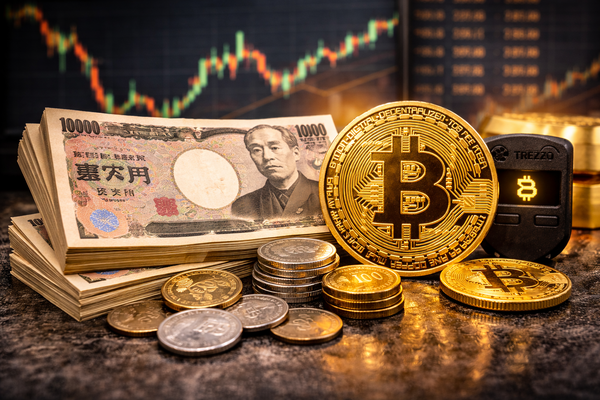
The possibility of a change in the Bank of Japan's monetary policy is emerging as a key variable in the virtual asset market in 2026. With the yen's prolonged weakness and signs of an interest rate hike detected, concerns are growing about the potential liquidation of yen carry trades and the potential for volatility in digital asset markets, including Bitcoin.
According to Coinpedia on the 29th (local time), the Bank of Japan raised its base interest rate by 25 basis points to 0.75% on the 19th. This is the highest level in approximately 30 years. The Bank of Japan explained that it is gradually moving away from the ultra-low interest rate policy that has been maintained for decades, and that while the base rate remains low compared to major economies, the weak yen and inflationary pressures are increasing. Market forecasts also suggest that Japan's base rate could rise to 1.25-1.50% by 2027.
However, uncertainty surrounding the policy direction persists. The prediction market Polymarket projects a 97% chance of Japan's base rate remaining frozen in January 2026. This reflects the view that the Bank of Japan's further tightening may be limited in terms of timing and pace, while the possibility of a gradual rate hike coexists.
The yen is currently trading around 156 yen per dollar. Despite the Bank of Japan's interest rate hike, the US benchmark interest rate remains at around 3.75%, and the interest rate gap between the two countries has not narrowed significantly. This has led to a continued shift of global funds into dollar assets, while import prices and inflationary pressures in Japan persist. The prevailing market view is that Japan's monetary policy remains accommodative.
The problem is the ripple effect these policy changes have on risky assets. In the past, when the Bank of Japan shifted its monetary policy, there were many instances where the yen carry trade reversed sharply, directly impacting high-risk assets like Bitcoin. There have even been instances where Bitcoin plummeted by 20-25% in a short period following interest rate adjustments. Recently, immediately after the Bank of Japan's interest rate adjustment, Bitcoin fell by approximately 5% in a single day, reaching the $88,000 level.
However, some analysts argue that at the time, the possibility of an interest rate hike was largely priced into the market, limiting further declines. At the same time, some argue that if the monetary easing trend continues for an extended period, demand for Bitcoin as a hedge against the yen's depreciation could resurface.
The market ultimately views the pace of the Bank of Japan's interest rate hikes and the narrowing of the interest rate gap with the US as key variables determining Bitcoin's future direction. While short-term shocks are inevitable if the yen carry liquidation begins in earnest, there's also the possibility that digital assets could once again gain traction as an alternative asset if currency instability persists.