This article is machine translated
Show original
Why will privacy be a core narrative in crypto in 2026? Besides $ZEC, I recommend paying attention to the potential performance opportunities of @zama, @boundless_xyz, and @anoma:
1) Let me first talk about the core driving logic: the privacy track has evolved from being in a cramped and difficult situation due to regulatory suppression to being required for compliance.
For the past decade, blockchain privacy has been a false proposition because the wrong technological path was chosen. Most projects pursued privacy for its own sake, engaging in indiscriminate anonymity while ignoring compliance boundaries and commercial viability, thus facing continuous regulatory crackdowns. The ongoing sanctions against @TornadoCash are a typical example.
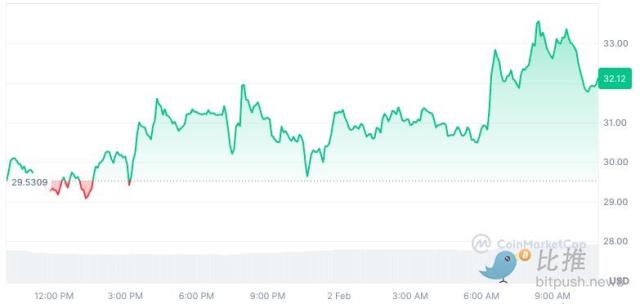
2) However, the situation will be different in 2025-2026. The strong performance of $ZEC in the secondary market is the most obvious signal. As a long-established privacy leader, @Zcash has verified through ten years of experience and Navarre's shill that privacy is not a false demand, but simply a matter of timing. This is because the core technology path has changed.
This generation of privacy projects are all working on "programmable compliance," which protects user privacy while leaving backdoors for regulators. This perfectly aligns with the underlying architecture needs of the institution-led Crypto era, such as RWA's asset tokenization and transaction agentization.
3) Therefore, the explosion of the privacy sector is no longer just a hype, but an inevitable result of industry evolution. Following this line of thought, let's look at the strategic positioning of the following three projects:
1. @zama (FHE), this is a revolutionary infrastructure at the very foundation of privacy technology. The core is understanding the fundamental difference between FHE (Fully Homomorphic Encryption) and ZK. Zcash's ZK can only prove "I know the secret," but FHE can process data directly in an encrypted state. For example, Zcash can hide the amount of a transaction, but FHE allows the entire DeFi protocol's staking, lending, and liquidation to run entirely in encrypted form, with nodes completely unaware of what they are calculating.
Zama doesn't create new chains; instead, it builds a Privacy Layer for all EVM chains, much like "HTTPS for blockchains." Through fhEVM, Zama enables mainstream chains like Ethereum, Base, and Solana to gain privacy computing capabilities and the potential for large-scale commercial applications. Once it secures this role, it will become the "shovel seller" for the entire Crypto industry.
The key point is that Zama is working with Fabric Cryptography on FPGA acceleration cards. Once implemented, FHE's TPS can be increased by 10 to 100 times, and gas costs can be reduced by two orders of magnitude. At that time, it may be able to shed the "toy" label of FHE as the holy grail of cryptography and move towards mass consumer applications.
2. @anoma (Intent-centric) is positioned as a web3 intent operating system, aiming to reshape the transaction paradigm. Traditional DeFi users' transactions usually run naked in the Mempool, with their intents fully exposed to the MEV bot. Anoma addresses this by allowing counterparties to discover privacy, users publish encrypted intents, and the Solver matches transactions without decryption (combined with FHE or TEE).
It's clear that this solution only addresses the basics of privacy; it also solves the problems of multi-chain fragmentation and interaction complexity.
3. @boundless_xyz (zkVM) is the infrastructure for the commercialization of ZK computing power. It solves the problem of "universal privacy proof" and its role in the privacy field has been seriously underestimated. Boundless was incubated by @RiscZero and programmed ZK proofs into tradable computing power commodities, which can be modularly embedded into any scenario that requires ZK verification.
With the future surge in demand for ZK-Rollups and ZK Coprocessors, Boundless will be the decentralized platform for generating massive amounts of ZK proofs. Boundless unlocks endless possibilities for privacy applications: on-chain identity, on-chain credit, on-chain compliance, and policy proofs for AI agents can all be achieved with privacy protection using zkVM.
above.
Rational analysis suggests that the privacy sector cannot thrive solely on Zcash. If $ZEC is the super narrative engine of the privacy sector, then Zama for encrypted computation, Anoma for intent matching, and Boundless for general proof constitute the complete technology stack supporting the vigorous growth of the privacy narrative—none of them can be omitted.
zama fhe is genuinely protecting privacy, while zk, in my opinion, skirts the line of privacy.
Okay, Tian, I'll get it done with IDO!

From Twitter
Disclaimer: The content above is only the author's opinion which does not represent any position of Followin, and is not intended as, and shall not be understood or construed as, investment advice from Followin.
Like
Add to Favorites
Comments
Share
Relevant content