The first wave of criticisms of ChatGPT's ads has arrived, and it's coming on a grand scale—Anthropic ran a series of ads during the American Super Bowl, and as OpenAI's strongest competitor, this time the ads directly "criticized" ChatGPT.
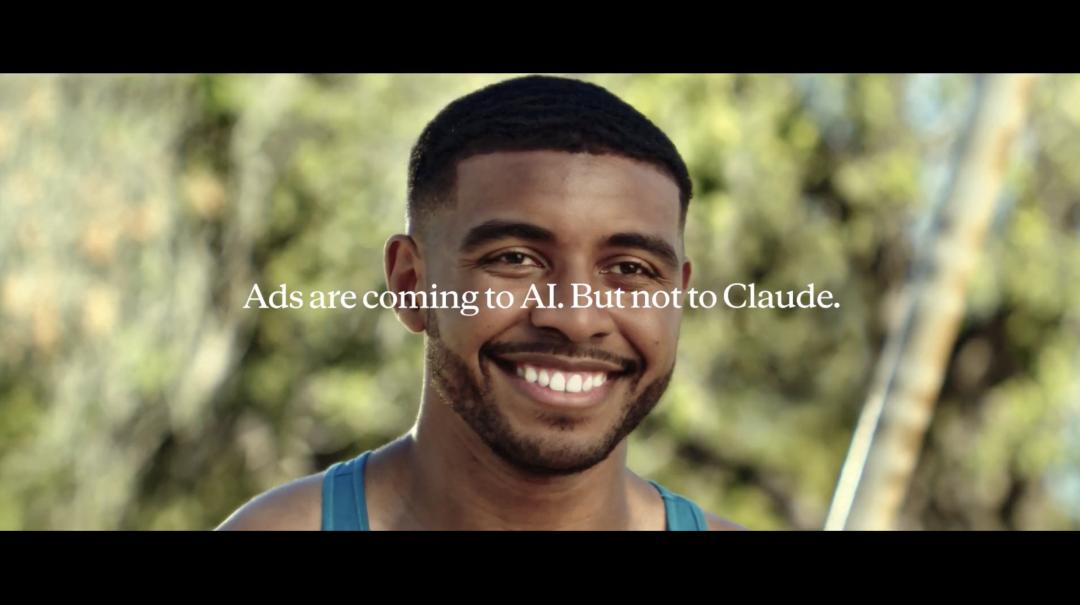
Anthropic submitted four short films, each with the same structure: in a very normal scene, two people are chatting, one of whom is Claude's "avatar," wearing a polite yet distant smile. To be honest, having a live actor "play" the embodiment of an AI is truly going against the natural order.
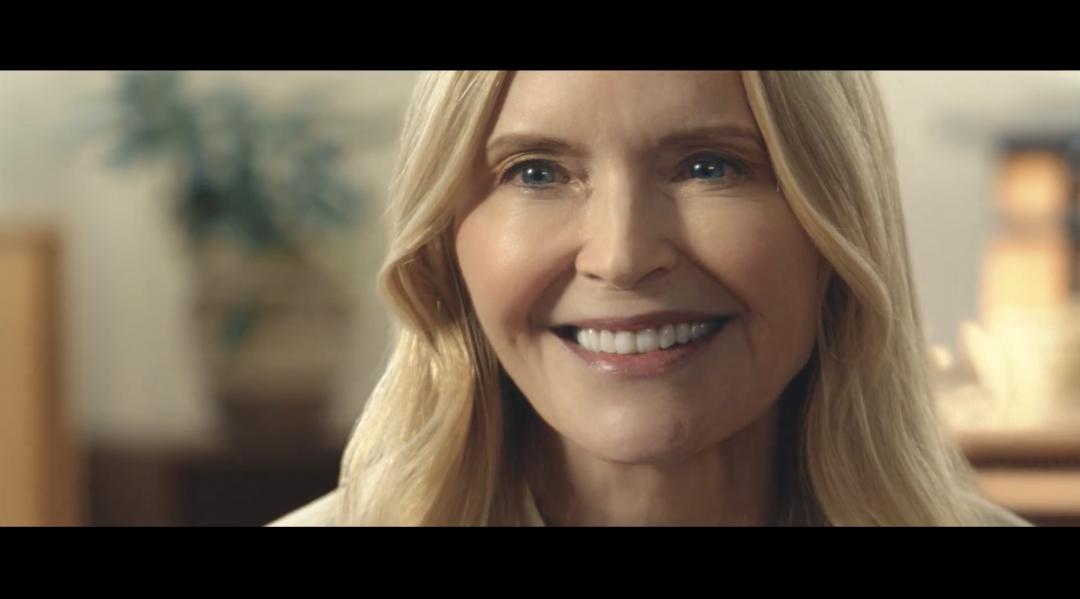
Initially, the user and the AI were just having a normal chat, asking questions they genuinely cared about, and the AI responded well to the first few questions—but suddenly things took a sharp turn for the worse.
The AI cleverly embedded advertisements in the answers: "Want to register for a dating app? Want to buy a necklace? Order now and get a 10% discount, plus you can even get it engraved!"
Finally, Claude added a large line of text: Ads have invaded AI, but they won't invade Claude.
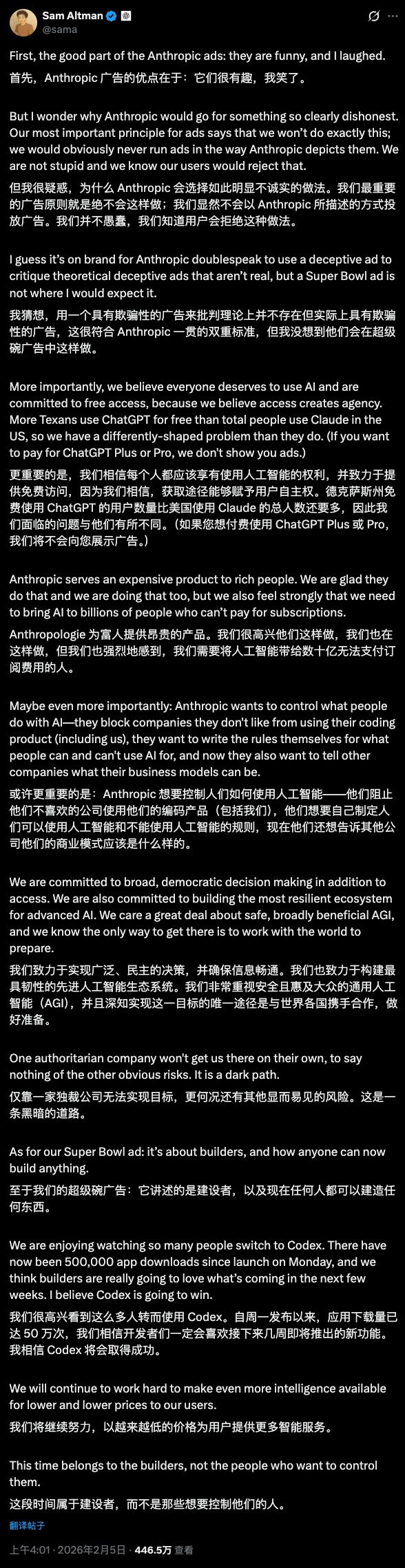
Okay, okay, this isn't just being sarcastic, it's a direct attack. Ultraman wasn't going to let himself be criticized like that, so he immediately posted a long response: This ad is funny, but not that funny.
It must be said that the shift from subscription to advertising was a major transformation that OpenAI presented at the beginning of 2026. To understand this transformation, one must first understand OpenAI's financial situation.
By 2025, OpenAI had completed the largest private technology company funding round in history, raising $40 billion at a valuation of $260 billion, led by SoftBank. Although its annual recurring revenue (ARR) had already surpassed $10 billion in June 2025 and was expected to reach $20 billion by the end of the year, its annual computing infrastructure costs were as high as $8 billion to $12 billion.
This extremely high cash burn rate means that it's difficult to fill the financial black hole created by pursuing massive computing power with just the monthly subscription fees and enterprise-level API interfaces. Therefore, in 2025, OpenAI made a crucial strategic move: hiring Fidji Simo, a former core executive of Meta and CEO of Instacart, as the newly established CEO of Applications, specifically to oversee the product.
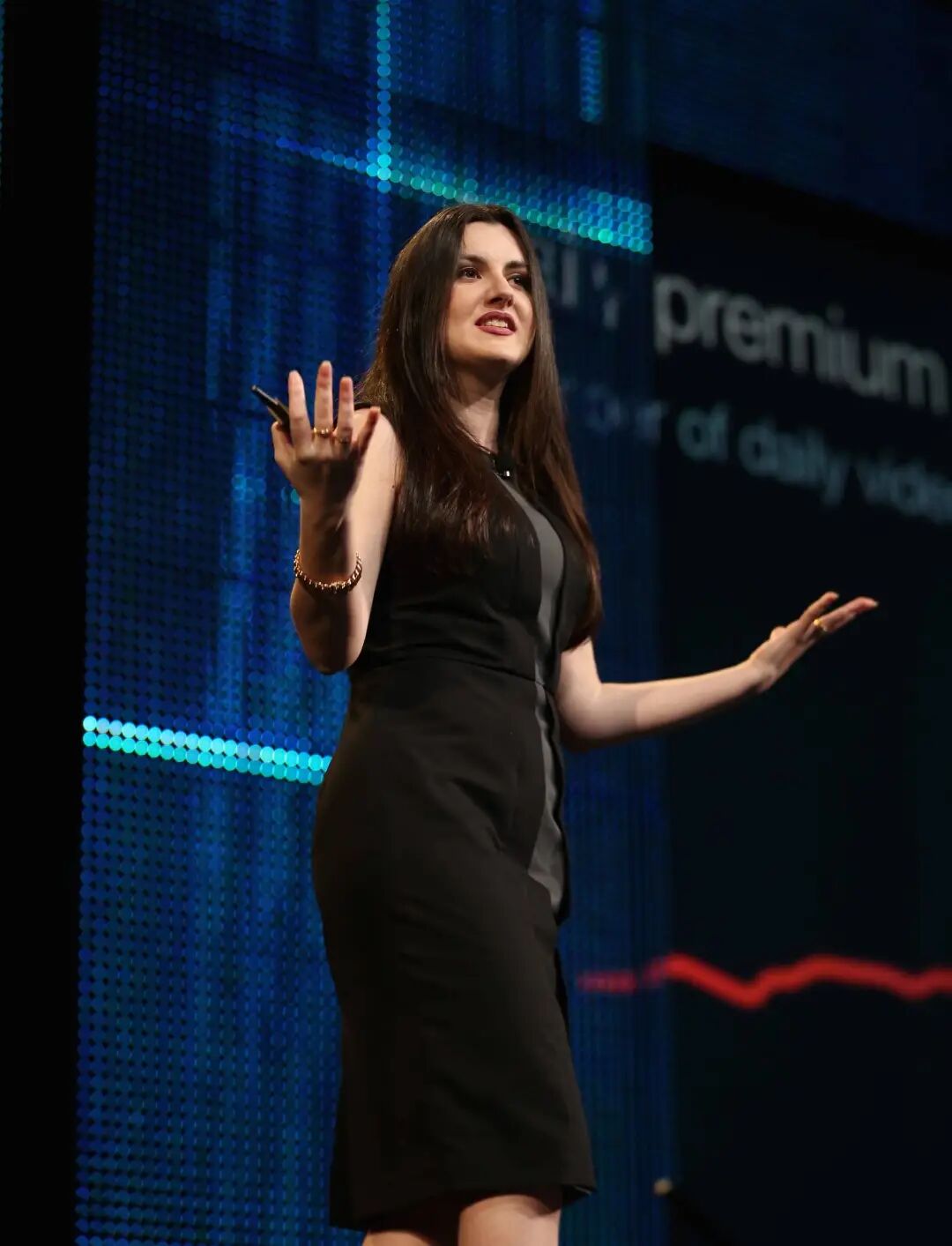
The addition of Fidji Simo is seen as a clear signal of a shift in OpenAI's monetization strategy. During her ten years at Meta, she was deeply involved in the entire process of Facebook's commercialization, promoting Facebook's advertising products globally, and is a typical "master of traffic monetization".
If Sam Altman was responsible for exploring the limits of AGI, then Simo's task was to lay the foundation for Sam Altman. Her arrival signifies that OpenAI is attempting to build a new monetization engine that integrates Meta social distribution genes with search intent logic.
This engine is fundamentally different from the traditional Meta model and Google model. Before proceeding, let's take a look at the advertising types of several giants.
Meta Mode: Monetize Your Attention
The Meta model can be defined as the pinnacle of the "attention economy." In the logic of Facebook and Instagram, users are browsing, socializing, and killing time; advertising is essentially a form of plundering user attention. Meta, through extremely sophisticated user profiling and tagging, targets specific demographics for services and uses algorithms to predict and create demand.
The core profitability of this model lies in the scale of traffic and retention time; it's an interest-based discovery model . However, in the current context of AI-powered chat interactions, users are no longer aimlessly scrolling through information feeds but come with specific questions. In this situation, traditional "feedback-style advertising" seems out of place.

Google Model: Intent Economy
The Google model represents the "intent economy": users directly express their intent through the keywords they enter in the search box, with Google acting as a guide and connector. Currently, Google's average revenue per user (ARPU) is approximately $59 to $60. This model is far more efficient at monetization than Meta because it precisely captures the step closer to the end in the conversion path. This approach has also been adopted in China; Baidu, as a search engine, uses a similar principle in its paid search ranking system.
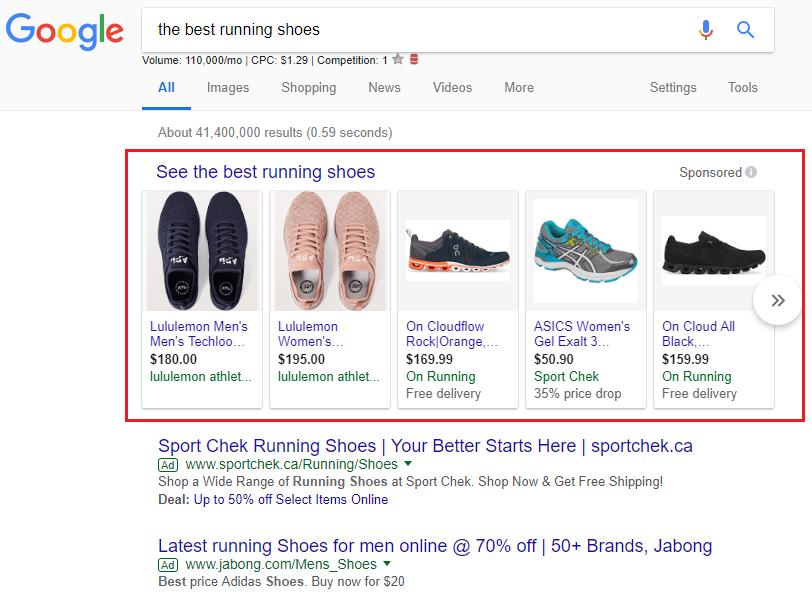
Even so, Google still cannot escape the limitations of being a "link distributor." After a user clicks on an ad link, all transactions and decisions must be made through Amazon, Shein, or the brand's independent website; in short, the purchase always occurs outside of Google's ecosystem.
OpenAI's model: ?
OpenAI is attempting to define the third phase: the "Action Economy." In a limited public beta test that began in early 2026, OpenAI introduced a model that displays related sponsored products or services at the bottom of the answers.
Currently, this looks like a simpler search ad, but the ARPU growth trajectory behind it reveals a deeper ambition.
Based on current modeling predictions, OpenAI's ARPU target for 2026 may only be $5.50—a drop in the ocean compared to its massive computing power expenditure. However, by 2028, when OpenAI launches its own advertising management system and allows millions of small and medium-sized enterprises to participate and occupy different niches, advertising will evolve into "actions."
In the "mobile economy," advertising is no longer a simple redirect link. When a user asks "how to prepare a week's worth of weight-loss meals," AI will not only recommend ingredients, but it will also directly integrate with the supermarket's purchasing interface to place the order for you. At this point, OpenAI no longer simply charges a cost-per-click (CPC), but instead earns a share of the revenue by completing the transaction (CPA model).

This shift from "display advertising" to "transaction revenue sharing" has led to an exponential increase in the monetization value of individual users. It is projected that by 2029, OpenAI's ad-supported free user ARPU will approach $50, matching or even challenging Google's dominant position. This means that AI is no longer a passive information retrieval tool, but a highly authoritative private buyer.
Comparing these three giants, we can clearly see an evolutionary chain. Meta monetizes your "boredom," Google monetizes your "curiosity," and OpenAI is trying to monetize your "decision-making."
"Mom's Birthday" Advertisement
The core competitiveness of "mobile business" lies in certainty. As the current evolution of AI e-commerce demonstrates, competition is no longer simply about the price of traffic acquisition, but about reducing the marginal cost of acquisition and the controllability of the outcome. If OpenAI can successfully get its 190 million daily active users (DAU) used to completing purchases, reservations, and contracts directly through chat windows, then it will create a closed-loop economic system, rather than just a traffic transfer station.
This will be a truly native ad, 100% "native" .
As many people already know, when AI generates each word (token), it is essentially making probabilistic choices. Ideally, this probability is based on the logic and facts in the training data. When advertising is involved, the system may selectively "fine-tune" the word weights for certain brands or viewpoints.
For example, when a user asks "Recommend a noise-canceling headphone suitable for long-haul flights", the AI's final answer may not be based on a comprehensive conclusion of performance evaluation, but rather on probability weighting, so that the brand that paid the highest bid appears in the answer in an extremely natural and objective tone.

This microscopic implantation allows it to bypass all of humanity's defense mechanisms. In the traditional internet era, we've developed methods to deal with attention-grabbing ads and search ads. But in a conversation with AI, you're facing an all-powerful "assistant" on whom you've placed your hopes. When it recommends a product to you in that calm, rational tone, it's hard not to feel uneasy.
"Invisibility" is also determined by the economic pressure on giants like OpenAI to pursue extremely high ARPU. To achieve an average revenue of $50 per user by 2029, an extremely high conversion rate is needed. In this situation, advertising cannot be a burden, nor can it be as conspicuous as before— advertising must be the product itself.
The "A" in AGI originally stood for "Aritificial," but in the future, it may have become the "A" for "advertising." The tech giants' complete embrace of advertising is a somewhat worrying sign: the smartest engineers aren't solving poverty or disease, and the AGI that transcends human biases and self-interest hasn't arrived as expected. What we're seeing is merely a more sophisticated traffic-harvesting machine disguised as a super-intelligent entity.
This article is from the WeChat official account "APPSO" , authored by Discover Tomorrow's Products, and published with authorization from 36Kr.