IDO (Initial DEX Offering) is a fundraising method where cryptocurrency projects directly issue and sell tokens to the public through decentralized exchanges (DEXs, such as Uniswap, PancakeSwap, and Raydium). Project teams use smart contracts to crowdfund on DEXs, where investors deposit base currencies (such as ETH, SOL, BNB on BSC, or USDT) in exchange for tokens. Once the sale concludes, the tokens immediately gain liquidity and become tradable.
The difference between IDO, ICO, and IEO
- ICO (Initial Coin Offering): An early model, often issued on project websites or centralized platforms, with high risks (easy to run away with funds, unregulated), and is now rarely used.
- IEO (Initial Exchange Offering): Issued through a centralized exchange (CEX, such as Binance Launchpad). The exchange reviews the project and holds the funds in custody. It is safer but has higher barriers to entry and higher fees.
- IDO: Fully decentralized, permissionless, audited by DEX or directly listed, low cost, fast speed, investors can trade immediately, and higher fairness (often without strict whitelists or priority for small amounts).
How do I create an IDO for a token?
Creating an IDO typically involves the following main steps (applicable to utility coins or meme coin projects):
- Project planning: writing a white paper, designing tokenomics (total supply, taxes, and allocation ratios), building communities (Twitter, Telegram, Discord), and preparing website/marketing materials.
- Choose a blockchain: ETH (high gas), BSC (low fees), Solana (fast and cheap, popular memes), TON, etc.
- Create token smart contracts: Write or deploy ERC-20 (ETH/BSC) or SPL (SOL) tokens using no-code tools.
- Choose a DEX/Launchpad: Uniswap (ETH), PancakeSwap (BSC), Raydium/Pump.fun (SOL), etc. For professional IDOs, use Launchpad.
- Set up fundraising: pre-sale, fair launch, or Launchpad sale; set price and fundraising target.
- Add liquidity: Create trading pairs (such as token + raised funds), burn or lock LP tokens to increase trust.
- Marketing and Launch: KOL promotion, airdrops, traffic-boosting bots, community activities; monitoring and maintaining market value after launch.
- Future additions include staking, lock-up, and governance features.
Throughout the process, attention should be paid to compliance (KYC/AML depending on the region), security (auditing contracts), gas fees, and network congestion.
Recommended tool: GTokenTool
GTokenTool is a leading one-click token creation platform that offers a visual interface, requires no coding, and supports multiple public chains (Solana, BSC, TON, ETH, ARB, Base, etc.). Key features include token creation (various modes: standard, marketing rebate, dividends, etc.), IDO/presale, adding liquidity, staking mining, staking, NFT minting, bulk airdrops, and market capitalization management bots (volume manipulation, bundled purchases). The platform ensures transparency and fairness through smart contracts, has strict audits to prevent fraud, has been operating for many years, and has active Telegram community support. A brief guide to creating tokens/IDOs using GTokenTool (using Solana as an example, the most popular chain; other chains are similar):
- Preparation: Install a wallet (such as Phantom for SOL, MetaMask for EVM), prepare sufficient gas (such as SOL/BNB), and prepare token information (name, symbol, total supply, logo PNG).
- Visit the website: https://sol.gtokentool.com .
- Connect your wallet: Click "Connect Wallet" in the upper right corner and confirm.
- To create a token: Go to the "Create Token" page or the SPL Token Creator page, fill in the information, and it is recommended to enable Revoke Mint/Freeze/Update Authority (to increase trust and prevent unlimited minting/freezing/modification). Click Create, pay a small fee, and the process will be completed in seconds, obtaining your CA (contract address).
- Set up IDO/Pre-sale: Use the platform's pre-sale/IDO function to set the price ( https://www.gtokentool.com/idov2 ), soft and hard caps, fundraising period, etc., and raise funds.
- Adding liquidity: Use the platform's liquidity addition tool, or manually create an LP pair (token + raised funds/base coin) on a DEX (such as Raydium, PancakeSwap). It is recommended to burn LPs or lock them to increase trust. Trading is possible immediately after creation (similar to a fair IDO launch).
- Marketing and maintenance: Use bulk airdrops, bundled purchases (to prevent sniping), market value bots to inflate trading volume, and community promotion.
- Completed: Monitor transactions and handle common issues (e.g., if the token is not displayed, you need to manually add CA; if a transaction fails, check gas/RPC).
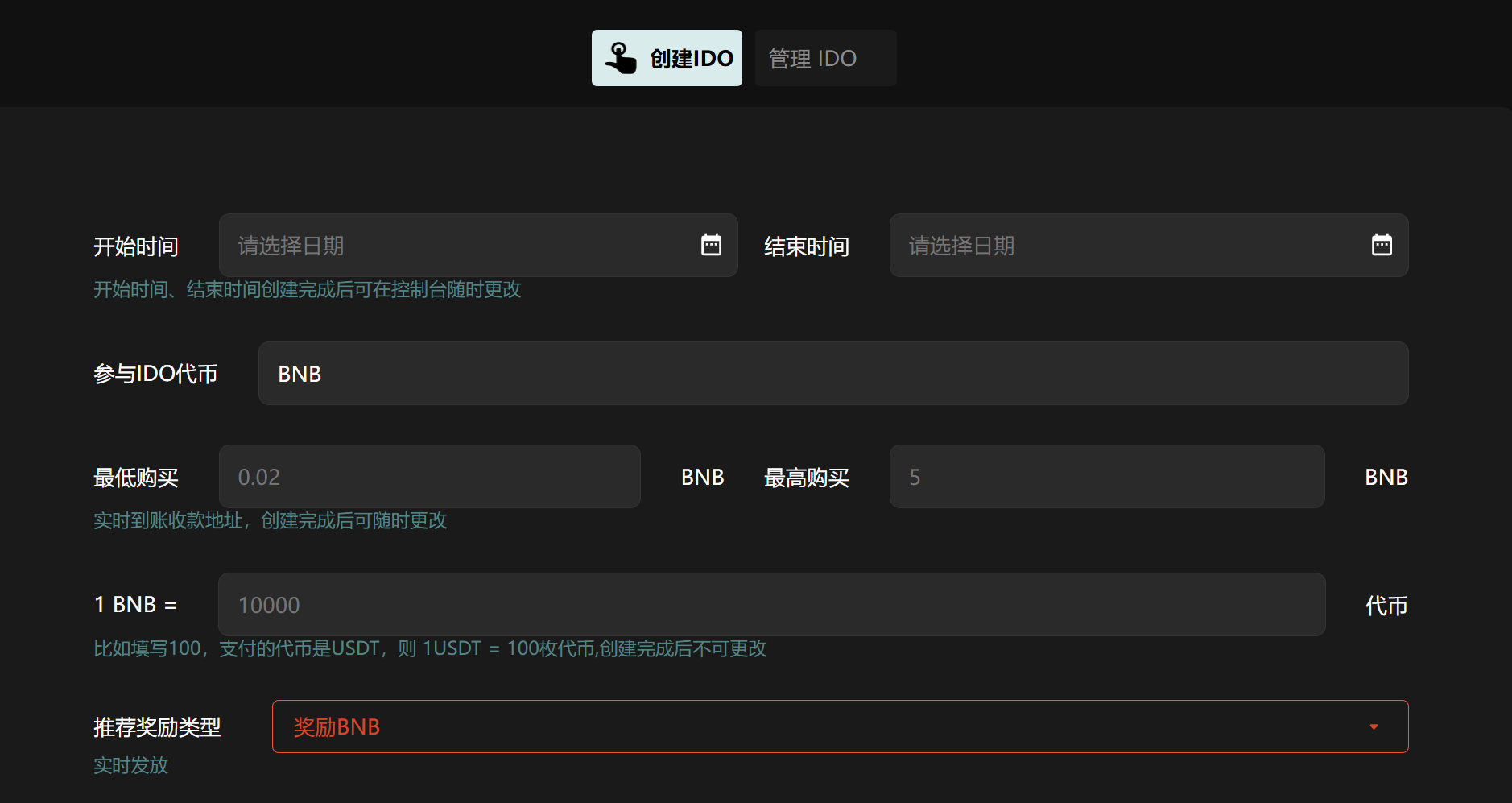
The entire process can be completed by a beginner within an hour, and the cost is low. The platform supports pump.fun-style launches and has market value maintenance tools suitable for long-term operation.
IDOs provide projects with an efficient fundraising channel and offer early-stage opportunities for investors, but the key to success lies in project value, community, and execution. Using tools like GTokenTool can significantly lower the technical barrier, making it suitable for beginners to get started quickly.