
This article is machine translated
Show original
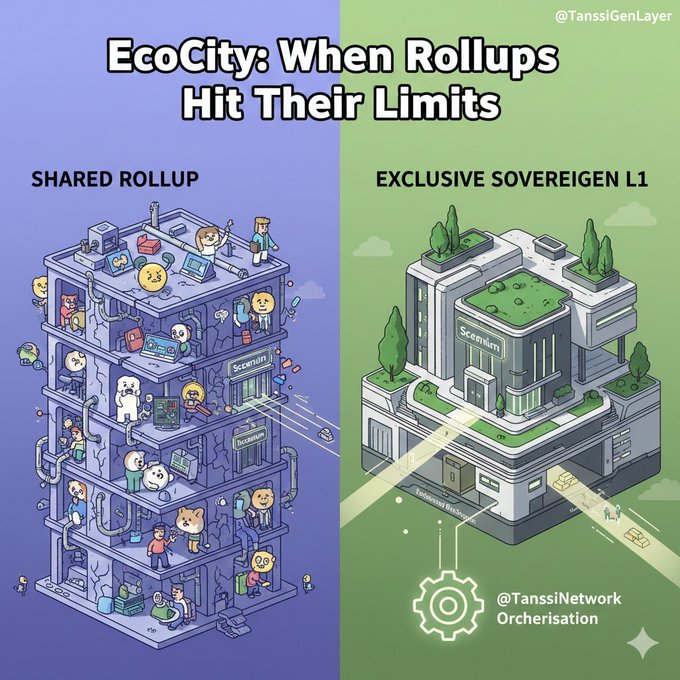
As Vitalik said, Ethereum Layer 2 is outdated. The current L2 is increasingly resembling a cramped, old, and dilapidated shared apartment in a good location.
Although it's livable, I always feel cramped. Recently, I've been looking at projects in EcoCity (the L1 incubator run by @TanssiNetwork), and Scenium has resonated with me the most.
What they're doing is RWA (Real-World Asset Tokenization), which simply means moving large sums of money like US stocks, real estate, and equity onto the blockchain ➡️ and running it on someone else's L2 platform, where the rules are set by them. For example, projects like Scenium, which require strict KYC (Know Your Customer) verification, would have to use multiple layers of contracts on a general-purpose blockchain, resulting in extremely bloated and inefficient code ➡️ all the transaction fees paid by users go to the L2 platform, leaving them with nothing. 👍 What's so great about Scenium being listed on EcoCity?
Thanks to Tanssi's "one-click chain creation" technology, Scenium didn't spend several months writing the underlying code and was able to move into its own "detached villa" immediately.
The blockchain is proprietary, and the block space is specifically for RWA. No matter how wildly other on-chain meme fare, Scenium's transactions will always be seamless and uninterrupted, with compliance logic hardcoded at the very bottom of the chain. Who can buy, and how assets are distributed—that's entirely up to them.
🤔Previously, building a sovereign blockchain required begging and pleading for validator nodes. Now, with Tanssi's orchestrator, it's a simple click of the mouse. Developers can finally focus on the assets themselves, rather than building infrastructure. ➡️Rollups aren't a panacea; as projects grow and their business becomes more specialized, sovereign L1 is the ultimate goal. EcoCity's recent moves are sending a signal: application blockchains are no longer the privilege of "big companies." Projects like Scenium, which require high performance and customization, can take off directly through Tanssi. This is what Web3 infrastructure should look like.

From Twitter
Disclaimer: The content above is only the author's opinion which does not represent any position of Followin, and is not intended as, and shall not be understood or construed as, investment advice from Followin.
Like
Add to Favorites
Comments
Share
Relevant content