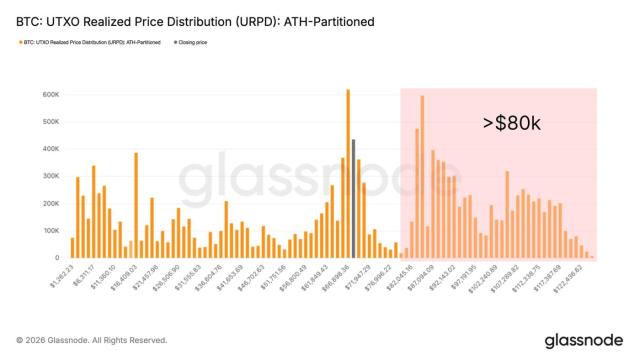
In early 2026, global markets showed a clear value divergence:gold strengthened amid uncertainty, while Bitcoin retraced more than 53% from its 2025 high, briefly falling below $60,000.
On the surface, this looks like a classic rotation between “safe-haven assets vs. risk assets.”On a deeper level, it reflects the market repricing different layers of value.
Gold’s strength once again confirms its role as the “ultimate trust anchor”:it does not rely on credit cycles, is not tied to economic growth, and derives its value from humanity’s long-term consensus on physical scarcity.
Bitcoin’s pullback, on the other hand, reminds us that as a “digital value transfer protocol,” it is still influenced by macro liquidity conditions. This does not negate its network value, but it forces us to confront a more fundamental question:
In the digital age, beyond storing and transferring value, how is value itself created and measured?
The answer is beginning to emerge in a new economy driven by AI Agents.
01|Behind the Divergence: Three Layers of Value Logic
To understand the current market, we need a layered framework:
Layer 1: Store of Value (Ultimate Anchor) — Gold Gold is not a production tool. It is the “ballast” of balance sheets, independent of economic activity.
Layer 2: Value Transfer (Digital Rails) — Bitcoin Bitcoin solves the problem of how value moves across networks, not where value comes from.
Layer 3: Value Creation and Measurement (Production Protocol) — ? As AI Agents become producers and service providers, the key question becomes:How do we measure their contributions and build a settlement system around them?
This is no longer about transferring old value, but about defining, proving, and circulating new value.
The market is seeking safety in Layer 1, while increasingly turning its attention to Layer 3:Which protocols can carry continuous, real, and measurable value creation?
02|OpenClaw: A Real Signal of the Agent Boom at the Application Layer
While Bitcoin was falling, a phenomenon emerged at the AI application layer: OpenClaw (formerly Clawdbot and Moltbot).
This open-source, self-hosted autonomous Agent quickly gained massive attention on GitHub, showcasing AI that can actually “get things done”: operating browsers, files, emails, and applications, executing tasks 24/7.
Its rise proves one thing:
When individual developers begin mass-producing Agents that can truly act in the real world, the AI economy is no longer a distant vision—it is accelerating into reality right in front of us.
The next question is inevitable:How will these massive, autonomous, and heterogeneous Agents collaborate, settle, and be incentivized?
03|The Missing Pieces of the AI Economy: No Native “Money” and “Accounting”
The AI economy is taking shape, but it lacks fundamental institutions:
- Settlement bottleneck: High-frequency microtransactions between Agents cannot be handled by traditional financial systems.
- Measurement vacuum: How do we fairly measure contributions of data, compute, and services?
- Trust gap: How do unfamiliar Agents establish low-cost, enforceable trust?
This is like the early days of the Industrial Revolution: factories existed, but there was no unified currency or accounting standard.
04|NOOS: The Native Value Operating System for the AI Economy
NOOS is not a simple combination of “AI + blockchain.”It is designed to become the value operating system of the AI economy.
What it focuses on is not “how much compute was consumed,” nor “how many models were connected,” but a more fundamental question:How can the effective contributions produced by intelligence in the real world be recognized, measured, and brought into a settleable value system?
In the AI economy, what truly matters is not how many resources are consumed, but whether:
- verifiable intelligent actions are produced,
- real and reusable results are created,
- and those results are actually used in practice.
Through PoAC (Proof of Agentic Contribution), NOOS turns these “real, happening intelligent actions” into value units that are verifiable, settleable, and distributable.
Dual-Token Model: The Native Monetary System of the AI Economy
NOOS adopts a dual-token structure to serve two different roles: rule stability and high-frequency circulation.
$NOOS functions as the governance and staking asset, securing system rules and network security to ensure long-term stability.$NOX serves as the settlement token, enabling high-frequency Agent-to-Agent calls and instant payments, supporting everyday transactions in the AI economy.
Stable rules plus efficient circulation allow the AI economy to operate sustainably over the long term, while maintaining the transaction efficiency required by real-world usage.
05|How Can the Protocol Layer Attract “OpenClaw-like” Projects?
Projects like OpenClaw belong to the application layer; NOOS belongs to the protocol layer.They are not in a subordinate relationship, but in a relationship of choice.
The value of a protocol layer lies in whether it can provide developers with a fair, efficient, and trustworthy value environment:
- No need to build a payment and economic system from scratch
- Contributions measured and verified by PoAC
- Access to a composable, revenue-sharing collaboration network
- Developers focus on AI itself, not financial engineering
06|Conclusion: From “Transferring Value” to “Creating Value”
Gold anchors value in the physical world.Bitcoin enables value to flow in the digital world.
The next generation of protocols must answer a new question:How can the value created by intelligence be natively defined, measured, and circulated?
This is not a replacement, but an evolution of value layers.
As the AI economy enters real operation, capital and value will increasingly flow toward infrastructure networks that can continuously attract, carry, and amplify Agent productivity.
And that is the long-term narrative quietly forming behind this market divergence.