A new era is dawning with a three-way competition: $SOL $SUI _ $ETH ? Institutions may be quietly positioning themselves! Everyone's talking about $ETH and $SOL who will dominate the future of public blockchains. Coinbase, the largest compliant exchange in the US, has quietly cast a historic vote of confidence in this third race. Coinbase has officially placed @SuiNetwork's token standard alongside Ethereum and Solana, making it one of its three officially supported public blockchains. Sui's ambition isn't just to create a simple public blockchain, but to build a complete Web3 infrastructure capable of supporting enterprise-level applications. The logic behind this system is more sophisticated than imagined. 1️⃣ Ecosystem Expansion: Three Pillars Building a Web3 Empire The SUI ecosystem has three core pillars: Sui handles the execution layer, DeepBook provides the liquidity layer, and Walrus serves as the decentralized storage infrastructure. More noteworthy is Sui's recent launch of its native stablecoin, USDsui, which complies with US regulations. Built on Stripe's Bridge open issuance platform, it's a digital dollar that will connect SuFi, wallets, and various applications. 2️⃣ Institutional Entry: Coinbase's Strategic Considerations Coinbase's decision to place Sui alongside Ethereum and Solana as one of the three major public blockchain standards is no accident. This decision has a clear strategic logic behind it. Institutional investors' interest in proposed investment vehicles related to SUI is growing. In its registration statement for a spot SUI exchange trading product submitted in December 2025, Bitwise explicitly designated Coinbase Custody Trust Company as the custodian of the Sui assets held in the trust. This directly accesses Coinbase's massive user base, making things much easier. 3️⃣ Why Did Developers Choose Sui? The technical architecture is the fundamental reason why Sui has been able to rank among the top public blockchains. Unlike traditional blockchains, Sui employs a Move-based programming model and a parallel execution design. This design allows applications to process transactions at high throughput without relying on complex scaling layers. Predictable performance and built-in security checks provide a solid foundation for ecosystem growth. Especially in processing stablecoin transactions, Sui processed over $400 billion in stablecoin transfers between August and September 2025. In comparison, Sui's horizontal scalability and predictably low gas fees make it ideal for applications handling high-frequency transactions. 4️⃣ A Three-Way Standoff: A New Landscape of ETH-SOL-SUI? With Sui being included in Coinbase's top public blockchain standards, the traditional duopoly of ETH and SOL is being broken. A new three-way standoff is quietly taking shape. For the entire crypto industry, this multipolar trend may be healthy. It means that the technology roadmap is no longer singular; developers can choose the most suitable infrastructure based on application needs, and users can enjoy more professional services. In the long run, the core of competition among public blockchains will return to fundamentals such as technological strength, developer friendliness, and real user adoption rates. I've been working on many projects within the SUI ecosystem recently, and I'm very optimistic about them! @SuiNetworkCN
This article is machine translated
Show original

Sui
@SuiNetwork
02-07
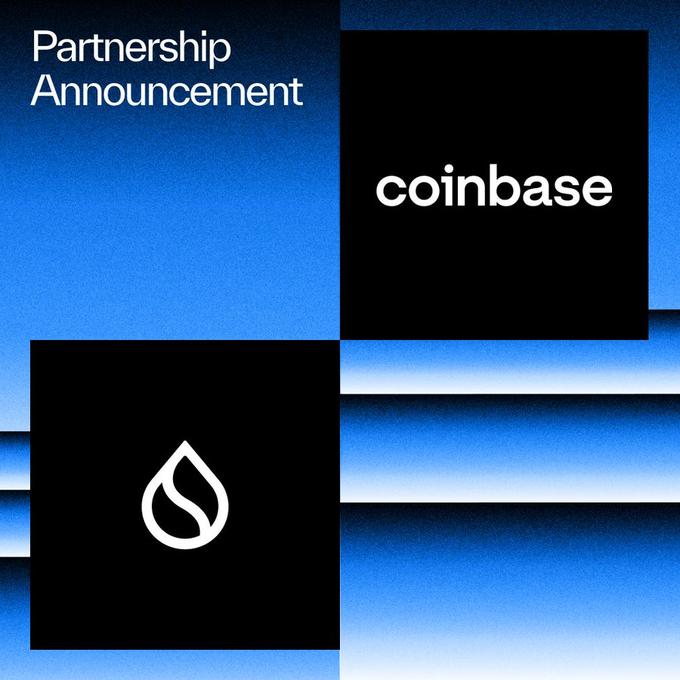
Excited to announce we’re partnering with @Coinbase as they adopt the Sui token standard, making it easier than ever for institutions, builders, and everyday users to participate in the Sui ecosystem.


From Twitter
Disclaimer: The content above is only the author's opinion which does not represent any position of Followin, and is not intended as, and shall not be understood or construed as, investment advice from Followin.
Like
Add to Favorites
Comments
Share
Relevant content