Guided by Hong Kong's stablecoin regulations and the latest regulatory guidelines from the China Securities Regulatory Commission, this seminar focused on the path of "asset → structure → currency → liquidity" and reached a clear consensus: the tokenization of gold is not a single product, but a systematic project that is "trustworthy, auditable, redeemable, compliantly scalable, and cross-borderable".
Article author and source: China Digital Capital
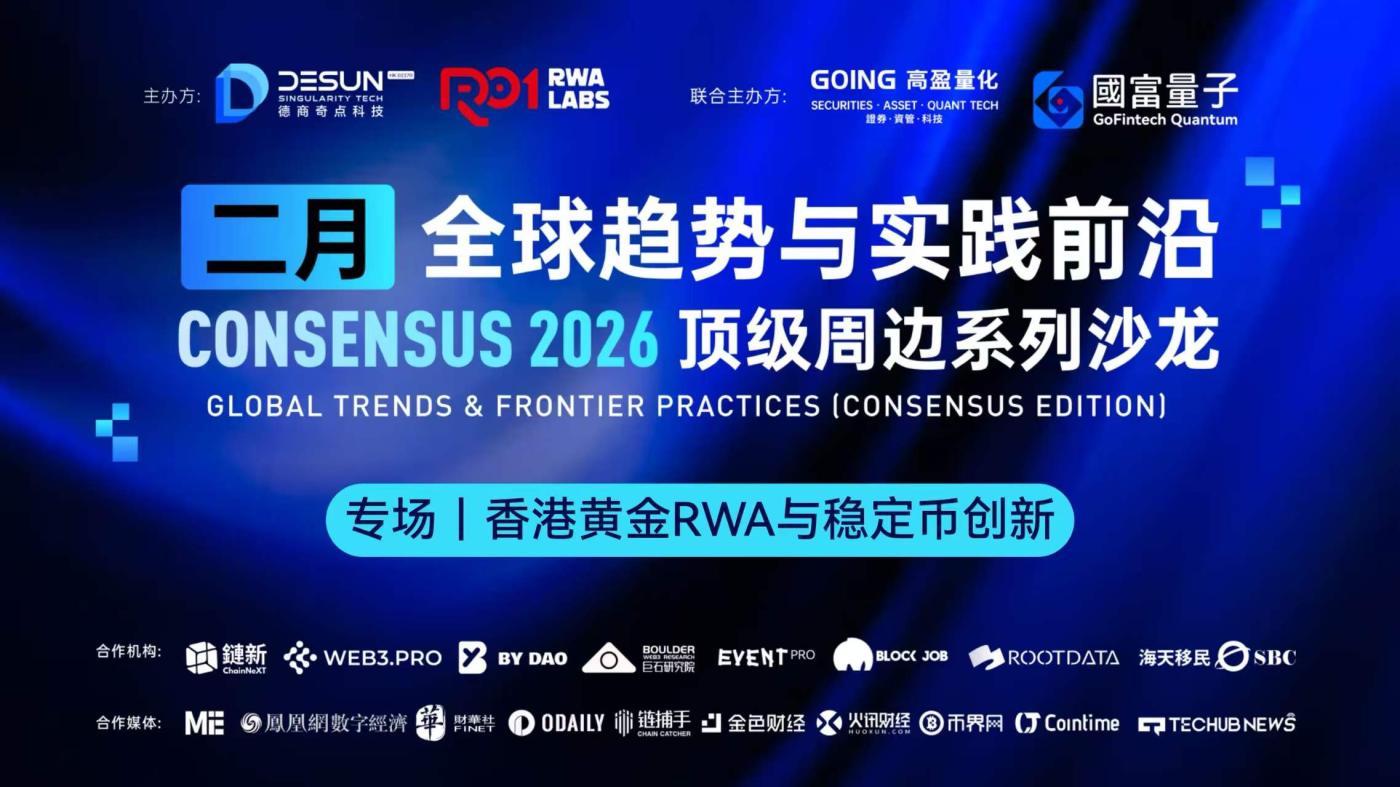
On February 12, 2026, the "Hong Kong Gold RWA and Stablecoin Innovation Seminar," hosted by Deutsche Capital and Huaxia Digital Capital, and co-hosted by Gaoying Capital and Guofu Quantum, was held at the Hong Kong MassMutual Insurance Centre. Supporting media included ME, Phoenix Digital Economy, and Caihua News Agency. The seminar focused on key topics such as "the latest regulatory guidelines, gold RWA issuance and asset management, gold stablecoins and international settlement, and trading and liquidity infrastructure," bringing together representatives from traditional financial institutions, compliant and licensed institutions, crypto institutions and trading platforms, infrastructure, and project teams to discuss how gold can be further upgraded from a "tradable asset" to an "on-chain financial foundation asset."
Why "present-day Hong Kong + Golden RWA"?
Over the past year, gold has experienced a rare "resonance" at both the macro and industrial levels: on the one hand, global central bank allocations, the dollar cycle, and geopolitical factors have led the market to re-examine gold as an asset with stronger monetary attributes amidst high-level fluctuations; on the other hand, XAU-type gold tokens and gold stablecoin products have begun to emerge on a large scale, marking the first time gold has entered the on-chain financial system in a more standardized, auditable, and tradable manner. The conference concluded that Hong Kong's advantages in possessing a gold trading and clearing system, international asset management and licensing regulations, and institutional experimentation and connectivity with Web3, RWA, and stablecoins have opened a window for discussion on "gold tokenization + RWA issuance + gold stablecoins + international settlement hub" from concept to feasible engineering implementation.
Opening Speech: From Macro Perspectives to Implementation Strategies, From "Digital Gold Bars" to "Golden Yuan"
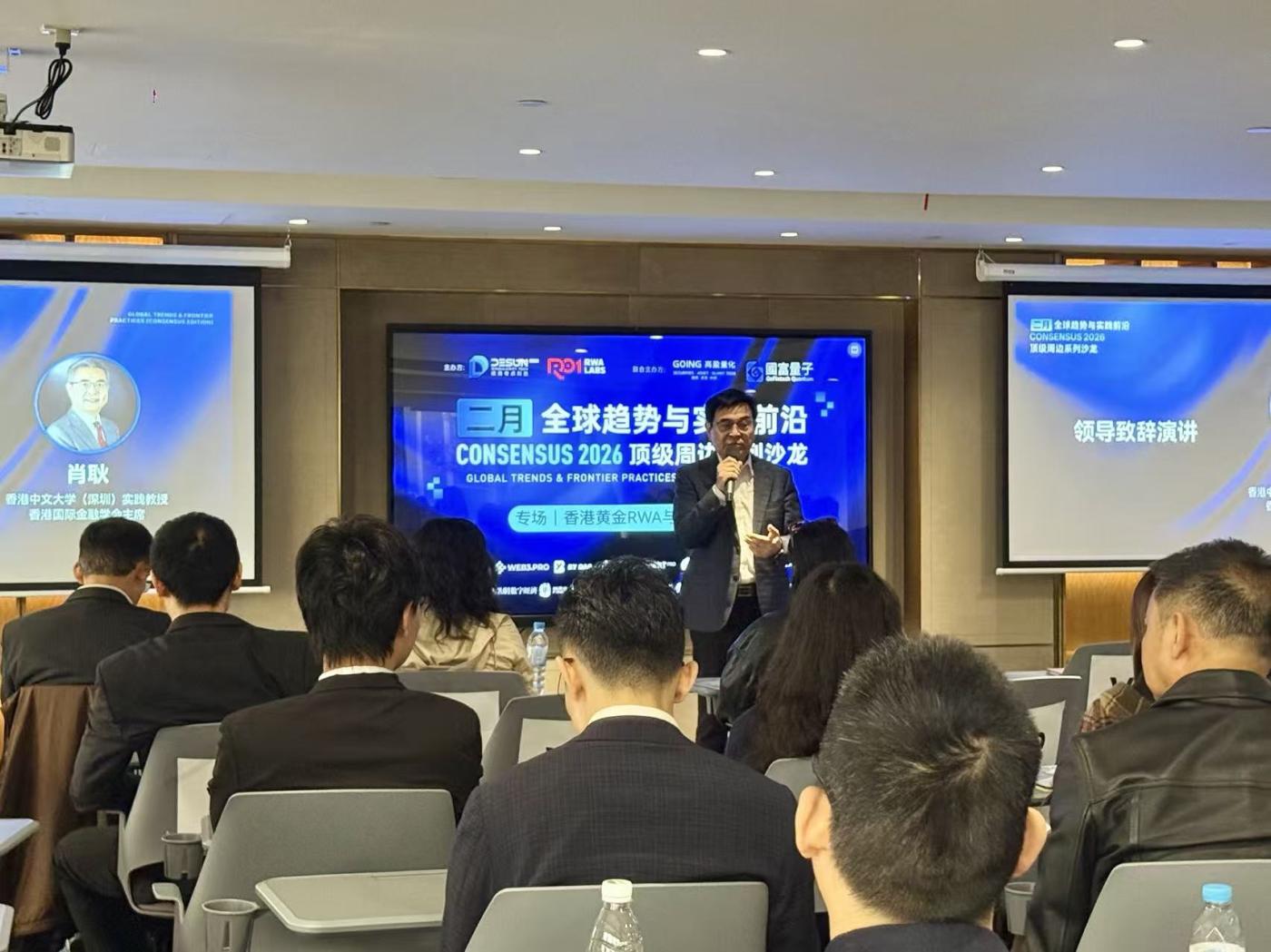
In the opening session of the conference, Xiao Geng, Professor of Practice at the Chinese University of Hong Kong (Shenzhen) and Chairman of the Hong Kong Institute of International Finance, gave a macro analysis and outlook on topics such as Hong Kong RWA, stablecoins, and international gold trading and settlement hubs.
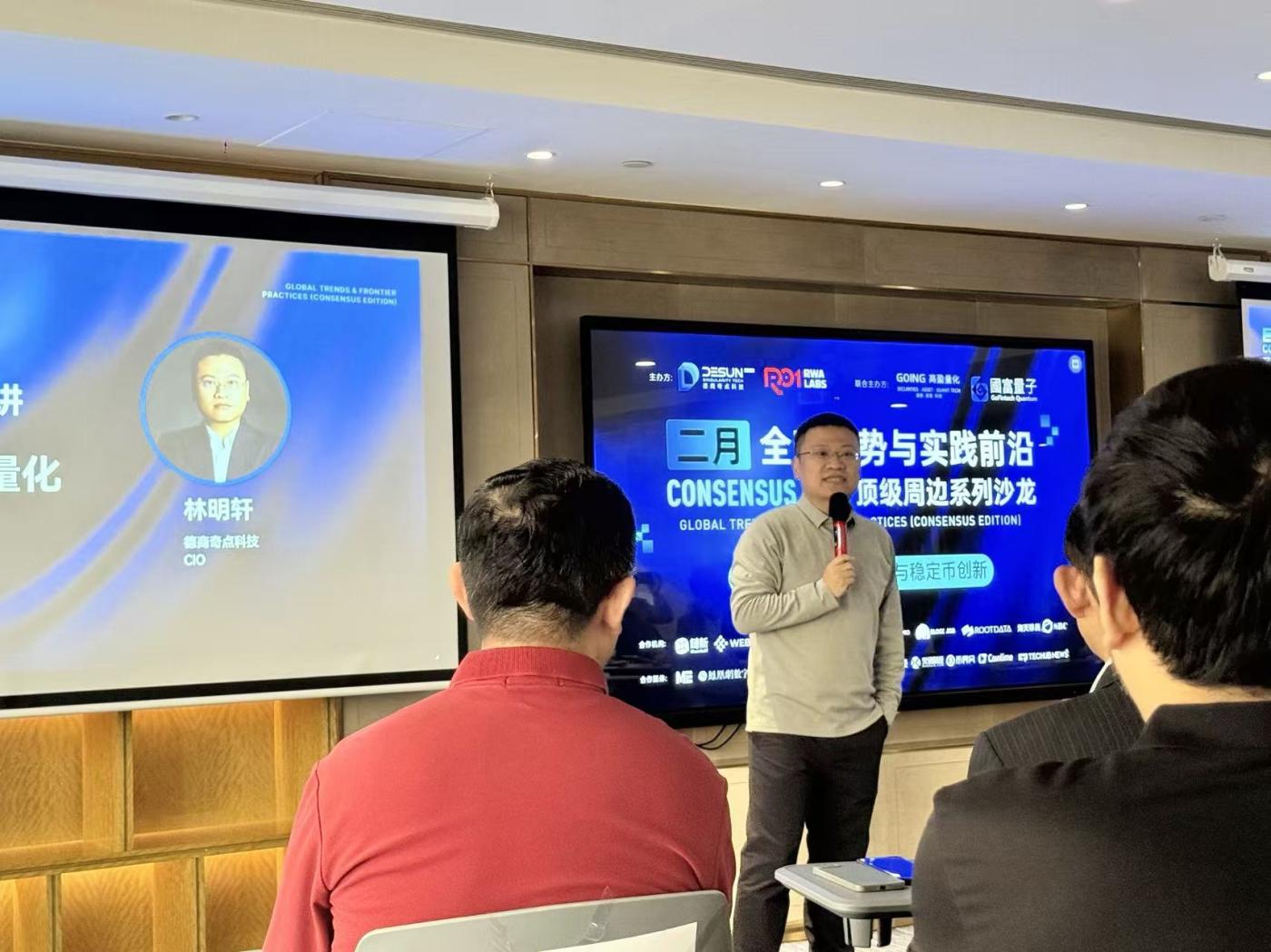
Lin Mingxuan, CIO of German company Qidian Technology, shared quantitative trading opportunities and risk control methodologies in the digital currency market.
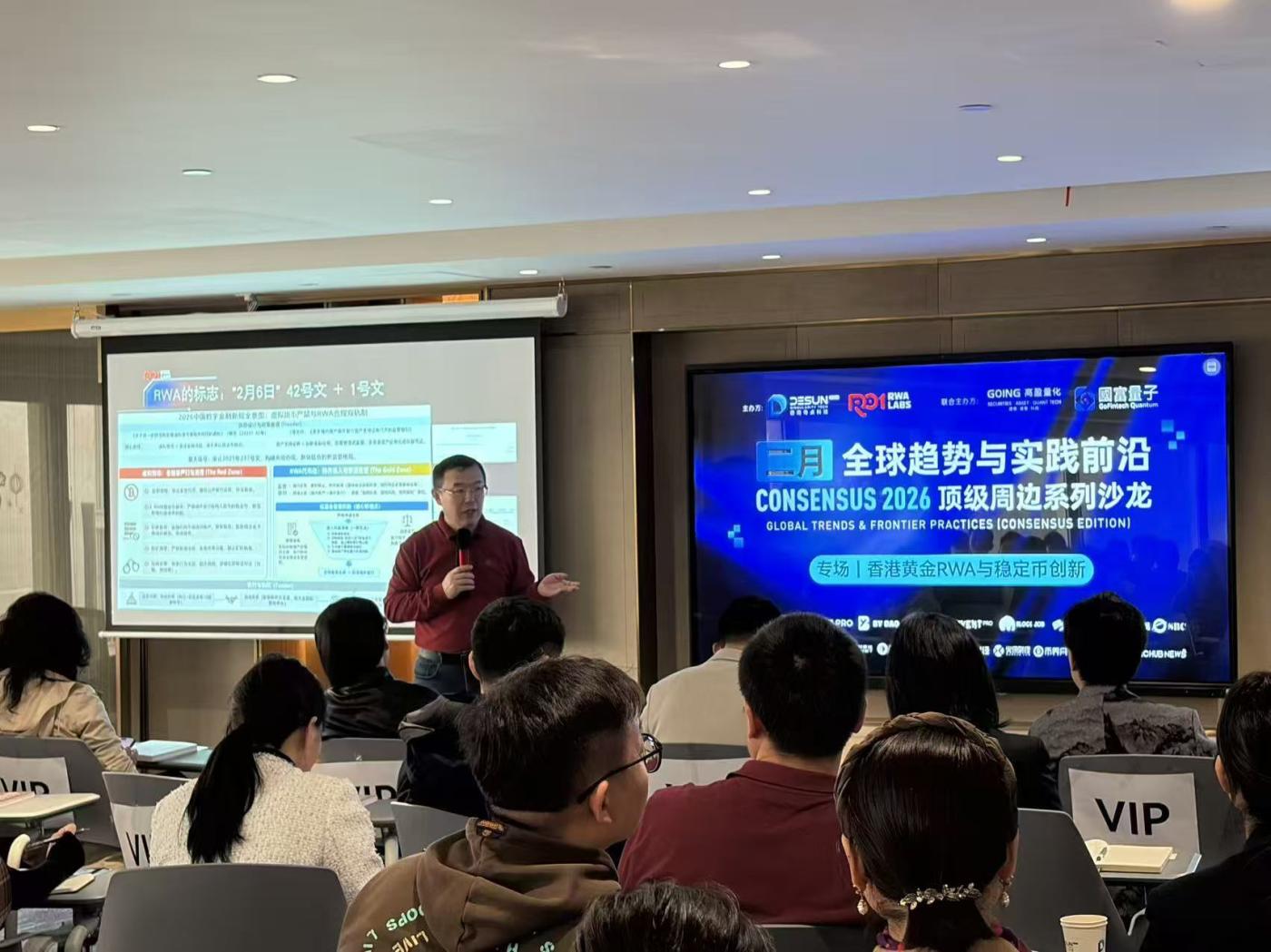
Following this, Ye Kaifa, Founding Partner of Huaxia Digital Capital, delivered a keynote speech entitled "From 'Digital Gold Bars' to 'Golden RMB'". He first provided a detailed interpretation of the latest regulatory guidelines issued by the China Securities Regulatory Commission on February 6 regarding the issuance of asset-backed securities tokens overseas by domestic assets. He then proposed that the core of Gold RWA is not in the "token issuance narrative", but in completing the financial infrastructure for gold. This involves building a closed-loop path of "Gold RWA × Gold Stablecoin" that coordinates the asset side, cash side, and trading side around the three key issues of "rights confirmation, reconciliation, and settlement". He also emphasized that Hong Kong's key advantage lies in its complete institutional components of "vault + license + clearing".
Keynote Speech: The Three Upgrades of Gold RWA and the Evolution of On-Chain Asset Forms
During the Keynote Session, several speakers discussed the structural key points and industrialization path of gold tokenization, starting from the evolutionary logic of "physical assets → financial assets → on-chain currency/settlement units".
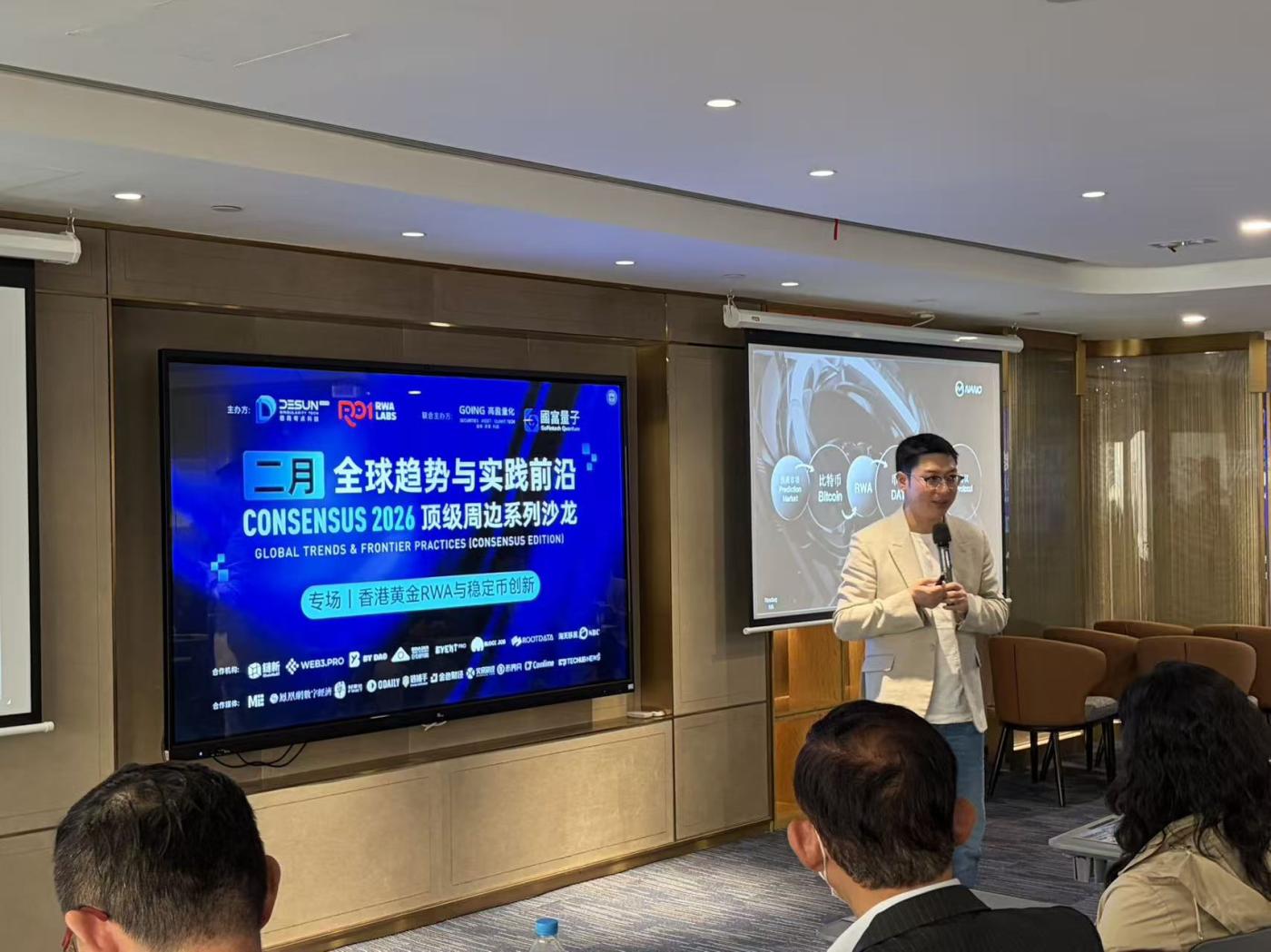
Nano Labs founder Jack Kong shared "Trends in Web3 Development," observing the development stages of Web3 and RWA from the perspectives of compliance integration and industry integration.
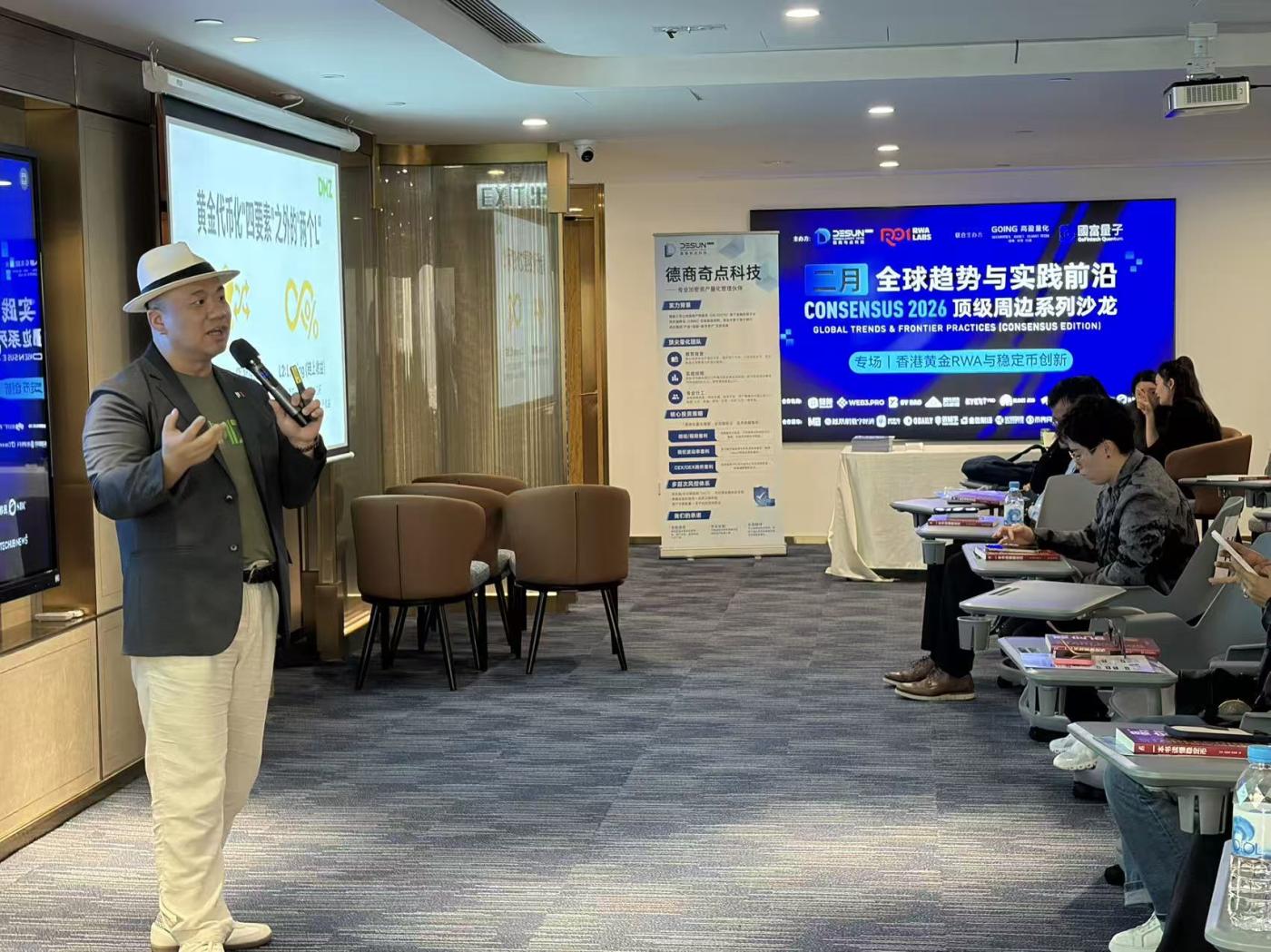
Nathan Ma, founder of DMZ.Finance, outlines the key elements of gold tokenization in his book, "The Four Core Elements of Gold Tokenization."
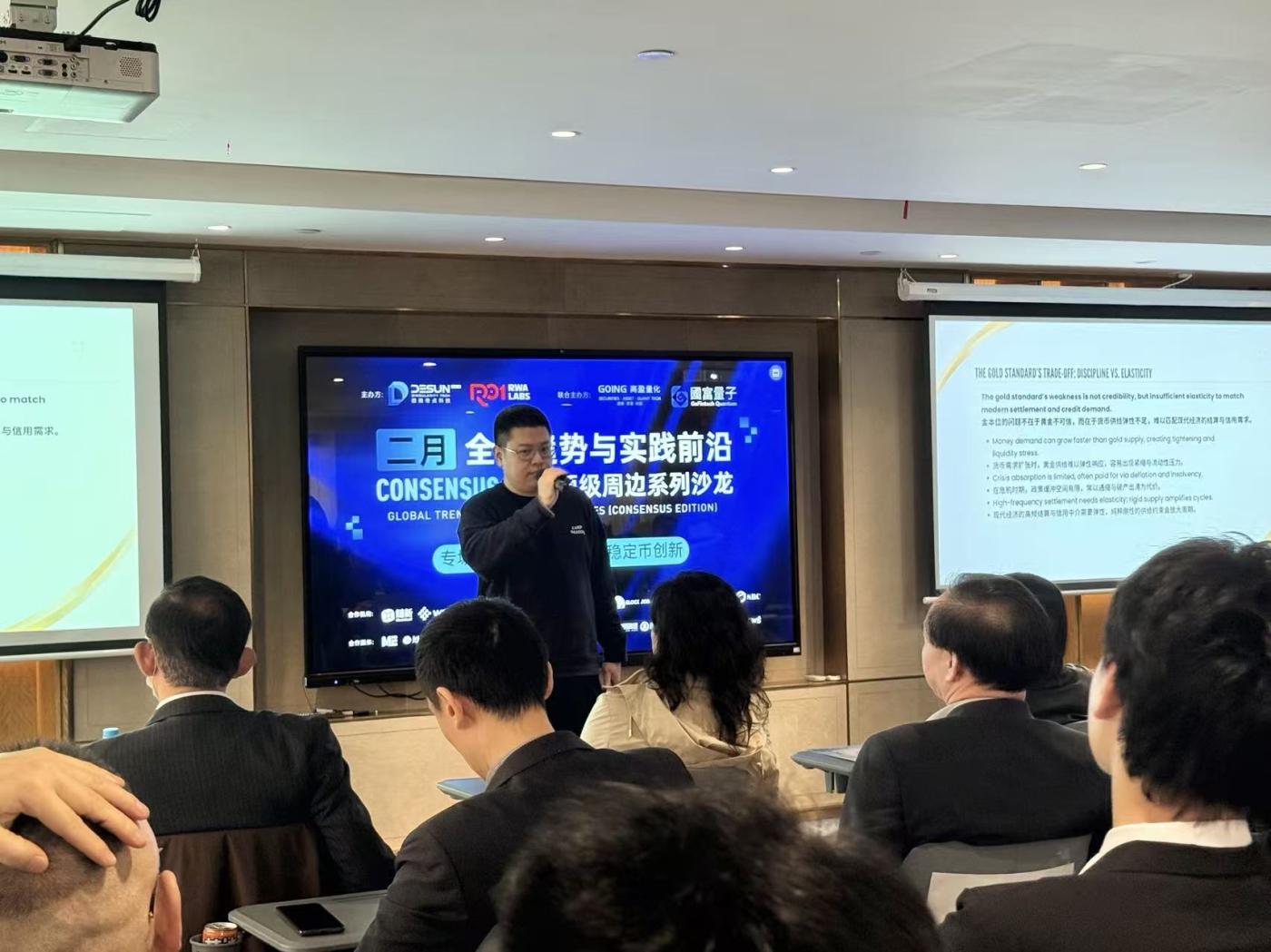
On.Nexus founder Jeremy Lin discusses the potential forms and design ideas of gold-backed synthetic assets in terms of settlement and clearing in his book "Gold-Backed Digital Asset".
Roundtable Forum: Clearly explain "whether it can be done" and "what lines cannot be crossed".
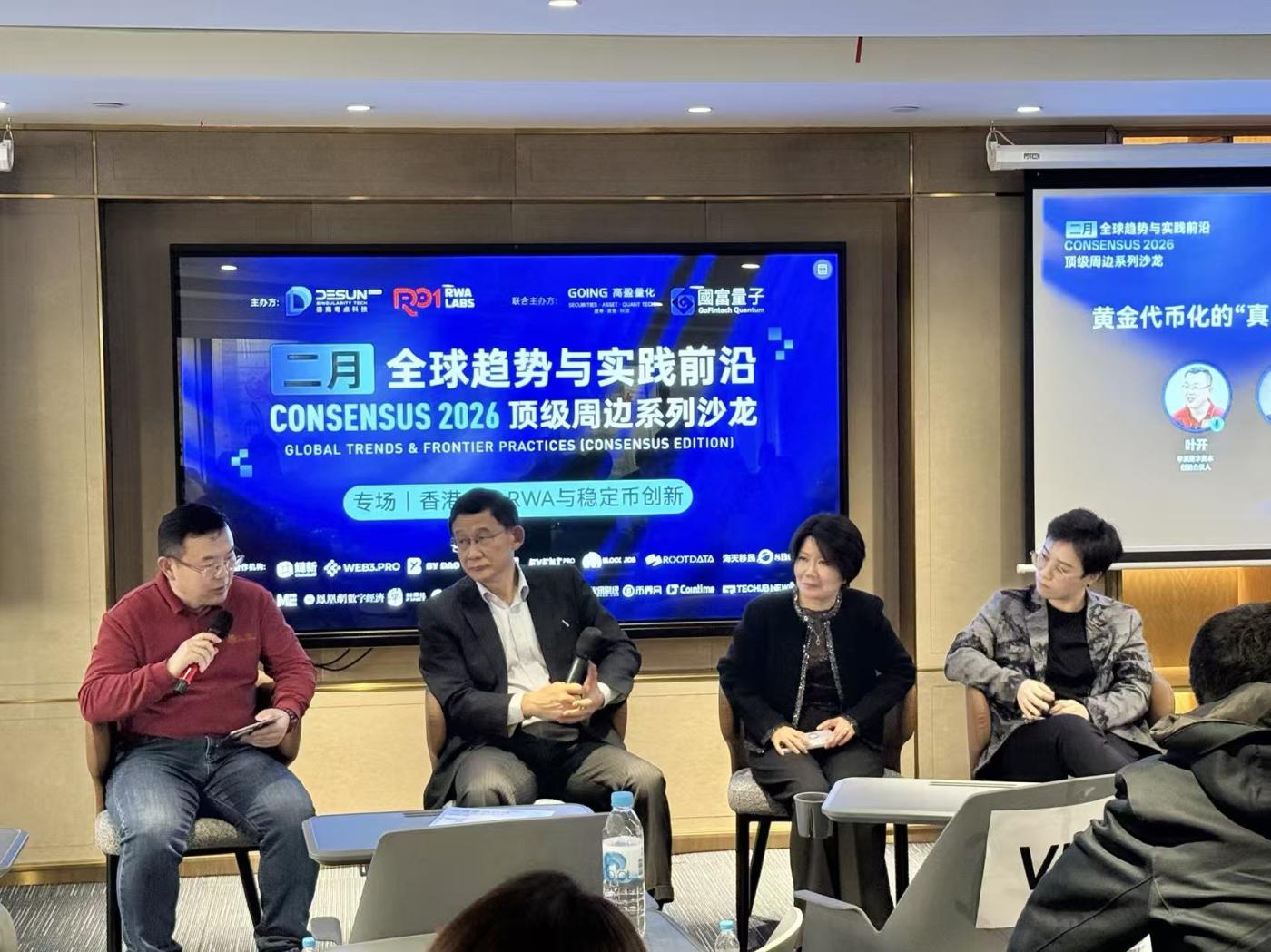
The Roundtable Forum I, themed "The Real Issues of Gold Tokenization: Ownership Confirmation, Compliance, and Circulation Boundaries," was moderated by Ye Kai, Founding Partner of Huaxia Digital Capital. Guests included Wang Zhonghe (a senior financial professional), Cynthia Xi (CRO of DigiFT Singapore), and Hazel Yang (Head of Business Development at HashKeyCaaS). The roundtable discussion revolved around the implementation chain of "traditional finance + regulation + tokenized funds + infrastructure," with a focus on the latest regulatory guidelines issued on February 6th. Furthermore, the roundtable analyzed the true boundaries of Hong Kong's licensing structure, the "three-account alignment" design of on-chain ownership confirmation and off-chain custody, auditing and settlement, and the disclosure and risk control requirements for gold tokenized products targeting global institutional funds.
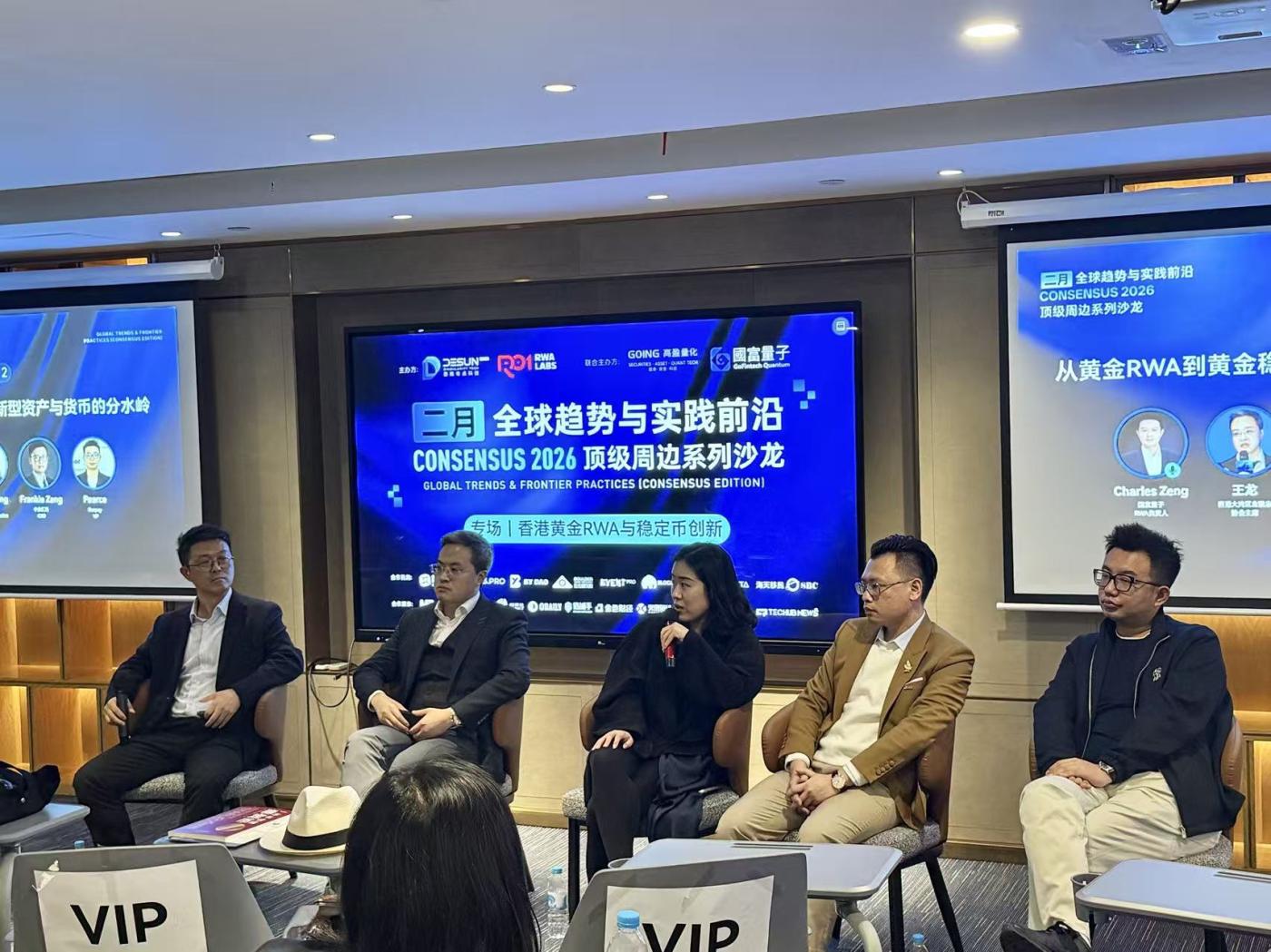
Roundtable Discussion II, themed "From Gold RWA to Gold Stablecoins: A Watershed Monetary Strategies," was moderated by Charles Zeng, Head of RWA at Guofu Quantum. Guests included Wang Long (Chairman of the Greater Bay Area Financiers Association), Yoyee Wang (Bybit B2B Business Executive), Frankie Zeng (CRO of CICC), and Pearce (VP of BenPay). The discussion focused on the fundamental differences between gold stablecoins and gold RWAs, whether gold stablecoins possess "quasi-currency" attributes, their potential for synergy with USD stablecoins and RMB cross-border settlement, and whether emerging markets are likely to adopt them first. Participants generally agreed that for gold stablecoins to achieve wider adoption in payment and clearing scenarios, the key lies not in the concept itself, but in "redemption mechanisms, compliance boundaries, liquidity and market making, and the cost of integrating with existing financial infrastructure."
Conclusion: Transforming gold into an "on-chain verifiable financial asset".
Guided by Hong Kong's stablecoin regulations and the latest regulatory guidelines from the China Securities Regulatory Commission, this seminar focused on the path of "asset → structure → currency → liquidity," reaching a clear consensus: gold tokenization is not a standalone product, but a systematic project that is "trustworthy, auditable, redeemable, compliantly scalable, and cross-borderable." Huaxia Digital Capital stated that it will continue to advance industry research, refine compliance structures, and promote industry collaboration in the areas of gold RWA and stablecoins, fostering a stronger synergy and demonstration effect between Hong Kong as an "international gold trading and settlement hub" and a "window for RWA/stablecoin institutional innovation."