The article's core argument is that although the open-source project OpenClaw has sparked market awareness and enthusiasm for "allowing AI to directly operate computers like humans," its own development is facing fundamental challenges.
Article author and source: Alan Walker, Silicon Valley
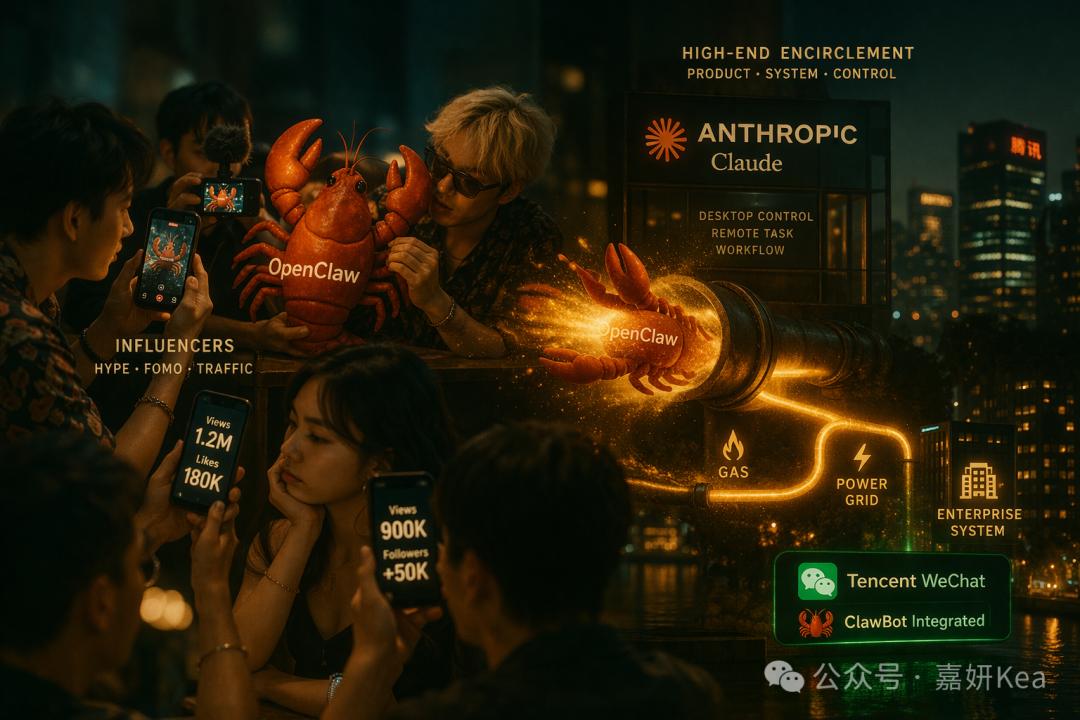
In the morning at Zombie Cafe in Palo Alto, Alan Walker, holding his coffee and looking out the window, said something very softly, but everyone fell silent:
"The most dangerous moment for OpenClaw is not when nobody talks about it, but when everyone starts talking about it."
Many people think that if a product becomes popular, it has won.
In fact, in the history of science and technology, the opposite is often true: once something is proven to be true, it no longer belongs to the person who first made it, but to the person who has the most systematic approach, the best distribution capabilities, and the greatest commercialization ability.
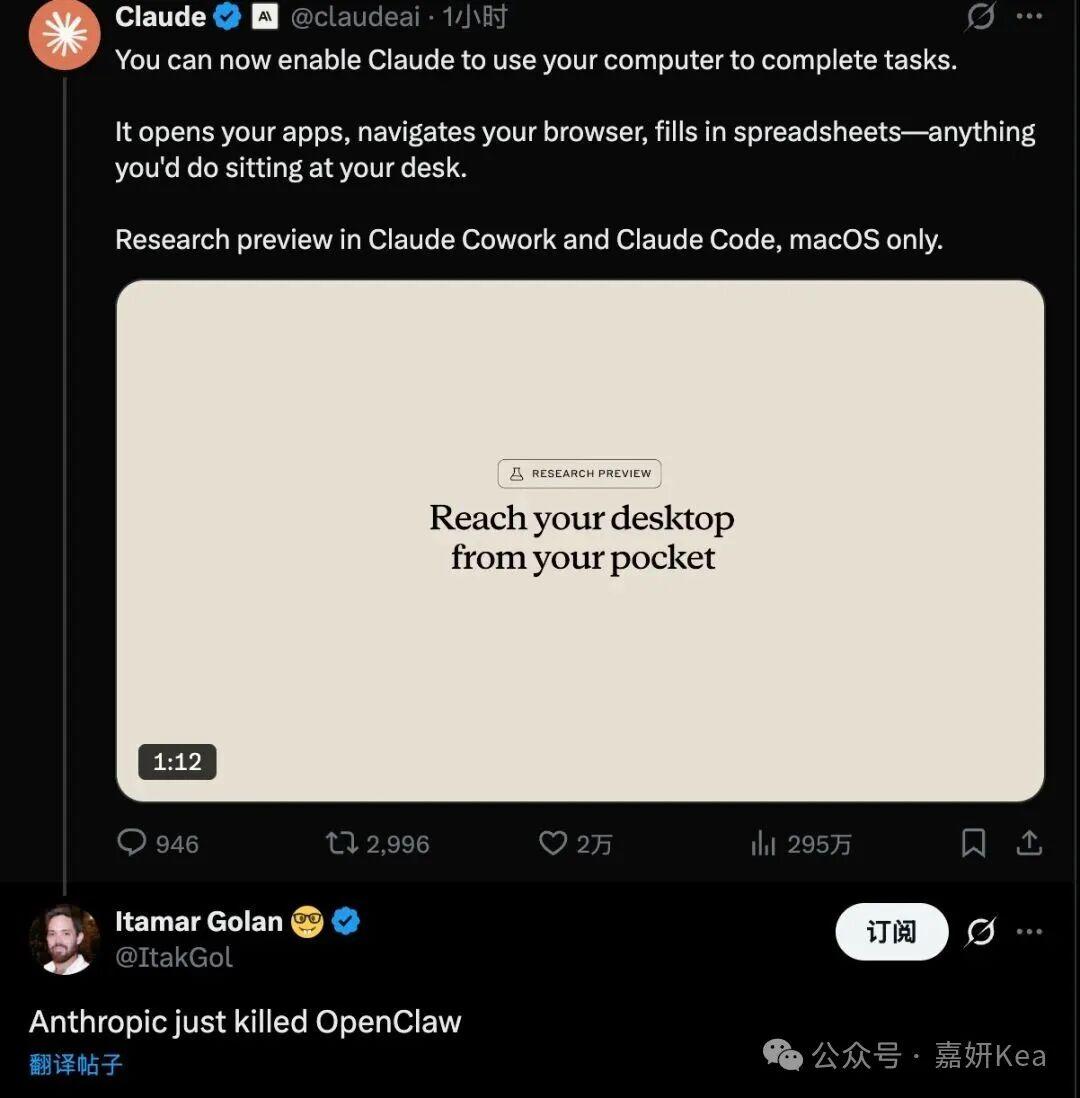
Anthropic has pushed Claude Code and Cowork forward this time, and the flavor is already very clear:
Claude can now operate the computer directly on the desktop, opening files, using browsers, and development tools; if connected tools like Slack or Google Workspace can complete the task, it will prioritize using integration; only if that's not possible will it then use the desktop.
At the same time, Anthropic also connected the mobile task dispatch chain , so users can send tasks to Claude to do even if they are not in front of their computers.
This capability is currently available for research preview to Pro and Max users, starting with macOS .
This is not a regular update.
This is a declaration:
OpenClaw broke down the door, but it wasn't the only one that went in.
1. Revelry is never a moat; excitement is often just the eve of harvest.
Alan said that many people romanticize the term "phenomenal".
They thought that as long as people were sharing, discussing, meeting offline, and demonstrating at conferences, a product already had an unshakeable position.
That's not how it works.
The bustling atmosphere only proves that the market has been educated, not that the value will remain in your hands.
The truly remarkable thing about OpenClaw this time is not how perfect its functions are, but that it has made something so widely known and understood:
For the first time, people felt so concretely that AI is not just about answering questions, writing a few lines of code, or being a chatbot; it can actually "operate" for people.
This step is its historical contribution. But that's also where the problem lies.
Once this understanding becomes widespread, large companies will no longer remain hesitant. Because all leading model companies will immediately realize:
The new entry point is not the API, the Agent directory, the CLI, or the plugin marketplace, but rather " making the model work directly on the computer like a human ."
At this point, OpenClaw's role begins to change. It is no longer the sole protagonist, but begins to become evidence:
This proves that this path is correct, that this wave of demand is real, and that users are ready to accept "AI doing things for me."
And this is where the cruelest part of the tech industry is:
Proving the direction doesn't guarantee you'll win in the end.
II. Open source is the easiest way to create an atmosphere, but the hardest way to get ordinary people to understand it.
Alan added that the most interesting thing about OpenClaw is not just the product itself, but the group of people who are dancing around it.
If you look closely, you'll find that many of the people who are most excited, most enthusiastically promoting, and most eager to attend parties and record podcasts recently are not actually people who have long been engaged in underlying technology, large-scale product delivery, or enterprise-level systems.
Many are more like traffic hunters .
They excel at smelling trends and at quickly standing next to new things when they're at their hottest, making themselves appear as "the first to understand the future."
This is nothing unusual.
This group of people emerges in every phenomenal wave in the open-source world.
Because open source naturally fosters a certain atmosphere:
It makes people feel close to the future, close to power, and close to the next wave of technological revolution.
Install it, get it running, post a message on WeChat Moments, record a podcast episode, attend a meetup, and it feels like you've already stepped into a new era.
But the real problem is:
Ordinary people simply cannot handle this .
Ordinary users don't want to deal with the environment every day, don't want to change permissions, don't want to adjust parameters, don't want to troubleshoot compatibility, and don't want to do half of the maintenance themselves for a task chain.
Companies are less willing to burden critical processes on a system that is "popular in the community but has unclear boundaries of responsibility".
This is the most common gap in open source:
Those who are willing to take risks treat it as a belief; those who aren't see it as a burden.
Therefore, in history, open source that has truly stood the test of time has never relied solely on community popularity.
Linux survived not because it was the most popular in forums, but because it was later absorbed by servers, enterprises, and cloud infrastructure, becoming a true system foundation .
MySQL's widespread adoption wasn't solely due to its open-source nature, but also because it was complemented by hosting, commercial support, and enterprise availability.
They ultimately won not because of the word "openness," but because they were systematized, serviced, and industrialized.
The most troublesome thing about OpenClaw today is precisely this:
It ignited too quickly, but systematization lagged far behind.
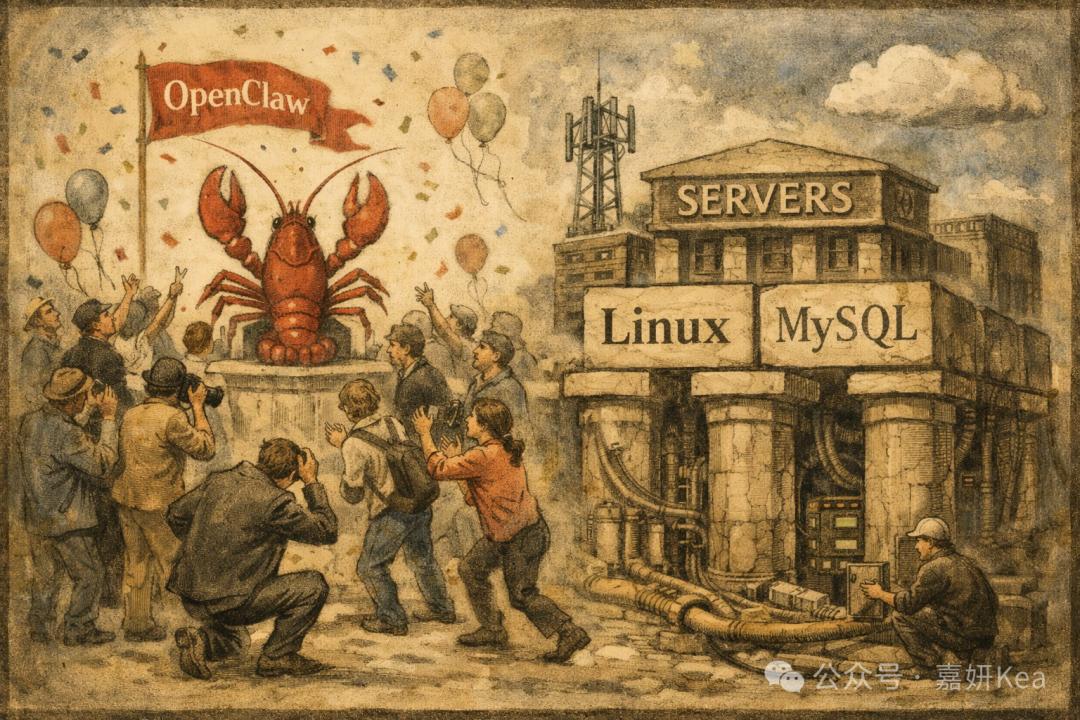
III. From a fundamental technical perspective, OpenClaw's failure wasn't due to cleverness, but rather its lack of completeness.
Alan was the harshest on this point.
He said that many people like to interpret this kind of competition as "open source vs. closed source," as if it were a battle of values.
Actually, no.
Ultimately, this is a debate about completion .
The problem with OpenClaw has never been a lack of capability.
On the contrary, it has been incredibly fast, so fast that it has forced companies like Anthropic to accelerate their efforts.
但问题在于,开源项目可以先做到能跑,商业产品必须做到能交付。
These two are worlds apart.
Anthropic's key takeaway this time wasn't a specific technical issue, but rather the layer of trouble that users fear most:
There's no need to prepare APIs for all software beforehand; no need to CLI-ify a bunch of tools; Claude can understand the interface through screen content, just like a human, and then click, click, click, completing tasks like a real person.
At the same time, it also layers permissions and security: it prioritizes calling existing connectors, requires confirmation for sensitive operations, and recommends running in an isolated environment.
what does that mean?
This means that what Anthropic is doing is not just showing off his skills.
Instead, it's pushing something that was originally only something tech enthusiasts could tinker with into something that ordinary users could use, companies could manage, and platforms could promote.
That's why I say that OpenClaw's real challenge isn't "getting a punch from Claude," but rather being overtaken by its commercialization completion.
The most common illusion in the tech world is that "getting it done first" naturally equates to "winning in the end".
The reality is that often, those who act first simply identify the pitfalls and pave the way.
Then let the next batch of people come in with more complete products, lower barriers to entry, larger distribution channels, and clearer boundaries of responsibility to reap the rewards .
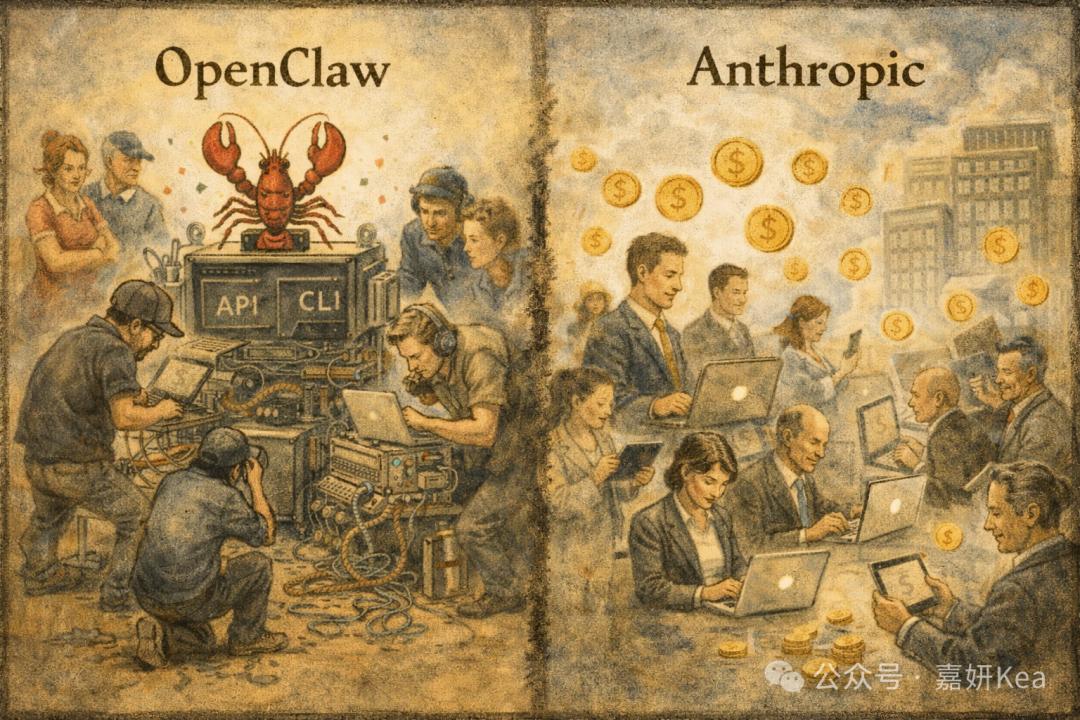
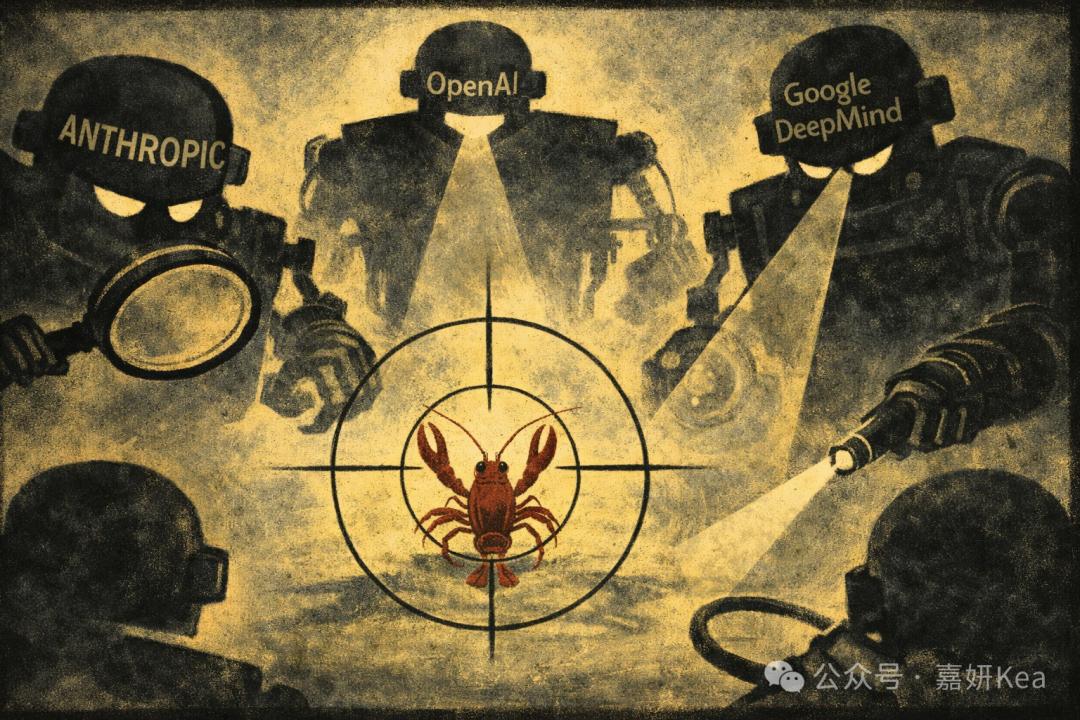
IV. What's truly terrifying isn't the Anthropic, but rather all the large models surrounding it together.
Alan said the most important thing in the title is not "the end," but the hunt .
Because this matter will not stop here at Anthropic.
Anthropic is just one of the top players to make this layer look more like a finished product, but he won't be the last.
The reason is very simple:
OpenClaw has already educated the market.
Since everyone has recognized that "AI using computers like humans" is the entry point, every leading model company will develop this capability. Whoever doesn't is essentially voluntarily relinquishing their main entry point to the future.
Therefore, you cannot interpret this as:
"Claude has released a new feature, and OpenClaw has been defeated."
You should understand it as:
OpenClaw has used its popularity to open up a new battlefield. Now all the major model companies know that this is where the road, the traffic, the entry point, and the future lie.
Moreover, this wave of attacks is no longer just a matter for American companies.
Reuters reported two days ago that Tencent has integrated OpenClaw capabilities into WeChat, launching ClawBot, which allows users to chat and give commands directly to it within WeChat.
Tencent has previously launched multiple agent product lines, clearly aiming to capture this wave of demand within its own platform ecosystem.
This is the cruelest aspect of the word " hunting ".
It's not that any particular competitor has better features.
而是一旦一个新入口被验证,模型层、平台层、分发层、应用层会一起扑过来。
OpenClaw is not facing a competitor today.
It is not a single industrial system .
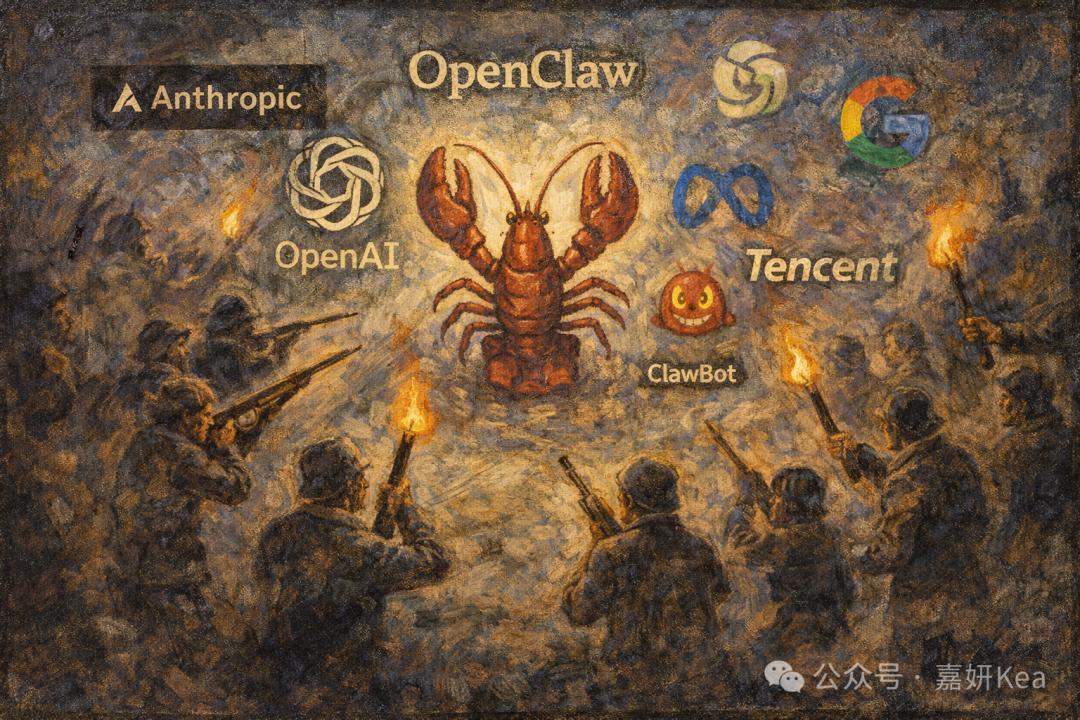
V. Low-end hunting focuses on traffic, while high-end hunting directly transforms traffic into a system entry point.
When Alan got to this point, the people around him laughed.
As everyone knows, there are actually two groups of people most enthusiastically surrounding OpenClaw right now.
The first wave was a physical hunt.
Social media, short videos, podcasts, offline meetups, various conferences, and various groups. Everyone is talking about OpenClaw, sharing their installation experience, and showing off how they debugged it, how they ran it, and how they integrated it into their lives and work workflows.
This round of hunting down, to put it bluntly, is about capturing attention .
Whoever steps forward first will gain a wave of attention and reap the benefits of the "I understand the future" persona.
But the second wave was the truly high-end hunt.
It wasn't people talking about it; the company directly incorporated this phenomenal demand into its product system .
That's exactly what Anthropic does.
Instead of telling stories about OpenClaw on social media, it directly incorporates similar needs into Claude's own desktop capabilities, remote scheduling capabilities, and workflow system .
Tencent is doing the same thing.
It's not about how far OpenClaw is going, but about turning it into a touchpoint within WeChat.
Can you see the difference?
Low-end hunting involves talking about trending topics.
High-end hunting involves making trending topics the default entry point .
One way to earn money is through viewership.
One way to profit is by securing ownership of user behavior over the next few years .
That's why I said that OpenClaw's current position is becoming increasingly delicate.
It will increasingly become a symbol of an era, a cultural event, a catalyst.
But it may not be the one that actually connects the fire to the gas pipeline, the city's power grid, or the industrial system.
VI. OpenClaw did not fail; it simply fulfilled its historical mission.
Alan's last sentence was actually quite calm, yet it was the most heartbreaking.
He said that many people are unwilling to admit one thing:
The greatest value of a pioneer is often not in possessing the end game, but in summoning the end game in advance.
OpenClaw has completed its most important mission.
It allowed the industry to see on a large scale for the first time:
The real breakthrough for agents is not necessarily a longer process, a more complex orchestration, or more plugins, but rather allowing the model to directly take over the task of "how humans use computers" .
This step is crucial.
Because it suddenly transforms abstract AI into something tangible, visible, perceptible, and imitable.
This is why it became a phenomenon in such a short time.
But precisely because it completed this step, its celebration came to an end.
Because once the market is ignited by it, the next to enter will definitely be:
Stronger model companies, more mature commercial products, lower barriers to interaction, larger platform access, more complete permission system, more reliable SLA, and faster iteration teams.
This is the cycle of technological history.
It's not that you did anything wrong.
Rather, it's because you did the right thing, you did it too right, and as a result, you attracted everyone's attention.
So what this title really means is not that Anthropic alone killed OpenClaw.
Instead:
OpenClaw broke down the door, and Anthropic was just the first to rush in with a whole unit of troops.
And behind it, all the big model companies, all the platform companies, and all those who want to seize the entry point will follow suit.
The celebration of OpenClaw did not end because of its failure.
On the contrary, it is precisely because it succeeded that it had to come to an end.
Because the hunt began the moment it illuminated the future.