Table of Contents
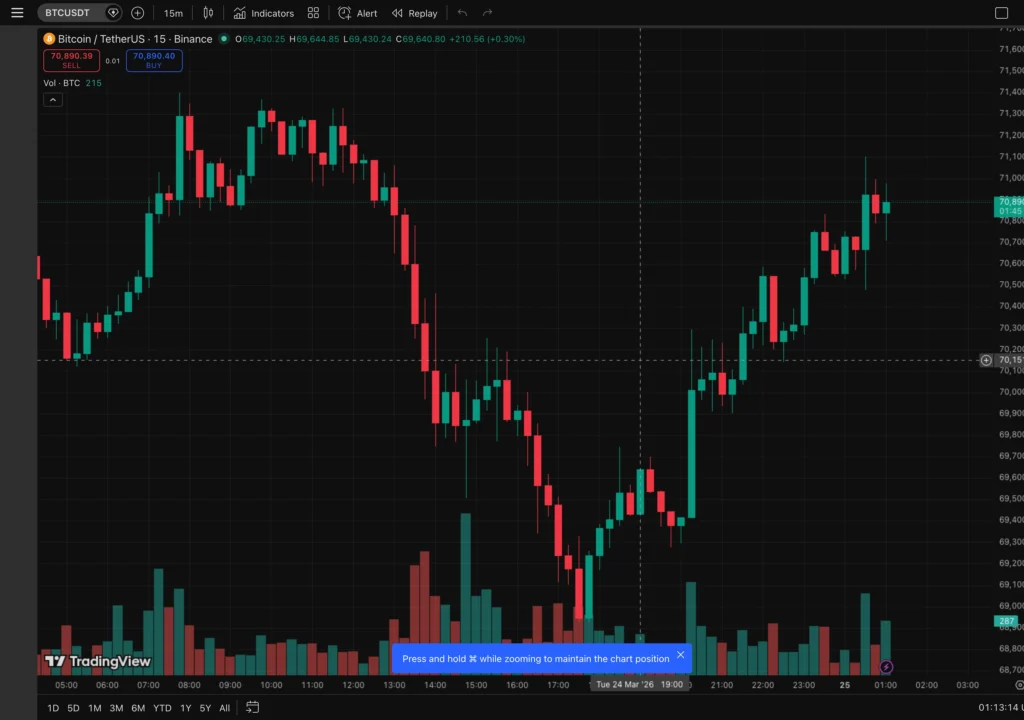
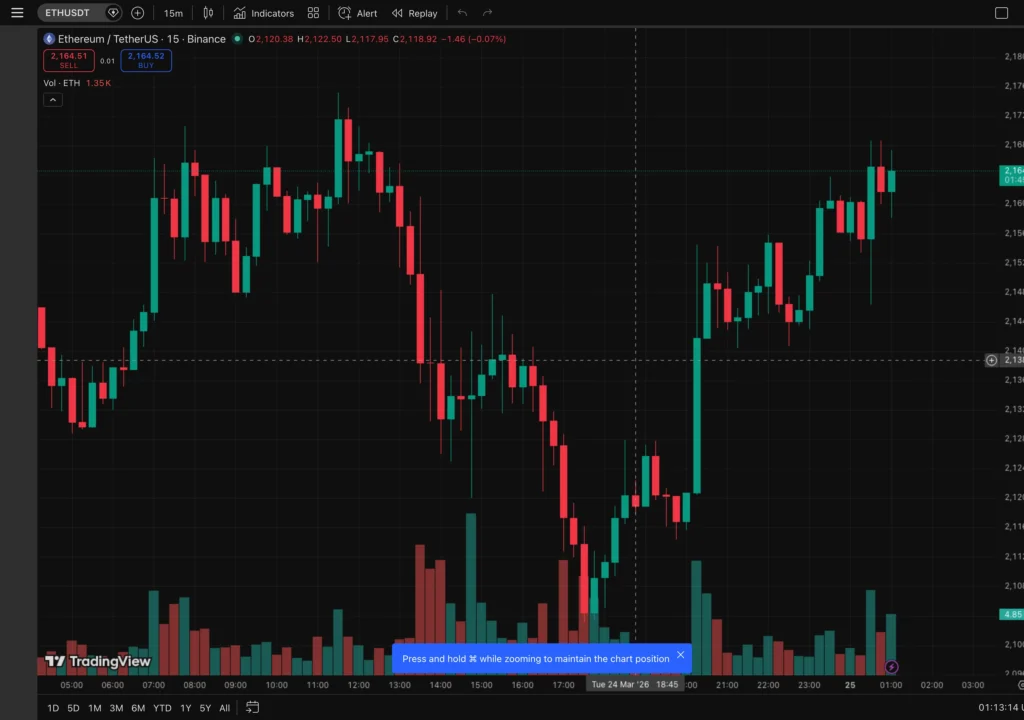
ToggleThe fear index is 15, indicating 46 days of extreme fear. Bitcoin, however, is still at $70,772—an absurd picture, yet a stark snapshot of the crypto market this morning. Last Friday, BTC rebounded strongly from a panic low of $67,400 to $71,000, and today it's consolidating within a narrow range of $68,970 to $71,300. ETH is currently trading at $2,161, a slight 1% increase in the last 24 hours, temporarily holding above the $2,100 support level.
The liquidation process has been relatively calm, but the shadow of last week's liquidations still lingers.
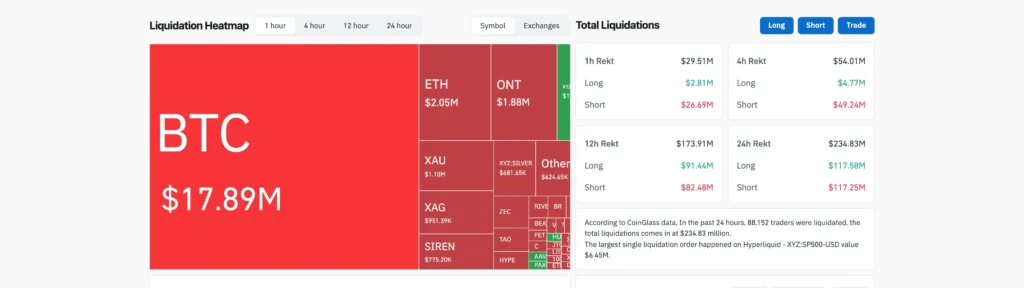
Today's total liquidation volume in the entire market is estimated to be around 234 million, representing a double liquidation of both long and short positions, with 87,000 people facing margin calls. Compared to the scale of margin calls during last week's dramatic fluctuations—on March 23, Trump's threat to "destroy Iranian power plants within 48 hours" triggered margin calls on 170,000 people, totaling $330 million; and on March 19, the hawkish FOMC meeting resulted in margin calls on 135,000 people, totaling $452 million—the market has clearly entered a breathing mode today, but it remains gripped by fear.
Three ropes suppressing the market: oil prices, Iran, and the Federal Reserve.
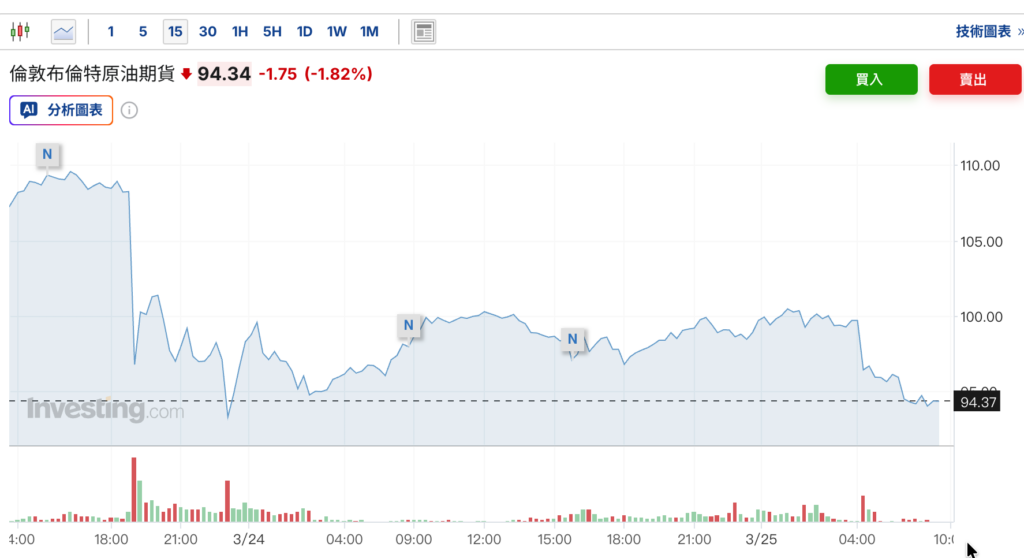
The reason why risk appetite has been slow to recover is due to three macroeconomic factors working in tandem. Brent crude oil broke through $114/barrel the day before yesterday, and although it has fallen below $94, it remains high, with rising oil prices directly reinforcing inflation expectations. Tensions between the US and Iran have entered their fourth week; while Trump's "48-hour" threat has not materialized, the market has not completely ruled out the possibility of escalation. The Federal Reserve's FOMC maintained its hawkish stance last week, keeping interest rates between 3.5% and 3.75%, which was reflected in US stocks tonight: the S&P 500 closed down 0.37%, and the Nasdaq fell 0.84%, with oil prices and geopolitical factors continuing to drag down risk assets.
The next catalyst for the crypto market is locked in on Friday, March 28th – the release of the Federal Reserve's preferred inflation gauge, the PCE data. If the PCE exceeds expectations, the timeline for interest rate cuts will be pushed back again, making a support-pressure test for BTC unavoidable.
An epic divergence between sentiment and price: 46 days of extreme fear, yet BTC hovers around $70,000.
The most thought-provoking number today is not the price of cryptocurrency, but the fear index of "46".
According to data from CoinGlass and Alternative.me, the Fear & Greed Index has remained in the "Extreme Fear" (0-25) range for 46 consecutive days, the longest streak of extreme fear since the FTX crash in November 2022. However, Bitcoin did not collapse during the same period—while the pullback from the February high of $96K was indeed 30%, it rebounded strongly after finding support at $67K and is currently holding above $70K.
This divergence between "extreme pessimism and relatively firm prices" has historically occurred during the bottoming phase, rather than in the middle of a freefall collapse.
Institutional behavior can explain part of the reason. Bitcoin ETFs saw net inflows of $2.5 billion this month, indicating that institutional buying power continues even as retail sentiment collapses. Bernstein analysts publicly declared this week that "Bitcoin has bottomed out," reiterating their year-end price target of $150,000, calling it the "weakest bear market in history."
SOL, XRP and other markets
SOL is currently trading at $91.19, up slightly by 0.35% in the last 24 hours, consolidating around $90. XRP is currently trading at $1.42, down slightly by 0.11%, showing relative weakness. The total market capitalization of cryptocurrencies is approximately $2.5 trillion, and the overall market is exhibiting low volatility and sideways movement.
Funding rates have remained negative for two consecutive weeks, and open interest has been reduced to only $20.8 billion, indicating that deleveraging is still ongoing. This suggests that the upward momentum in the short term is limited, but it also means that the market structure is relatively clean and the risk of a stampede is low.
Wintermute outlines three scenarios: if the US-Iran situation eases and the PCE meets expectations, BTC could optimistically test $80K; if the geopolitical situation remains unchanged and the data is neutral, the price will fluctuate around $74K; if the PCE exceeds expectations and the situation in Iran escalates, the pessimistic scenario is a test of the $65K support level.
Bitcoin today is trapped in a cage of fear, but it has not fallen.