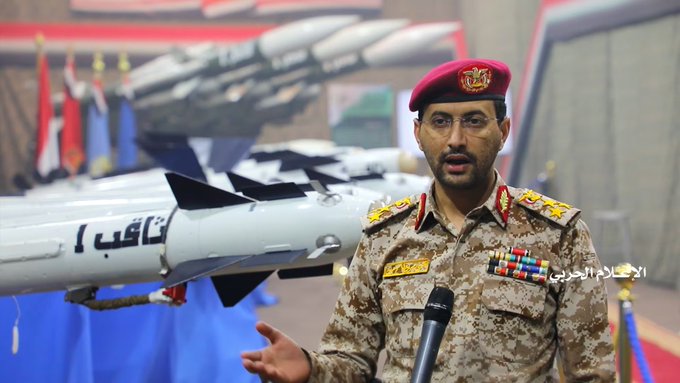
JUST IN: The Houthis just declared they are not neutral. “Fingers on the trigger,” their leader said on March 26. Direct military intervention if the Red Sea is used for hostile operations against Iran.
That sentence turns a one-chokepoint war into a two-chokepoint war.
Hormuz carries 20 to 25 percent of global oil. Bab el-Mandeb carries 12 percent. Combined, that is one-third of the world’s seaborne petroleum flowing through two narrow passages controlled or contested by the same axis. The Strait of Hormuz is 39 kilometres wide. The Bab el-Mandeb is 26 kilometres wide. Sixty-five kilometres of water between Iran and Yemen. One-third of global oil.
The carriers have already made their decision. Maersk, MSC, CMA CGM, and Hapag-Lloyd have paused or sharply reduced Bab el-Mandeb transits since the Houthi declaration per Xeneta and Reuters. Over 70 percent of Asia-to-Europe container traffic has reverted to the Cape of Good Hope route. That adds 10 to 14 days per voyage. Two to four million dollars in extra fuel and crew costs. War risk insurance premiums have surged to 0.7 to 1 percent of cargo value, translating to $150,000 to $500,000 per voyage per Reuters and Lloyd’s data. Bab el-Mandeb traffic is running at roughly 50 percent of normal per Windward and Kpler tracking. Suez Canal passages are down 37 percent year on year.
The Houthis have launched over 70 ballistic missiles and more than 20 drones at Israel since March 18 per JNS. The IDF reports a 92 percent interception rate. The March 28 launch was intercepted over southern Israel with zero damage. Hit accuracy remains very low. But accuracy is not the point. Volume is the point. Every interceptor fired costs orders of magnitude more than the Shahed it destroys. The cost asymmetry is the weapon.
And the supply chain feeding the Houthis is now a closed loop. Iran provides the core: Shahed drones, ballistic and cruise missiles, anti-ship missiles, training, and smuggling routes through the Red Sea and overland through Oman per CSIS. Western intelligence reported on March 26 that Russia is shipping upgraded Geran-2 drones back to Iran’s IRGC, battle-tested and improved in Ukraine with better navigation and anti-jamming per the Financial Times and AP. The Kremlin denied it. The drones that Iran originally gave Russia are allegedly returning to the axis upgraded by the war Russia fought with them.
Meanwhile, Ukraine has deployed 228 military drone specialists to five Gulf countries to teach them how to kill the same drones. Interceptor drones account for roughly 70 percent of Shahed shootdowns in Ukraine per Forces News. Militarnyi confirmed multiple shootdowns by Ukrainian teams in the Middle East as of March 22.
The war is now a drone ecosystem. Iran builds. Russia upgrades. Iran distributes. Ukraine intercepts. The Gulf pays for the expertise. Every improvement by one side is studied and countered by the other across three theatres simultaneously.
The market priced a single chokepoint disruption. Hormuz was the headline. But the Houthis just opened the second front. And the same 95 percent of global internet traffic that runs through undersea cables in both waterways is now threatened by the same axis that controls or contests both passages.
Two chokepoints. One axis. One-third of global oil. Ninety-five percent of global data. The convergence has not been priced.
open.substack.com/pub/shanakaa...…

From Twitter
Disclaimer: The content above is only the author's opinion which does not represent any position of Followin, and is not intended as, and shall not be understood or construed as, investment advice from Followin.
Like
Add to Favorites
Comments
Share
Relevant content