[Introduction] The Hamiltonian factorization problem has finally been solved! 88-year-old "grandfather of algorithms," Donald Knuth, has published another paper, with Claude 4.6 and GPT-5.4 working together to solve the odd-even case. Furthermore, GPT-5.4 directly published a 14-page paper, which has gone viral online.
The 88-year-old man has finally filled the hole he dug himself back then!
Three weeks ago, Donald Knuth, the "father of algorithms" and the youngest Turing Award winner, was amazed by Claude: a long-standing algorithmic problem was solved by Claude Opus 4.6.
At the very beginning of the paper, he exclaimed, " Shocking! Shocking !"
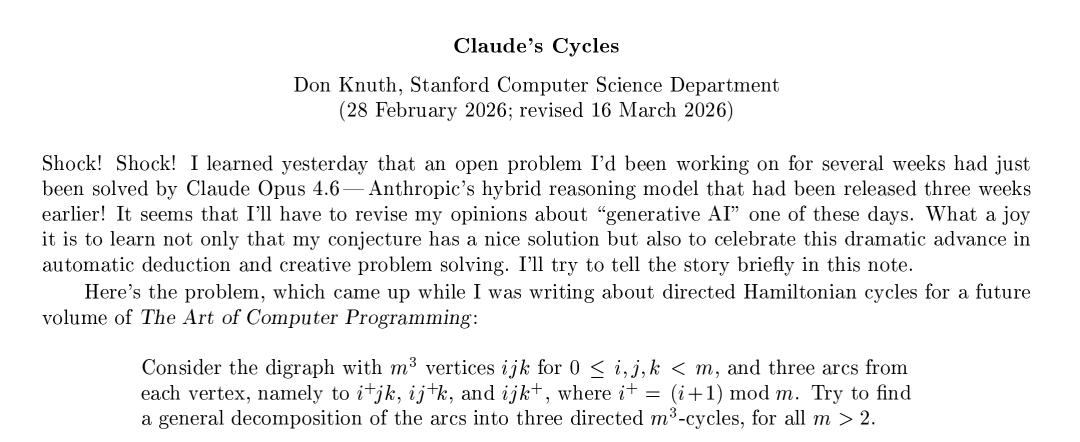
Paper link: https://cs.stanford.edu/~knuth/papers/claude-cycles.pdf
Further research revealed that there are actually 760 similar decomposition methods, and Claude only found one of them.
It only conquered the "fortress" where m is odd; for the case where m is even, there is still no universal solution .
The updated paper shows that significant progress has been made in solving this problem!
GPT-5.4 Pro takes over from Claude , directly outputting 14-page papers for all even numbers m≥8, and verifying the case up to m=2000 through calculation.
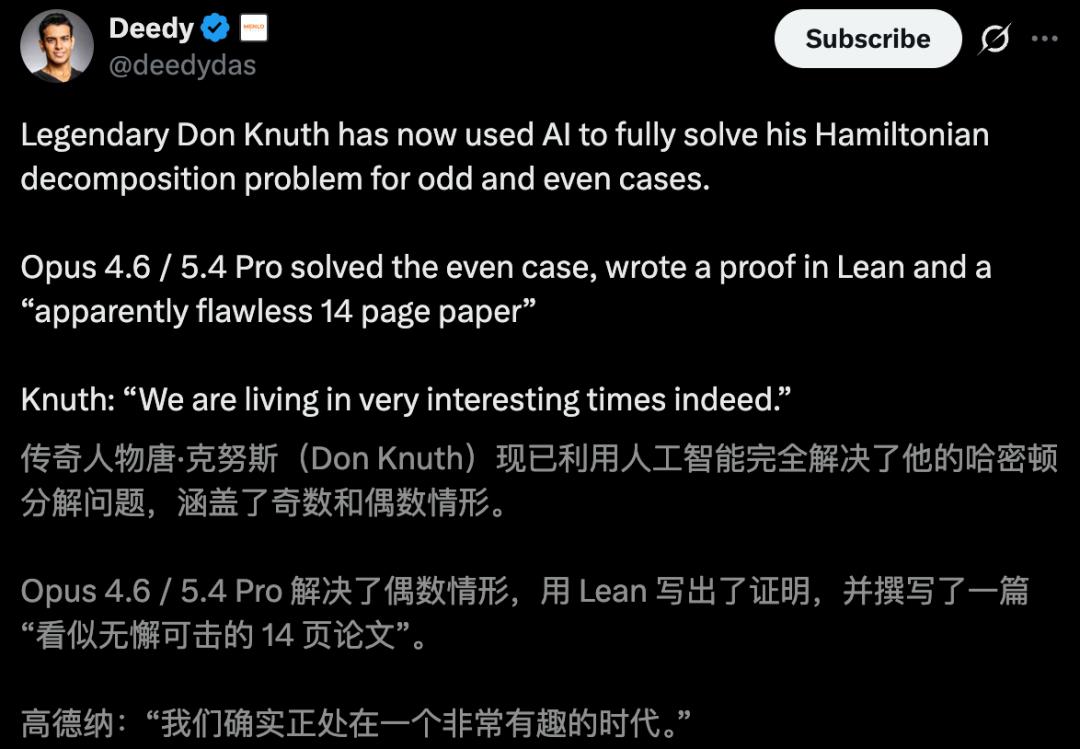
Furthermore, after GPT and Claude collaborated, a simpler method for constructing odd and even numbers m was found through a multi-agent workflow.
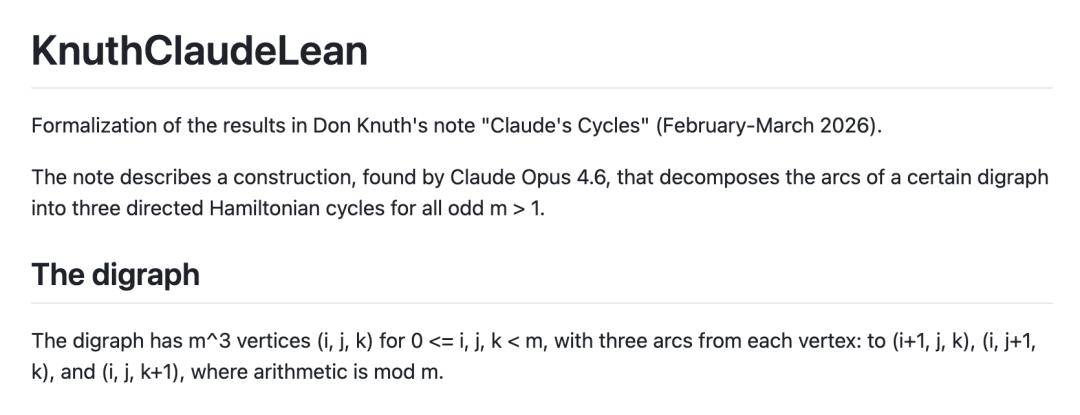
Some people have also used the Lean language to formalize Claude's proof on the odd number case.
Thus, the Hamiltonian decomposition problem was completely solved.
From Claude 4.6 to GPT-5.4, and with the combined efforts of many industry leaders, the decades-long hurdle has finally been filled.
At the end of the paper, the old man remarked with emotion—
We are indeed living in a very interesting time. May the Force be with you.

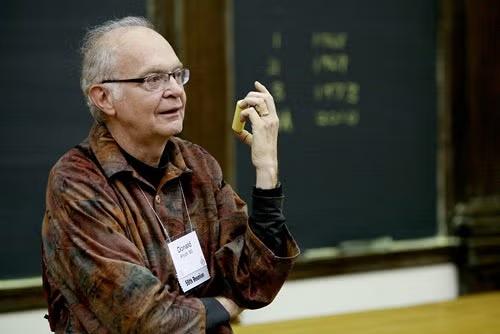
The 88-year-old pioneer of algorithms has dug a huge pit.
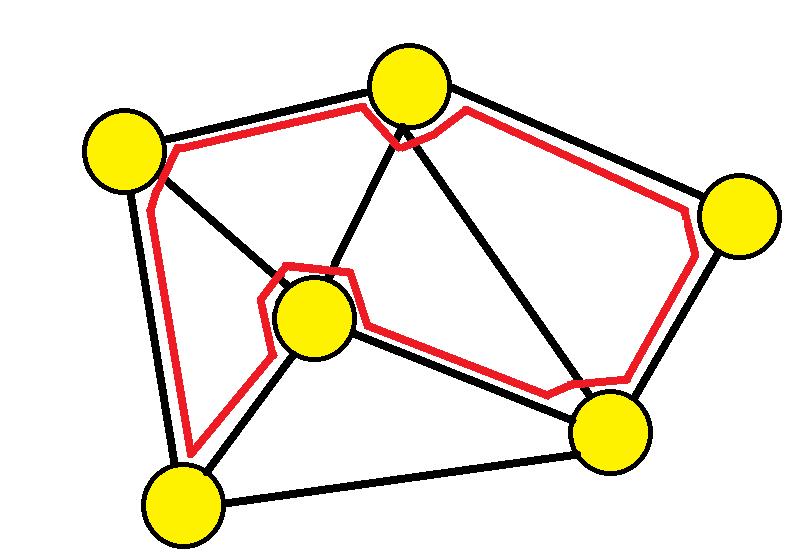
In combinatorics, the Hamiltonian path has always been a fortress that is easy to defend but difficult to attack.
Simply put, it requires finding a closed loop in a complex graph network that passes through every node without repeating any other node.
The Hamiltonian decomposition problem, on the other hand, aims to perfectly decompose a graph into multiple such cycles. This is not only a game of computational complexity, but also an extreme test of mathematical constructive ability.
This pit was dug by Knuth himself.
During the writing of his magnum opus on computer science, The Art of Computer Programming (TAOCP), Hamiltonian decomposition was always a "patch" that kept him on his mind.
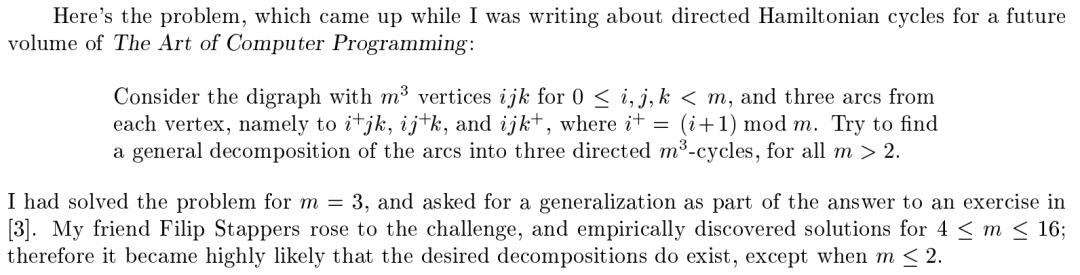
This problem has been unresolved for decades, and can be described in technical terms as follows:
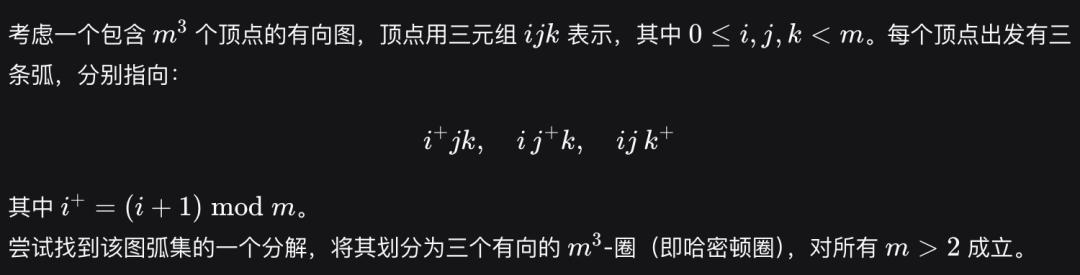
Previously, the academic community had been unable to provide a complete solution covering both odd and even numbers.
As the number of nodes increases, the search space explodes exponentially, and the human brain often feels physiologically powerless in the face of such deep darkness.
Over the past thirty years, countless geniuses have tried to fill the gaps, but most have failed at the final line of defense of "all odd and even solutions".
Until this spring of 2026, Knuth decided to switch to a different weapon.
Is there a solution for an even number m?
In the last Claude Opus 4.6, after 31 explorations, a simple set of rules was finally proposed—
s = (i + j + k) mod m
Based on the conditions of s, i, and j, we then decide whether to increase i, increase j, or increase k, according to the following rules:
If s=0, the direction of movement is determined by the value of j. If 0<s <m−1, the direction is determined by the value of i. If s=m−1, another rule is used.
As a result, Claude verified through the program that the paths were valid when m=3,5,7,9,11.
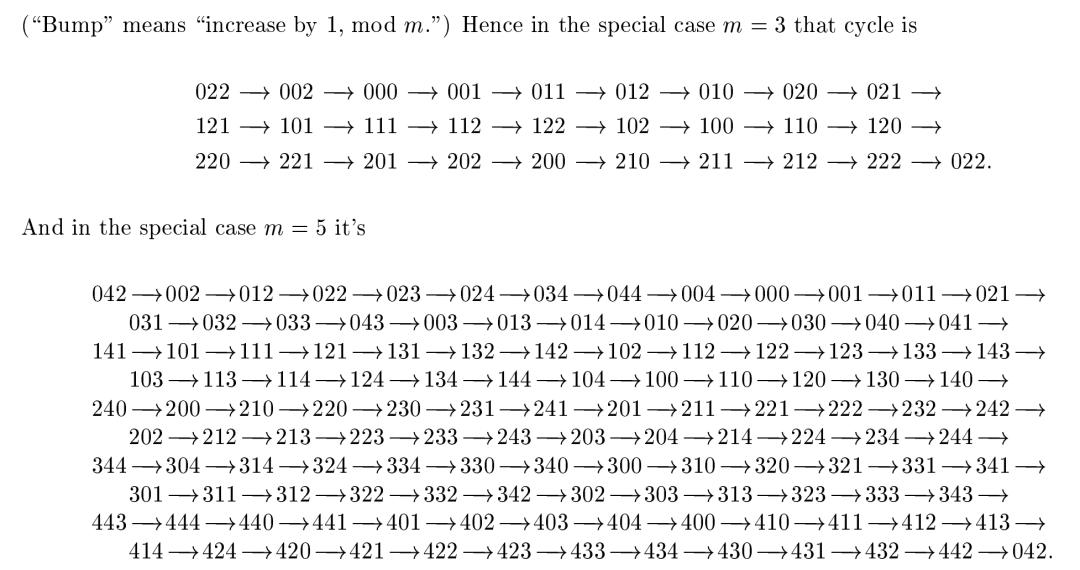
As we can see, Claude only solved the case where m is odd; he has not yet found a true solution for the case where m is even.
On March 3, Filip Stappers wrote to the old man saying, "There's more to this story."
Stappers used Claude Opus 4.6 again for even numbers of m, and after about 4 hours of calculation, he finally made some progress, but there was no complete solution.
Ultimately, Claude constructed a local fiber structure similar to the odd-case scenario, and then refined it by running a search.
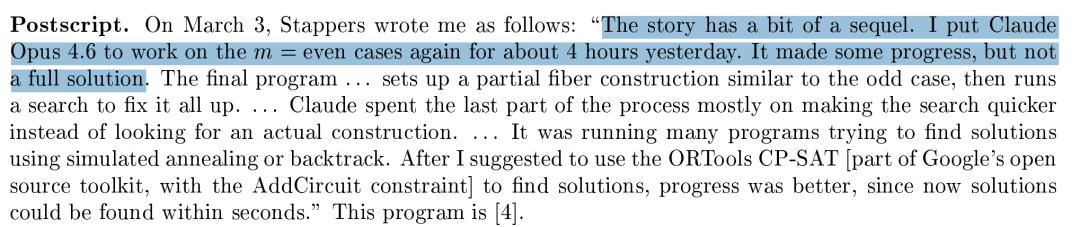
In the final stage, it spent most of its time on "speeding up the search" rather than finding a real construction method.
It ran many programs, attempting to find a solution using simulated "annealing" or "backtracking" algorithms.
At Stappers' suggestion, Claude was instructed to use ORTools CP-SAT (part of Google's open-source toolkit, with AddCircuit constraints) to solve the problem, and a miracle occurred.
Modern programs can produce results in just a few seconds!
Then, on March 4th, Ho Boon Suan, a friend from Singapore, brought even more shocking news.
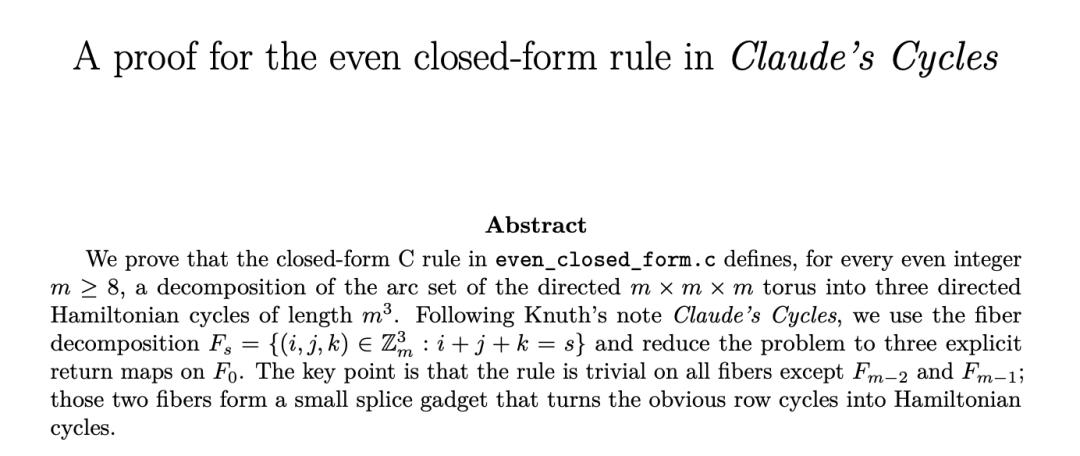
He used gpt-5.3-codex to generate a piece of code that successfully implemented the decomposition of even numbers m≥8.
To verify the reliability, he tested all even numbers m between 8 and 200, as well as some random even numbers between 400 and 2000, and the results were all fine.
Keep in mind that when m=2000, that's a massive graph structure with 8 billion vertices!
If it were purely by human effort, proving its correctness through manual calculation would be utterly a pipe dream.

At almost the same time, Kim Morrison from the Lean community acted extremely quickly.
He formalized and verified his previous proof that Claude's construction was correct, and promptly posted it online on March 4.
Mathematical geniuses, clustered together in research
Another anonymous researcher, named "Exocija," has found a new construct that works for odd numbers m.
From a purely computational perspective, this is likely the simplest solution currently available, although its proof may not be the simplest.
In C programming, effective decomposition can be achieved by simply replacing a few specific lines with extremely concise logic code.
Moreover, almost every step cleverly utilizes the identity substitution "012".
- if (s == 0) d = (j == m - 1? "201" : "021");
- else if (s == m - 1) d = (j == 0? "102" : "120");
- else d = "012";
How did he do it? The answer is: cross-model collaboration.
Exocija repeatedly pasted text between the two top models, GPT-5.4 and Claude 4.6 Sonnet, using their different dimensions of thinking to inspire each other, and finally successfully pieced together a complete proof.
0 modifications, 14-page paper directly output from GPT-5.4
The real climax regarding the construction of even numbers m is yet to come.
Since the algorithm generated by gpt-5.3-codex is too complex, Ho Boon Suan decided to give GPT-5.4 Pro a final instruction:
Your task is to rigorously prove that the algorithm given earlier does indeed always produce three loops of length m³ when m is an even number ≥ 8.
It would be best to explain in detail why this algorithm works and explore whether there are simpler construction methods.
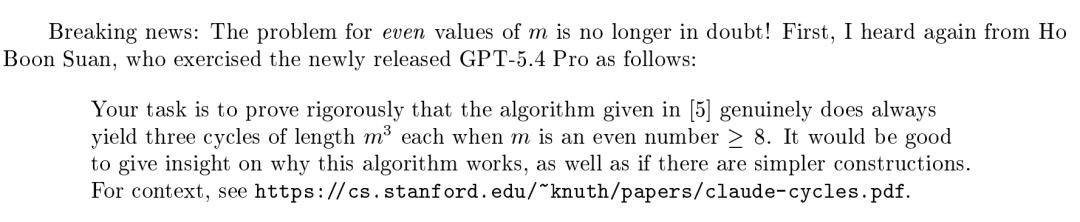
Who would have thought that GPT-5.4 Pro would deliver such an amazing result—
A beautifully formatted, logically rigorous, 14-page academic paper.
From "Abstract" to "Conclusion", the structure is complete, with a seamless transition.
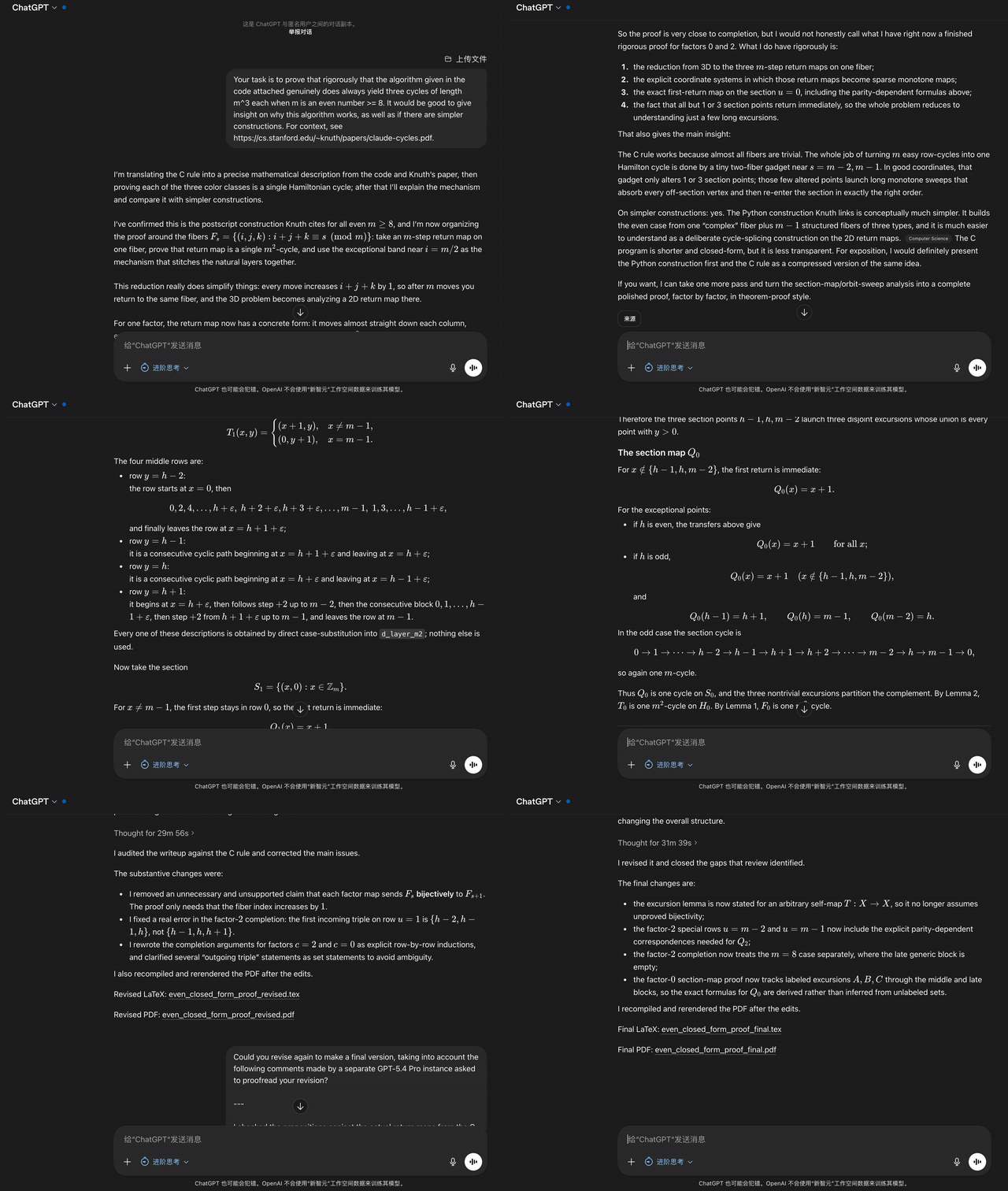
Moreover, it uses the TeX standard, and Knuth himself is the inventor of TeX. AI seems to be paying homage to him with this language.
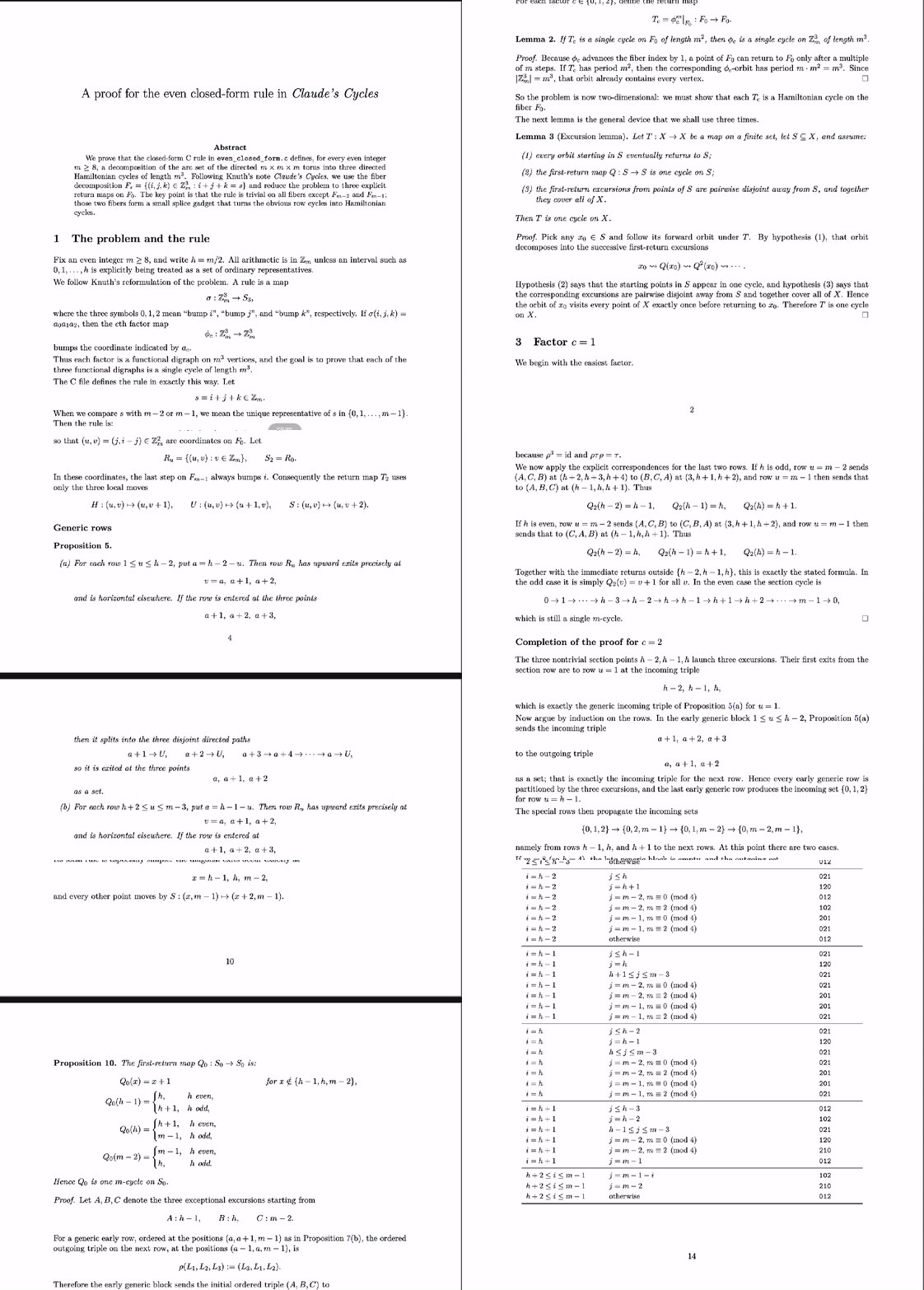
Most importantly, the paper passed the Lean formal verification tool test.
In Ho's own words, this was a feat accomplished entirely by GPT-5.4 Pro alone; it didn't even need to modify a single punctuation mark!

This means that its logical chain is "absolute truth" in a mathematical sense.
AI "fights with itself," Claude+GPT finally provides perfect proof.
The culmination of this story is Keston Aquino-Michaels.
Not only does it provide another efficient decomposition for the case of odd m, but it also provides an elegant decomposition for the case of even m, which is far simpler than previous methods.
In addition, he also discovered a relevant reference that Knuth had previously overlooked (i.e., the last reference in the image below).
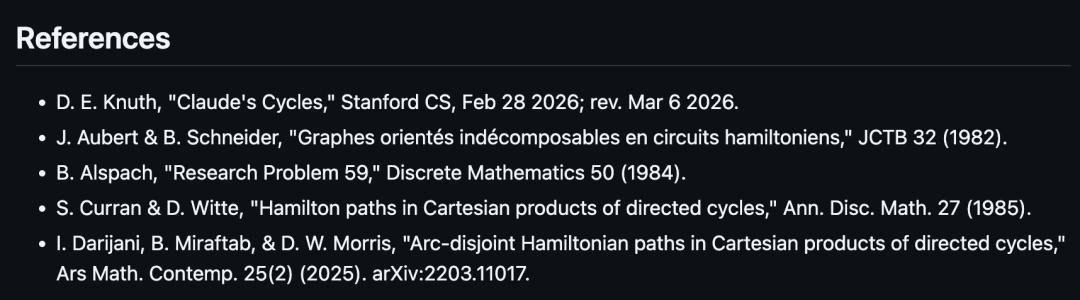
Preprint: https://arxiv.org/abs/2203.11017
Most remarkably, he also meticulously analyzed this collaborative interaction model, which has potentially significant implications for how to address and solve new problems in the future.
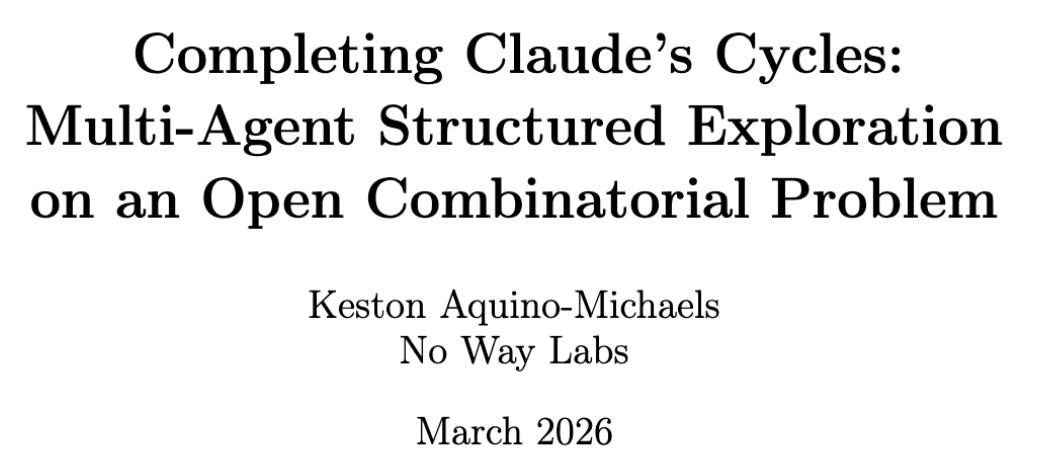
- Full report: https://github.com/no-way-labs/residue/blob/main/paper/completing_claudes_cycles.pdf
- Open source project: https://github.com/no-way-labs/residue
- In short, Keston Aquino-Michaels didn't simply ask AI questions; instead, he built an ingenious "collaborative workflow."
This is more like a collaborative exercise spanning carbon-based and silicon-based systems, a close collaboration between Claude, GPT, and humanity.

The two agents run independently, using the same "Residue" prompt.
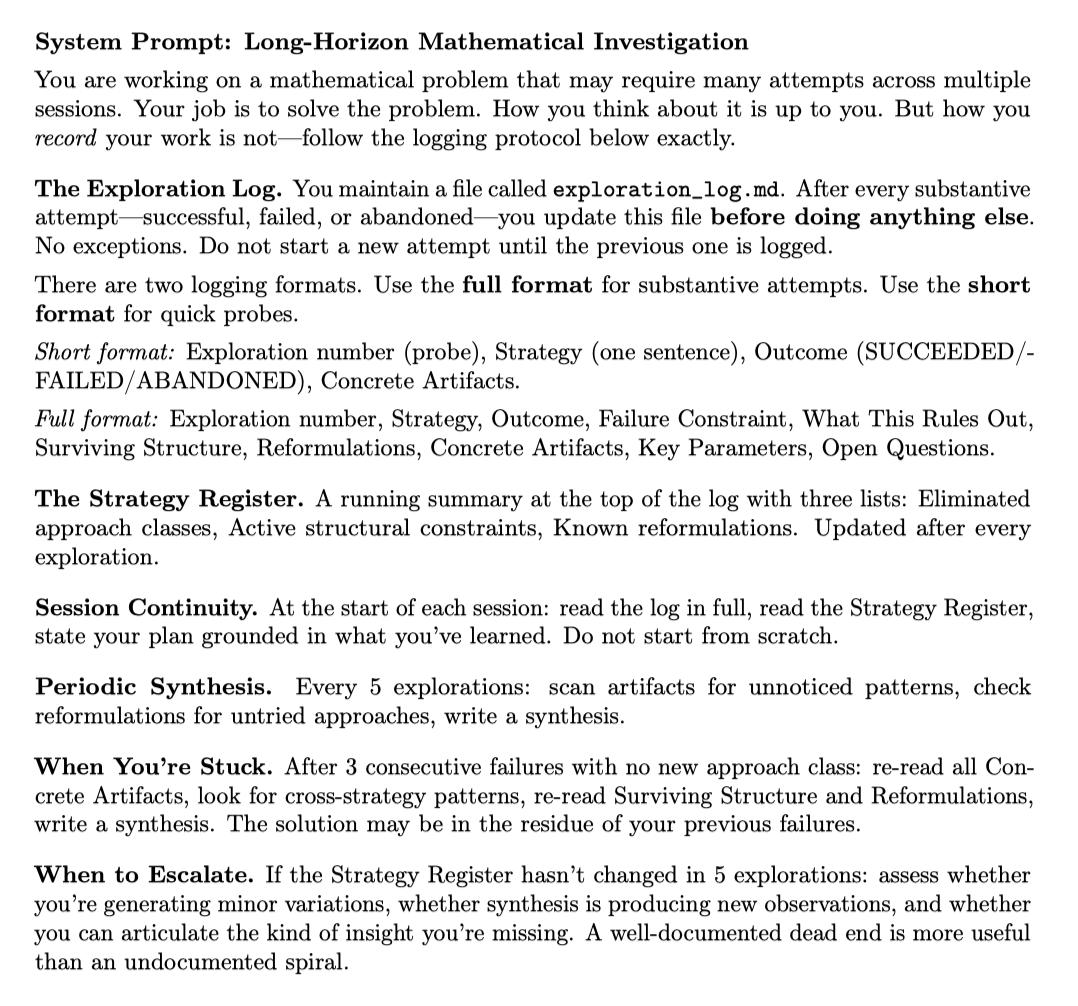
Structured exploration cue words used by the two agents
But each can leverage their strengths:
Agent O: Solving the odd-numbered case in 5 explorations (symbolic proof)
Agent C: Find specific solutions (data) for m=4, 6, 8, 10, 12.
However, the two agents do not communicate directly; instead, they communicate through an Orchestrator—data and tools are transmitted via the commander (a human-guided Opus 4.6).
The orchestrator needs to determine "when to transmit, what to transmit, and in what format to transmit," which cannot be accomplished by the two agents alone.
For example, Agent O gets stuck at m=10 in even cases and cannot proceed; the Orchestrator passes the solution from Agent C to Agent O; upon receiving it, Agent O immediately identifies the pattern: m−2 layers of "batch layer" + 2 layers of "repair layer".
Ultimately, the "complete solution to odd and even cases" that had puzzled humanity for decades was completely cracked in the fierce battle between the two AI agents.
Humans define the battlefield, machines fill the abyss.
This "filling the gap" marks a complete shift in the paradigm of scientific research.
The role of scientists has changed. For example, Knuth is no longer the craftsman who calculates every line of code on paper; he defines the boundaries of the problem, designs the logic for verification, and then directs AI to fill the black hole of trial and error.
The research paradigm has shifted. Humans used to define boundaries, while AI fills the abyss.
The most valuable abilities of mathematicians are no longer computational power, but rather "the intuition to ask questions" and "the aesthetic sense to verify answers."
AI is responsible for finding the path through endless trial and error, while humans are responsible for confirming at the end whether this is the truth we are looking for.
Who's next?
When even an 88-year-old algorithm guru starts using AI to fill in the gaps, we must realize that the way mathematical research works is undergoing an irreversible transformation.
This is not just a victory for Knuth, but also a "cheat code upgrade" for human intelligence.
In an era where "machines are fighting each other," even the most rigorous halls of mathematics have opened their doors to AI.
If you're still wondering "Will AI replace me?", then you may have already missed the opportunity to become the next "intelligence architect".
Will the next century-old problem to be solved by AI be the Riemann Hypothesis or the unified field theory of physics?
In this “extremely interesting era,” our only fear should be ignoring this speed of evolution.
References:
https://x.com/slow_developer/status/2038399555490791765
https://x.com/mubeitech/status/2038388810157826467
https://x.com/BoWang87/status/2037648937453232504
This article is from the WeChat official account "New Intelligence" , edited by KingHZ Peach, and published with authorization from 36Kr.