Written by: Max.S
March 31, 2026, will be a day to remember in the history of cryptocurrency development. The FTX bankruptcy trust fund officially confirmed the distribution of the final tranche of funds totaling $2.2 billion to creditors. This moment marks the formal completion of the three-and-a-half-year-long "FTX bankruptcy case." This was once the biggest ulcer in the crypto industry, and the "last toxin" left over from the previous bull and bear cycle.
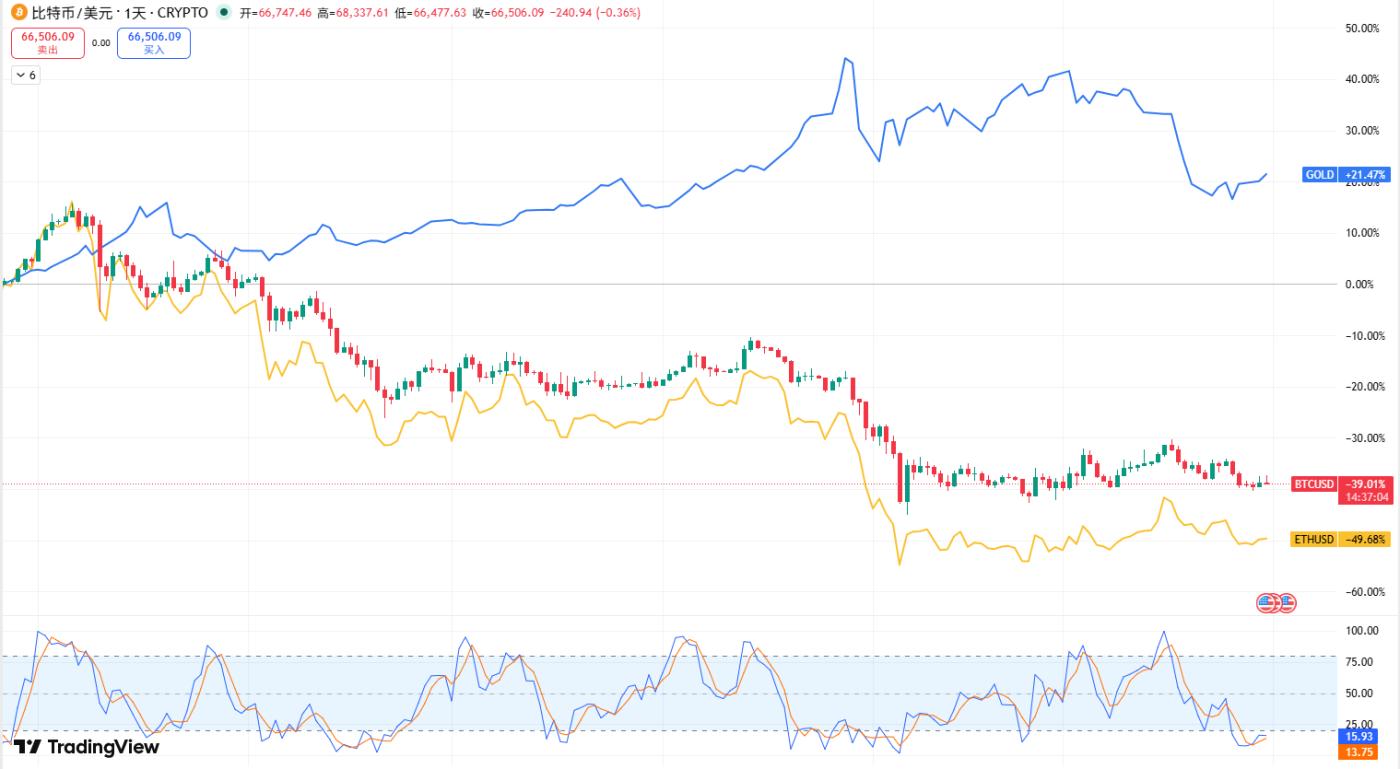
However, the market reaction wasn't entirely one of relief and jubilation. On the contrary, at this historic moment when all the bad news had been priced in, the Fear & Greed Index unusually plummeted to 10—extreme fear. As the shadow of FTX finally dissipated, the crypto market seemed lost in a vacuum, devoid of any major shocks. Was the final $2.2 billion in liquidity a much-needed "liquidity salvation" or a "sell-off nightmare" crashing down on the market, especially given Bitcoin's vulnerability at below $70,000 (currently around $67,000)? We need to strip away the emotions and conduct a rational, in-depth analysis.
From a professional quantitative perspective, many supporters believe that this $2.2 billion is not selling pressure, but rather a fresh and highly effective "reusable supply." This view is supported by the following logic:
FTX's creditors, especially those holding DOTCOM (FTX.com) accounts, are mostly investors deeply involved in the cryptocurrency market, rather than occasional retail investors. Under the court-approved Chapter 11 reorganization plan, most creditors will receive repayments calculated in US dollars based on the assets' value as of the bankruptcy filing date (November 2022), with some Convenience Class claims even receiving a 120% cash buyback (including interest).
These investors have been essentially forced into a "lock-up" situation over the past three years. More importantly, what they received was not the BTC or ETH they had initially lost, but cash from the bankruptcy trust. Psychologically, this group has transformed from "asset victims" to "cash holders."
With BTC experiencing a "double-double" crash and currently at a relatively low level of $67,000 (compared to its peak of $100,000 two years ago), these cash holders are highly likely to choose to "reuse" this large sum of money and reinvest it in the market in hopes of recaptured the gains missed in the previous round. This $2.2 billion represents new capital entering the market with a strong belief in the Crypto industry, and its purchasing power should not be underestimated.
Another technical detail we need to clarify is that this $2.2 billion is a cash distribution. If it were a token distribution (like the partial repayment of Mt. Gox), the market would expect creditors to immediately sell the received BTC on exchanges for cash, creating direct selling pressure. But a cash distribution is entirely different. For the cryptocurrency market, this directly increases the overall net inflow of fiat currency.
For professional investors, once they receive cash through BitGo, Kraken, or Payoneer, their most natural action, unless they choose to exit the industry entirely, is to convert the cash into crypto assets. Therefore, from a quantitative perspective of capital flows, this naturally supplements the market with liquidity.
However, the extreme fear reflected in the Fear & Greed Index suggests that the bears' concerns are not unfounded. Given the current macroeconomic environment and market sentiment, this $2.2 billion could very well be the final straw that breaks the camel's back.

However, the extreme fear reflected in the Fear & Greed Index suggests that the bears' concerns are not unfounded. Given the current macroeconomic environment and market sentiment, this $2.2 billion could very well be the final straw that breaks the camel's back.
We cannot underestimate the psychological torment inflicted on investors by more than three years of legal proceedings. From the $8 billion funding shortfall in November 2022 to the final repayment in 2026, many creditors are no longer the fearless crypto traders they once were. For some of them, this repayment is a belated cleanup, not a return to capital.
Especially considering the current repayment rate: Dotcom customers have achieved a cumulative repayment rate of 96% (based on the USD price in November 2022). Since the price of Bitcoin was approximately $16,000 in November 2022, while these creditors ultimately received more cash than their initial ETH (around $1,287 at the time) or BTC in USD value, they have still lost several times the potential token-denominated gains compared to Bitcoin's current price of $67,000. This massive FOMO translates into anger and exhaustion, with many likely choosing to withdraw their funds completely and never return, allocating the money to traditional financial assets or for direct consumption. This capital outflow will exert indirect but persistent selling pressure on the market.
In an extremely optimistic market (Fear & Greed Index 90+), $2.2 billion might be a drop in the ocean, barely causing a ripple. But today is different; the Fear & Greed Index is only 10.
The current cryptocurrency market is extremely fragile, with both depth and liquidity at low levels. Bitcoin has consistently hovered below the key psychological level of $70,000. In an environment of extreme fear, even a tiny amount of negative expectation flow can be amplified infinitely. Short sellers worry that if even a small portion of the liquidated funds—say, 10%-20%—is proven to have completely flowed out of the system, it would be enough to trigger panic among existing holders, initiating a new round of cascading liquidations (a "double-ten" stampede). This "self-fulfilling prophecy" is the biggest nightmare.
The collapse of FTX marks the end of an era. Over the past three years, the industry has been plagued by regulatory storms, liquidity crises, and even stringent policies from regulators such as the SEC and CFTC against cryptocurrencies, all of which have been more or less related to FTX's collapse.
What we need to consider is: once the "shadow" of bankruptcy liquidation has completely dissipated, has the crypto market already acquired the ability to operate independently without any "thunder" interference?
The current "extreme fear" actually reflects a complex psychological trap of "all bad news is bad news." For a long time, the market has been accustomed to having a clear, definite, external "villain" to blame or react to: such as "Mt. Gox token selling pressure," "FTX bankruptcy legal progress," or "further interest rate hikes by the Federal Reserve." While these negative factors are harmful, they also provide a clear logical framework for market price movements.
Now, this biggest logical framework has suddenly disappeared. The market has entered a "negative news vacuum" (the villain has completed the final judgment). Without the liquidation pressure from FTX, the market must re-examine its fundamentals: the number of active addresses, the total value locked (TVL) on L2, the actual revenue of the application layer, and more importantly—its actual demand and pricing mechanism as "digital gold" or a "new asset class" in the macroeconomy.
This fear of the "unknown vacuum" is the core reason why the index has fallen to 10. The market is uncertain; without the FUD (fear, uncertainty, and doubt) provided by FTX as a cover, what is its true valuation?
As we archive FTX's final liquidation announcement into the historical record, we should also realize that the Crypto market has finally broken free from "FTX ICUp's supervision." Whether it can "walk independently" depends on its true strength after being weaned off external support. Following the vacuum of negative news, a new wave of independent pricing will emerge. We need to examine this completely new Crypto financial market, now free of old toxins, with greater information density and a more professional perspective.