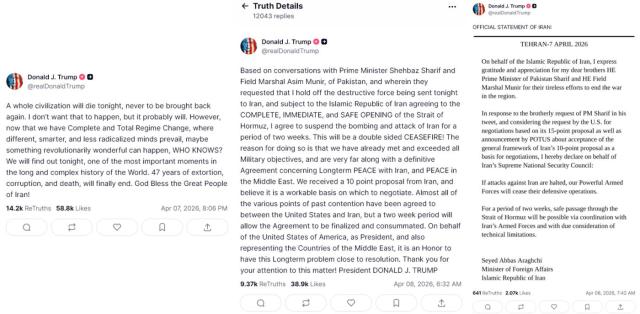
US stock Futures Contract surged after President Donald Trump announced a two-week halt to attacks on Iran, raising hopes of de-escalating a five-week conflict and disrupting global energy supplies.
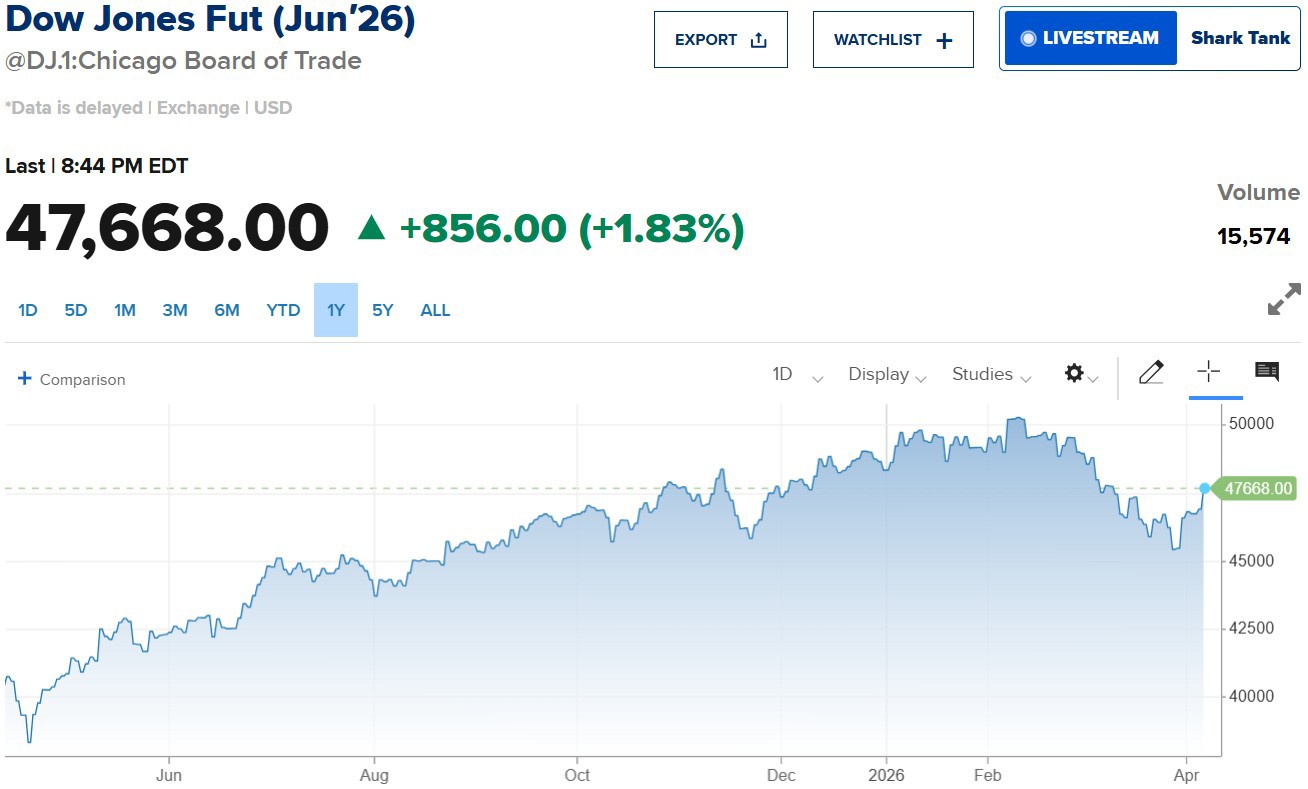
Dow Jones Industrial Average Futures Contract rose 967 points, or 2.1%. S&P 500 and Nasdaq 100 Futures Contract also rose more than 2%.
In Asian markets, as of 8:00 AM on April 8th, Japan's Nikkei 225 index rose 4.35% to 55,749.5 points. South Korea's KOSPI index jumped more than 5.2% to 5,782 points.
Oil prices plummet.
The strongest reaction came from the energy market. WTI oil prices fell by about 18%, dropping below $93 per barrel immediately after Trump's announcement.
According to published information, the US agreed to temporarily halt military operations after receiving a 10-point negotiation proposal from Iran. The ceasefire agreement is "two-way," with the key condition being that Iran reopen the Strait of Hormuz – the world's most important oil shipping route.
Iran said it had agreed to reopen the shipping lane within two weeks if the attacks ceased, while Israel was also reportedly said to have agreed to a ceasefire.
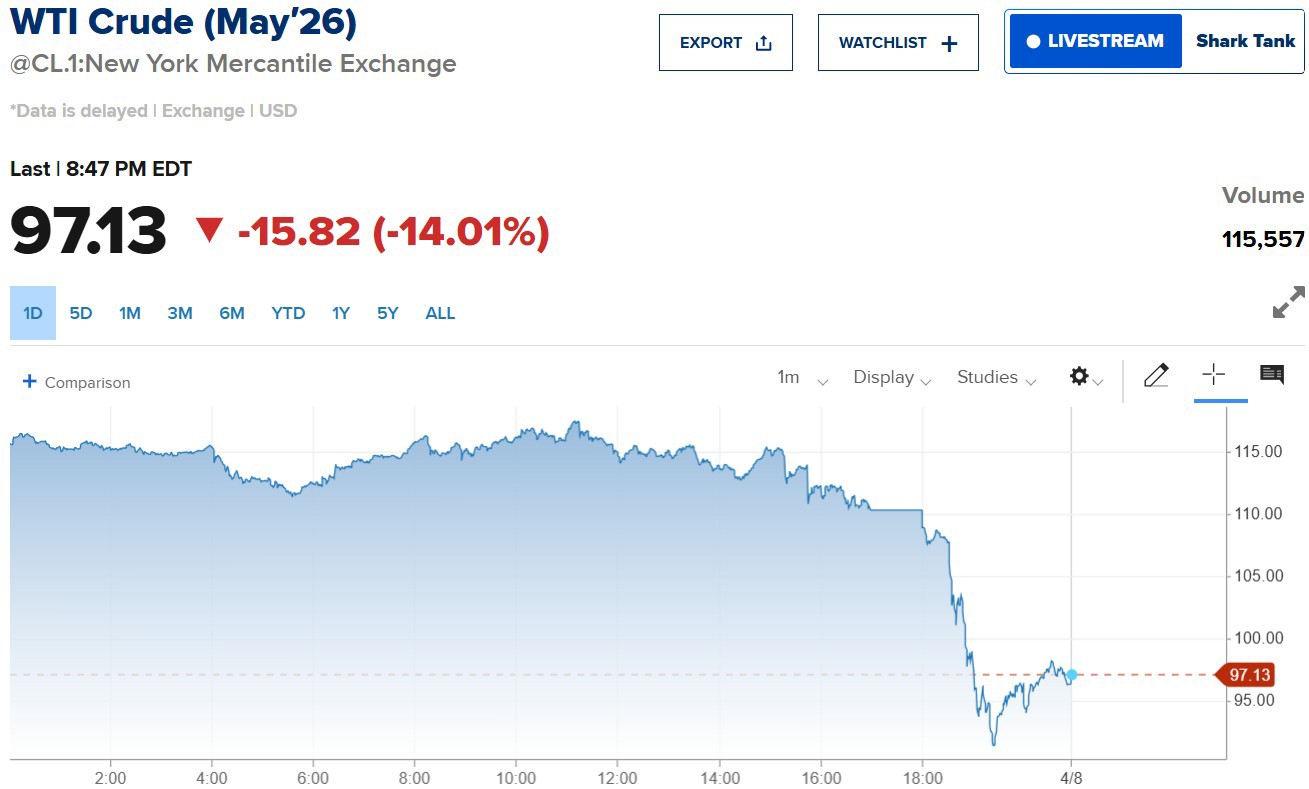
Oil price movements following Trump's statement.
This development is XEM as a temporary escape for the market after a period of intense volatility due to the conflict. Previously, the closure of the Strait of Hormuz had pushed oil prices up by more than 70% since the beginning of the year, pushing gasoline prices in the US above $4 per gallon for the first time since 2022.
US stock indices have been under considerable pressure during this period. As of the end of the most recent trading session, the S&P 500 was still about 5.5% lower than its all-time high, at one point approaching a 10% correction before recovering on expectations that the conflict was under control.
The previous trading session showed that the market had begun "betting" on a ceasefire scenario, with the S&P 500 and Nasdaq rising slightly, while the Dow Jones declined only slightly.
The risk hasn't disappeared.
Despite the positive market reaction, analysts believe the key factor remains the ability to reach a substantive agreement within the two-week deadline.
According to Jay Woods (Freedom Capital Markets), the market had somewhat anticipated this move, but the big question is whether the pause will be long enough to reach a sustainable solution.
In this context, the energy variable continues to play a central Vai . If the Strait of Hormuz remains open, pressure on oil prices could ease, thereby supporting financial markets. Conversely, any breakdown in negotiations could quickly reverse the current trend.