In the early hours of April 8, the situation suddenly took a turn.
The market is currently reacting swiftly to the de-escalation of tensions in the Middle East: Nasdaq futures rose by 2%, crude oil prices plummeted, with WTI crude oil once plunging 15% and falling below the $100 mark; while gold rose due to repeated fluctuations in safe-haven demand, with gold briefly surging to $4,811 per ounce. The crypto market also rebounded, with Bitcoin regaining the $72,000 mark and Ethereum strengthening in tandem.
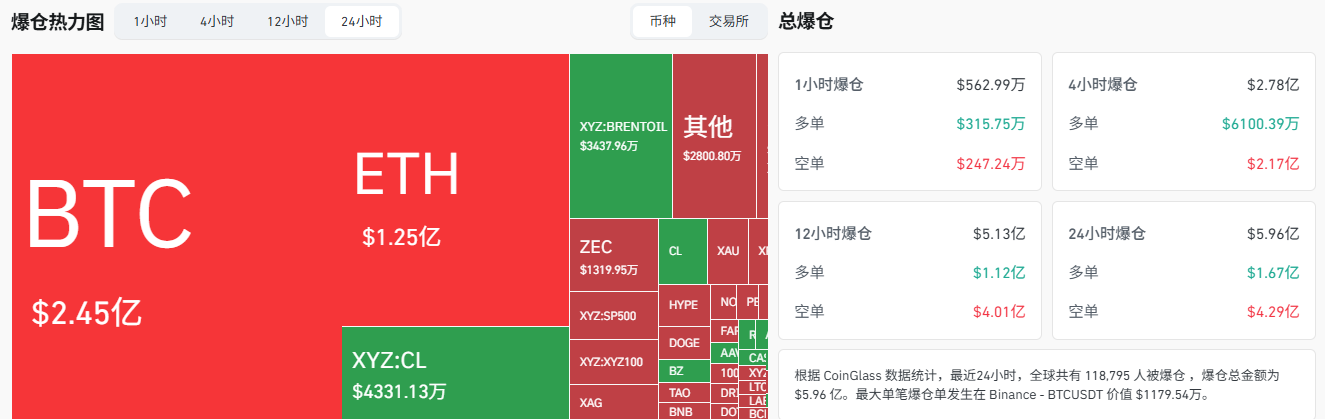
However, behind the dramatic fluctuations lies a rapid reshuffling of funds. In the past 12 hours, more than $60 million in long positions in crude oil-related derivatives were liquidated, while more than 120,000 people in the crypto market were liquidated, with a total liquidation amount of approximately $600 million. Market sentiment oscillated between extreme panic and short-term optimism.
Structurally, Bitcoin has been oscillating between $66,000 and $72,500 for the past month. Although there has been a short-term pullback, the overall decline has narrowed significantly. The $67,000 level has become a key area repeatedly defended by the bulls, with multiple attempts to break through quickly being pulled back. Meanwhile, the $72,500 to $75,900 range contains a large amount of historical trapped capital, making a breakthrough difficult. After the geopolitical conflict and on-chain security incidents in March, the market was extremely pessimistic. However, as ceasefire expectations rose, investor sentiment gradually recovered. This rebound, while seemingly driven by news, actually reflects a subtle shift in the underlying asset structure.
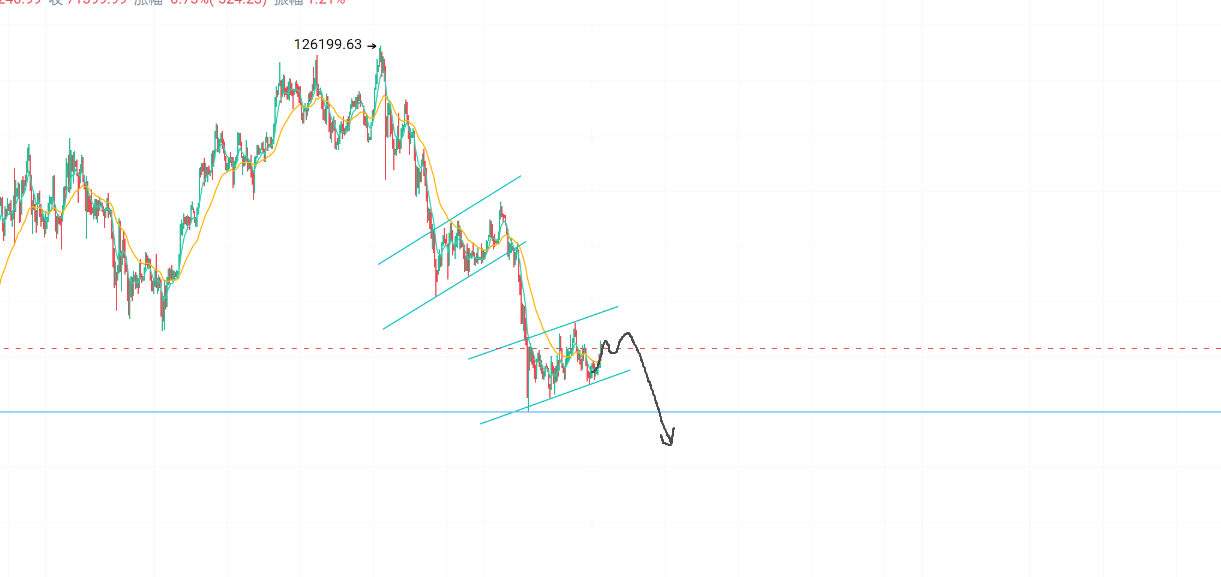
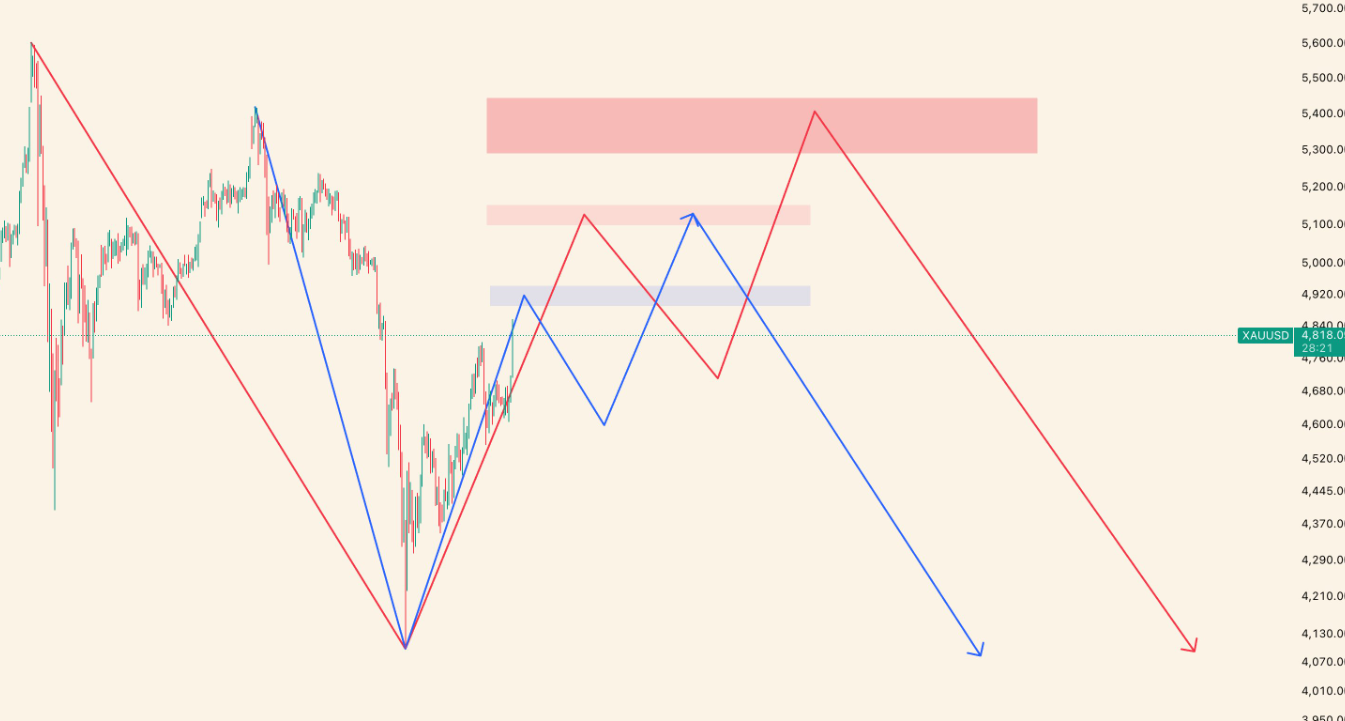
As for crude oil , this round of decline is not unexpected. There is no real shortage on the supply side; there are still abundant exploitable resources globally. Meanwhile, new energy and nuclear energy technologies continue to advance. Once geopolitical risks ease and key passages like the Strait of Hormuz reopen, prices tend to quickly return to rationality. In other words, what is currently being short is not oil itself, but the risk premium brought about by war. Once the sentiment subsides, this "bubble" will naturally be difficult to sustain.
Shifting our focus to the counterfeit market, the current differentiation remains quite evident.
Like $AAVE , which has recently been plagued by negative news and the departure of its core team members, market sentiment has been significantly impacted. However, from a fundamental perspective, it still holds an absolute dominant position in the DeFi lending sector, with a consistently high market share. The problem lies more in expectations and public opinion than in the collapse of its core business.
On the other hand, $JOE 's performance is completely different. As a long-established DEX project in the Avalanche ecosystem, its token structure is already highly dispersed, without obvious pressure from a single controlling shareholder. This structure brings both high activity and more direct, emotional volatility. Currently, many people in the market are blindly short, thinking they can "make money effortlessly," but in reality, such positions are more likely to be shaken out by a pullback. In contrast, following the short-term rhythm, attempting a long position around 0.07, targeting 0.08-0.09, and then switching between positions based on resistance levels, is much more flexible.
Looking at $RENDER , the key variables for this stock in the short to medium term still lie in the specific proposals and their actual implementation effects. In the long term, it's not a core asset with extremely high certainty, but within the AI theme, it's still worth continuing to track. Technically, the 200-day moving average around $2.1 is a crucial watershed; only if this upward move can be sustained with significant volume will it truly open up new upside potential.
As for $VIRTUAL , it is more of a typical sentiment-driven stock. Its price is often determined not by fundamentals, but by market attention. Once funds focus on it, its explosive potential is very direct.
Another recent phenomenon worth mentioning is the resurgence of the BSC ecosystem. Assets like "Binance Life" have rapidly doubled from their lows, becoming one of the most certain opportunities in the short term. In the short term, it has reached weekly resistance, and consolidation is normal; however, from a structural and consensus perspective, it has become a core sentiment anchor within the current BSC system. What's more noteworthy going forward is whether it can drive capital outflow and revitalize other assets in the same ecosystem, such as TUT and TST.
Overall, the market at this stage is essentially a structural opportunity amidst fluctuations: the major trend is bottoming out, the minor cycle is in a game of strategy, and certain sectors are rotating.
Those who truly emerge from the crisis are not the most emotionally charged, but rather those who can weather cycles and whose experiences are repeatedly validated.
Cryptocurrency markets are highly volatile; caution is advised when entering the market. This is just my personal opinion, not advice, and is for sharing purposes only.
Contact me via WeChat: Mixm5688 or QQ: 2234099968