The correct posture to participate in Ethereum liquidity staking.
Written by: CapitalismLab
The Shanghai upgrade is imminent, and the liquidity betting track is hot. After the Shanghai upgrade, since unstake is enabled, the magnitude and risk of de-peg such as stETH will be greatly reduced, which is suitable for more users to participate. This article will compare the advantages and disadvantages of various liquidity staking in detail for you, and help you find the ETH staking interest-earning plan that suits you.

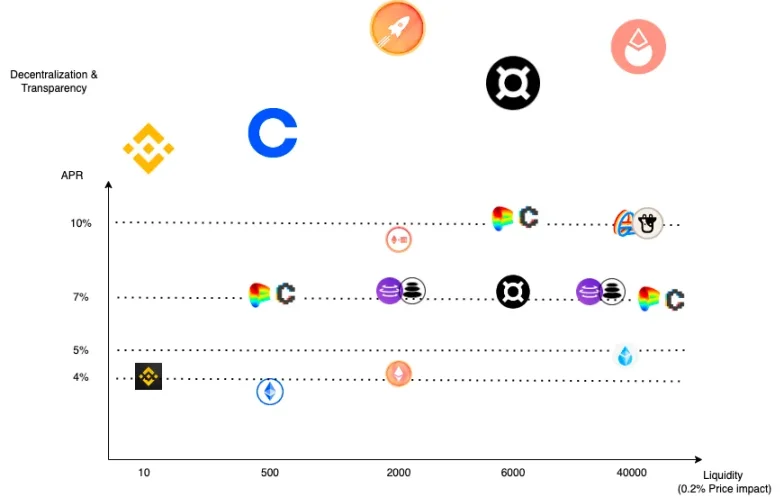
As shown in the figure above, overall, there is not much difference in the rate of return among the companies. Pure staking is about 4%-5%, and AMM is about 7%. Frax currently has a certain early bonus; there is a huge difference in liquidity. (Half a month of pure Staking income), stETH can sell 40,000, while bETH can only sell 10; in terms of decentralization and transparency, DeFi is significantly better than CeFi. In addition, in addition to the mining income, the discount is also an important source of affecting the yield, which requires special attention.
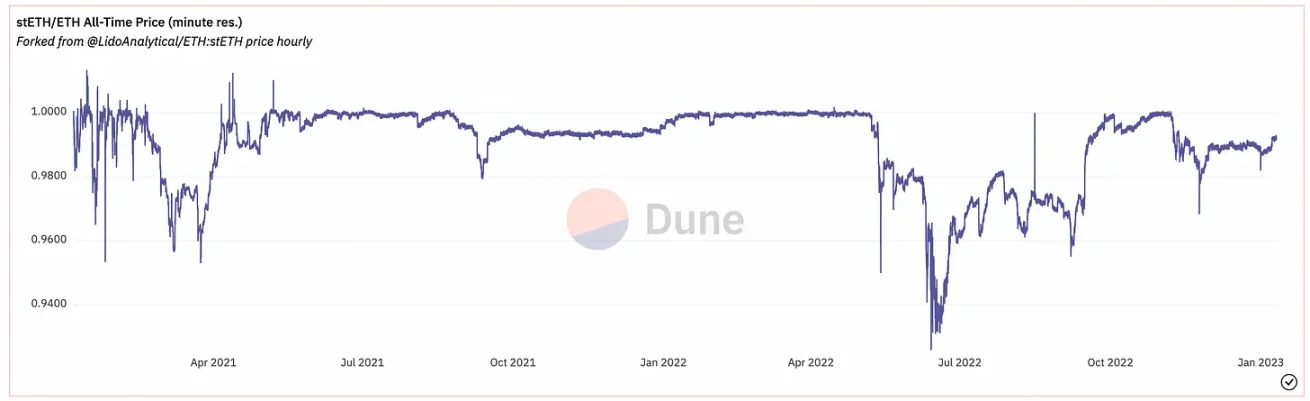
Lido: It has good liquidity and many ways to play. It is the most universal, and it is the best choice for users with large funds. Since wstETH has cross-chained to OP/Arbi, the gas fee has been greatly reduced, which is more friendly to users with small capital and beginners who want to try. There is currently a 1% discount on stETH, and it is recommended to purchase through 1INCH(L2 is also applicable). As mentioned above, novice users are recommended to play on L2 first. This tweet has an introduction to the wstETH Arbitrum ecology.
The underlying node operator of stETH is under the current DAO approval system, which is completely transparent but requires permission, and there is room for improvement in the degree of decentralization. The agreement will also draw 10% to pay the fees of node operators and as treasury revenue, which is relatively low. For more information about Lido, please refer to this article , you can also join the Lido Chinese community https://t.me/lidocn to exchange questions, welcome to follow the Lido Chinese community Twitter @lidocn and mod @NintendoDoomed (me)
Rocket Pool: The feature is "no permission required", everyone can become a node operator, users can use 16ETH to build a node on the server, and the other half of 16ETH is provided by non-node operator users. rETH is suitable for people with cheap server resources, and the income is as high as 9%, because they can enjoy RPL rewards and share other users' commissions. For non-node operation users, the agreement is 15%, and there is no advantage in terms of yield and liquidity, but the degree of decentralization is slightly higher.
Frax: It was released at the end of 22nd. It is in the early dividend period. The current income is relatively high. The ARP of sfrxETH exceeds 7%, and Convex/Curve LP is more than 10%. However, there is almost no discount on frxETH, and there is no benefit from narrowing the discount. For the specific design logic of frxETH, please refer to Thread . The frxETH protocol draws 10%, and currently has not paid any fees to node operators. It is suspected of self-operation, and the degree of centralization is slightly higher than the first two. Generally speaking, it is more suitable for users who are familiar with the Frax/Curve ecology and more professional DeFi users.
Coinbase: ETH2.0 service originated from Coinbase, 25% commission. It is relatively mediocre in all aspects, and may be more suitable for institutions with US compliance requirements? There is also a certain Alpha when there is a large discount, so you can keep an eye on it.
Binance: You can get bETH by depositing in Binance’s ETH2.0 service pledge. Currently, its secondary market has a ~3% discount. Binance is opaque in terms of fees and underlying operators. The text game on the interface misleads users. "My actual measurement is currently about 4%, and it is estimated that the commission is about 20%." Node operators such as ANKR of Black History. Liquidity is scarce, 10bETH will be sold at 0.2%, and there are few DeFi Legos. It is more cost-effective to buy at a substantial discount. Remember not to deposit directly, but to buy bETH in spot.
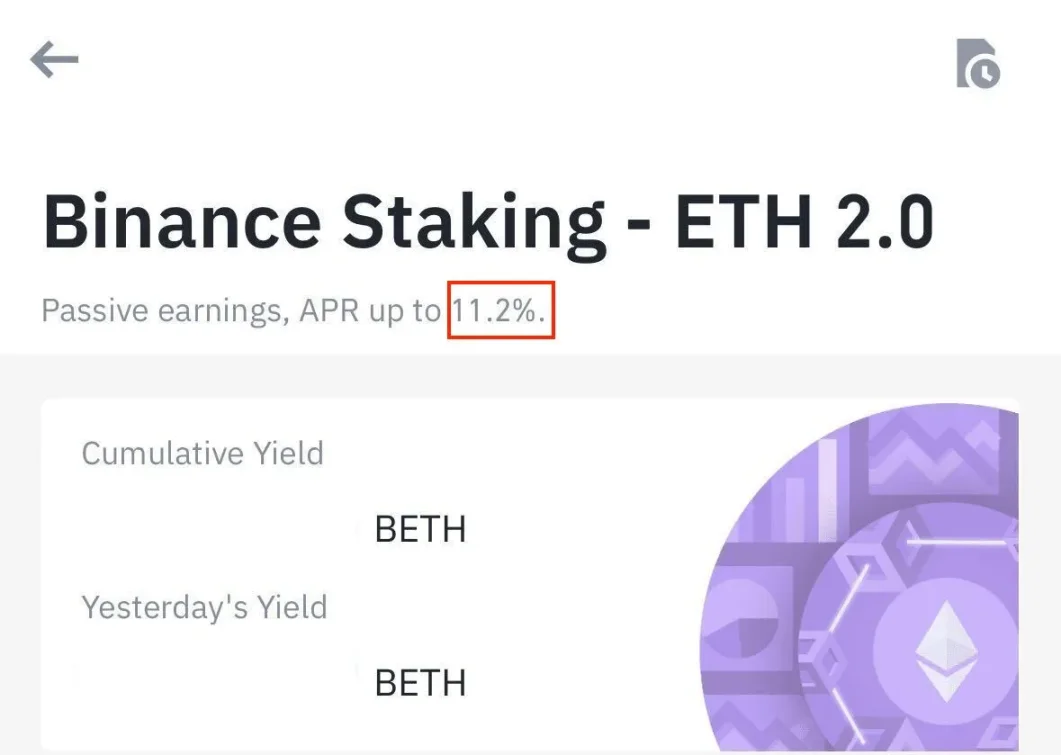
In addition, in fact, most of the ETH deposited by users to CeFi institutions also participate in pledge or liquidity pledge, including Celsius, which absorbs ETH deposits and then operates at will (due to liquidity problems, it is easy to play off).

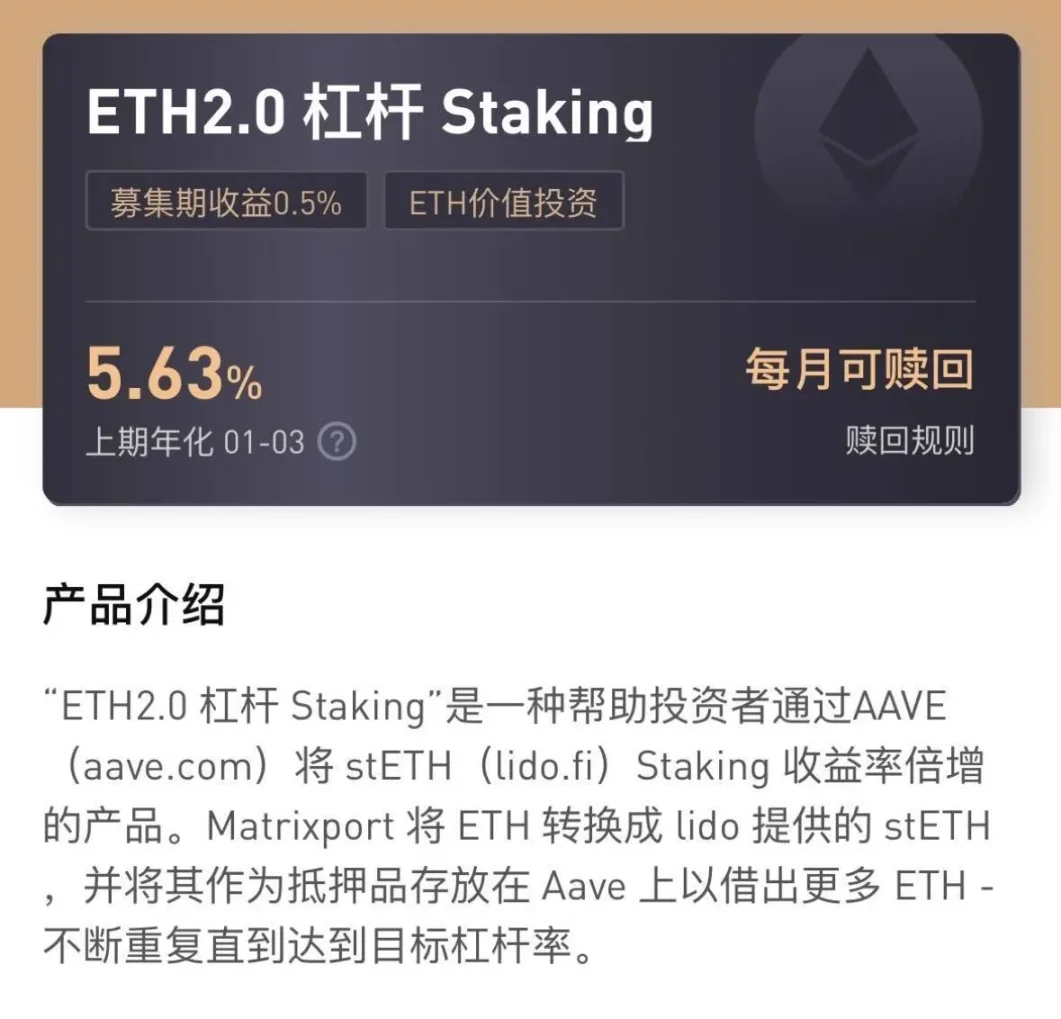
It also includes Matrixport, which provides transparent products. All in all, if you don’t make pledges or liquid pledges yourself, depository institutions will actually do this implicitly or explicitly.
Summary: Yield rate (commission), liquidity, discount, and risk are the four elements to participate in liquidity staking. Reasonably compare the four points of each company to find a solution that suits you.