Monday's market was heavily influenced by sentiment, with more of a speculative game than a trend-driven market.
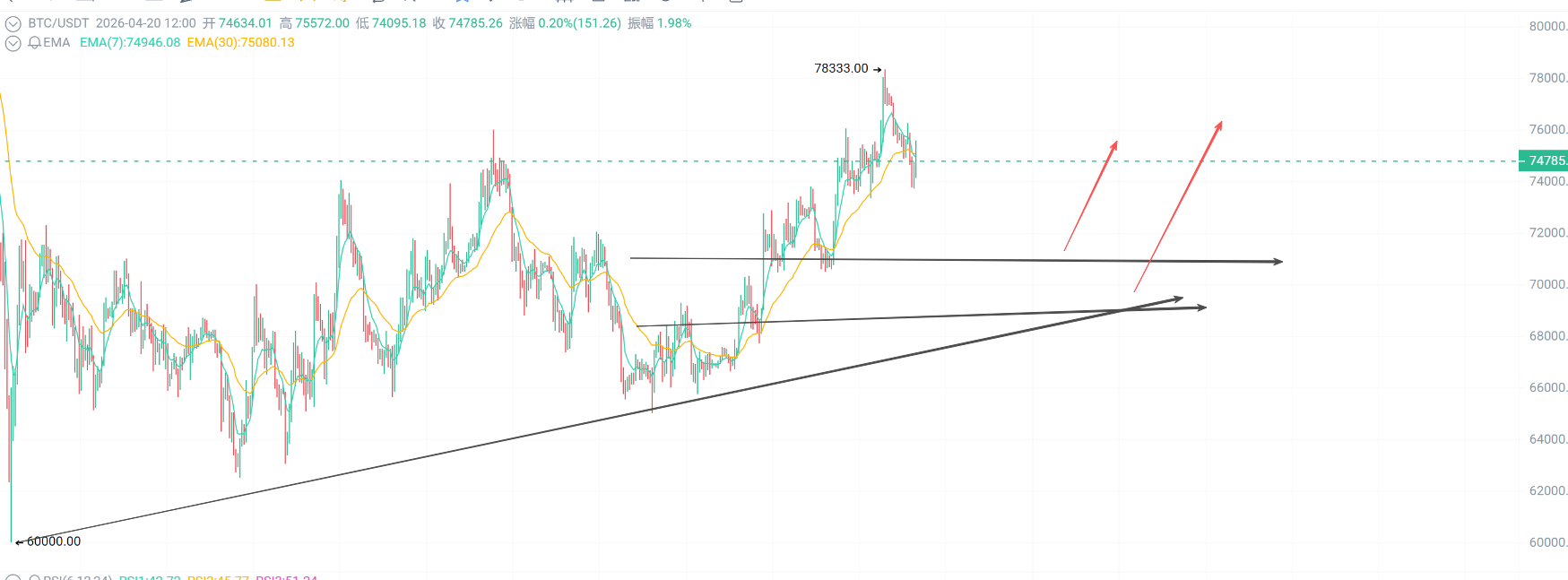
On the BTC side, a rebound occurred around 71.6K on the 4-hour chart, providing short-term support. However, the 75K-76K range remains a strong resistance zone. Structurally, the market is more likely to consolidate before pulling back. If it breaks below 73.6K, it will likely test the 72K-73K range; if that also fails, the 68K-70K range would be a more cost-effective area to buy on dips.
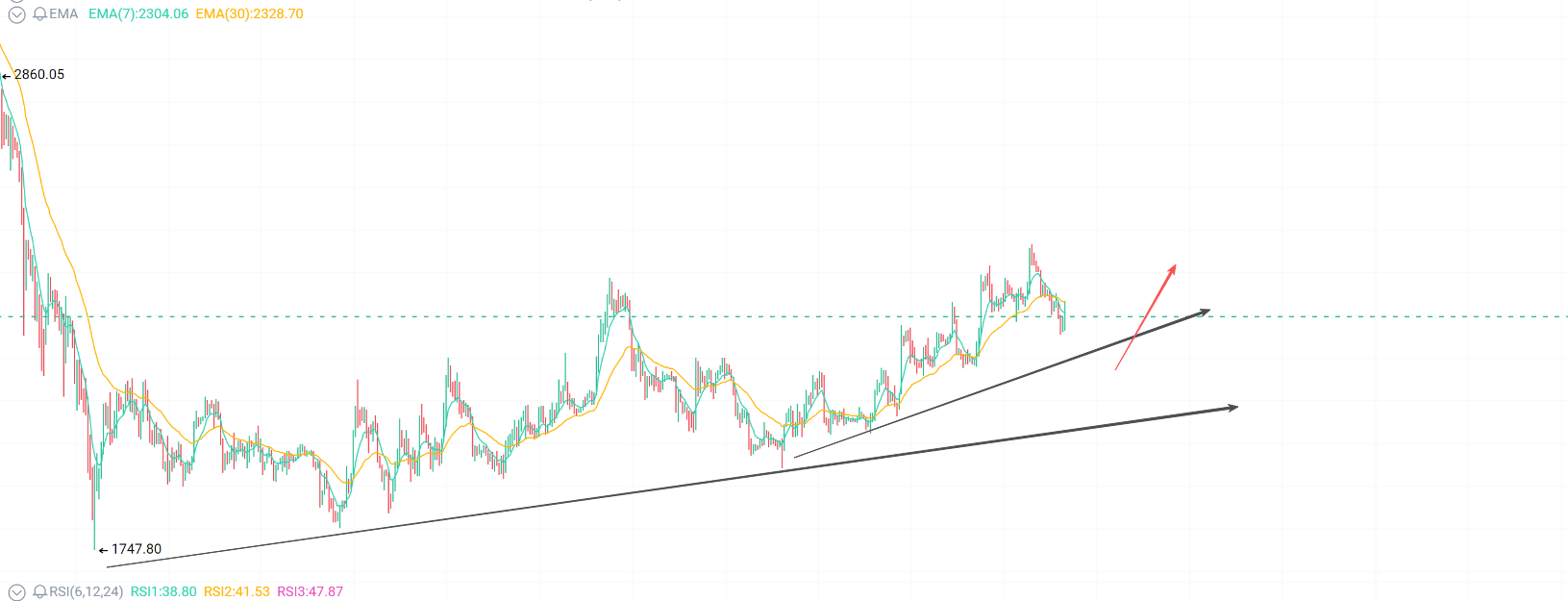
#ETH is following a similar pattern, rebounding from the 2260 level, but significant resistance lies ahead at 2300-2360. If it breaks below 2260, watch for support at 2120-2160 in the short term; if it continues to weaken, the 2000-2100 range will be a more crucial support level and may present a short-term buying opportunity.
The counterfeiters have already given their answer: they come fast and go even faster.
The extreme case of $RAVE , which nearly went to zero in a short period, exemplifies the extreme risks of "emotional speculation." Many coins that surged a few days ago have now seen their prices halved, with even the strongest performers not immune. Essentially, liquidity was rapidly drained, and the second round of profit-taking has been completed.
Looking at the candlestick chart, RAVE has clearly weakened and even shows signs of going to zero; while Binance Life is relatively more resistant to decline. The core difference behind this is actually very simple - the liquidity structure is completely different.
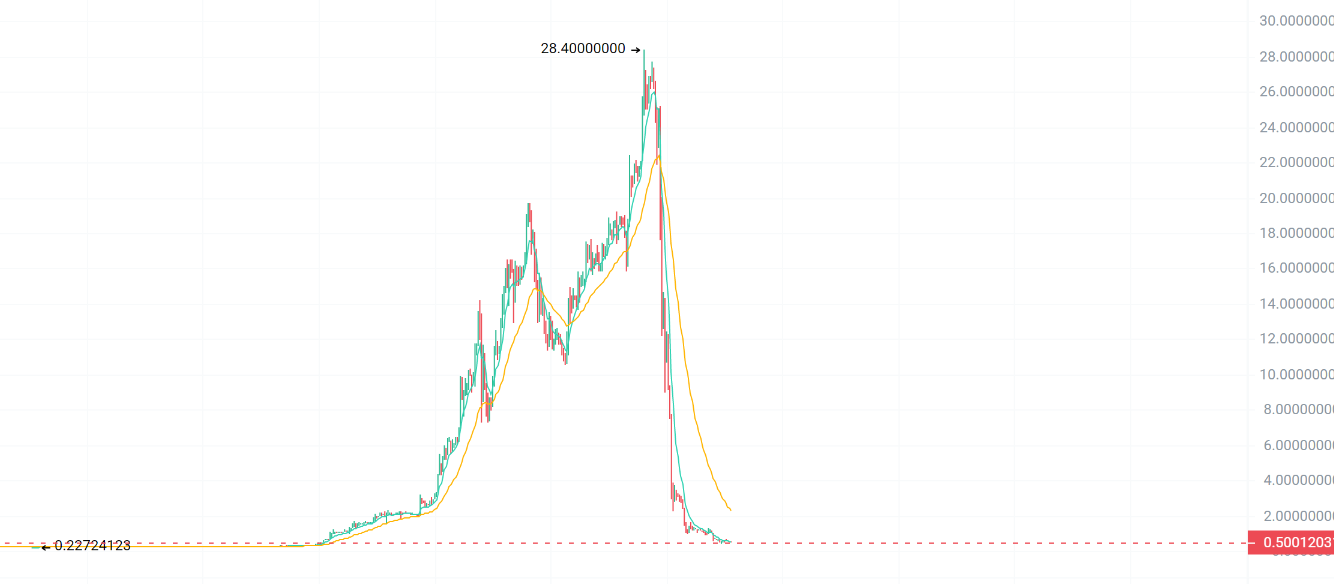
RAVE lacks spot support from major exchanges, resulting in highly concentrated holdings and extremely shallow market depth. Most participants can only participate through contract trading. Under this structure, the so-called "market capitalization" is more of a superficial figure. Major players can control the market with relatively small amounts of capital, leading to extremely volatile price movements. Once sentiment reverses, the price can easily experience a precipitous drop.
In contrast, Binance Life, with its real spot trading, has more market participants, more dispersed holdings, and greater trading depth. Even if major players want to dump their holdings, there is sufficient buying support below to cushion the price fluctuations, making price volatility more "elastic" and less prone to extreme single-day crashes.
As for the spot liquidity of some smaller platforms, it is basically negligible compared to that of leading exchanges, and it is not very meaningful when assessing risk.
Essentially, these differences boil down to one point: whether or not a coin has real liquidity support determines whether it can "withstand" extreme market conditions.
Looking at Altcoin in detail: MEME is still the small-cap stock that is experiencing a surge, while the old leaders have become quiet!
The reasons are not complicated—the trapped positions are too heavy, and funds are more willing to push up targets without historical burdens; blockchain games and observation zones are more like the last wave of price increases for distribution, and the pace must be extremely fast; RWA has relatively more continuity, but it is essentially a rotation market, and chasing highs is not very meaningful.
Looking at the individual coin's rhythm, $ORDI had previously indicated that it might form a double top structure at high levels, similar to the trend of TAO. Popular coins often complete the exchange of tokens through "M-tops," clearing out short sellers on the one hand and attracting funds to buy at higher prices on the other. $1000SATS in the same sector also weakened in tandem.
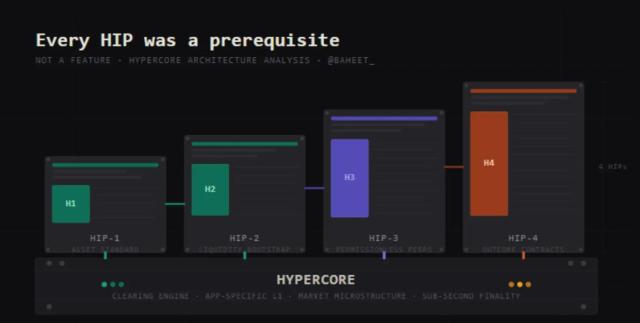
However, sentiment continues to shift within specific sectors. For example, HYPE's recent trend has been relatively clear, with some room for further gains; meanwhile, meme funds on the Ethereum chain have become active again, with projects like ASTEROID and PUNK experiencing rapid growth in trading volume within a short period, even seeing accelerated price increases from millions to tens of millions of dollars. Overall, the Ethereum ecosystem still possesses stronger scalability in terms of "community consensus + narrative-driven" growth. Once a particular asset can stabilize at a higher market capitalization range, funds are likely to continue concentrating on that chain, leading to the emergence of more highly volatile projects.
Therefore, the more realistic strategy at present is to use light positions, short-term trading, and quick entry and exit, prioritizing small-cap stocks that are consolidating at the bottom and have not yet started to rise.
As for major opportunities, they're not here now. The real phase where heavy investment is worthwhile will most likely come in the second half of the year. Right now is more about practicing and accumulating capital, rather than going all in to change your destiny.
Cryptocurrency markets are highly volatile; caution is advised when entering the market. This is just my personal opinion, not advice, and is for sharing purposes only.
Contact me via WeChat: Mixm5688 or QQ: 2234099968