By Nathan Snell, Co-Founder and CEO, Raleon
Source: Bankless
Compilation: The Way of DeFi
Everyone loves an AirDrop, after all who doesn't love a freebie? But from the perspective of a project, the correctness of token distribution can determine the success or failure of a community.
The Next Phase of AirDrop
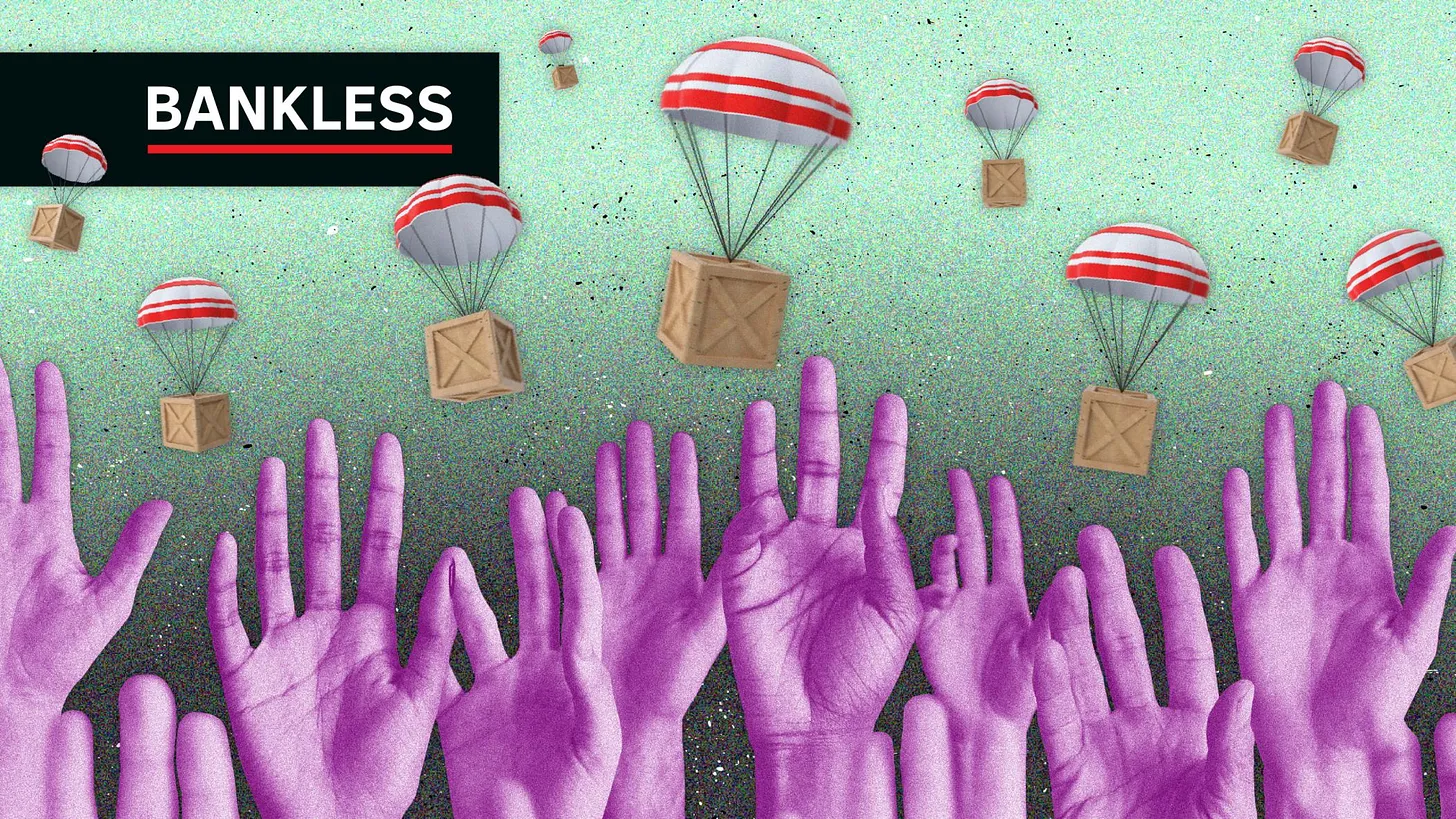
Photo: Logan Craig
AirDrop are a native Web3 marketing strategy. Done right, they can help drive new user growth, retention and TVL.
With this in mind, we took the time to research past AirDrop such as UNI, HOP, ENS, 1INCH, Mooncats, and Optimism to determine how effective an AirDrop really is. The results of the AirDrop with the current method are not very good: the retention rate is as low as 1%.
Crypto needs to revisit existing AirDrop methods.
Why are AirDrop important?
First, it's important to understand why AirDrop are so important to Web3 today. There are two reasons:
1. AirDrop are one of the best available strategies for reaching anonymous users
2. AirDrop provide a mechanism for distributing ownership to users, a key element of Web3.
What does the AirDrop look like at this stage?
Every project that uses AirDrop uses it as a Web3 marketing tool to acquire new users. Yes, they also hope to form a community to allow users to continue to use the product, and hope that users hold (hold) instead of dump (sell).
The challenge, as we've seen, is that this rarely happens. There are currently two types of AirDrop that can be seen:
Push AirDrop
This is when a legitimate token or NFT “magically” appears in a user’s wallet — usually by putting it in full, or sometimes by a claim.
Push AirDrop bring new customers to the project when wallet owners discover what's coming out of their wallets and try to use the app. Unfortunately, most Push AirDrop today are used as scams.
Pull AirDrop
This is when the user actively needs to claim the reward. Most projects fall into this category, such as Uniswap, ENS, 1INCH , and Cow Swap.
Pull AirDrop are usually the result when a project announces that they will reward users for using their project, most commonly via tokens or NFTs (less commonly). The purpose here is also to help the project acquire new clients. The exact criteria for claiming the rewards are often kept secret, like a sort of "nuclear launch code" for the project, to keep people from gaming the system.
While both of these approaches are mechanistically viable, the analysis we follow shows that they generally fail to create sustainable growth.
Challenges of AirDrop at this stage
The professional researchers at Dune Analytics have done a nice in-depth look at the UNI AirDrop as well as a quick look at some of the others. Given that we recently wrote about tracking other important Web3 project health metrics , we wanted to correlate Dune's analysis with some of these metrics, such as customer acquisition cost, payback period, retention rate, and customer lifetime value. ).
These metrics give us a basic understanding of the sustainability and health of the project. Analyzing these metrics with the results of the AirDrop will help us understand the effectiveness of the AirDrop as a sustainable Web3 marketing and growth tool.
First, what is the structure of the UNI"Pull AirDrop"?
- They distribute UNI to over 250,000 users
- The conditions to get the AirDrop are simple - you basically need to use Uniswap before September 1, 2020
How does the AirDrop work?
As with most projects today, a large percentage of users are expecting AirDrop- which is one of the benefits of AirDrop as a marketing tool. Given that the AirDrop AirDrop appears to be the first of its kind, it may gain more users if it is more anticipated.

If you want a deeper analysis of some of the above metrics, Tomasz Tunguz uses these numbers to compare Web2 and Web3 customer acquisition costs (CAC). You can also dig into the data in the Dune query to see how we arrived at some of these numbers.
AirDrop in their current form are a loss-making business for project user base growth. In order for AirDrop to be more effective for projects and drive sustainable growth, we need to move them to where the CAC of AirDrop is less than the project's user lifetime value (CLV).
A Framework: Making AirDrop More Effective
While AirDrop in their current form are still seen as less effective than expected, we still see projects distributing ~44% of their supply to the community . The good news is that we are seeing a few projects experimenting, which may bring us closer to the next evolution of more effective AirDrop.
1. Encourage cycles of behavior
When considering Pull AirDrop, their current criteria mostly fall into the generic category of "Used Goods". While generous to users, today's AirDrop is not generous to the project itself, as it doesn't actually "hook" users to the product.
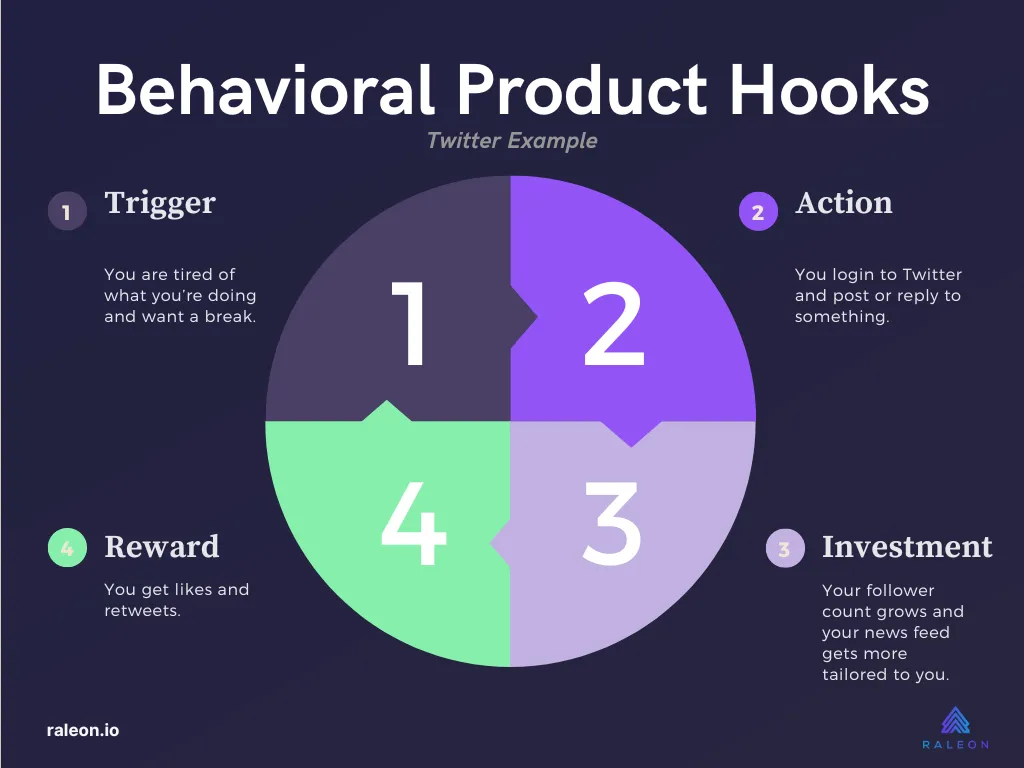
An example of a good behavior hook from Web2 is Twitter.
Thinking about behavior loops has the added benefit of identifying who your ideal users are and what behaviors you think might “engage” them. This effort will have a downstream effect on acquiring new users and retaining them through other marketing efforts.
When considering a Push AirDrop, it's unlikely that you've interacted with the project, so the criteria you're looking for will be the behavior and reputation of similar projects, or projects that represent similar buyers.
2. Reputation-based AirDrop
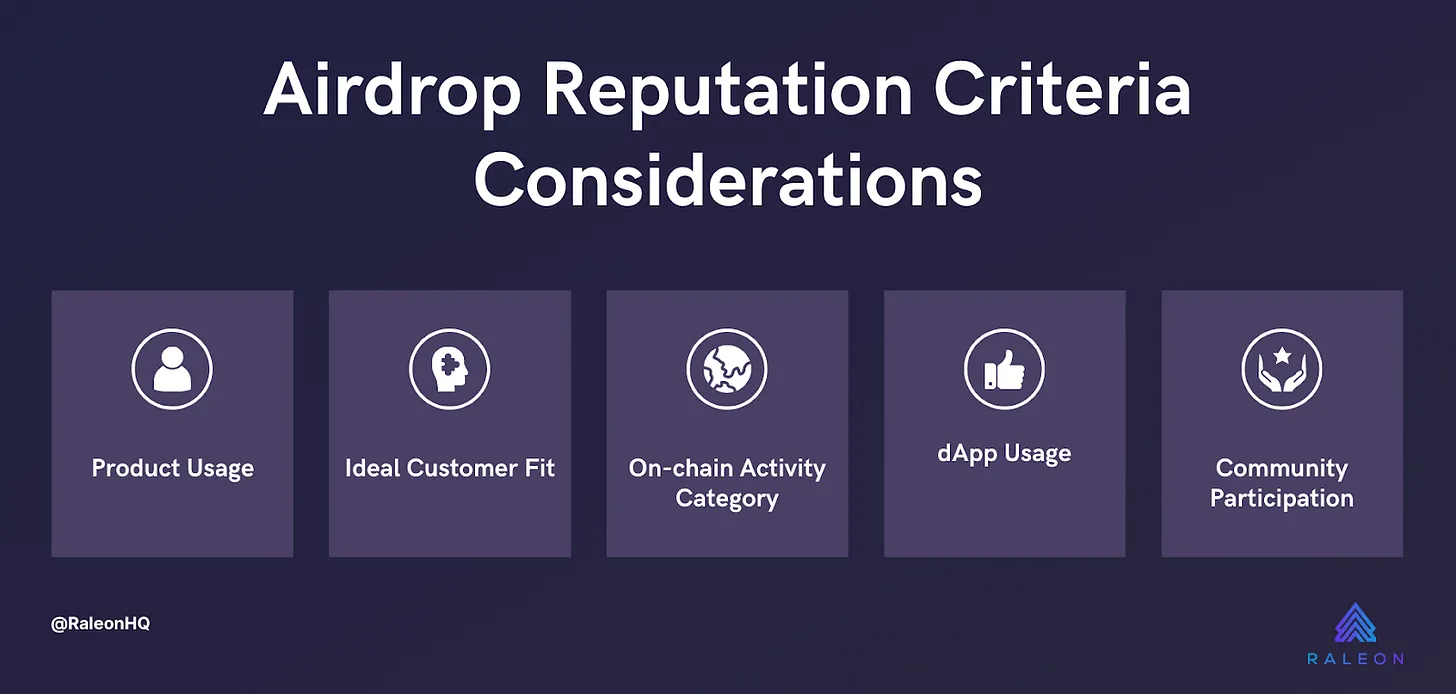
The criteria for who gets the AirDrop needs to be upgraded to a "reputation criteria" as the project goes from being equivalent to a blind date to finding a match.
General Criteria: You have a pizzeria that had 500 customers in the last month. You can give these customers $50 each and hope they come back.
Reputation criteria: You offer $50 to customers who you know spend 50% of their food budget on pizza, come to your store 5 times a month, and regularly attend music nights at your pizzeria, occasionally Will visit your competitors.
3. AirDrop"wave"
Blur and Optimism do a great job of this. As opposed to massive one-off event AirDrop, planning AirDrop“waves” based on more targeted criteria would be effective for two reasons:
1. It encourages people to keep using your product
2. It allows you to use data to test your reputation criteria so you can see if it is creating the desired outcomes for the project, such as better retention and customer lifetime value (CLV).
The AirDrop"wave" creates a process by which projects can set their reputation criteria, execute the AirDrop, monitor the results, and then use those results to improve the next AirDrop.
4. Create project loyalty to retain users
Loyalty matters not only because of how much marketing dollars you spend to acquire customers, but also because repeat customers spend 67% more than new customers (using web2 as a proxy).
Looking at Dune’s analysis, whether it is UNI, 1INCH, or other projects, it is not surprising that the retention rate is so low when most users sell after the AirDrop and 98% of the AirDrop users did not participate in any UNI voting up.
Governance and purely economic benefits like staking have not proven to be the most effective means of encouraging user retention.
We need to find new ways to build loyalty. If we look at some of the most successful Web2 and Web3 brands, they build loyalty by:
- Tailor the experience to the customer, showing they know the customer
- Well-Designed Token Economics and NFT Design
- Give their customers a reason to come back
- Make customers feel like they are part of the brand
- Offer redeemable rewards
Case Study: What might the next generation of AirDrop look like in practice?
We don’t have a crystal ball, but we do know that some projects are already experimenting with some of the ideas mentioned above, as well as other strategies like AirDrop attribution. We're big fans of testing, tracking results with usage data, and sharing, so here's an example of an AirDrop 2.0 program.
Item type: DEX
Behavioral Target: When a user becomes a Liquidity Provider (LP), its "sticky" peg is strongest, which makes our second peg actually trade on the DEX. Your behavioral goals may also depend on what you're optimizing for, and you should be optimizing to drive the most value out of your project and the best return for your users (your hook).
Reputation-Based AirDrop Criteria: As we are improving our AirDrop criteria, we will consider behavioral goals in it, in addition to reputation metrics. It usually takes 7 to 15 interactions to form a behavior, so we take that into account as well.
AirDrop Wave:
Wave 1: LP small batches . Here are some examples of reputation criteria a project might add:
- Created or added two LPs of $10,000 or more
- Traded at least 5 times with the protocol for an amount of $1000 or more
- Traded at least once last month and this month
- Has served as LP on Uniswap for many times
- Be active on DEX every month in the past 6 months
Wave 2: Smaller exchange batches. Reputation note: Given the broader scope this time around, we'll be looking for exchange-centric behavioral hooks and hope to weed out as many AirDrop hunters as possible. Examples of reputation criteria:
- At least 20 transactions with an amount over $50
- Traded at least once last month and this month
- Has been active on DEX for the last 3 months
Wave 3 and more : We won't detail each additional "wave", but you can learn the criteria for content modification based on LP batches and transaction batches.
Next steps in planning the AirDrop
If you're considering doing a Push or Pull based AirDrop for wallet marketing, the framework above should put you on the path to improving your results. We believe the future of AirDrop depends on identifying your best users and incentivizing them to power your long-term continued growth.