Original author: Kaori
Original article edited by: Sleepy.md
$8,000.
If you wanted to be present at the party at Trump's Mar-a-Lago resort last weekend, it only cost $8,000.
In January 2025, Trump issued a meme coin named after himself. Five months later, he announced that the top 220 holders of the coin could attend a dinner at his golf club. The coin transformed from an on-chain speculative asset into a ticket to meet the President of the United States.
In March 2026, Trump's token fell below $3, a 96% drop from its peak, but Trump's team announced a second gathering for token holders. The gathering was scheduled for April 25th, with 297 slots available.
Bigsong, a crypto fund manager, saw the business behind the party.
The ceiling of the scalper industry
Bigsong has three partners who run a crypto fund called Saucerful Labs, where they engage in cyclical trading, DeFi investment, and quantitative arbitrage. After news of the Trump coin dinner was released, his first reaction was to short the coin. The price rose 50% before falling back, and the short sellers began to profit.
But while searching for grounds for liquidation, Bigsong recalled an old incident.
Last year, one of his partners, Luolan, tried to participate in the cryptocurrency rankings for the 2025 dinner. After qualifying, he sold his entry to someone else for $30,000. He shared this with his team, believing it was a good opportunity to arbitrage between different circles.
"Everyone thinks it's very difficult to get into the top 297 of Trump's list," Bigsong said, "but it's not actually that difficult."
Trump's banquet team is managed by his longtime business partner, Bill Zankel. The top 297 on-chain address holders with the highest token holdings will receive admission to the Mar-a-Lago banquet. Rankings are not based on the number of tokens held, but rather on points. Each token generates one point per hour; the earlier and more you deposit, the higher your points.
The ranking system only tracks token holdings in on-chain addresses and Robinhood accounts; holdings on other exchanges are not counted. This means the number of addresses actually competing for rankings is far less than the total number of Trump token holders. Furthermore, since the ranking system is time-dependent, earlier entry offers a greater advantage.
After assessing the situation, the bigsong team immediately convened a project initiation meeting. Their strategy was to borrow a portion of their Trump tokens from lending platforms and hedge the remaining portion through contracts to lock in price risk. This way, they didn't actually bear the risk of price fluctuations, only paying borrowing interest and hedging costs.
They used AI to write programs to monitor cryptocurrency price fluctuations and lending health factors to prevent liquidation. They wrote scripts to monitor abnormal withdrawals from every wallet, analyzed the addresses, holdings, and estimated points of all competitors on the blockchain, and built a real-time ranking dashboard. They even scanned social media every 24 hours, summarizing community discussions, media reports, and new messages from official Twitter accounts.
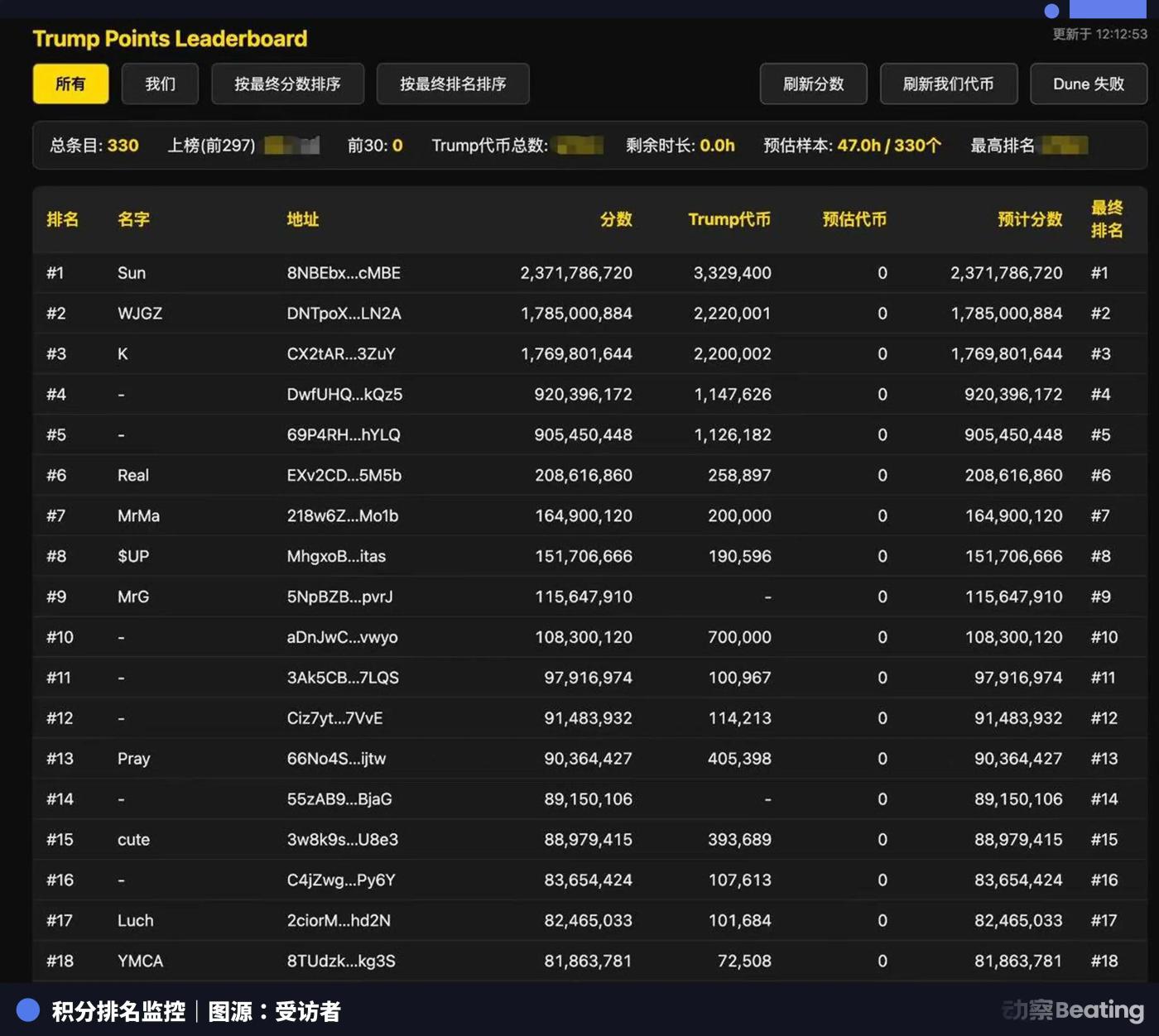
During this period, the $TRUMP team postponed the points settlement time by four days, meaning that more funds would flow into the points system. Some of Bigsong's clients even went so far as to accumulate points themselves to secure entry slots because of this rule change.
This is not an isolated case. Crypto investor Christensen bought tokens on an exchange and simultaneously short$TRUMP to hedge his risk, spending only $500 in the entire operation.
This was a sophisticated production line; the product was the qualification to meet with the US president. Ultimately, out of 297 slots, Bigsong's team secured 40.
They priced the tickets at $8,000.
If the production process is like an on-chain war waged by quantitative funds, then the sales process is like a micro-business conference.
Bigsong divided the sales process into two phases. In the first phase, he found super agents with strong social media distribution capabilities. He provided them with scripts, promotional images, and even created a dedicated webpage. In the second phase, with about five days left before the registration deadline, he began promoting the product within the crypto community.
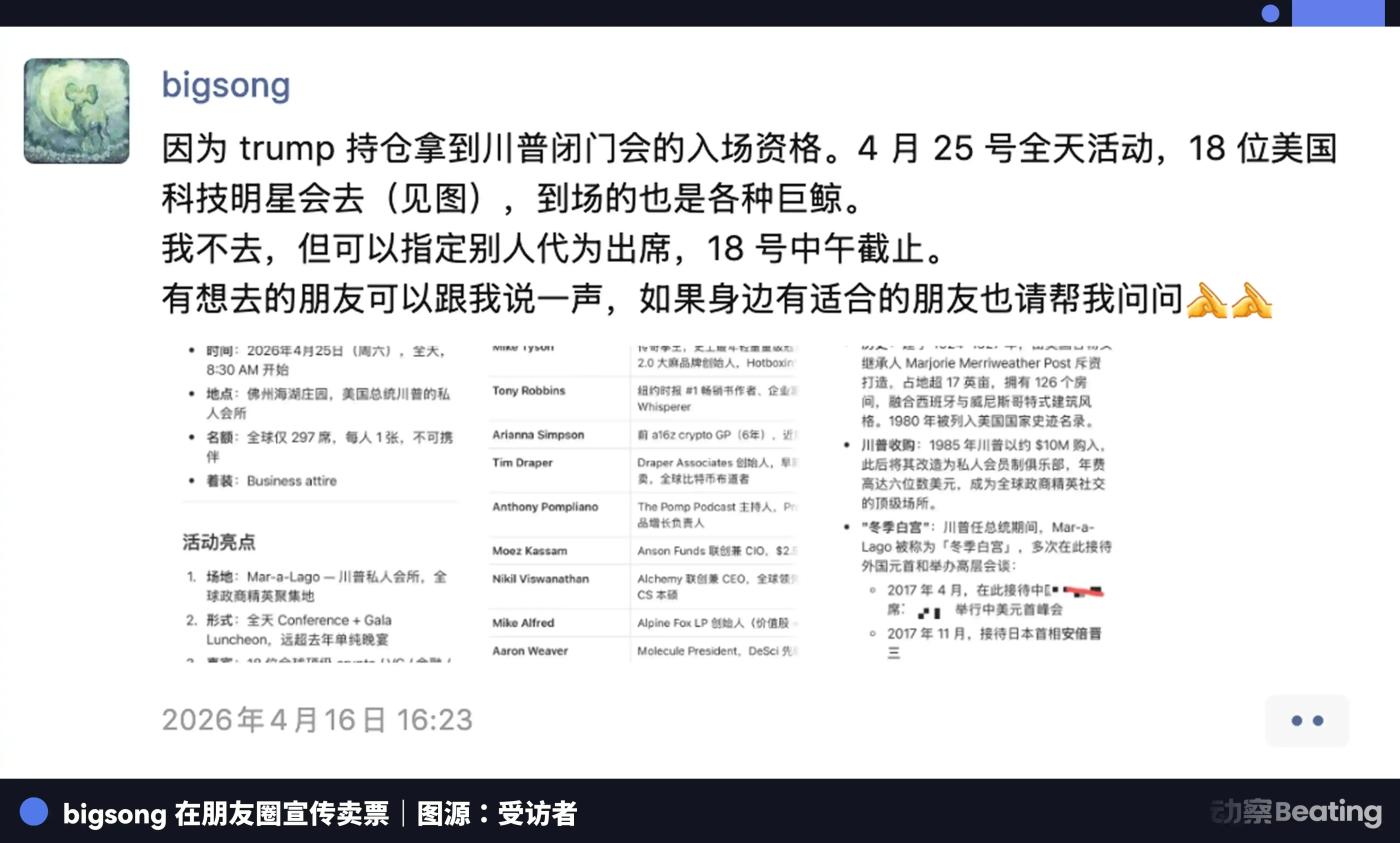
All 40 tickets were sold out, with attendees including international students studying in the United States, socialites from Hong Kong and Taiwan, young entrepreneurs, and families traveling with their elders.
Four months ago, a person went to Mar-a-Lago, took photos outside, and posted them on his WeChat Moments, writing, "Who can take me inside?" Four months later, he found Bigsong through three layers of intermediaries.
"I really like my buyers," bigsong said. "They are mostly ambitious people, and I've used my abilities to help them achieve their dreams. I'm probably the number one scalper in the Chinese server now, selling the qualifications to meet the president."
Selling tickets doesn't mean the business is over. Every buyer must pass a security vetting process by the Secret Service and a third-party security firm commissioned by the Trump team. This process involves three parties: the Trump token team verifies the token holder's eligibility, the third-party security firm conducts background checks, and Mar-a-Lago organizes the event.
Bigsong's team handles the review process for each client individually. The after-sales phase consumes a significant amount of the team's time and energy; the paperwork is comparable to simultaneously applying to top universities for 40 students aspiring to study abroad. If the review is successful, the client is notified immediately; if not, supplementary materials are requested, involving repeated communication.
Some people paid and then suddenly didn't go, initiating a refund process, but the intermediary fee had already been distributed to lower-level agents and was unrecoverable. Some people bought tickets through second- or even third-tier distributors, making refund disputes extremely complicated within the nested distribution network.
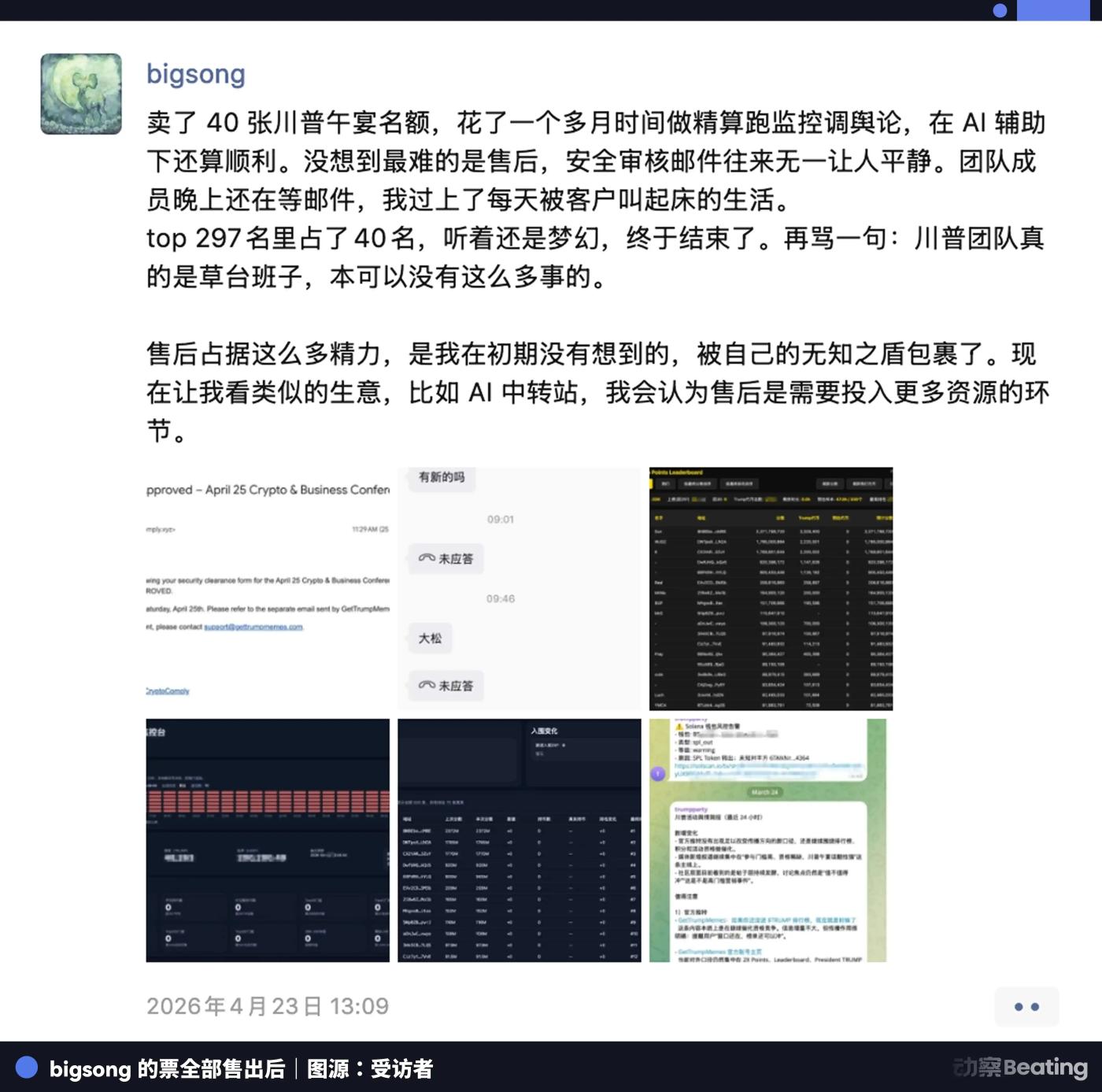
"We completely underestimated the difficulty of after-sales service," said Bigsong, a quantitative trader accustomed to dealing with numbers. But this business dragged him into a traditional business world with upstream, midstream, and downstream operations, customer service, and dispute resolution.
However, from an official perspective, Bigsong does not exist. His 40 clients appear on the review list under 40 completely unrelated individual identities.
The most unique business conference
Saturday, April 25, 2026. 297 top holders of Trump coins, or at least those recognized as top holders by the points ranking system, gathered at Trump's Mar-a-Lago estate in Palm Beach, Florida.
The event was packaged as a full-day crypto and business summit, with the organizer, Fight Fight Fight LLC, advertising on its promotional page: "The world's most unique crypto and business conference."
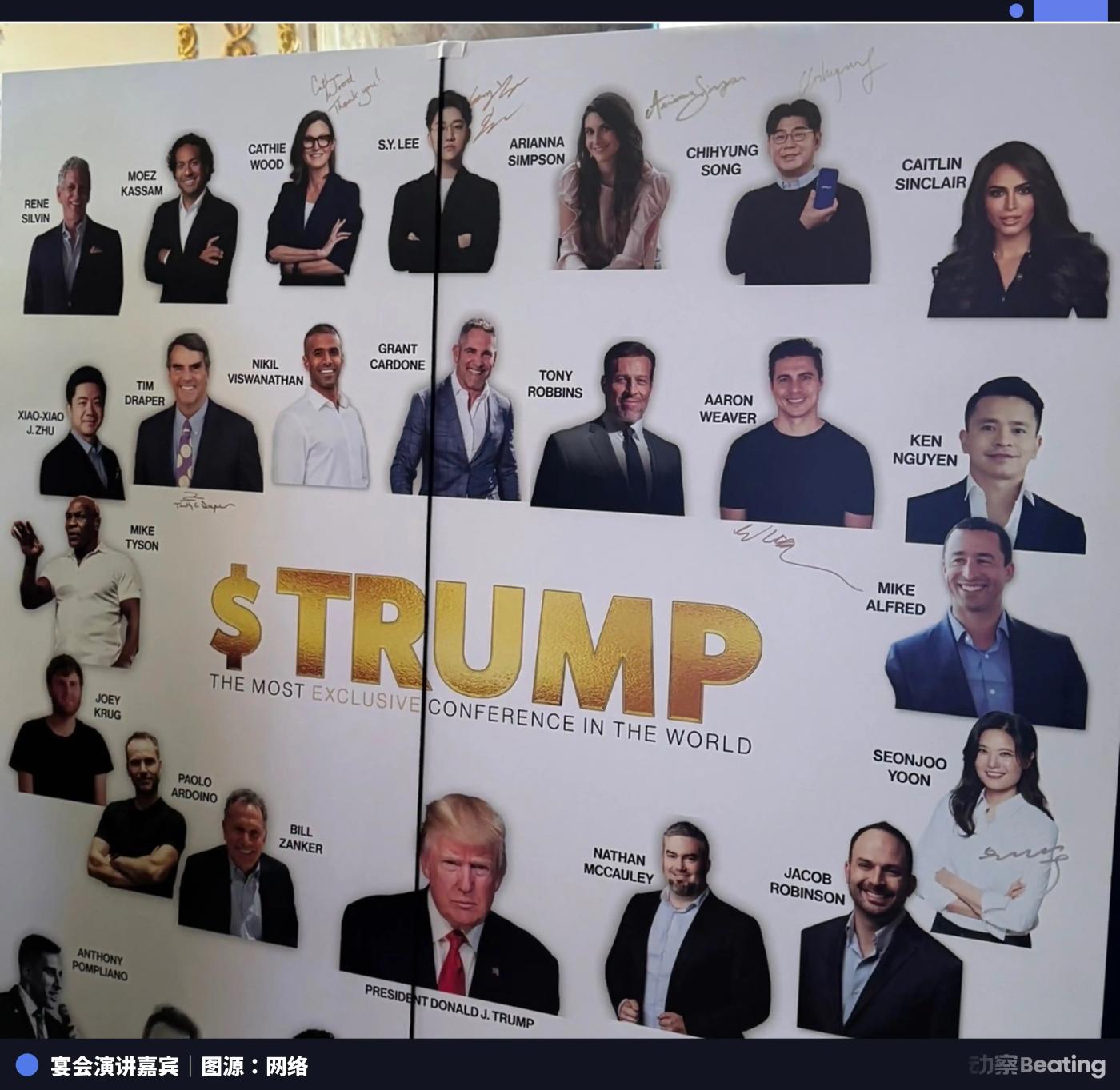
Cathie Wood Wood spent the entire afternoon interacting with attendees, followed by a keynote speech from boxing champion Mike Tyson and a bestselling author, Tony Robbins.
Paul Aldoino, CEO of Tether, a stablecoin giant who has rarely appeared in public for years, shook hands and chatted with token holders on the lawn of Mar-a-Lago. Also present were venture capital guru Tim Draper, Ariana Simpson of a16z, Song Ji-hyung, founder of Upbit, and Nathan McCauley, CEO of Anchorage Digital. The power structure of the crypto world was essentially transplanted into this private estate in Palm Beach.
Trump delivered a 45-minute keynote address at the event. He had just canceled a planned trip for the U.S. negotiating team to Pakistan for peace talks with Iran, minutes before he began speaking.
He discussed the mainstreaming of cryptocurrencies, the need for banks not to obstruct the legislative process for stablecoins, artificial intelligence, the Iran war, and even Trump-branded sneakers.
Throughout the entire speech, he never once mentioned his memecoin.
Turbo, who participated in the event, is a student studying in the United States who works in crypto investment at IOSG Ventures. What impressed him most was not the president, but Tony Robbins.
Robbins stepped down from the stage and moved between the small round tables, coming within half a meter of Turbo. He talked about AI, crypto, and robots. When he talked about crypto, Turbo felt that he didn't actually know that much about it, but he was a little deeper than the average person in each field, yet a little shallower than a professional. This position was precisely where he could best communicate his ideas.
"Many CEOs of large companies, after ceasing to conduct on-the-ground research, would sit down and listen to Robbins speak. Robbins talked with the most senior people in each industry, bringing the information to these CEOs; then he wrote books to bring the information to the public. Bestselling author, resource integrator, and top-notch speaker—three roles combined in one person. He was the best speaker I've ever heard in person," Turbo said.
It was totally worth it!
Sherry is one of the "super agents" Bigsong mentioned. She works in New York and sold six tickets this time, including one to an elderly person who has lived in the United States for many years.
She never imagined she would meet Trump in the real world. "Security has been much tighter since Trump was shot."
But Sherry did the math: Mar-a-Lago is a members-only estate, with annual fees reaching $500,000 a few years ago, and new memberships required referrals from existing members. Even having a member take you out for a meal would cost several thousand dollars. $8,000 appearing before the president—"It's totally worth it!"
After paying, the wait began.
The registration window is only open for three days. Rankings will be locked on April 14th, and registration closes on the 17th. Information required includes name, date of birth, current address, nationality, and social media accounts such as LinkedIn, Instagram, and even Xiaohongshu.
However, two out of her six people hadn't been approved yet. With less than two days left until the event, no one had booked flights.
"They are very focused on social media," Sherry said. Some people are very capable and wealthy, but their social media accounts are incomplete. "No matter how we communicated with them or wrote emails, it didn't get approved."
On the evening of the 23rd, the last person's screening was finally completed. Sherry and her companions immediately booked flights and hotels, flying from New York to Florida. This was the first time any of them had ever been to Mar-a-Lago, and the first time they had ever met the President of the United States.
At 6:30 a.m. on the 25th, Sherry arrived early with six people, but two of them did not receive an admission QR code. The event started at 8 a.m., and Sherry negotiated with the organizers on-site for 30 minutes. She gave her name, and everyone was in the system. The staff checked the IDs one by one and finally obtained admission qualifications.
Bigsong and other clients encountered the same problem. Sherry created a WeChat group before the event to bring together Chinese attendees. She told Bigsong to contact those who hadn't received the QR code and then guide them to communicate with the organizers.
"If one person tells the organizers, they might not take it seriously, but if a group of people say it together, it will draw their attention and expedite the process."
This group later became the largest Chinese community group at the entire event, with 90 people.
Bigsong was in charge of production and sales, while Sherry voluntarily took on the role of on-site organizer.
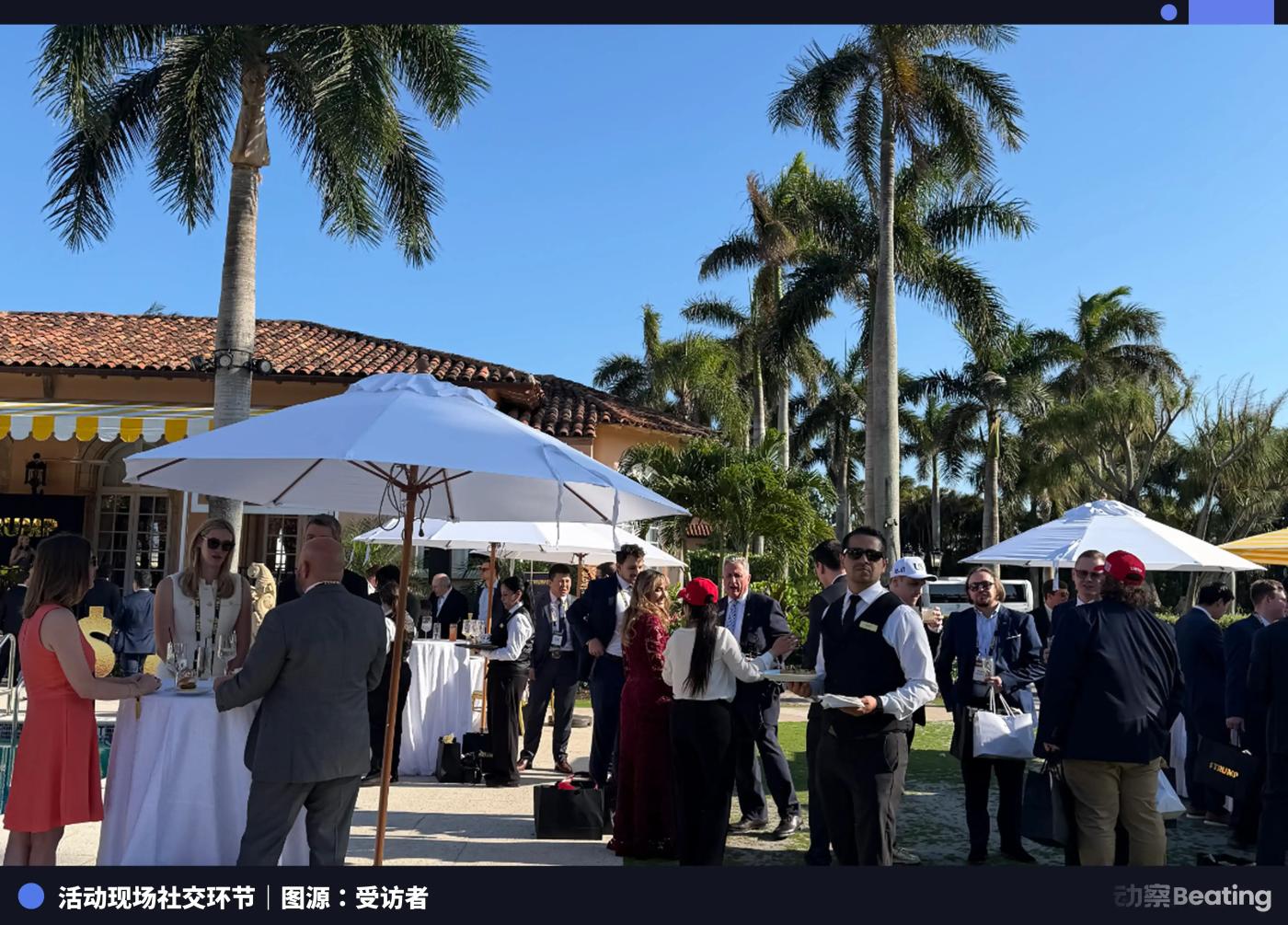
In this on-site group chat, people would post real-time information: where Tyson was, which area Cathie Wood was in, and where to take good photos. She helped her complete strangers take group photos and gave directions. Sherry was the person who got the most group photos of the entire event.
Aside from the frenzy of taking photos with celebrities, people like Sherry who bought tickets to attend the event felt that networking with these individuals was the most worthwhile part of the experience.
Turbo observed that the people at the scene fell into three categories: some sat quietly and listened to the speech, some socialized occasionally, and others enthusiastically chatted with the guests to explore cooperation opportunities. "Everyone comes here for different reasons. Some people just treat it as a form of entertainment or a way to prove their identity."
He also experienced a culture shock. The entire atmosphere of Palm Beach, Mar-a-Lago, and Trump's team exuded a "very, very traditional white culture," which was completely different from the Democratic-leaning events he attended in New York.
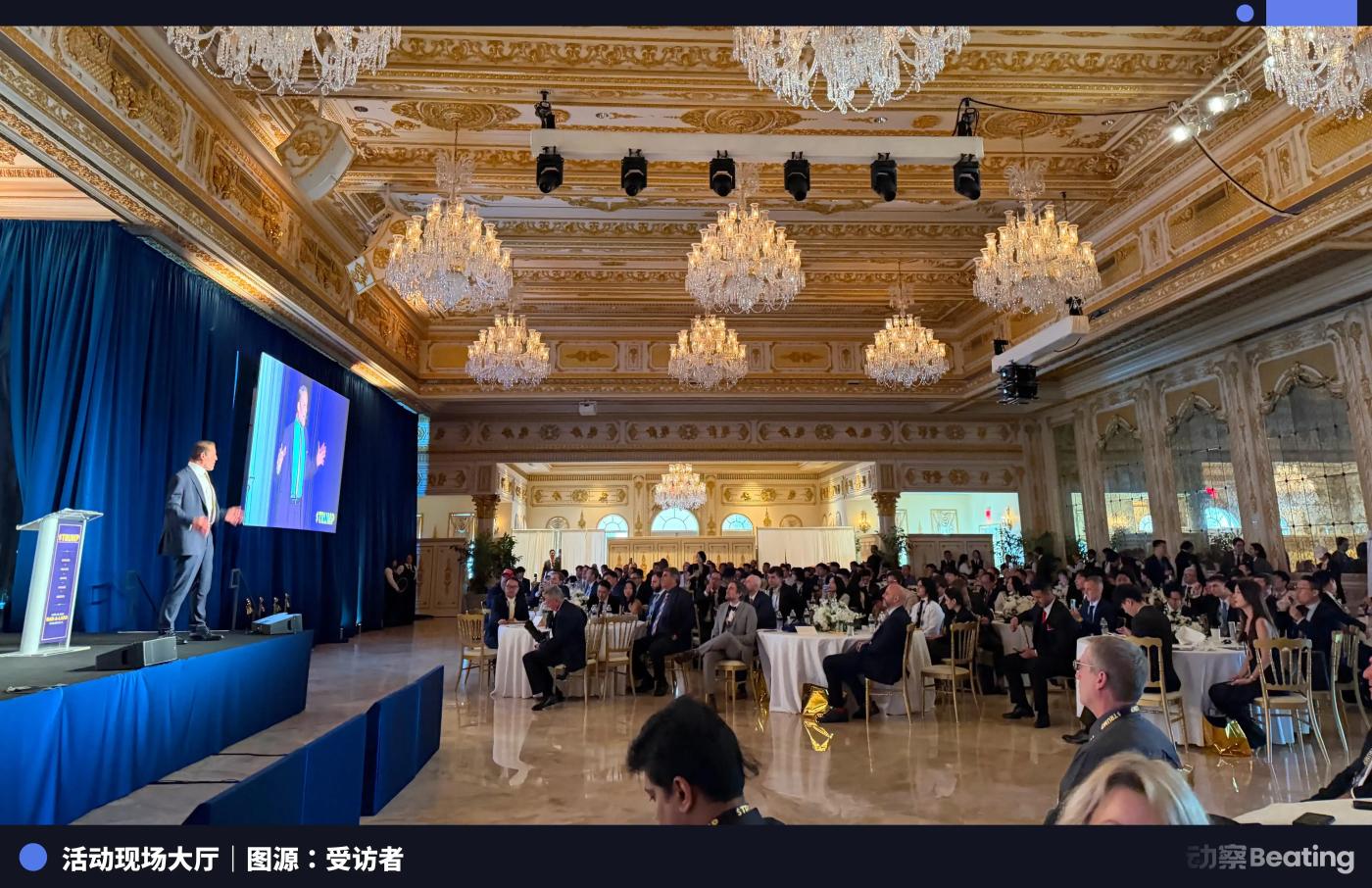
"Don't you think this is a top-tier social stage for the new generation of young people?" Sherry's feelings were completely different. "We're appearing before the president, before these investment tycoons; we're young faces. Older immigrants never had this kind of opportunity!"
Sherry shared her experience of attending the event on her WeChat Moments, and everyone seemed to approve. She said that what people appreciated wasn't the coin itself, but rather the presence of these young Chinese people in such an setting, their understanding of politics, their interaction with the president, and their appearance on the social stage.
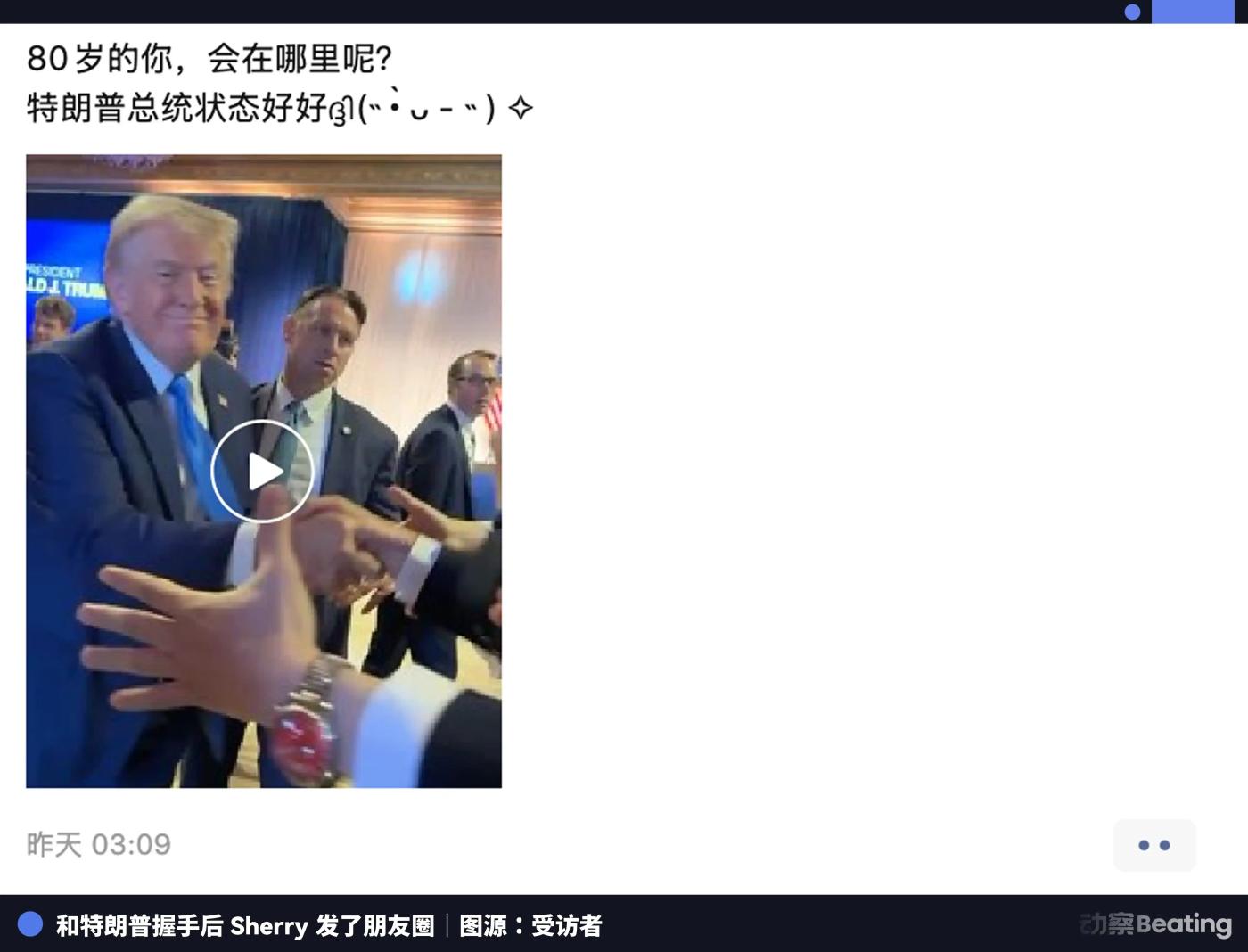
Throughout the entire speech, Trump never once mentioned his memecoin. Sherry found this unsurprising, saying, "If you were the owner of a cryptocurrency, would you publicly shill it? Even CEOs of publicly traded companies can't recommend buying their stock, let alone the president."
However, her assessment of the coin itself differed from her assessment of the event: "This coin itself has no value; all worthless tokens are worthless."
What did she buy?
"The underlying resources, social connections, and networks," Sherry said. "Everyone buys this coin, and without saying a word, people will assume we're part of the same circle. What's more, it offers exclusive content; events are held at Mar-a-Lago, providing access to business resources that ordinary people can't access."
After the show
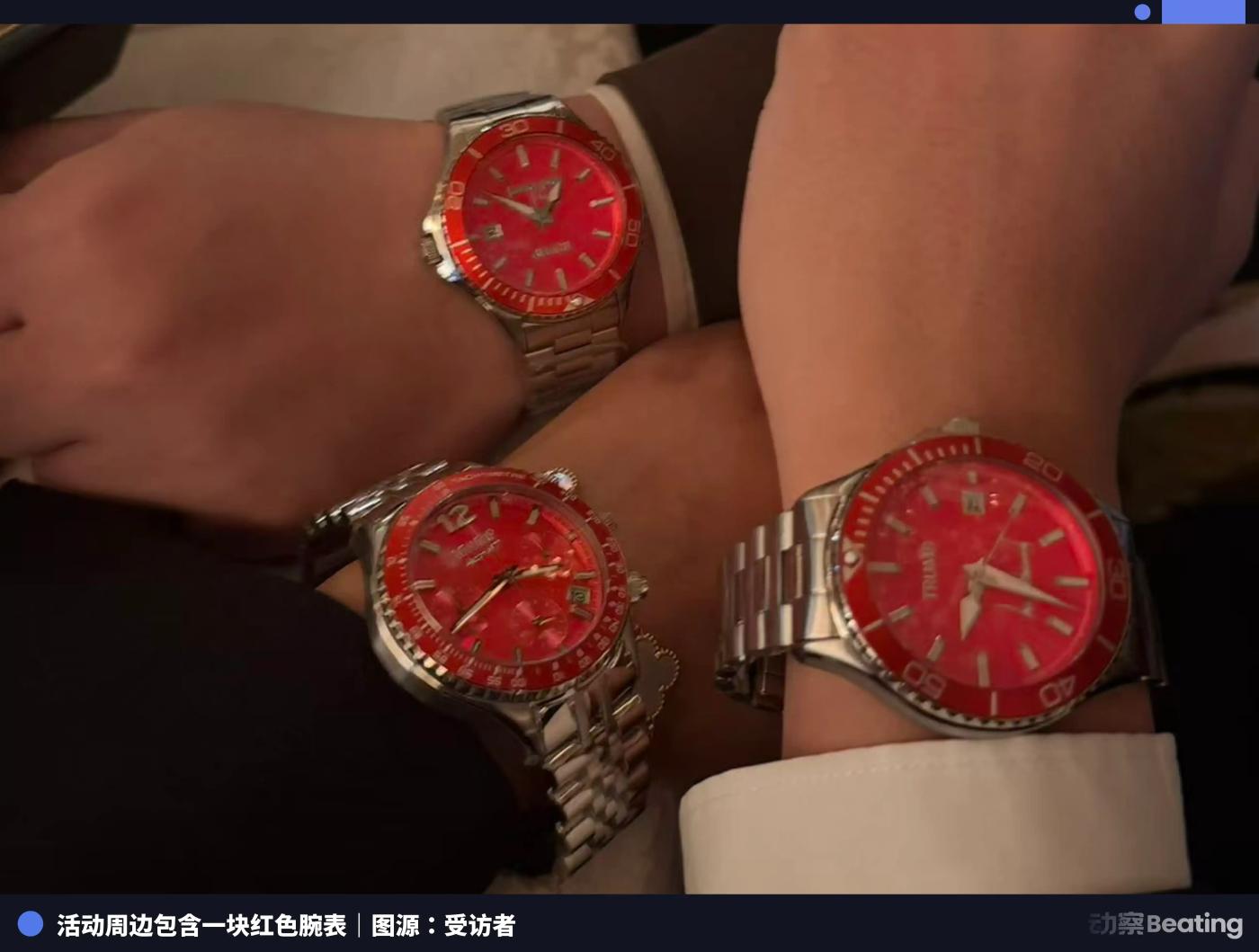
At the event, attendees received a bag of Trump-branded merchandise, including perfume, a red Fight Fight Fight watch, a commemorative trading card, and a poster. Sherry's watch photo was immediately reserved by an elder after being posted online; "He said I absolutely had to save it for him."
The organizers also launched the Trump Billionaire Club mobile game and a membership program called $TRUMP Coin Club at the event, promising to provide coin holders with luxury suites, private dinners and the most elite and extraordinary experiences at top global sporting events.
That same evening, Trump rushed back to Washington to attend the White House Correspondents' Association Dinner. Gunshots were heard at the scene. Sherry quipped, "Many people got confused, thinking something had happened at Mar-a-Lago, but no one came to offer condolences; everyone was only concerned about the president."
Within hours of the event ending, Trump fell 14% to $2.56.
According to Forbes estimates, as of April 2026, transaction fees for Trump-related entities had generated nearly $400 million in revenue. Despite the coin's price plummeting 96% from its peak, and his family controlling 80% of its supply, the money-making machine has never stopped.
Data from analytics firm Nansen indicates that the 297 attendees this year held a total of approximately $29 million worth of Trump tokens, compared to $148 million held by the 220 attendees last year. The median VIP holdings were $3.28 million last year, but only $539,000 this year, a decrease of 84%. Many sold their holdings after the points window closed.
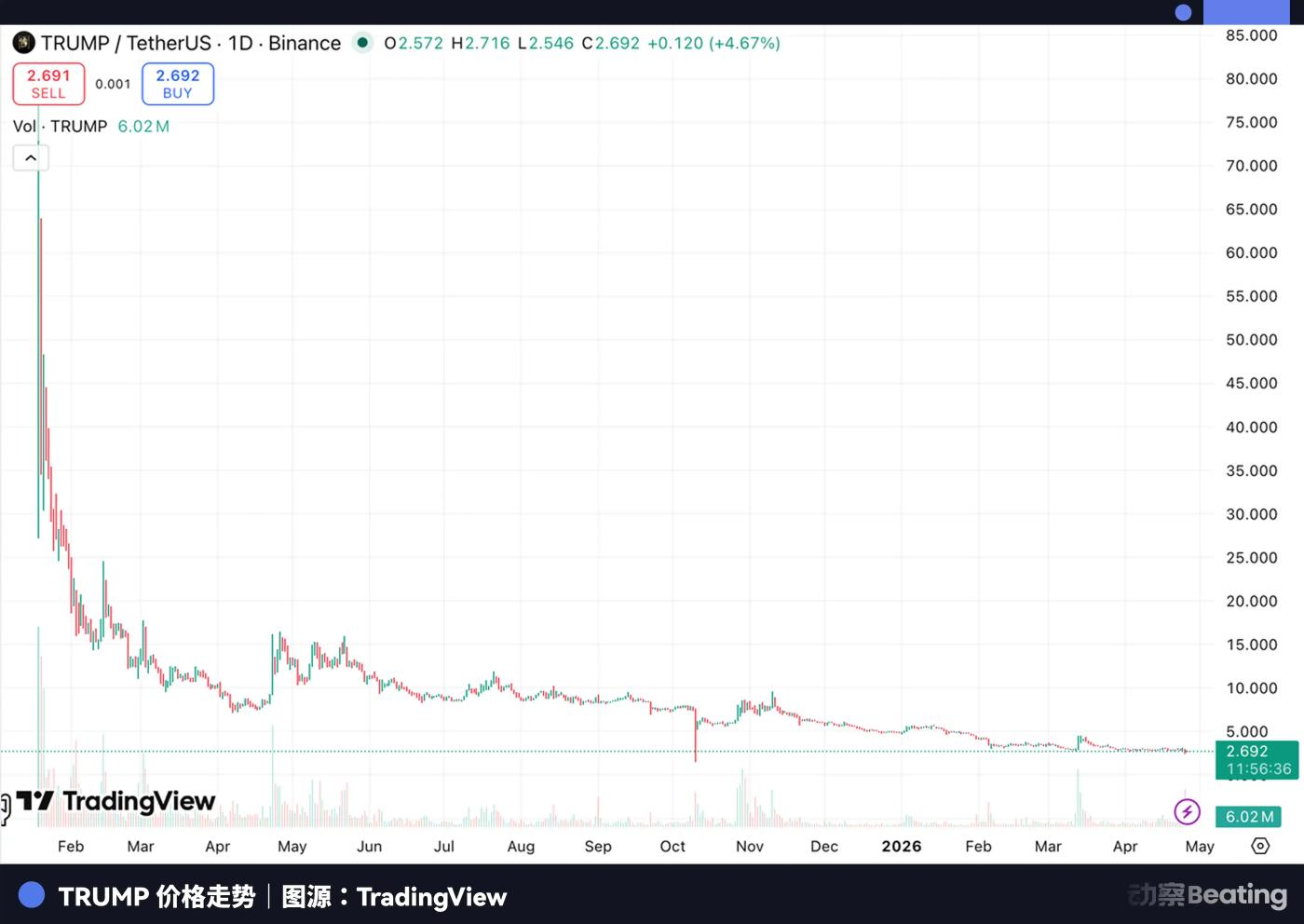
"Buyers in 2025 held their positions after purchase, driving a sustained rise," Nansen's report stated. The points rankings in 2026 created a short-lived price surge, but this demand was not sustained.
Buyers are becoming increasingly savvy; they are not investing in a coin, but rather buying a ticket to the game.
Returning to Bigsong's business, he used a quantitative trading methodology to graft a traditional scalper's distribution chain, turning "meeting with the US president" into a standardized and deliverable commodity.
If you are someone from a traditional industry, what methods can you use to meet the President of the United States?
"Either you're a politically influential figure who is entitled to meet him, or you're an industry giant in a top field who gets a face-to-face opportunity through business relationships, charity dinners, or policy lobbying. Or you go to a campaign rally where the president is speaking on a distant stage, surrounded by a huge crowd, and you're one of them. You do see him, but he's on top, and you're below; the distance between you is physical and structural."
Bigsong used this example to demonstrate the value of his business, while Sherry filled in the missing link on the other side of the world—organization and community.
“They held one last year, but everyone was disorganized afterward,” Sherry said. She wants to continue building the community she’s created to provide experience sharing and organizational support for the next event. “Next time, people will know there’s such an organization, and they can ask any questions related to the event, unlike us who had to figure things out on our own this time.”
Turning the right to meet the president into an on-chain points game will inevitably lead to quantitative analysis, financial engineering, and multi-level marketing. Bigsong and Sherry are simply localized distributors of this system in the Chinese market.
Trump's business partner, Zankel, said he would persuade the president to hold the event every six months. Bigsong might also launch a "guaranteed pass package" next year, not only helping ticket buyers get points for ranking but also helping cryptocurrency holders pass security checks. In Sherry's group, some people have already started booking tickets for next year. Supply and demand are upgrading simultaneously, and a complete industrial chain from production, sales, after-sales service to repeat purchases is taking shape.
The person who orchestrated all of this has seen his wealth triple in the past year.
Democratic Senators Elizabeth Warren, Adam Schiff, and Richard Blumenthal sent a joint letter to Zankel in early April, accusing the event of reflecting the president's desire to use his position for personal gain. Zankel did not respond.
Two hundred years ago, at Andrew Jackson's inauguration, 20,000 people stormed into the White House to shake hands with the president, breaking china and forcing Jackson to escape through a side door. Supreme Court Justice Story wrote a worried comment: "It seems the reign of the mob king has begun."
If he saw Mar-a-Lago in April 2026, with 297 tickets, on-chain points rankings, scalper prices of $8,000, and WeChat groups of 90 people, he would probably say again: "The king of the mob hasn't disappeared; he's just learned how to set prices."
Furthermore, Wang's pricing system has also spawned intermediaries, agents, and private domain operators.