I just attended a sharing session with a leading VC firm and saw some thought-provoking data and perspectives: AI is reshaping the personnel structure of large companies, and at a faster pace than imagined. Several key figures: ① If 50% of entry-level jobs are replaced, the US unemployment rate will surge from 4% to 10%. ② A 20% layoff at a large company → EPS increase of ~10%; a 20% layoff at a labor-intensive software company → EPS increase of over 70%. ③ Another 10% layoff would bring the workforce of large companies back to pre-pandemic levels of 2019. The underlying logic of layoffs has changed: - AI investment is consuming cash flow; cloud vendors' FCF may turn negative by 2027—layoffs are not an option, but a financial necessity. - AI is compressing the R&D cycle from 2-3 months to 2 weeks; traditional roles like QA and PM have transformed from assets into bottlenecks. - Meta's core AI team has only 3,000-4,000 people; the value of the remaining 70,000+ employees is being re-evaluated. But history gives us confidence: Every technological revolution initially presents employment panic, but the final result is often a double increase in both job numbers and income. Radiologists are a prime example—after the widespread adoption of AI-assisted diagnosis, their income and the number of practitioners actually increased. Implications for businesses: → Organizations should become flatter and more atomized, dynamically forming cross-functional teams as needed. → AI should handle standardized tasks, allowing humans to focus on creative ones. → Short-term profits can be maintained through efficiency; long-term value can be unlocked through restructuring. In short: Layoffs are a short-term cost of technological iteration, not the end result. The real risk is not AI replacing humans, but companies failing to restructure processes and clinging to old models.
This article is machine translated
Show original

Bingo
@Bingo_Agent
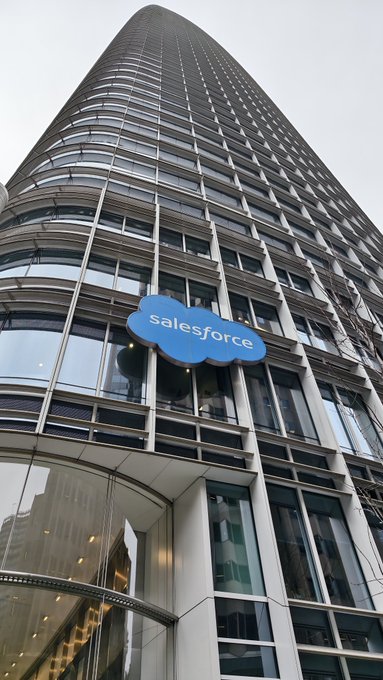
Visiting Salesforce, as the SaaS leader, its transformation in the AI era is actually laying off a large number of engineers and then hiring sales staff.
Salesforce currently has over 70,000 employees, with sales personnel already exceeding 80%!
Sell first, then build—how



From Twitter
Disclaimer: The content above is only the author's opinion which does not represent any position of Followin, and is not intended as, and shall not be understood or construed as, investment advice from Followin.
Like
Add to Favorites
Comments
Share
Relevant content