The potential of Hooks extends far beyond the current meme token experiment.
Written by: Mahe, Foresight News
UNI has recently surged from $3.30 to $4.17, which may be attributed to renewed market attention on Uniswap following the on-chain boom.
Sato's market capitalization surged past $40 million in just a few days; uPEG, using the name "Unipeg" abandoned by Hayden Adams eight years ago, skyrocketed from zero to over $30 million in two weeks; Slonks, by incorporating AI-generated models into smart contracts, traded hundreds of ETH in six days, with its daily trading volume once surpassing CryptoPunks. Their common label isn't memes or NFTs, but rather Uniswap V4 hooks.
While the market is still using "new narratives" to explain this wave of enthusiasm, a more fundamental fact has been overlooked: Hook is not a marketing gimmick for a particular project, but rather a reconstruction of the entire DeFi protocol architecture since the launch of the self-sustaining network.
From Switchboards to the Programmable Market
Before V4, Uniswap was essentially an automated exchange counter. You exchanged ETH for USDC, the price followed the x*y=k rule, the transaction was complete, and that was it. V3 introduced centralized liquidity, allowing LPs to customize price ranges, but the core logic of the protocol remained rigid.
V4's Hook mechanism completely breaks this rigidity. It allows developers to insert custom code throughout the lifecycle of a liquidity pool—before, after, when adding liquidity, and when removing liquidity. This means that the same Uniswap underlying layer can run traditional AMM pools, as well as issuance protocols with Bonding Curve, dynamic fee models, on-chain limit orders, and even built-in MEV protection modules.
More importantly, there are changes at the architectural level. V4 adopts a Singleton design, where all pools are no longer independent smart contracts, but coexist in a unified contract, which directly leads to a significant reduction in gas costs.
According to on-chain data, V4's gas optimization has significantly lowered the barrier to entry for complex Hook interactions, which is the technical prerequisite for the surge in Hook projects this year.
What exactly are the Satos doing?
To understand the Hook craze, you must first understand which V4 capabilities these projects are actually calling.
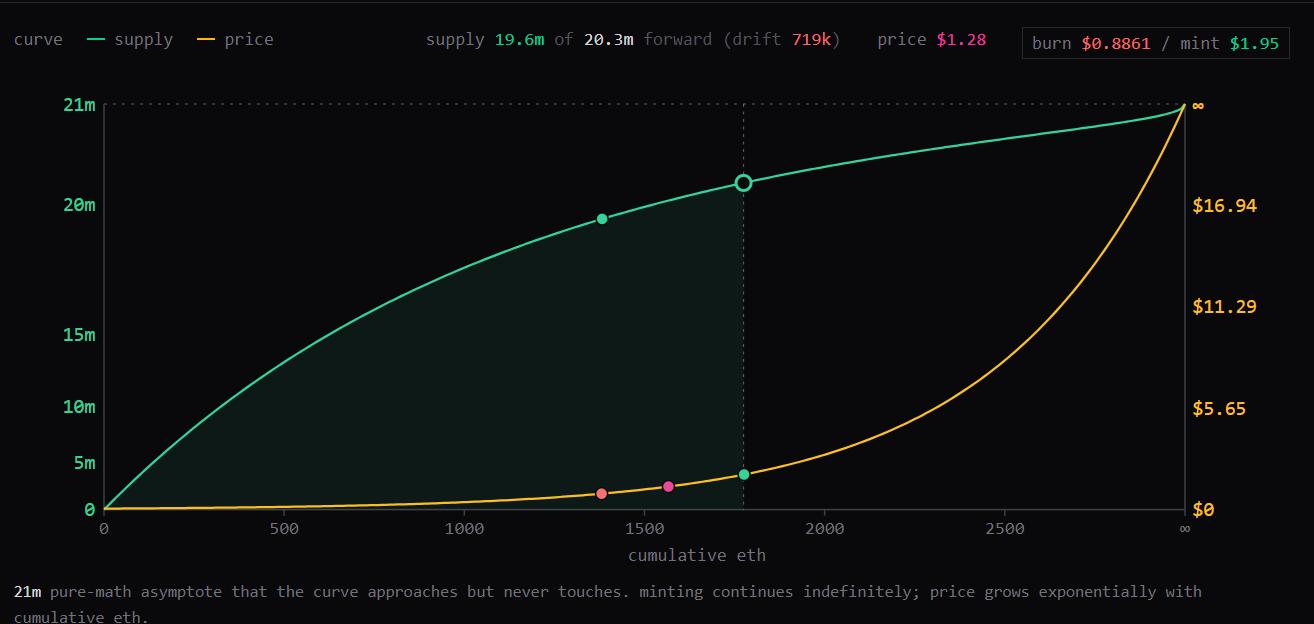
Sato's design is a prime example of Hook-based native token economics. It has no pre-mining, no team allocation, and no administrator privileges; the entire system operates automatically through a single Hook contract. Users deposit ETH into the contract, and the Hook automatically mints Sato according to an exponentially increasing Bonding Curve. When a token is sold, the contract automatically burns the token and returns the ETH. When the total supply reaches 99% of the theoretical limit of 21 million (i.e., 20.79 million), minting permanently ceases, and the Curve transforms into an on-chain automatic buyback pool. The 0.3% transaction fee collected from all transactions is permanently locked in the Hook contract and cannot be withdrawn by anyone.
This design was virtually impossible in the V3 era. Developers would have needed to fork the Uniswap code, deploy separate AMM contracts, and handle complex permission management. In V4, however, a single Hook contract can embed token issuance, pricing, buybacks, and burning entirely within Uniswap's liquidity infrastructure.
uPEG's approach demonstrates the explosive power of hooks on a narrative level. Its name, "Unipeg," originates from a 2019 blog post by Hayden Adams: he initially wanted to name the protocol a combination of Unicorn and PeGasus, but abandoned the idea after Vitalik Buterin quipped that it "sounded more like Uniswap." Eight years later, anonymous developer @unipegv4 revived the name, redefining it as "Uni + JPEG." This narrative simultaneously connects founder anecdotes, Vitalik Buterin's comments, NFT slang, and V4's new mechanisms, naturally possessing viral potential.
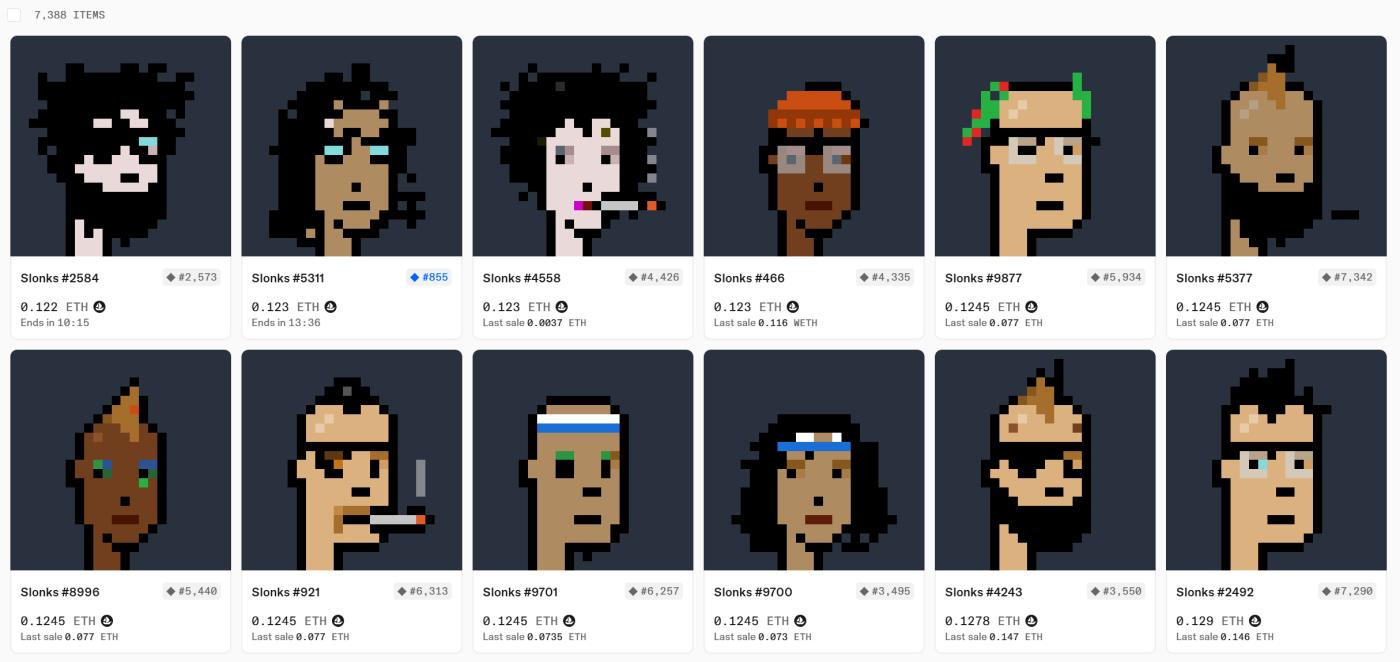
Slonks went even further, combining AI-generated CryptoPunk images with a hook mechanism. With a minting price below 0.004 ETH, the price surged from its floor to 0.123 ETH within six days, a 60-fold increase. As of May 11th, OpenSea data showed a trading volume exceeding 1200 ETH.
Why now?
The Hook mechanism was launched with the V4 mainnet as early as January 2025, but it didn't gain market attention until May 2026. These 15 months were precisely the quiet construction period of the V4 ecosystem.
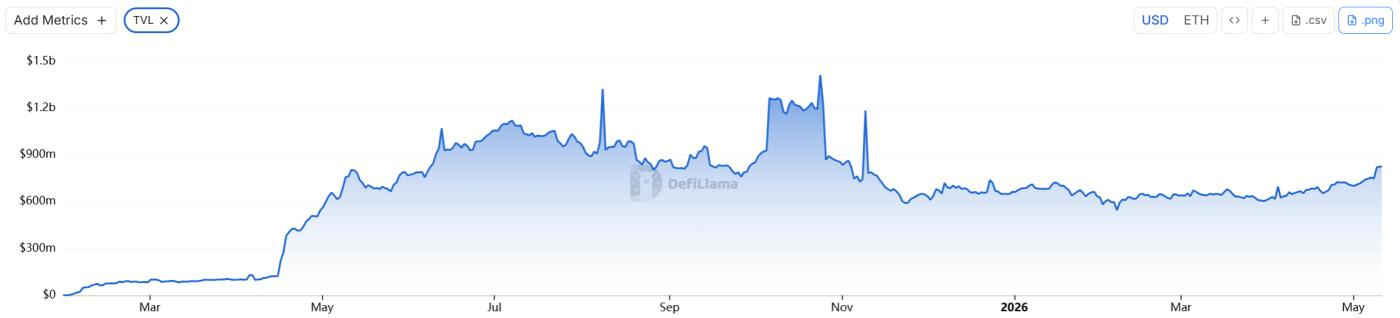
According to DefiLlama data, V4's total value added (TVL) peaked at over $1.4 billion after its launch, but subsequently fell back to $650 million, and has now rebounded to $800 million. This indicates that V4 was initially viewed more as a "technical upgrade" than a "liquidity migration."
The real turning point came recently: when Sato used Hook to achieve fair launch of pure on-chain Bonding Curve, the market suddenly realized that V4 is not just a better AMM, but a platform that can incubate entirely new asset classes.
This shift in perception led to rapid rotation of funds. Recently, Sato briefly absorbed uPEG liquidity, causing its market capitalization to briefly exceed $30 million; on the same day, Sat1 surged to a market capitalization of $10 million thanks to its enhancement mechanism. This level of on-chain activity is extremely rare in the bear market environment of early 2026.
Sober Reflections Amidst the Revelry
As infrastructure, Hook's potential extends far beyond the current meme token experiment.
The Uniswap Foundation's weekly developer logs show that developers are exploring complex financial instruments based on Hooks, such as dynamic fees, time-weighted market making, custom oracles, and continuous liquidation auctions.
As of early 2026, the V4 ecosystem had spawned over 2,000 dedicated pools. These pools transformed Uniswap from an exchange into a modular financial infrastructure—any scenario requiring liquidity, pricing, and automation can be built on hooks without the need for forked protocols or custom AMMs.
However, risks also exist. The modularity of Hooks means that each external contract introduces a new attack surface. The V4 code underwent nine independent audits and a large-scale security competition before its release, but the Hook contracts themselves are written by third-party developers, and their security levels vary.
For ordinary investors, the barrier to entry for participating in Hook projects is not only understanding Bonding Curve, but also verifying the Hook contract's permission settings, fund custody logic, and exit mechanism.