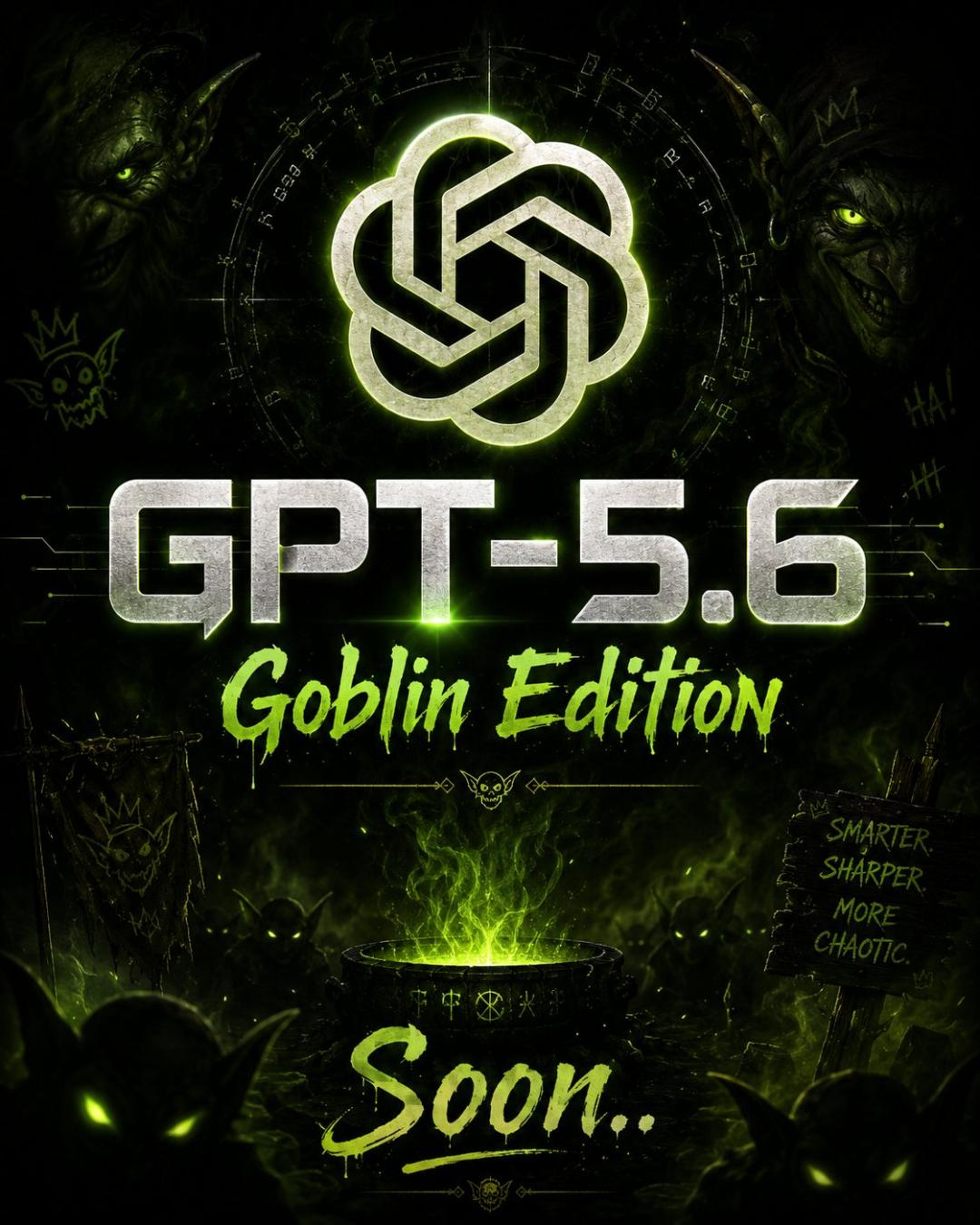
GPT-5.6 has been leaked just three weeks after the release of GPT-5.5!
Today, well-known leaker Leo released a bombshell announcement: the development cycle of GPT-5.6 has entered a full-speed phase.
The first batch of checkpoints has begun internal testing in the past few days and is expected to officially open next month.
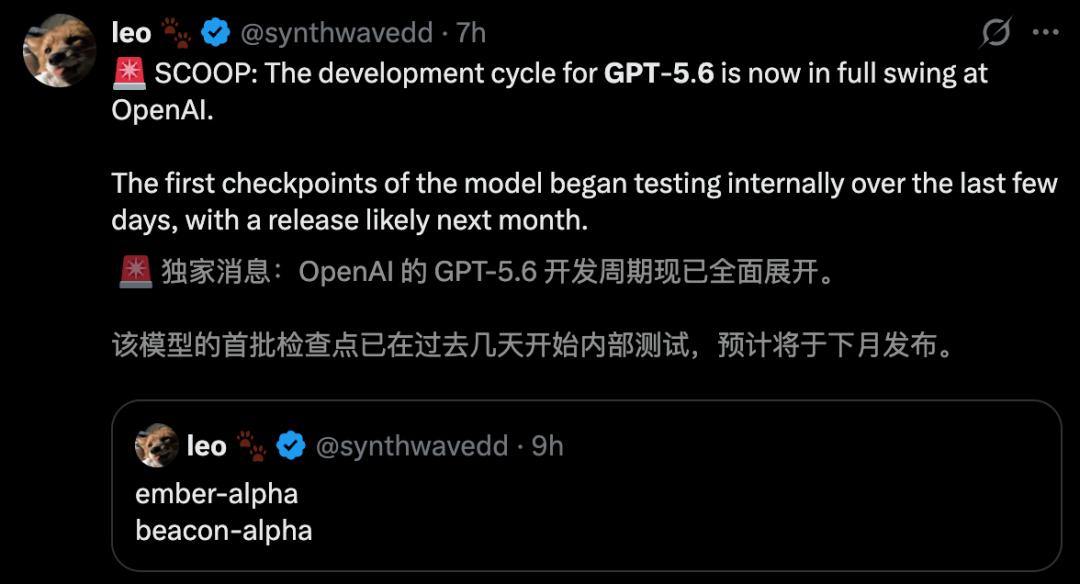
Even more shockingly, the internal code was also exposed—
ember-alpha
beacon-alpha
Some experts even discovered clues about rollout mapping in OpenAI's internal Codex logs.
Most model calls are still routed to GPT-5.5, but one record clearly points to GPT-5.6.

Clearly, the Codex environment may already be running tests using GPT-5.6!
Netizens commented that OpenAI's iteration speed is too fast, they simply can't keep up...


OpenAI accelerates its updates rapidly; Codex to surge by 3 times.
Even before GPT-5.6 arrives, OpenAI's product offerings have already been disrupted.
Chetaslua also revealed that OpenAI will launch "ultrafast mode" this Thursday, which will increase speed by 2-3 times.
The description states that it is designed to provide the fastest available response for latency-sensitive tasks.
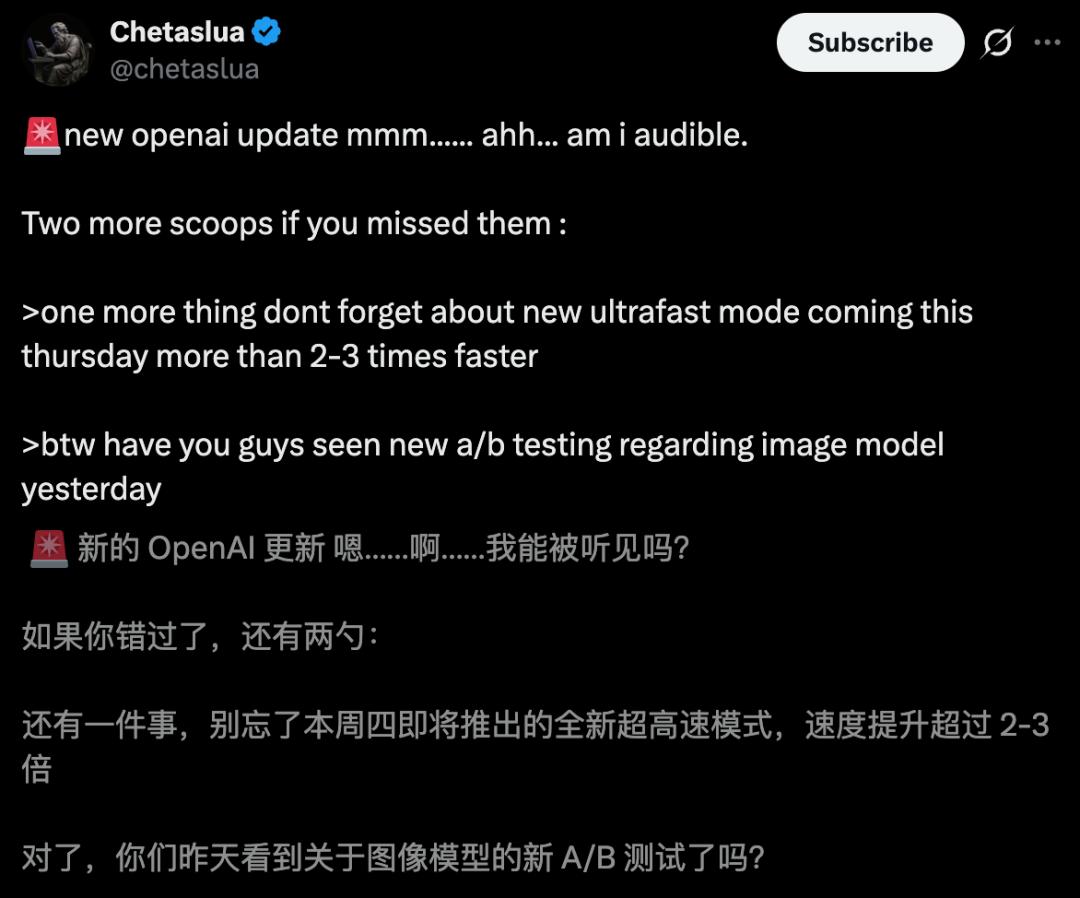
Simultaneously, A/B testing updates for the image model are also being implemented.
It's the one that leads the Image Arena rankings by a significant margin with +242 points, namely gpt-image-2.

It's worth noting that OpenAI has long been making strides in speed optimization.
When GPT-5.4 was released in March of this year, Codex's /fast mode had already achieved a 1.5x speedup.
Later, GPT-5.3-Codex-Spark further boosted its inference speed to over 1000 tokens/second with the help of Cerebras chips, which is 15 times faster than the normal mode.
This ultrafast mode directly achieves a 2-3 times speedup on the main model.
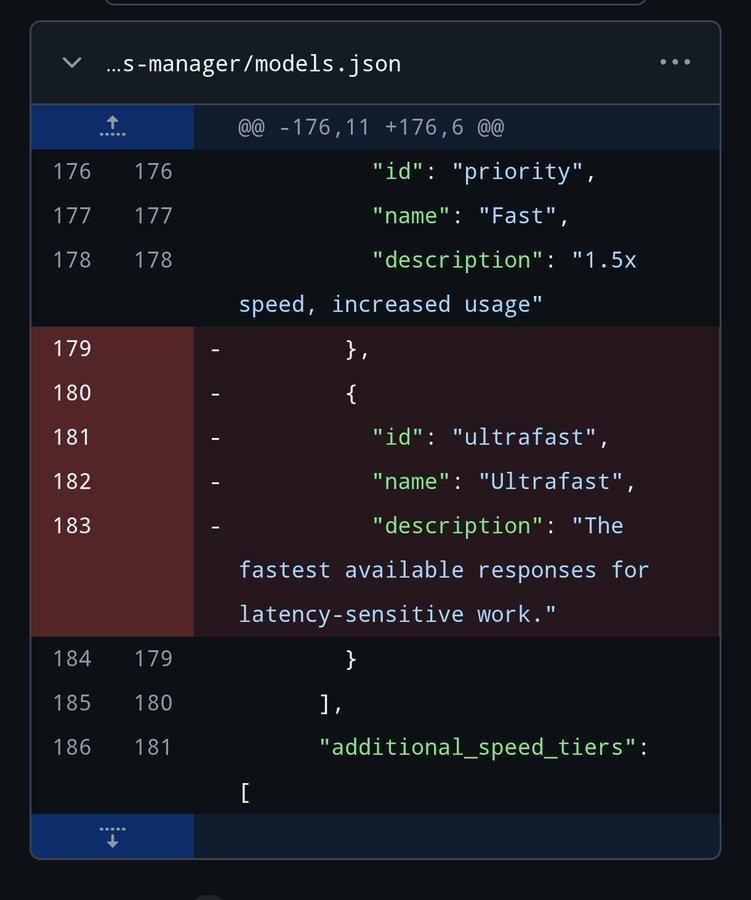
It's not a stripped-down version, nor a replacement for a smaller model; it's a genuine flagship model acceleration.
For developers, the experience will take off dramatically in scenarios that previously required waiting, such as agent loops, long task pipelines, and browser automation.
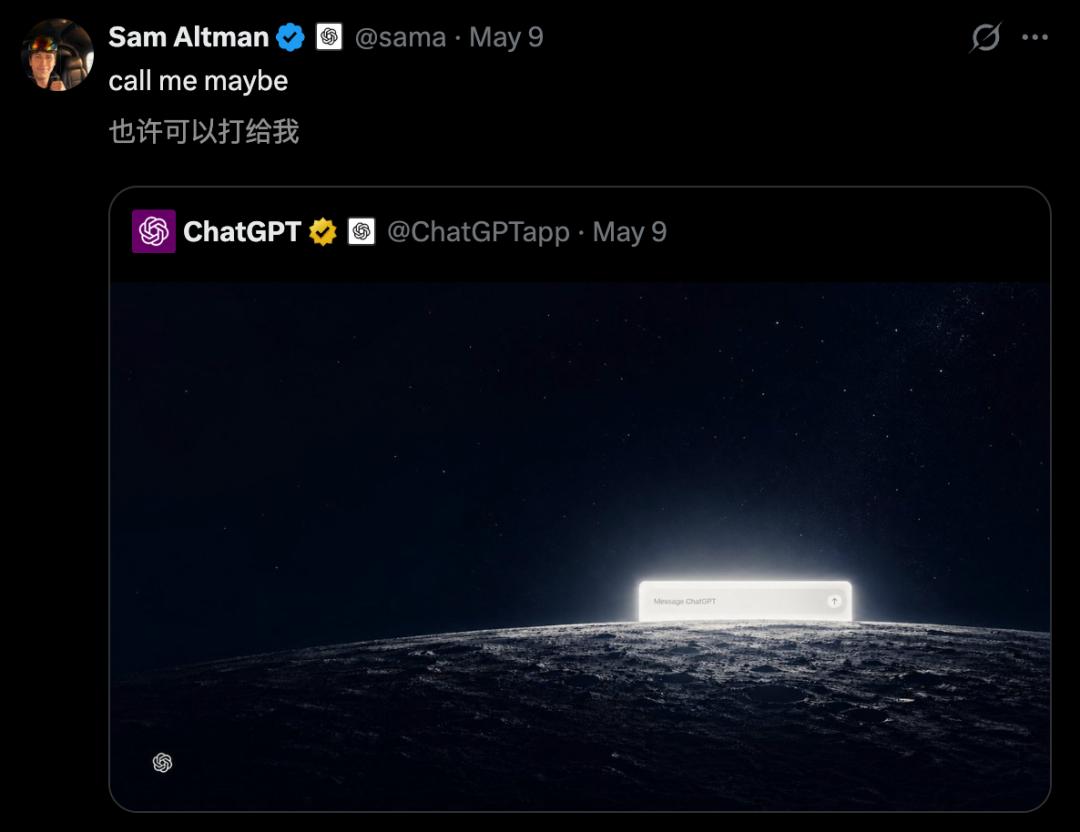
Don't forget that last week, the ChatGPT account posted a highly sci-fi-inspired image, which also hinted at a major announcement.
It has changed its long-standing name "Ask ChatGPT" to "Message ChatGPT".
Ultraman's line, "Call me maybe," has sparked endless imagination about ChatGPT integrating voice calling and even launching hardware products.
All-out war begins! Codex vs Claude Code
It can be said that the most dramatic scene in Silicon Valley has unfolded!
Anthropic released Opus 4.7 Fast mode before OpenAI launched its "ultrafast mode".
It offers faster advanced inference, better long-context coding, and a smoother ambient coding experience than Codex.
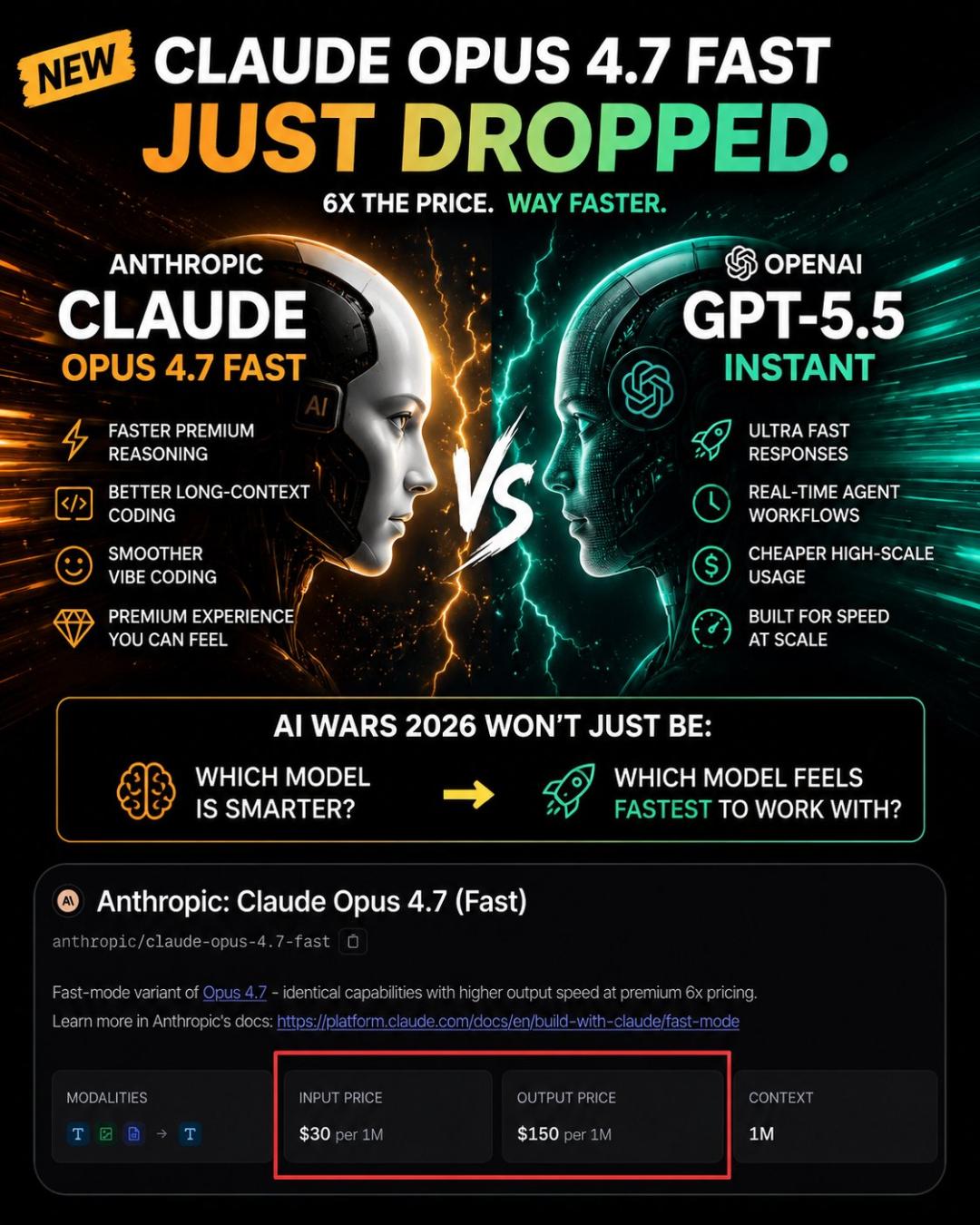
The truly intense moment came today when Codex and Claude Code went to war!
Anthropic took the lead early on, increasing the monthly coding credit for paid subscribers by 50% starting June 15.
It will fully cover the Claude Agent SDK, the command-line tool claude -p, and Claude Code, which is deeply integrated with GitHub workflows.

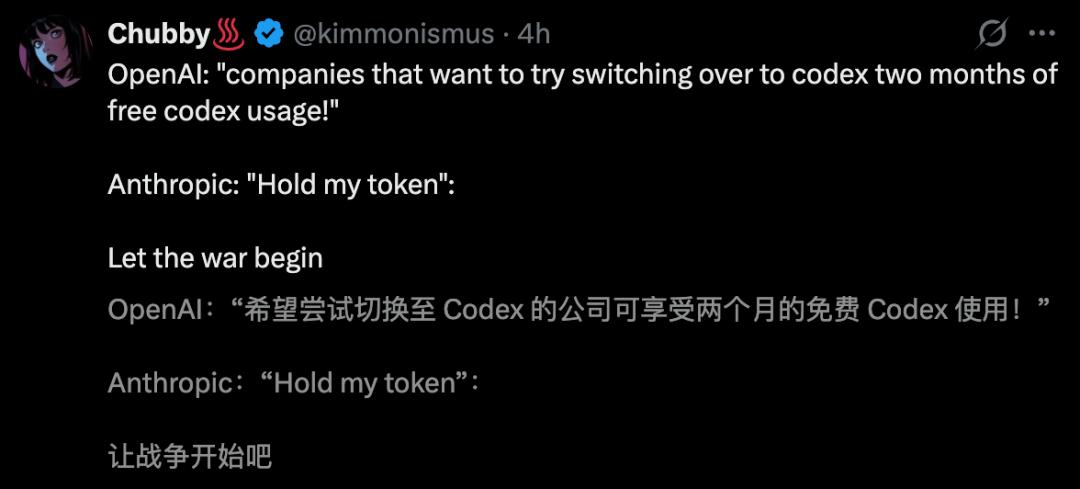
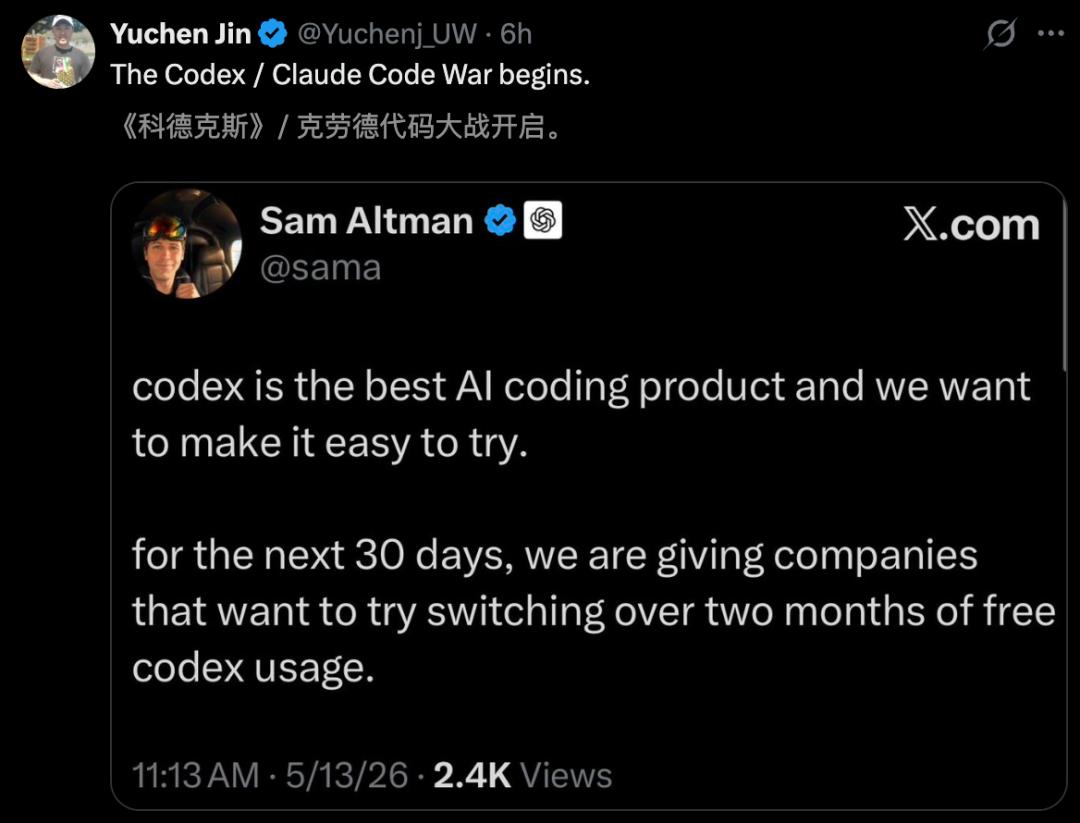
OpenAI reacted very quickly, launching a move that can be described as a "heavyweight subsidy"—
For the next 30 days, any company that wants to switch from another platform to Codex will receive two months of free access.
Ultraman even personally promoted the product, stating that "Codex is currently the strongest AI programming product on the market."
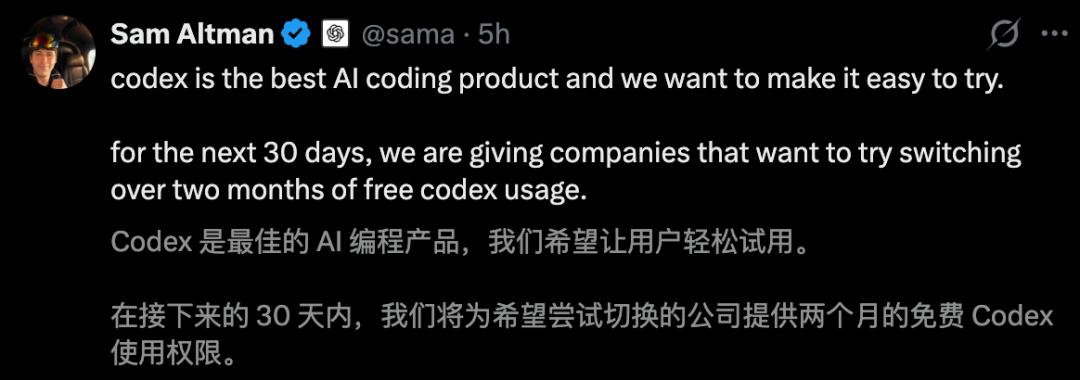
Two months free, which, based on the Pro plan's standard of $200/month, is equivalent to receiving $400 worth of usage rights for free.
This face-to-face confrontation stunned the entire Silicon Valley.
OpenAI's intention is very clear: while Claude Code users are still hesitant, they will directly spend money to create a migration channel.
Within hours, OpenAI announced its latest achievement: 2,000 developers contacted us within 3 hours.
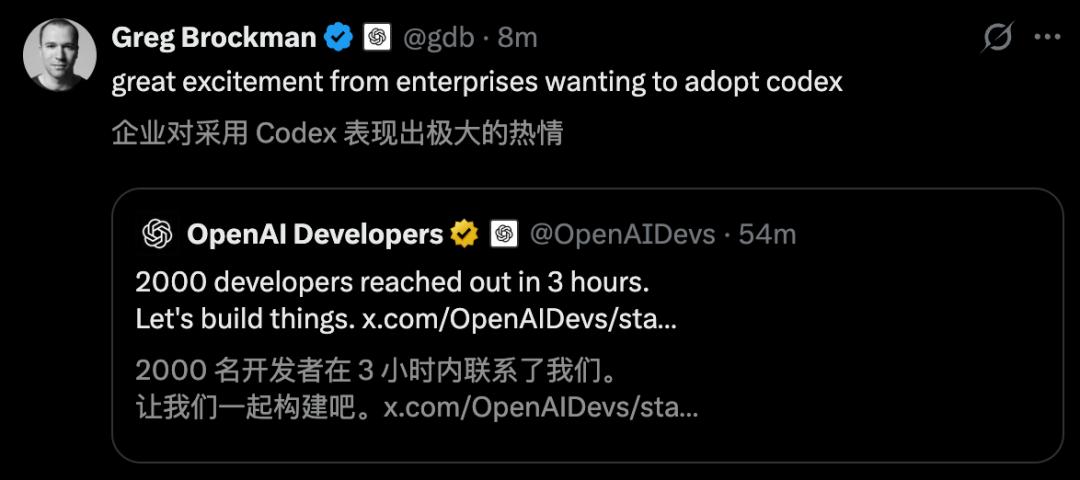
Netizens commented that the big battle has begun.
Developers have emerged as the biggest winners in this AI battle.
When the iteration speed approaches ASI
Now, let's broaden our perspective to the highest dimension.
GPT-5.6 and the programming wars appear to be two separate events.
But when viewed together, a trend far more profound than any single event emerges—
The self-acceleration and commercialization of AI are creating a positive feedback flywheel.
On one hand, the model is evolving at an accelerated pace. GPT-5.3-Codex was OpenAI's first model to "participate in its own training." By GPT-5.5, 85% of OpenAI's employees were using Codex weekly.
The development of GPT-5.6 was almost certainly carried out with deep involvement from GPT-5.5. AI is helping OpenAI create even stronger AI.
On the other hand, the widespread adoption of programming tools is unleashing unprecedented engineering productivity.
Codex boasts 3 million weekly active users, and Claude Code is also experiencing explosive user growth.
As millions of developers use AI programming tools as daily productivity tools, the code generated by AI feeds back into the training and deployment of AI, and this cycle will only accelerate.
Altman once stated that OpenAI's goal is no longer limited to AGI, but is directly aimed at ASI.
When the speed of model iteration is driven by AI itself, when AI programming tools become the infrastructure for AI development, and when two trillion-dollar companies use a "subsidy war" to accelerate the popularization of all this.
The flywheel leading to ASI has already begun to spin.
References:
https://x.com/kimmonismus/status/2054595447834997086
https://x.com/kimmonismus/status/2054583558904103226
This article is from the WeChat official account "New Zhiyuan" , author: New Zhiyuan, editor: Peach, and published with authorization from 36Kr.