 |
Mr. To Tran Hoa, Deputy Head of the Standing Committee of the Cryptocurrency Trading Market Management Board (UBCKNN), Chia this at the event. Photo: BTC . |
At the Digital Trust in Finance 2026 Forum, themed "Building Digital Financial Trust in the AI Era," held on May 12th, representatives from regulatory bodies and international experts shared a common view: Vietnam possesses a great opportunity to become one of the world's leading cryptocurrency markets. However, to realize this potential, the key is to build a transparent legal framework, effective oversight mechanisms, and a sufficiently strong foundation of trust.
Vietnam is emerging as a bright spot in the cryptocurrency market.
According to Mr. To Tran Hoa, Deputy Head of the Standing Committee of the Cryptocurrency Trading Market Management Board (UBCKNN) , the scale and growth rate of the cryptocurrency market in Vietnam are at a very noteworthy level.
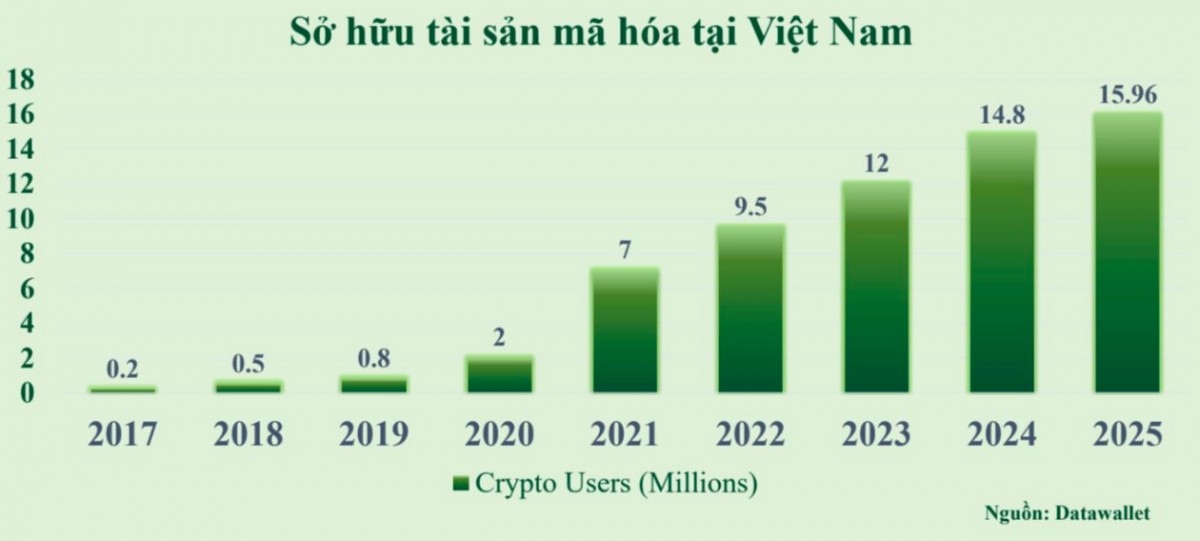
Citing data from Chainalysis, Mr. Hoa stated that the number of cryptocurrency users in Vietnam has increased sharply since 2017 and is projected to reach nearly 16 million accounts by 2025. Vietnam is currently among the global leaders in cryptocurrency adoption, not only in the region but also worldwide. The total value of cryptocurrency transactions in Vietnam is estimated to reach approximately $220 billion in 2025.
 |
From an international business perspective, Chris Chiew, Senior Advisor at CAEX , assesses that Vietnam is currently among the top 5 globally in terms of cryptocurrency adoption, thereby opening up opportunities to become a strategic destination for digital assets.
According to him, one of the biggest opportunities is the Tokenize of real world assets (RWA), including stocks, bonds, commodities, and real estate. The size of this sector in Vietnam could reach $70-80 billion by 2030, creating more liquidation for the economy and improving the efficiency of traditional asset utilization.
Digital assets will not replace traditional finance, but will coexist with it.
According to Chris Chiew, digital assets are not an opposing model to traditional finance (TradFi), but are more likely to coexist within a new financial structure.
The crucial issue is not the Tokenize technology itself, but whether businesses, investors, and financial institutions are confident enough to bring shares, real estate, or other traditional assets into the digital environment.
This requires coordination among exchanges, the financial sector, regulators, and the government to build a safe, secure, compliant operating environment that adequately protects investors – similar to how trust in traditional financial products has been built over decades.
However, according to experts, the major obstacles currently remain the lack of legal clarity, compliance risks, awareness gaps, and the slow pace of adoption from businesses and ordinary investors.
 |
Chris Chiew, Senior Advisor at CAEX, at the event. Photo: BTC |
The legal framework is gradually taking shape.
Given the rapid pace of market development, the Vietnamese government and regulatory agencies are gradually shifting from observation to building a legal framework.
According to Mr. To Tran Hoa, many important resolutions such as Resolutions No. 20, 52, 57, 68 and especially Resolution No. 05 are creating a guiding framework for the cryptocurrency market.
In particular, Resolution No. 05 on the pilot implementation of the cryptocurrency market in Vietnam is XEM a "guiding principle" for the market development phase, with a clear distinction between the primary and secondary markets, and for the first time officially formalizing the concept of ICO (Initial Coin Offering) based on registration similar to IPO.
Simultaneously, the Law on Digital Technology Industry has initially provided a clear definition of digital assets, virtual assets, and crypto assets; the amended Investment Law establishes these as conditional business sectors.
The Ministry of Finance has also issued circulars on accounting and taxation to create a more transparent operating environment for cryptocurrency service providers (VASPs).
According to the leaders of the State Securities Commission of Vietnam, in order to build trust in the market, organizations providing crypto asset services will have to strictly adhere to the principles of information disclosure, customer identity verification (KYC), anti-money laundering, segregation of investor assets from business assets, and prioritizing investor interests.
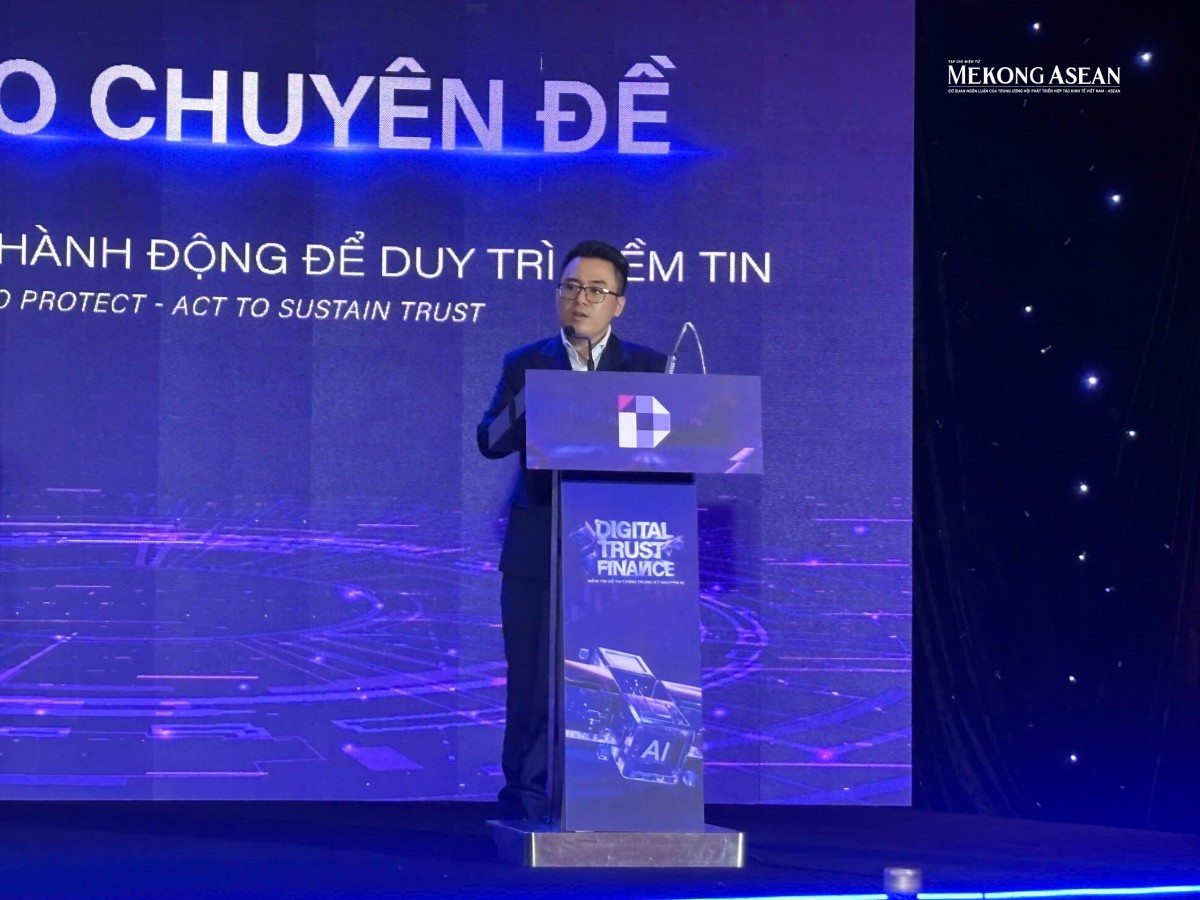 |
| Mr. To Tran Hoa, Deputy Head of the Standing Committee of the Cryptocurrency Trading Market Management Board (SSC), at the event. Photo: Thu Trang/Mekong ASEAN |
In terms of professional rights and obligations, organizations will have a very important right: the right to choose which crypto assets to list and trade according to international practices. However, caution is needed, prioritizing highly liquidation and popular assets to limit market risks.
In addition, exchanges are also entitled to charge service fees related to the trading of crypto assets. For issuance activities, issuers must also disclose information similar to crypto asset service providers. Any changes must be disclosed in the prospectus when conducting an offering or issuance.
To best protect the interests of participants, VASP organizations must prioritize executing investor orders over their own orders, and investor assets will be protected in accordance with the provisions of the Civil Code.
To realize the goal of building digital trust, the regulatory body will establish close coordination regulations between the Ministry of Public Security, the Ministry of Finance, and the State Bank of Vietnam, in conjunction with inter-agency inspection teams to comprehensively monitor all activities in the cryptocurrency market.
Q3 2026: Vietnam could launch its first official cryptocurrency market.
From the regulatory perspective, Deputy Minister of Finance Nguyen Duc Chi stated that Vietnam expects to have its first official cryptocurrency market operations in the third quarter of 2026 under state management.
According to him, the Ministry of Finance has submitted to the Government Resolution No. 05 as the first legal framework for this field, with the orientation of developing the market based on the principles of prudence, transparency, control, and protection of the legitimate rights of participants.
Currently, the Ministry of Finance, in coordination with the Ministry of Public Security and the State Bank of Vietnam, has approved five units to prepare for implementation. If the schedule is followed correctly, the third quarter of this year could mark the first official launch of Vietnam's cryptocurrency market under the direct supervision of regulatory authorities.