Elon Musk's SpaceX filed for an IPO on Wednesday. The filing revealed a massive $1 trillion bonus package linked to colonizing Mars, a surprising $45 billion computing deal with rival Anthropic, and the simultaneous inclusion of X and xAI in the company going public.
Here are 10 surprising things you might have missed from SpaceX's IPO filing.
SPCX is listed on two stock exchanges simultaneously.
The company's stock will be traded under the ticker symbol "SPCX" on the Nasdaq and Nasdaq Texas.
SpaceX reported revenue of $18.67 billion in 2025, but an operating loss of $2.59 billion. Total debt currently stands at $29.1 billion.
This isn't just a SpaceX IPO, but a SpaceX + X (Twitter) + xAI + Grok IPO.
More importantly, investors buying SPCX will not just own a pure rocket company. SpaceX merged with xAI in February 2026, and xAI also acquired X (formerly Twitter) in March 2025.
This merged company now operates in the fields of rockets, Starlink satellites, Grok chatbots, and the X social networking platform.
A $1 trillion bet on people living on Mars.
Musk's reward policy immediately attracted attention.
The board of directors awarded Musk 1 billion restricted shares in January, to be received only if SpaceX reached a Capital capitalization of $7.5 trillion and built “a permanent settlement on Mars with at least one million inhabitants.”
A second bonus offering of 302 million shares would be given if the company built space-based data centers with a total capacity of 100 terawatts. The company's own auditors assessed both of these goals as "unrealistic."
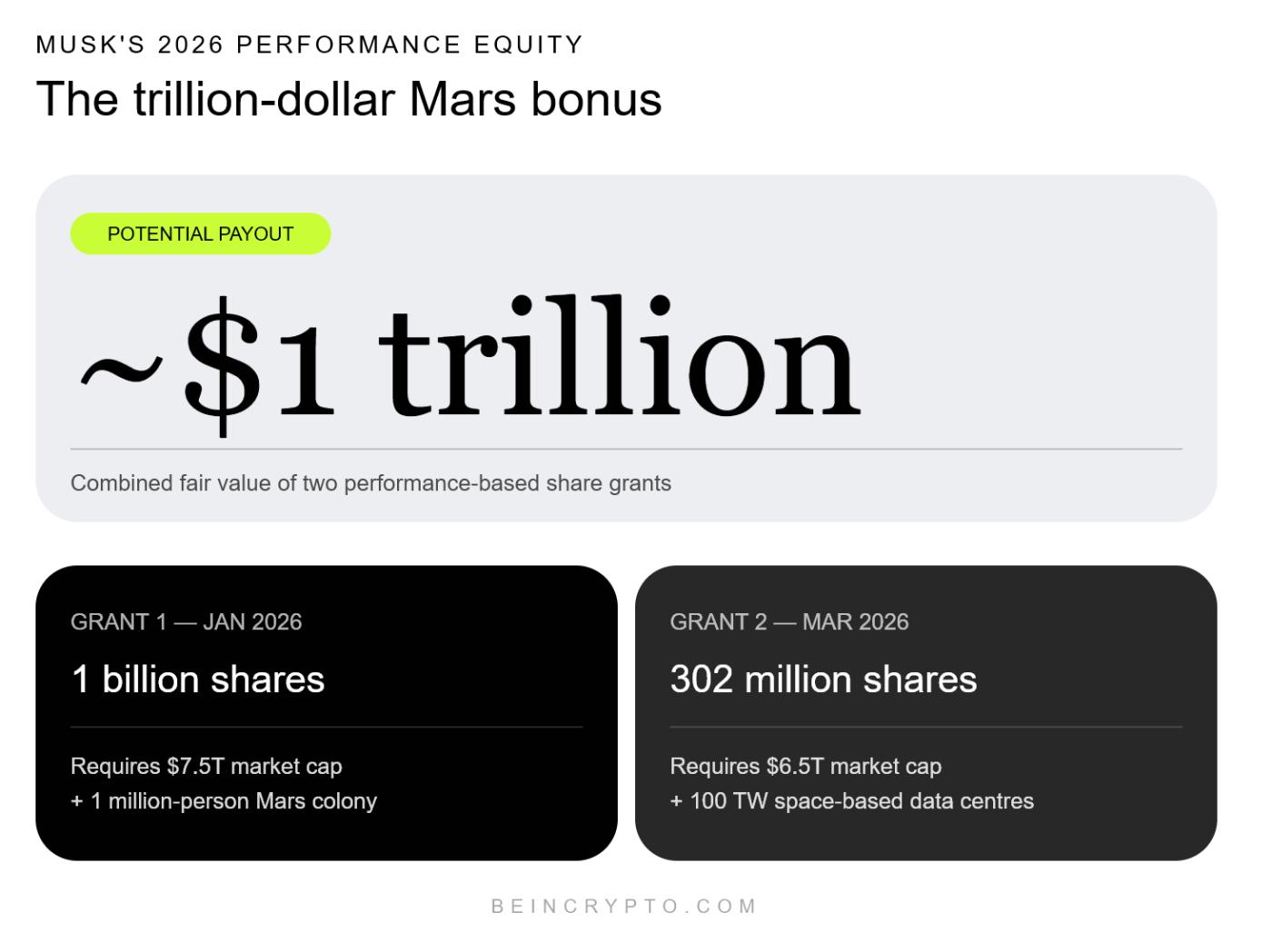 A massive bonus for Musk if SpaceX successfully builds a colony on Mars.
Minimum salary for the world's richest CEO.
According to records, Musk's base salary is just $54,080, exactly the minimum wage for managers in California, and has remained unchanged since 2019.
Grok's biggest competitor is the one paying the bill.
Anthropic, Grok's direct competitor, signed a contract in May, agreeing to pay SpaceX $1.25 billion per month until 2029 to use the COLOSSUS supercomputer in Memphis.
The total value of the contract amounts to approximately $45 billion.
There is no insurance for the satellite or the CEO.
The IPO filing also revealed several risks. SpaceX currently has no insurance for its 9,600 satellites in orbit, nor does it have life insurance for Musk.
The document also states that several governments have openly discussed attacking the Starlink network with anti-satellite weapons.
Three-quarters of all satellites in space belong to Elon Musk.
Currently, Starlink accounts for approximately 75% of all active satellites that can be launched into orbit, serving 10.3 million customers in 164 countries.
This satellite fleet will have to perform more than 1,000 collision avoidance maneuvers per day in 2025.
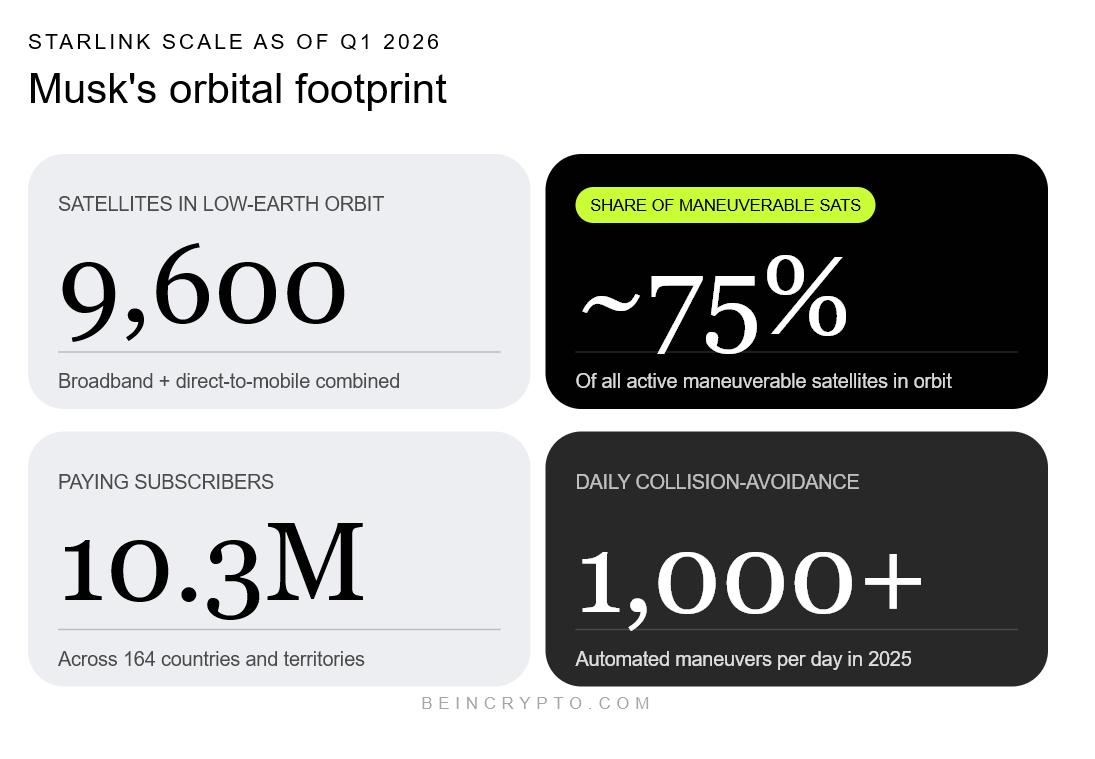 Starlink in the numbers
Asteroid mining, lunar electromagnetic cannons, and star-sized targets.
Looking further ahead, SpaceX plans to build in-orbit data centers starting in 2028, mine asteroids, and construct a lunar mass driver – an electromagnetic launch system – on the Moon.
The IPO filing states that SpaceX's long-term goal is to reach "Kardashev Type II" – a level at which a civilization can harness the full energy of its host star.
Musk still retains control.
After the IPO, Musk will still own 85.1% of the voting rights. At Tesla, the title that the SEC publicly assigned to him remains "Technoking".
What about clean energy?
SpaceX's data centers are still using gas turbines and natural gas, a concerning aspect that contradicts the brand's strong image of clean energy.