The US IPO market is reopening.
This time, the market is not seeing a typical wave of tech company IPOs, but rather a batch of giant companies that could reshape the global primary market: SpaceX, OpenAI, Anthropic, Databricks, as well as a number of crypto-native and fintech companies.
For traditional markets, this means the IPO window has reopened; for the crypto, it could be another form of liquidity competition.
Because today's crypto market is no longer the completely self-sustaining market of 2020. Stablecoins, ETFs, listed mining companies, Coinbase, Circle, Kraken, Robinhood, and MicroStrategy have connected the on-chain market with the US stock market. Global venture capital is seeking returns in the same US dollar pool: it can buy BTC ETFs, or AI stocks; it can buy high FDV new coins, or "super narrative assets" like SpaceX and OpenAI.
Therefore, a core issue of this year's US IPO boom is: when more mainstream, compliant, and easily allocated high-volatility assets are listed in large numbers, will the long-term risk appetite that the crypto relies on most be compressed?
US IPO window reopens
The US IPO market was not particularly hot in the first quarter of 2026. Renaissance Capital's first-quarter review stated that there were 35 IPOs in the US stock market in Q1, raising approximately $9.9 billion, and the market recovery was delayed by volatility.
However, the atmosphere warmed up significantly after entering the second quarter. By mid-May, the pace of IPO filings and issuances on the US stock market was accelerating. Kiplinger cited data from Renaissance Capital, stating that as of May 13, 93 IPOs had been filed this year, with 57 completed, raising a total of approximately $20.7 billion, representing a year-on-year increase of 86%.
That's not the main point.
What truly repriced the IPO frenzy in the market was SpaceX's public release of its IPO documents, followed by AI giants like OpenAI and Anthropic. Reuters reported that SpaceX aimed to raise approximately $75 billion, valuing the company at nearly $2 trillion. If it ultimately goes public, it will not only surpass historic IPOs like Saudi Aramco, Alibaba, and SoftBank, but could also become the largest single IPO in the history of the global capital markets.
If I had to describe the characteristics of this year's IPO boom in the US stock market in one word, I would call it "the orca dancing."
"Orca Dance"
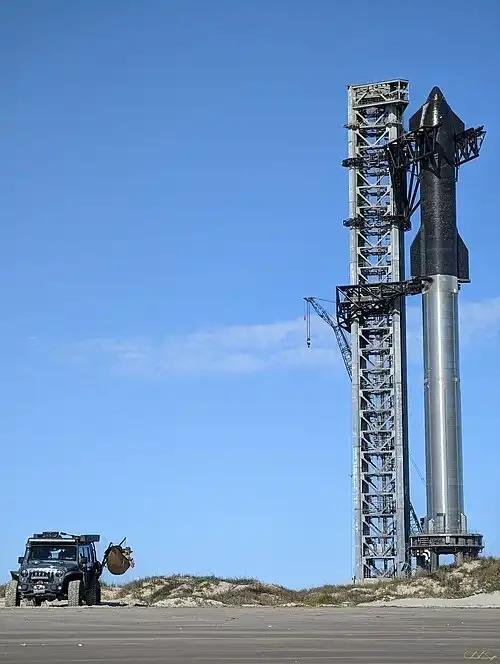
SpaceX's Starship
The most crucial element is SpaceX.
According to Reuters and multiple media reports, SpaceX has entered the final stage of its IPO, targeting a valuation of approximately $1.75 trillion to $2 trillion, with a potential fundraising scale of $50 billion to $75 billion. This figure is extremely staggering in any market: Saudi Aramco raised approximately $29.4 billion in its 2019 IPO, and Alibaba raised approximately $25 billion in its 2014 US IPO; SpaceX's target could be two to three times that amount.
SpaceX is unique in that it's not a single-business company. The market isn't buying "rocket launches," but rather a hybrid of Starlink, satellite internet, deep space transportation, AI data centers, defense contracts, and Elon Musk's personal credit. It's more like a collection of super narratives than a company that can be easily explained by traditional financial models.
The second is OpenAI.
According to reports from the WSJ and Reuters, OpenAI is preparing a confidential IPO filing, with the market anticipating a potential valuation in the trillions of dollars. OpenAI's significance extends beyond ChatGPT; it represents a pricing anchor for the entire AI application layer, model layer, and enterprise software gateway. Once OpenAI goes public, the US stock market will, for the first time, possess a truly meaningful core asset: a "pure AI model platform."
The third is Anthropic.
Anthropic has been frequently mentioned in funding and IPO rumors this year. Market reports indicate that Anthropic is discussing a massive funding round, with a valuation potentially reaching hundreds of billions of dollars or even higher, and is considered one of the AI companies most likely to go public later this year. Compared to OpenAI, Anthropic leans more towards the enterprise, compliance, security, and large customer markets. If it goes public, investors will see it as a direct competitor to OpenAI.
The fourth category consists of established unicorns such as Databricks, Klarna, and Chime.
These companies may not be as large as SpaceX or OpenAI, but they represent another direction: after the valuation compression of 2022-2024, high-quality private technology companies are retesting the public market. Databricks is a representative of AI data infrastructure, while Klarna and Chime are bellwethers for fintech companies returning to the IPO market.
The fifth category is encryption companies.
Circle went public in 2025, proving that the market is willing to price stablecoin businesses. Kraken has also seen multiple IPO-related developments this year, although the pace has been fluctuating due to market conditions, but crypto companies going public is no longer a fringe event. For the crypto, this signifies a change: narratives that originally occurred on-chain are being re-securitized by the US stock market.
The impact of the IPO wave on the crypto
On the surface, US stock IPOs and crypto liquidity are not the same thing.
SpaceX's IPO won't directly require investors to redeem their USDT; OpenAI's subscription won't automatically cause a decline in on-chain TVL. But in a dollar-dominated global risk asset market, they are competing for the same thing: risk budgets.
The most vulnerable part of the crypto is not BTC or ETH, but long-tail assets.
The crypto market isn't entirely short of money right now. DeFiLlama data shows that the total market capitalization of stablecoins is already above $320 billion, near all-time highs. The problem is that this money is increasingly resembling "wait-and-see funds" rather than "long-term buying."
According to CoinDesk Research's April 2026 Exchange Review, spot trading volume on centralized exchanges fell to approximately $1.05 trillion in April, a 14% decrease month-over-month, the lowest level since November 2023. Total spot and derivatives trading volume combined reached approximately $4.61 trillion, marking the fourth consecutive month of decline. However, derivatives accounted for about 77% of total trading volume, and open interest remained high.
This shows that the crypto is not devoid of risk appetite, but rather that risk appetite is becoming "short-sighted".
Funds are willing to engage in BTC, ETH, and ETF arbitrage, perpetual contracts, and short-term volatility, but are unwilling to hold high-FDV new coins long-term, lock up their holdings, or prepay for applications three years from now. In other words, the money is still in the market, but its duration has shortened.
This is precisely the pressure that a mega IPO in the US stock market may bring.
If the market sees assets like SpaceX, OpenAI, and Anthropic go public this year, funds will naturally make comparisons: all of these involve buying long-term stories, and all involve buying high valuations and high volatility, so why not buy AI and space assets that are more mainstream, more compliant, and easier for institutions to allocate?
For the crypto, the impact may not necessarily manifest as an immediate drop in the market capitalization of stablecoins, but rather as three more subtle changes:
First, Altcoin rallies are becoming shorter and less sustained.
Second, the ability to absorb new coins after listing decreases, especially for projects with high FDV and low circulating supply.
Third, market attention has shifted from on-chain narratives to mega-IPOs in the US stock crypto.
This is not a "liquidity crisis" in the traditional sense, but a crisis that is more familiar to the crypto: you have money, but no one is willing to take over your position.
Nasdaq's new rules make IPOs more like a black hole.
Another easily overlooked structural change this year is the "fast-track inclusion" mechanism of Nasdaq-100.
New rules for Nasdaq, effective May 1, 2026, indicate that eligible large newly listed companies, if their market capitalization ranks among the top 40 of the Nasdaq-100 constituents and they meet other conditions, can be included in the index as early as 15 trading days after listing.
This means that mega-IPOs like SpaceX not only attract active capital on the listing day, but can also quickly trigger passive buying. ETFs and index funds tracking the Nasdaq-100 need to adjust their holdings in a very short period of time.
This has two effects on the market.
On the one hand, it increases the attractiveness of mega-IPOs. This is because investors know that as long as a company is large enough, it can quickly be included in the index after listing, followed by passive buying.
On the other hand, it can also amplify short-term funding congestion. Active funds, hedge funds, retail investors, and passive ETFs will all trade the same stock within the same time window. For companies of SpaceX and OpenAI's caliber, this mechanism can transform an IPO from a primary market event into a rebalancing event for the entire tech stock market.
This is why this year's IPO wave is even more important for the crypto: it's not just about a few companies going public, but about the US stock market preparing new liquidity channels for these companies.
Is the IPO boom a sign of the market top?
Looking at the history of the US stock market, there are not typical cases where a single large IPO directly triggers a systemic liquidity crisis.
On the contrary, another pattern emerges: IPO booms often occur near the peak of risk appetite.
Before 1929, the US market experienced an investment trust boom, with a large number of new financial products and IPOs absorbing retail investors' funds, which, along with leverage and margin trading, fueled a bubble. It wasn't a single IPO that triggered the Great Depression, but the IPO frenzy was part of the out-of-control risk appetite at the time.
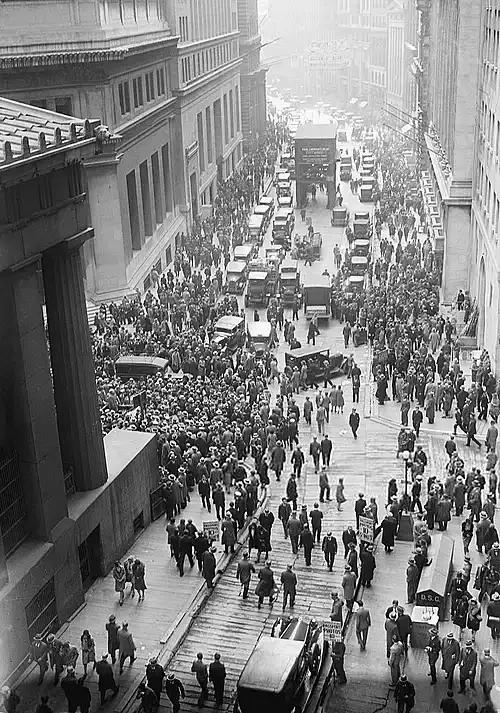
Crowds gathered on Wall Street after the stock market crash of 1929.
The dot-com bubble of 1999-2000 was similar. A large number of unprofitable internet companies, some even lacking mature business models, went public, and first-day price surges became commonplace. Wilmer Hale's IPO report showed that in 1999, there were 537 IPOs in the US, raising approximately $95.3 billion; in the first quarter of 2000, internet-related companies accounted for 60% of all IPOs. Subsequently, the Nasdaq crashed, and the IPO window quickly closed.
2021 provides a more recent example. Renaissance Capital data shows that in 2021, 397 IPOs in the US raised a total of $142.4 billion, one of the largest fundraising years on record; if SPACs are included, the frenzy is even more pronounced. Rivian, Robinhood, Coinbase, and a large number of software and consumer internet companies went public. However, by 2022, rising interest rates, valuation corrections in growth stocks, and a decline in SPACs led to a rapid cooling of the IPO market.
These historical facts illustrate that the IPO boom is like a thermometer.
When the market is willing to give increasingly higher valuations to increasingly distant-term stories, and when assets from the primary market begin to flow intensively into the secondary market, it often indicates that liquidity has entered its most risk-taking phase. Subsequently, once interest rates, earnings expectations, or risk appetite reverse, the IPO boom will turn from a "money-sucking machine" into a "top signal."
When bigger gaming tables open
The biggest change in the crypto in the past two years has been institutionalization.
BTC ETFs have turned Bitcoin into an asset in US stock accounts; Circle's IPO has turned stablecoins into assets in the stock market; Coinbase, Robinhood, mining companies, and MicroStrategy have packaged crypto beta as US stock beta. Now, SpaceX, OpenAI, and Anthropic are bringing the "future technology narrative" back to the US stock market.
This means that the competition in the crypto industry has changed.
In the past, Altcoin only needed to compete for liquidity with other on-chain assets. Today, it has to compete with BTC ETFs, AI stocks, space stocks, stablecoin stocks, trading platform stocks, and Nasdaq-100 passive funds for the same dollar risk budget.
This isn't a problem if the market is in a highly liquid environment. US stocks rise, Bitcoin rises, and altcoins can rise too. However, if liquidity contracts marginally, funds will first choose the deepest, most compliant, and easiest-to-exit assets.
This is why this year's US IPO boom is important to the crypto.
It won't simply create a "liquidity crisis," but it could further alter the internal funding structure of the crypto: BTC and ETH will resemble macro assets more, stablecoins more like cash management tools, trading platforms and stablecoin companies will become US stock assets, and long-tail altcoins will increasingly rely on short-term sentiment and localized narratives.
In the coming months, judging the impact of this wave of IPOs on the crypto should not only focus on whether the total market capitalization of stablecoins has declined, but should also consider several more sensitive indicators:
Whether spot trading volume can recover; whether the proportion of derivatives will continue to remain high; whether BTC dominance will continue to suppress altcoins; whether the first week of new coin listing will see continued weakening; and whether there will be real buying interest in the market when high FDV projects are unlocked, etc.
If these indicators continue to deteriorate, then the impact of large-scale US IPOs on the crypto will not be a one-time drain on liquidity, but rather a further shortening of market liquidity duration.
For the crypto, the real question isn't whether these IPOs will drain all stablecoins, but rather: when US stocks offer a more mainstream narrative of high volatility, can on-chain long-tail assets still retain the money willing to pay for long-term stories?
If the answer is no, then this year's IPO boom may not become a liquidity crisis in the US stock market, but it will become a duration crisis in the crypto market.