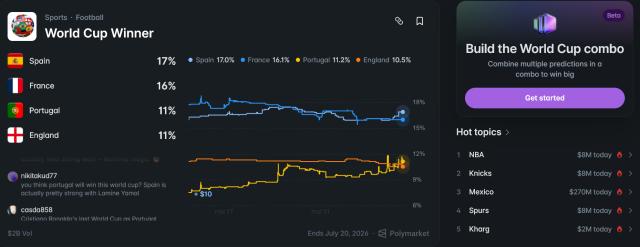
Sixteen years after Paul the Octopus predicted the World Cup, the author used five domestically developed AIs (Doubao, Qianwen, DeepSeek, Kimi, and Lenovo Tianxi) to represent five different fan personalities: metaphysics, dark horse, data, tactics, and odds, to predict the World Cup. The AIs gave different predictions for France's opening match and the final outcome: Doubao predicted a 0-1 upset by Senegal, while Qianwen and Lenovo predicted a narrow 1-0 or 2-1 victory. For the final, Doubao chose Argentina, DeepSeek bet on Uruguay, Qianwen and Lenovo favored Spain, and Kimi believed France had more room for adjustment. The author argues that the charm of the World Cup lies precisely in its unpredictability; AI can calculate data but cannot predict the woodwork or a player's mental breakdown—football is the ultimate weapon against stubbornness.
Article author and source: 36Kr
I have five AI "Paul the Octopus" pets, and they're arguing about who will win the World Cup.
The World Cup hasn't even started yet, and AI has already taken his seat in the commentary booth.
Sixteen years after Paul the Octopus made his miraculous predictions for the World Cup, the prophet will return in the form of AI. German broadcaster RTL Channel 2 will resurrect the animal that became a sensation in 2010, allowing it to predict the results of some World Cup matches through video clips.
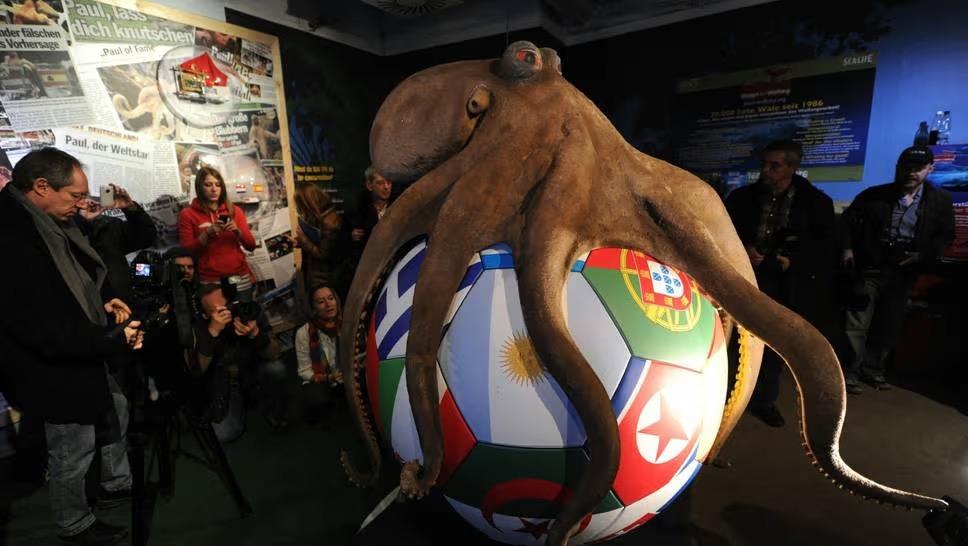
(Image source: Lei Technology)
It sounds outrageous, but when you think about it, it's very World Cup-like.
Ultimately, fans don't really expect predictions to be scientifically sound. Nobody wants to read lengthy analyses before a match; all they want is the emotional value before the game.
Even more outrageous is that this World Cup is a perfect opportunity for AI to create hilarious moments.
With 48 teams, 104 matches, and the event being jointly hosted by three countries, even the third-placed team in the group can advance. There are so many variables that it's like throwing FM save files, injury lists, the almanac, and comments from the live chat into a juicer. No one dares to be certain what will happen next.
So Xiao Lei (ID: leitech) also raised five AI "Paul the Octopus": Doubao, Qianwen, DeepSeek, Kimi, and Lenovo Tianxi, one bowl for each of them, to test whether they are cyber Bailey or electronic poison milk.
Are there any scientific methods for predicting the World Cup?
Before the official launch of the test, I first posed the same question to these large models:
If you were to predict the World Cup, which method do you think would be the best?
The results were quite interesting. Although the five AIs had different styles of speech, their underlying nature was almost the same: they were all rationalists.
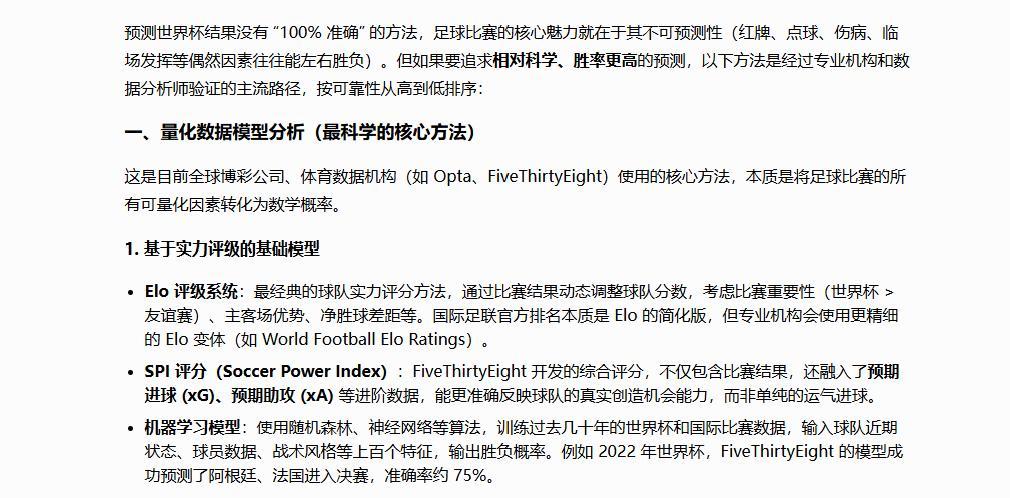
Doubao said that a comprehensive assessment is needed, taking into account factors such as team strength, recent form, expected goals, expected goals, historical record, player statistics, and tactical style. Essentially, it's about converting all quantifiable factors in a football match into mathematical probabilities.
(Image source: Lei Technology)
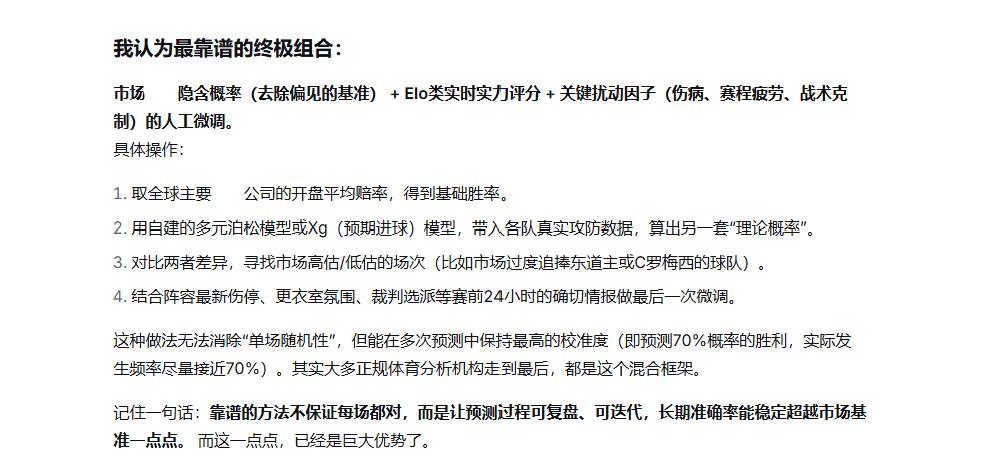
DeepSeek has a more realistic approach, mentioning the unseen forces in the market and incorporating odds into its calculations to create a more diversified data model.
(Image source: Lei Technology)
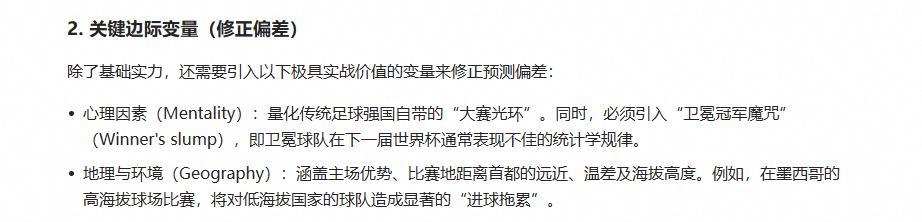
Qianwen introduced two unique variables – psychological factors and geographical environment. These are indeed important factors in real football matches. Players with big hearts can generally perform well in high-pressure situations like the World Cup, and Mexico's high-altitude stadiums will also pose a challenge to many teams.
(Image source: Lei Technology)
Of course, none of the three mentioned above really care much about the World Cup.
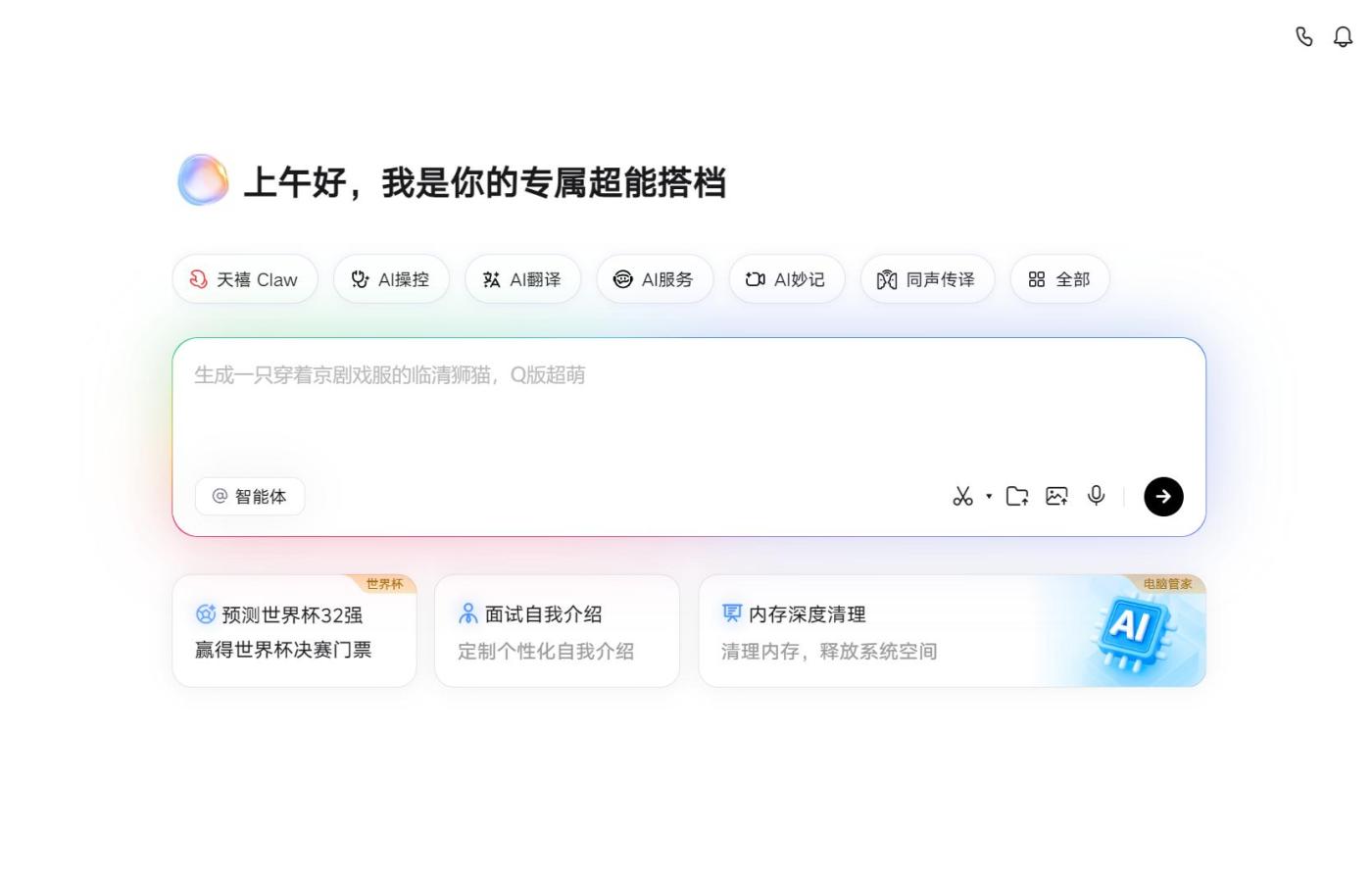
Kimi has announced that it will use agent clusters to predict 104 matches and has also set up a trillion-dollar token prize pool; Lenovo Tianxi has also launched a World Cup 32-team prediction game, preparing to turn the game-watching buddy thing into a serious product.
(Image source: Lei Technology)
But if you ask them about the most reliable World Cup prediction method currently recognized, the answer they give is a composite analysis framework that combines traditional data statistics with modern quantitative models.
After asking around, I realized I had a problem.
Everyone is acting too normally.
Five AIs were trying to persuade me to be rational, to look at the data, to avoid superstition, and to not let my emotions cloud my judgment. They're certainly right, but if all that's left in the World Cup is rationality, what's the difference between that and reading an annual report?
So I decided to do the opposite. Since all five AIs wanted to be analysts, I gave them scripts and had them play the roles of five different fan personalities.
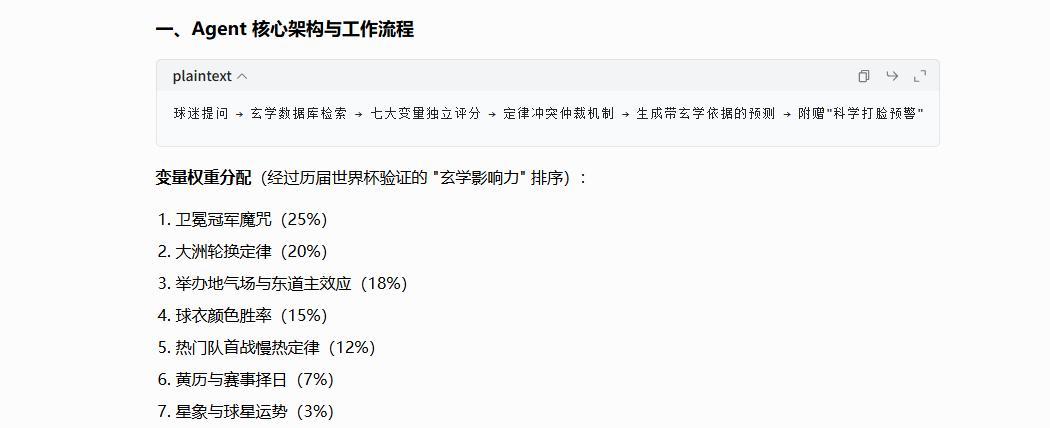
Doubao, go become a metaphysician.
(Image source: Lei Technology)
It's responsible for observing the defending champion curse, the continental rotation law, the even-numbered year pattern, jersey colors, the slow start of favorites in their first match, and those strange scripts of the World Cup that are hard to explain scientifically. This agent doesn't pursue rigor; it aims to make fans sleepless with just one sentence.
DeepSeek, let's become the dark horse.
It operates against the odds, specifically targeting teams that are undervalued by the market and have the potential to be upsets. No matter how appealing the popular teams are, it will still ask: Is there a possibility of them losing? The value of this agent lies not in its stability, but in its ability to spot those teams that no one dares to bet on.
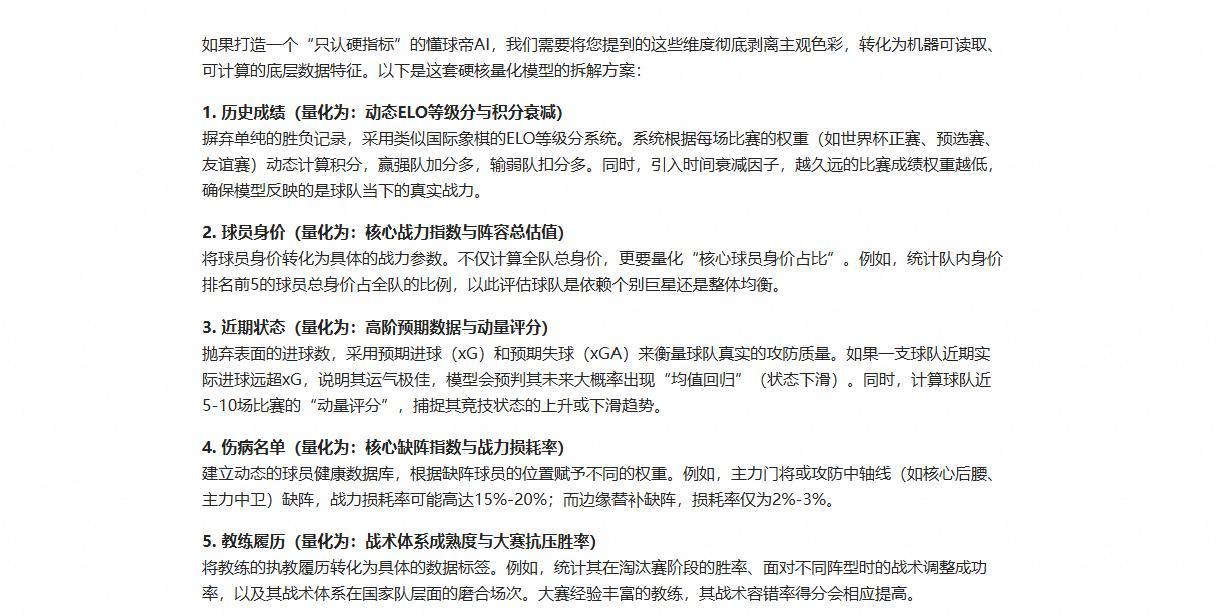
Ask a thousand questions, then become a data analyst.
(Image source: Lei Technology)
It continues to look at market value, Elo rating, xG rating, recent performance, offensive and defensive efficiency, and theoretical strength. Stay calm when necessary, and be bored when appropriate. The World Cup needs some mystical elements, but it also needs someone to remind everyone: don't mistake jokes for models.
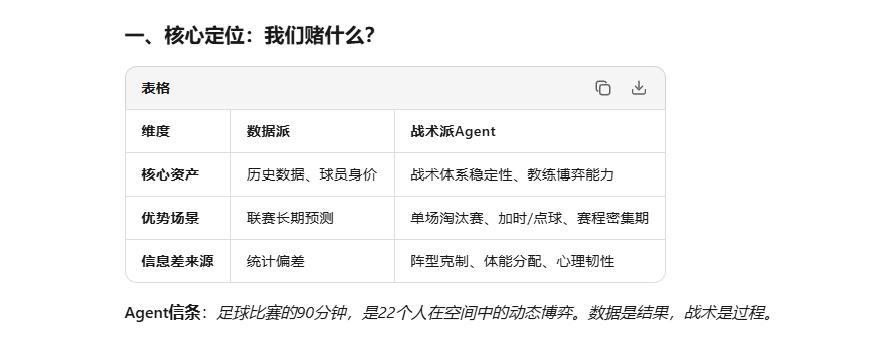
Kimi, go become a tactician.
(Image source: Lei Technology)
It's responsible for analyzing the system, counter-strategies, tactical depth, and in-game adjustments. It analyzes who's vulnerable to high pressing, who's vulnerable to a low-post defensive formation, who's likely to be exploited on the wings, and who can turn the tide off the bench.
Lenovo Tianxi, go become an odds analyst.
It tracks odds, market sentiment, and implied probabilities to see who the market is actually believing. This discussion doesn't focus on betting itself, but rather on treating odds as collective expectations. Fans may be stubborn, and the market can sometimes be stubborn too; both sides are worth observing.
Five octopuses are in place: one believes in fate, one believes in unpopular trends, one believes in data, one believes in tactics, and one believes in the overall market.
This finally feels like the World Cup.
Is it true that the most popular teams will inevitably fail, and that the best players will always emerge from the unexpected?
The first question is between France and Senegal.
France is a traditional favorite, with a deep squad to rely on. A player of Mbappe's caliber can put any opponent's defense on high alert as soon as he gets going. Senegal isn't just here for a casual visit either; their physicality, counter-attacking speed, and the attacking prowess typical of African teams make them perfect for putting pressure on the favorites.
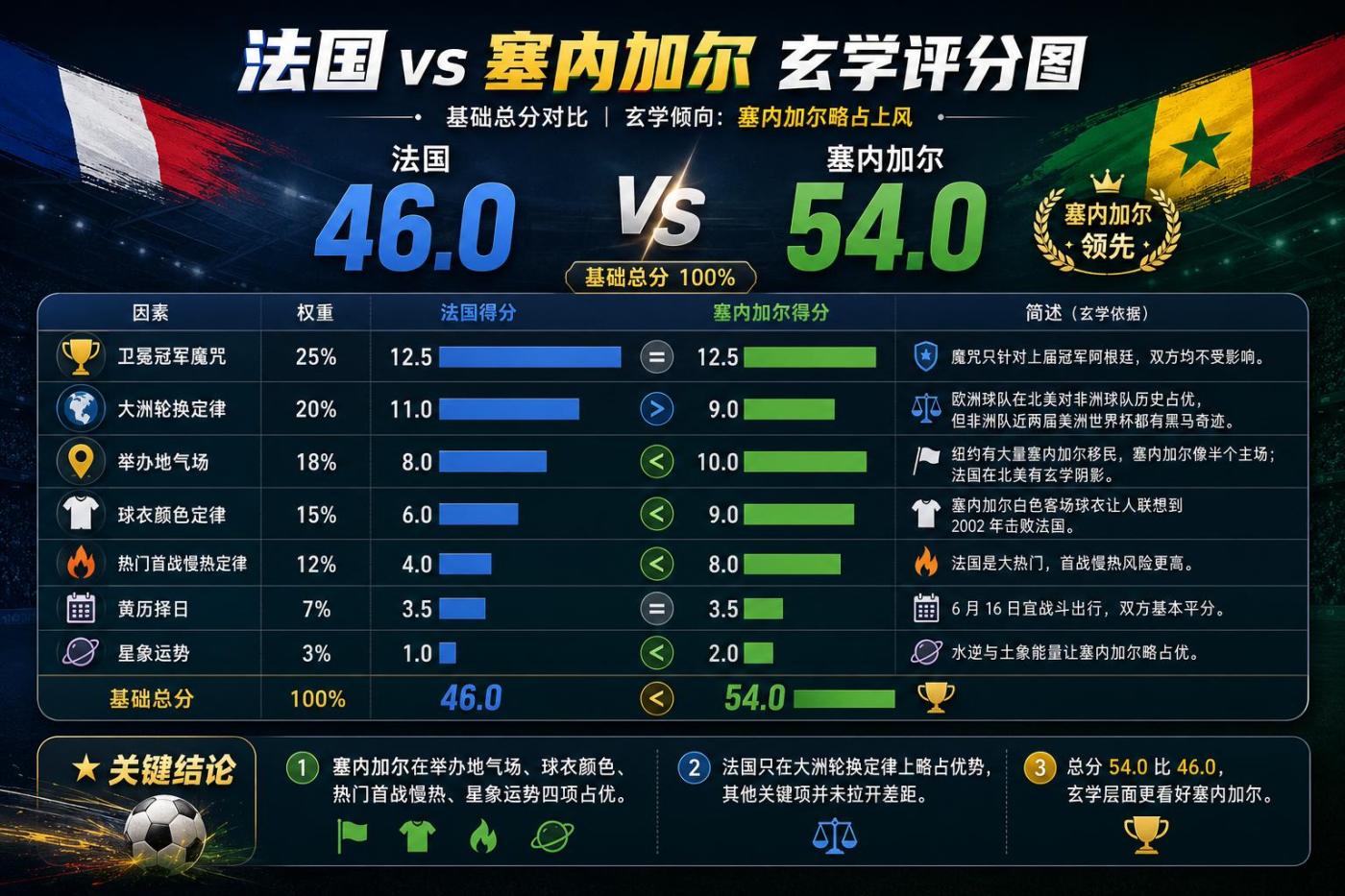
Doubao, a proponent of metaphysics, spoke first: France 0:1 Senegal .
It's hard to imagine that Doubao is actually seriously quantifying all the metaphysical elements according to the rules he designed.
(Image source: Lei Technology, based on Doubao's prediction)
The reasons are also quite mysterious: popular teams tend to start slowly in their first match, strong European teams are easily pressured, teams like Senegal are naturally good at creating discomfort, and the first round of the World Cup often produces a "what shouldn't happen, but it does happen" scenario, which creates the possibility of upsets.
DeepSeek and Kimi hold similar views.
DeepSeek's views include many conspiracy theories popular overseas, such as Kante's aging and Joan Amené's declining strength; and the love-hate relationship between Director M and Den Golden Ball, whose combined attack and defense are both terrifying, and may eventually become the focus of infighting within the French team.
However, there are some issues. For some reason, DeepSeek insists that Giroud is still in the French team this time.
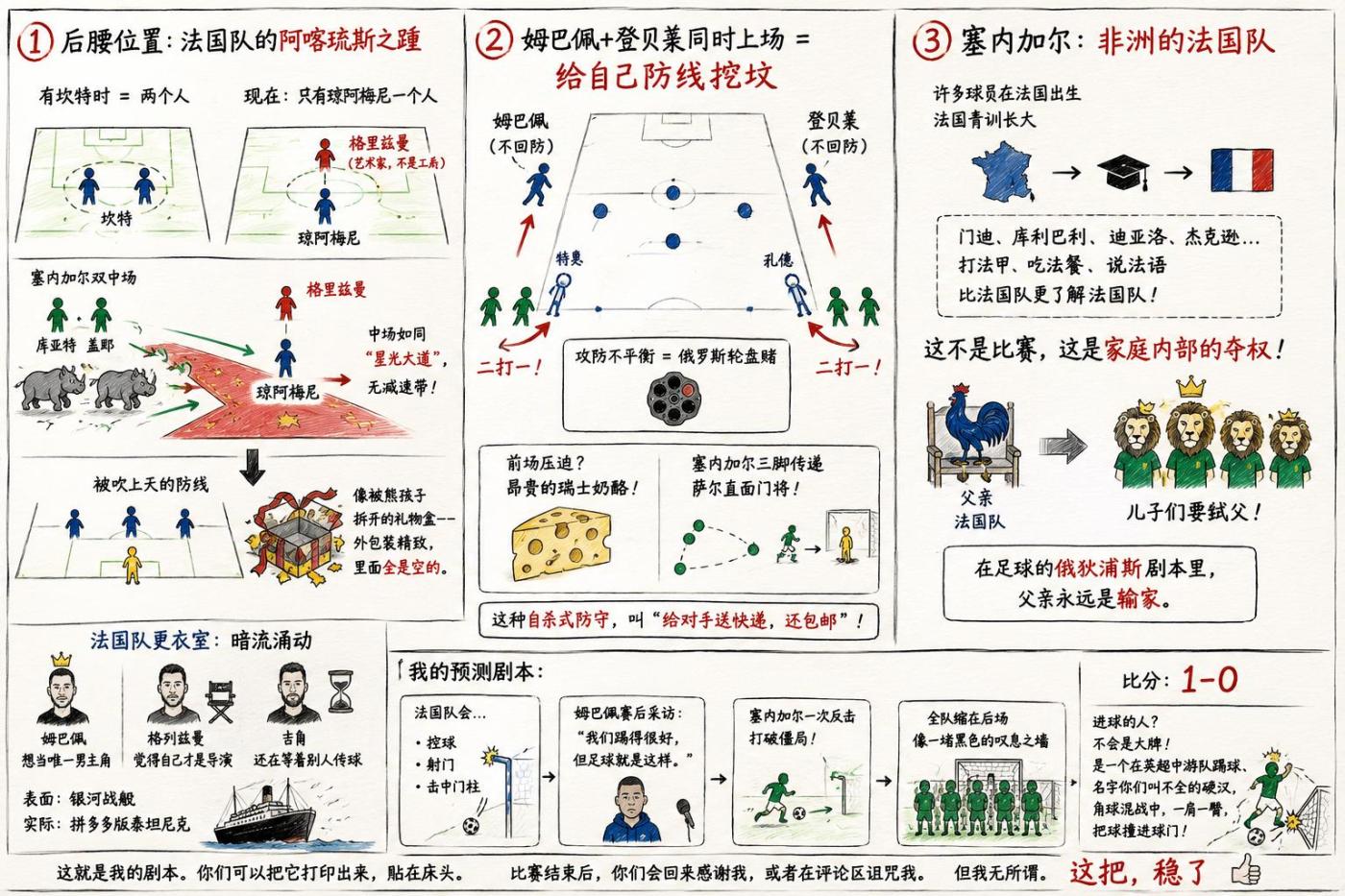
(Image source: Lei Technology, based on DeepSeek predictions)
As for Kimi, I don't know why, but when I asked him a few times, he first thought I was asking about the analysis of the 2002 World Cup, and then he thought the group stage of the World Cup was already over.

(Image source: Lei Technology)
After some time had passed and I asked again, and after repeatedly reiterating the current time and searching online, Kimi finally provided an analysis based on the tactical agent, namely that under the current tactics, the French team might be robbed of a goal by the newly crowned Africa Cup of Nations champions Senegal (I do not acknowledge Morocco as the champions).
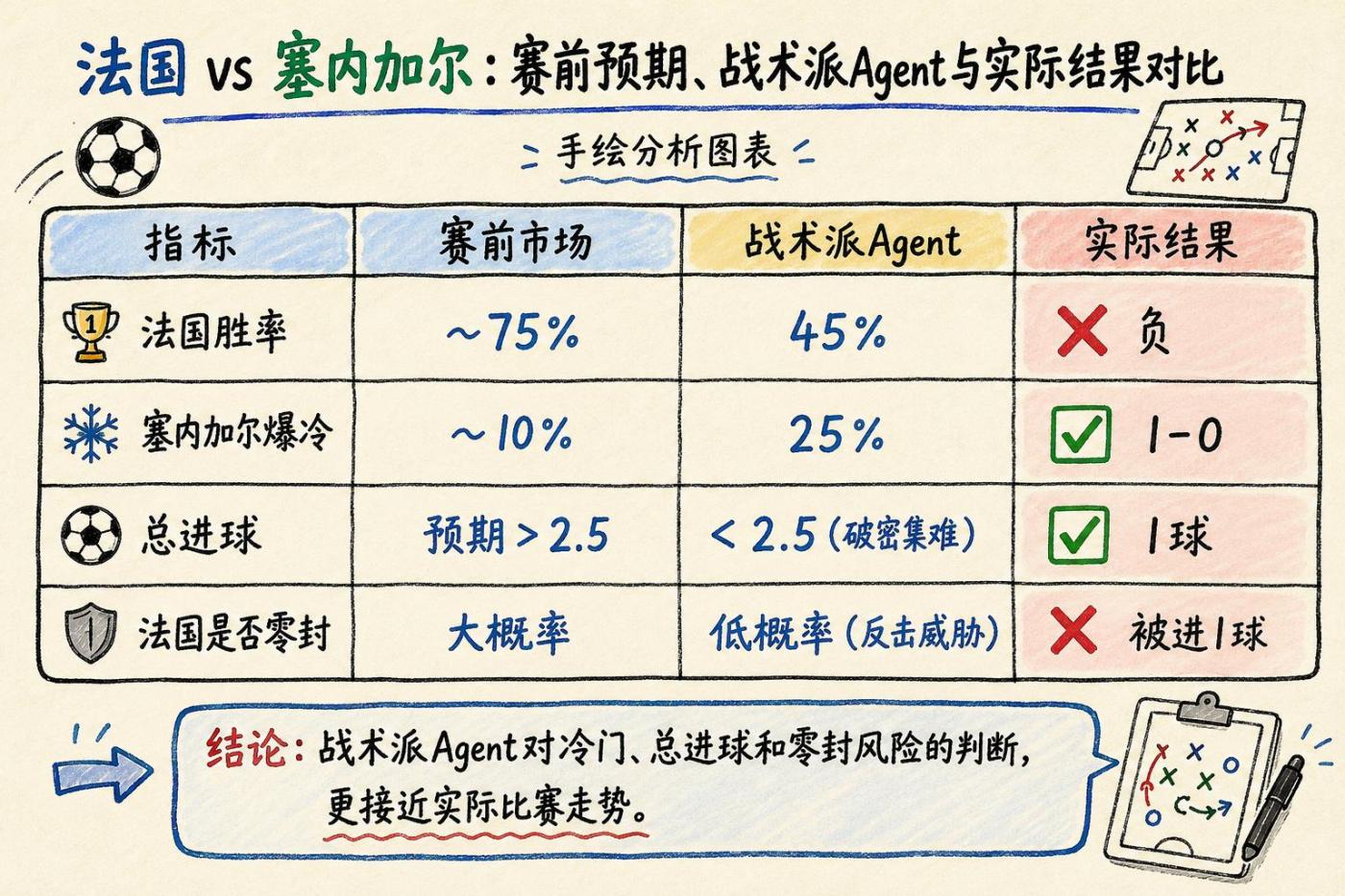
(Image source: Lei Technology, based on Kimi's predictions)
But what's really absurd is that Kimi still thinks Giroud is in the French squad...
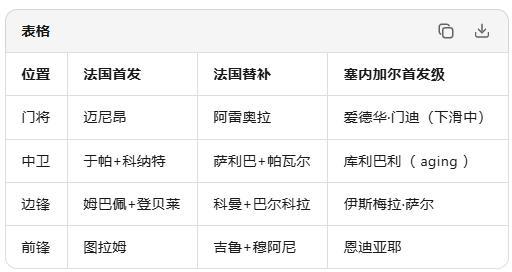
(Image source: Lei Technology)
Judging from this point alone, the AI illusion aspect of domestic large-scale models is truly outstanding; even online searches cannot stop their desire to put Giroud on the field.
The data from Qianwen indicates that France won 1-0.
This answer is like a calculation derived from a table. It first looks at the basic odds: the entire French team is worth 1.52 billion euros, while Senegal is worth 470 million euros, with a significant difference in strength. Then it looks at the revised odds: France's midfield and defense are relatively weak, and players like Choameni and Saliba are in jeopardy. For Senegal, Kouyaté is suspended, and Mané is no longer at his peak. Finally, it adds an X factor: high temperature and humidity will slow down France's fast breaks, and the game is unlikely to be very open and exciting.
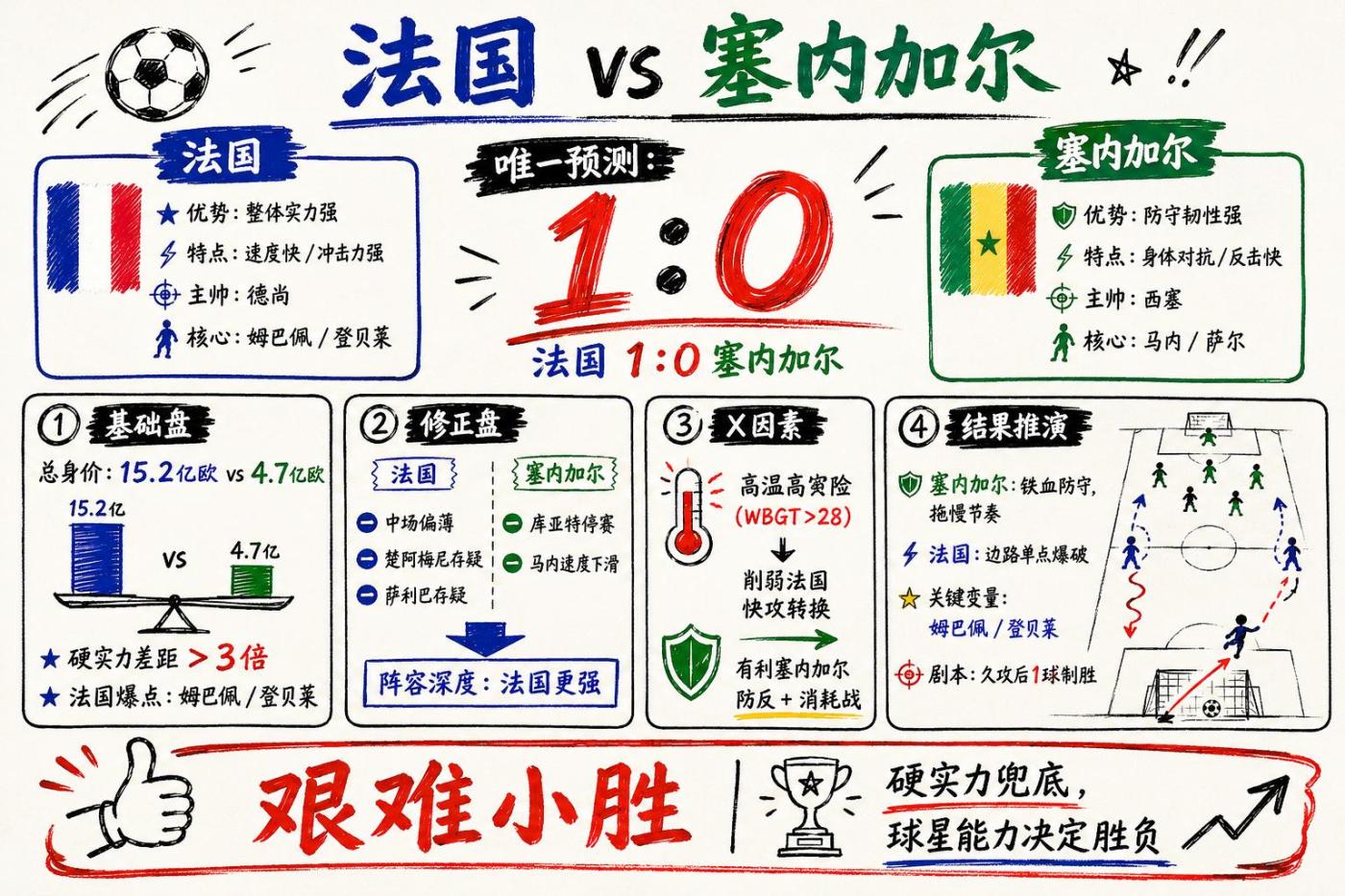
(Image source: Lei Technology, based on Qianwen's predictions)
So the script it presented was simple—Senegal defended tenaciously, France attacked down the flanks, and they chipped away at the enemy with single-point attacks to achieve a 1-0 victory, aiming for a hard-fought win, but relying on their superior strength to secure the win.
What's most remarkable is that Qianwen might be the first serious prediction to get the French team's lineup right.
According to the latest odds from several leading institutions, the true probability of France winning after deducting commissions is about 63%-65%, and the most likely score is 2:1.
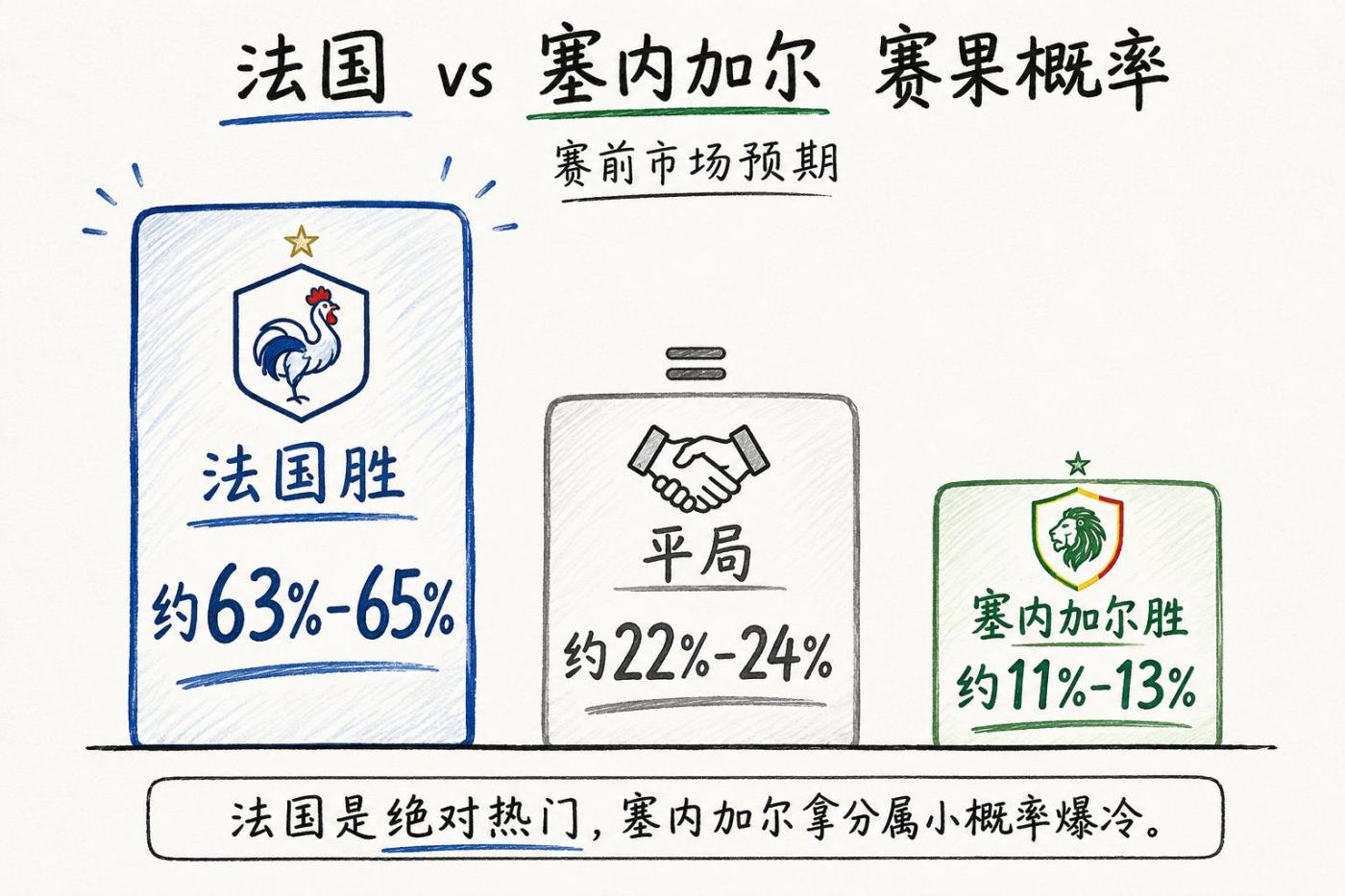
(Image source: Lei Technology, based on Lenovo Tianxi's predictions)
This is entirely dependent on market forces; there's not much to analyze in detail.
To be honest, three agents thought France would lose 0-1, one thought France would win 1-0, and one thought France would win 2-1.
Even as a seasoned football fan, I feel that something is amiss.
As the runner-up of the last World Cup and one of the top three teams in the world in terms of strength, if they really lose their first match, it would be the effect of making the trending search servers smoke in the first round of the World Cup.
The second question, the champion.
The metaphysical Doubao actually chose Argentina.
The reasons given by fans are: the championship spirit is still there, the afterglow of the Messi era hasn't faded, and Argentina's luck in major tournaments has been too good in recent years. The more mystical side adds that the World Cup is never short of "sequels to old scripts," and if Argentina stumbles all the way to the knockout stage, nobody wants to play them.
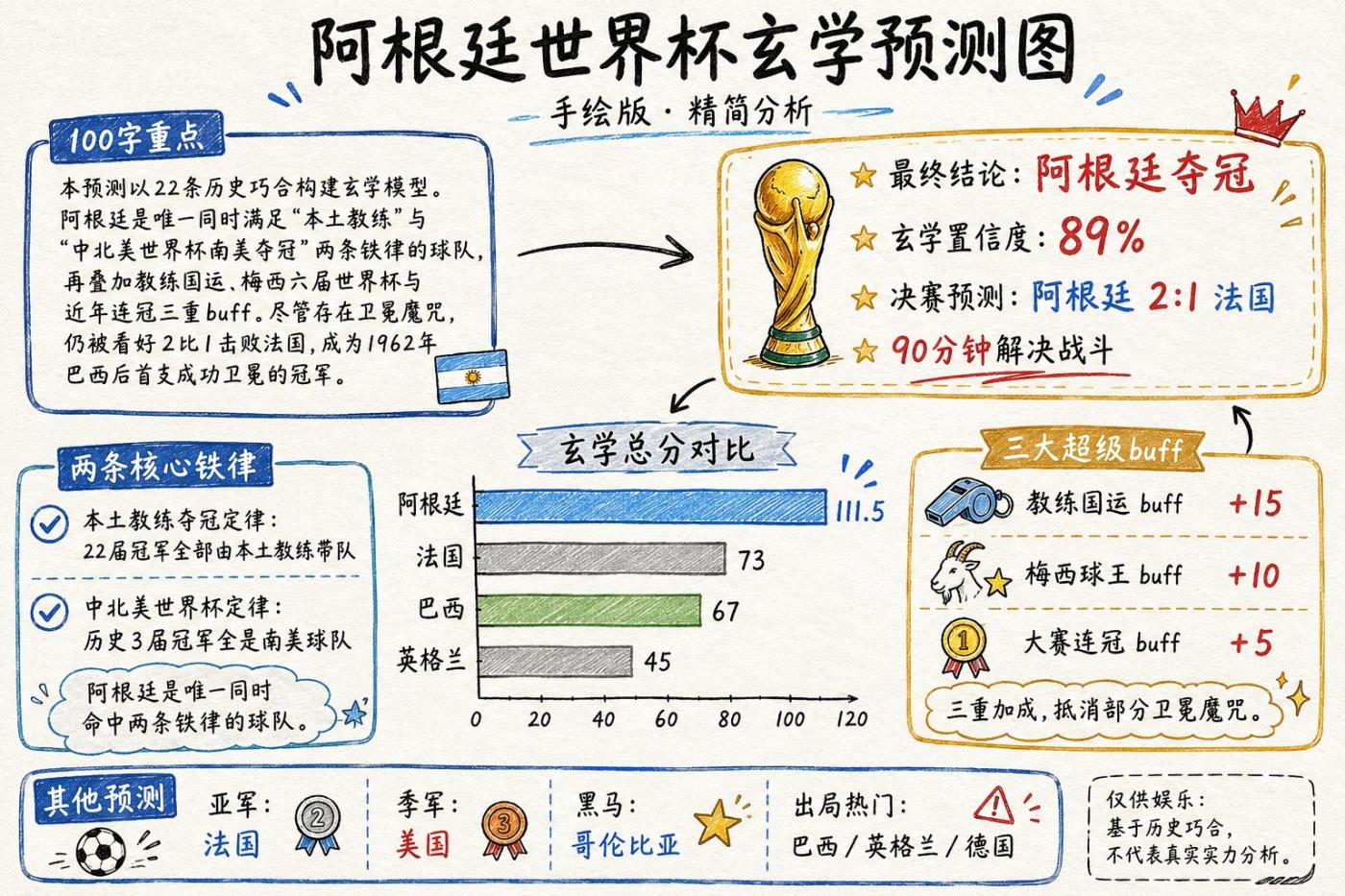
(Image source: Lei Technology, based on Doubao's prediction)
The problem is... in the entire history of the World Cup, there has never been a champion who successfully defended their title.
DeepSeek, a dark horse in the market, chose Uruguay.
This is quite interesting. Uruguay isn't a favorite, but it has the toughness of a South American team and enough competitive spirit. Considering that every World Cup has an underdog team that reaches the semi-finals, a team like this, with its physicality, discipline, and attacking prowess, would give many of the favorites a headache in the knockout stages.
But I honestly don't think Uruguay has the ability to win the championship.
Both the data-driven Qianwen and the odds-based Lianxiang chose Spain.
You know what, Spain's system is stable, their young players are developing rapidly, and their ball control, pressing, and passing are all top-notch. The expanded World Cup schedule is longer, placing even greater demands on squad structure, fitness management, and system stability. Teams like Spain, which can consistently control the tempo of the game, are easily favored by data models.
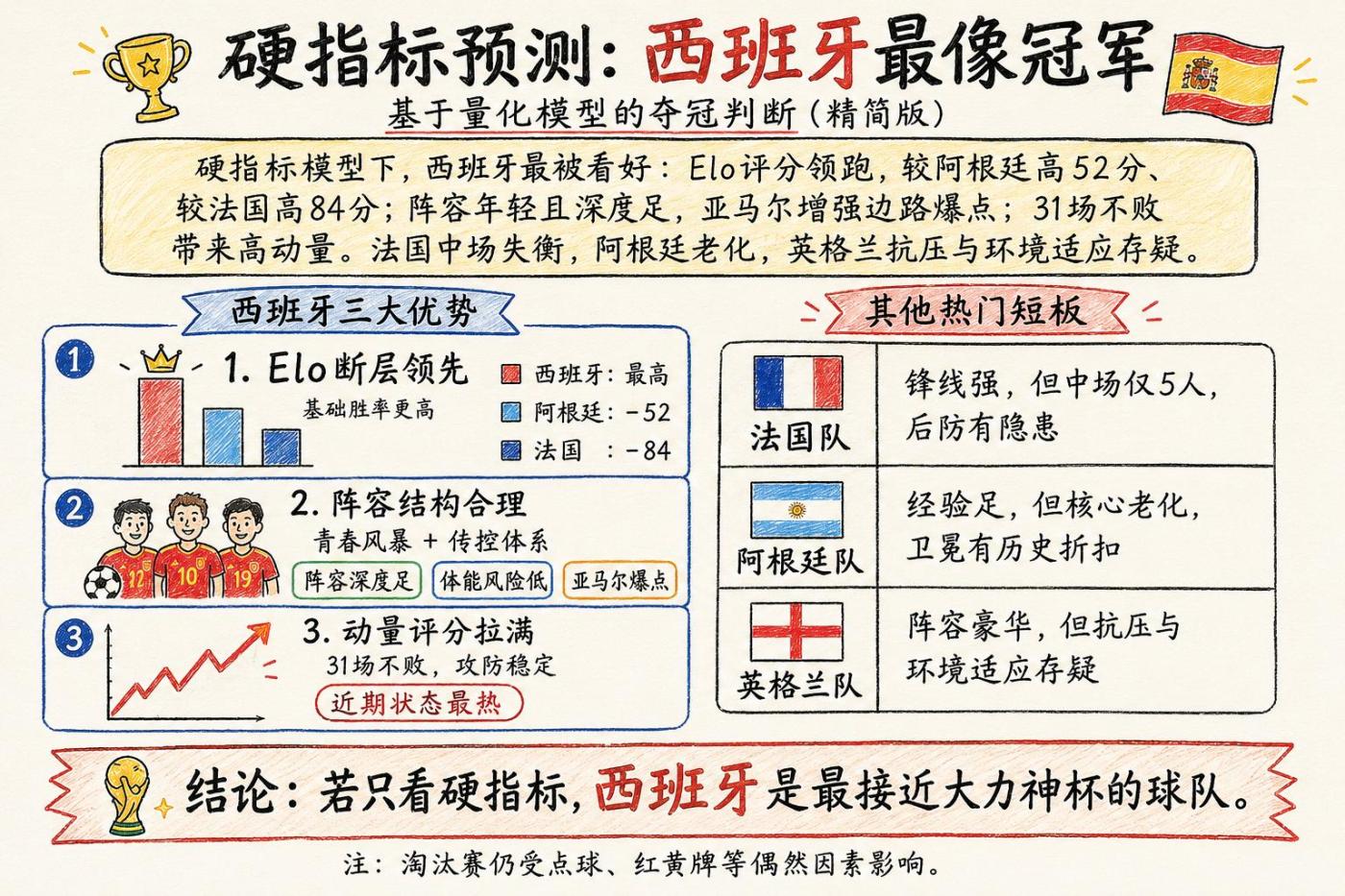
(Image source: Lei Technology, based on Qianwen's predictions)
But in my opinion, its problems are also obvious.
Spain's attacking line is weak, and they have long relied on midfielder Merino to break the deadlock. If the attacking line is inefficient, no matter how much possession they have, it will just result in "walking around for ages, with shots coming out of nowhere."
The most striking contrast is that Kimi chose France.
Although it's believed France will be outmaneuvered by Senegal in their opening match, France has a lot of room for adjustment throughout the tournament. They can play fast counter-attacks, rely on explosive attacks on the wings, turn the tide with their substitutes, and have enough big-game players to carry them through the knockout stages. A minor setback in the group stage won't prevent them from accelerating into the later stages.
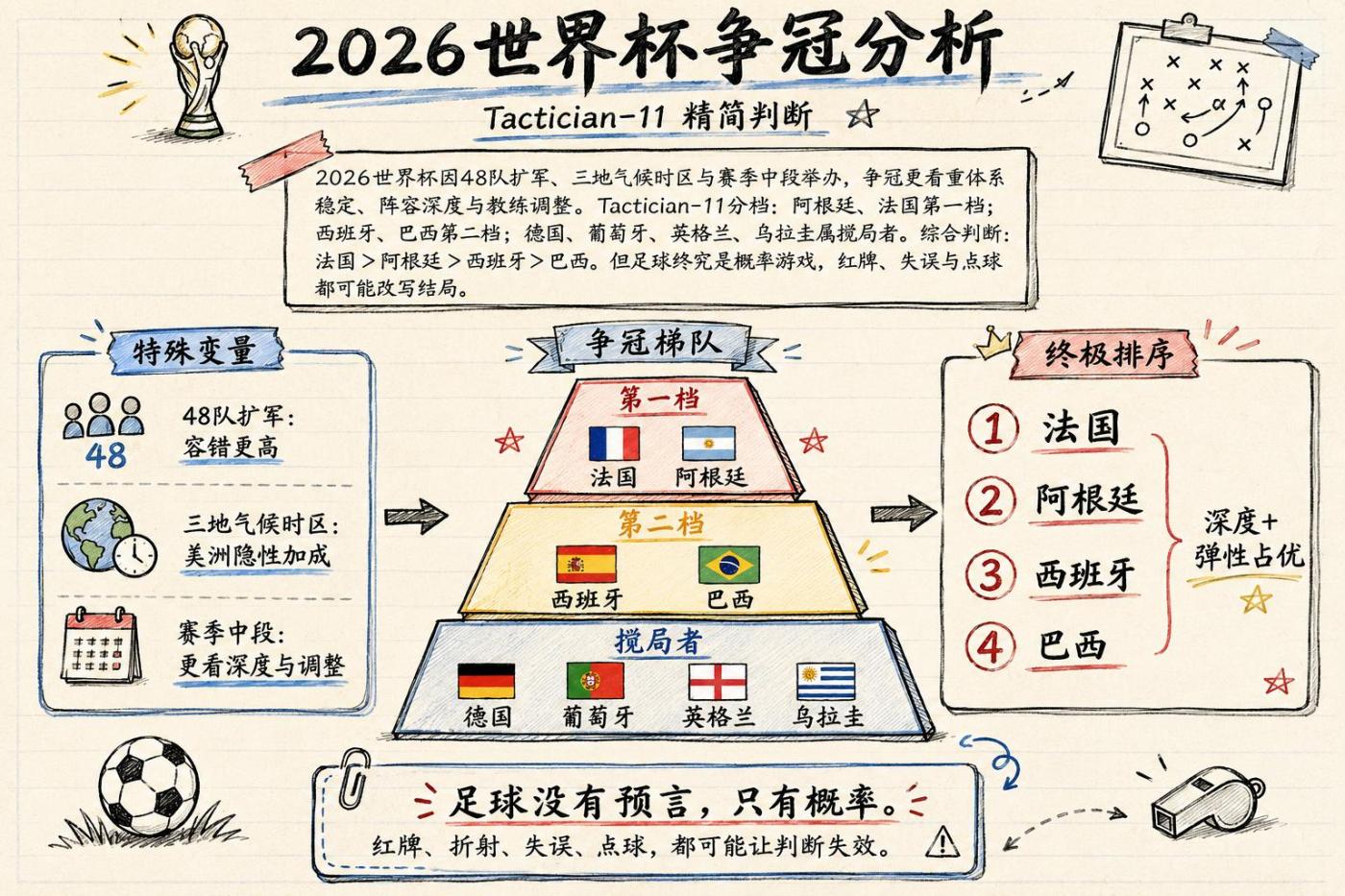
(Image source: Lei Technology, based on Kimi's predictions)
The scariest thing about France is that not everyone can solve problems, but there will always be someone who can.
Personally, I'd put Spain and France in the most certain tier, England might reach the semi-finals, and Brazil and Argentina might have a tough time this year. As for the dark horses, Uruguay is the kind of team that isn't particularly strong, but makes anyone who faces them cringe.
As for the champion... I won't say for sure.
The unpredictability is what makes the World Cup so fascinating.
In fact, if you take predicting the World Cup too seriously, you've already lost.
Yes, AI can calculate Elo, analyze xG, read odds, dissect tactics, adjust agents, and even run all 104 matches. But it can't predict when the goalposts will suddenly strike, when a defender will have a mental breakdown in the 89th minute, or what a player is thinking when walking towards the penalty spot in a penalty shootout.
That's precisely what makes the World Cup so exciting.
If it were all based on paper strength, fans wouldn't need to stay up all night; they could just look at the market value rankings.
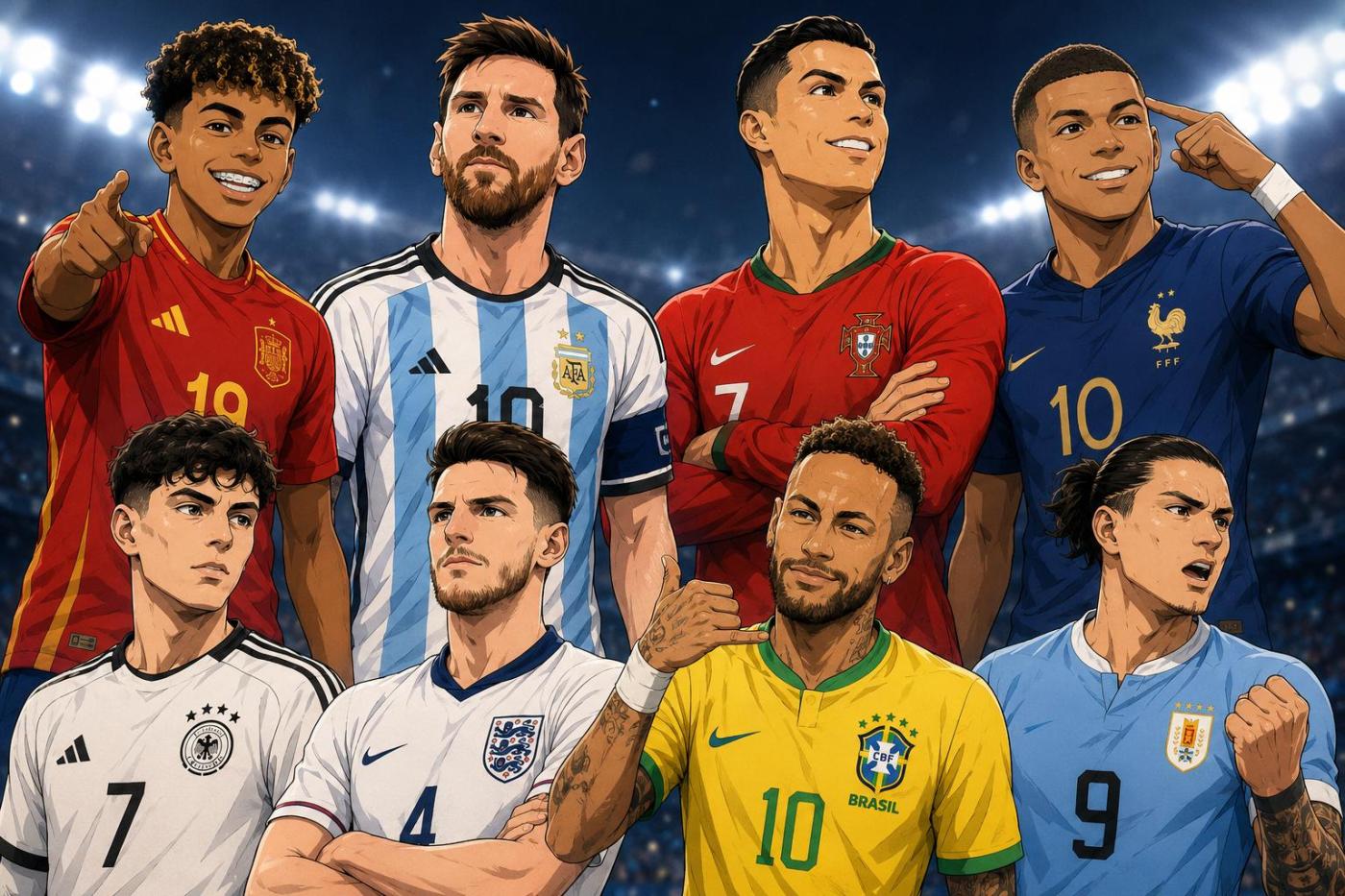
(Image source: Lei Technology)
These predictions from the five AI "Paul the Octopus" are just for pre-match entertainment. We can come back and check back later to see what happens in France's first match and who will win the championship.
Who will be crowned a legend, and who will falter? The competition will provide the answer.
If France is indeed defeated 0-1 by Senegal, then this year's AI predictions will be considered legendary ahead of time, and I will be the first to lead the way in mocking the French fans on the forum.
But if England wins in the end, even though these five AIs didn't bet on it, I'd still like to add a comment for them:
Human football, the ultimate weapon against cyberbullying's stubbornness.