Written by: Winter Soldier
Compilation: Deep Tide TechFlow
Recently, Circle launched its Cross-chain Transfer Protocol (CCTP), which will set a new standard for USDC’s pricing power and Cross-chain monopoly. By eliminating the need for Liquidity on either chain, the protocol takes capital efficiency to a new level. This means that Circle may monopolize the USDC bridging market and strengthen USDC's advantages in DeFi. At the same time, the current Cross-chain bridges may face stronger competitive pressure.
Here's a quick introduction to how CCTP works and its impact.
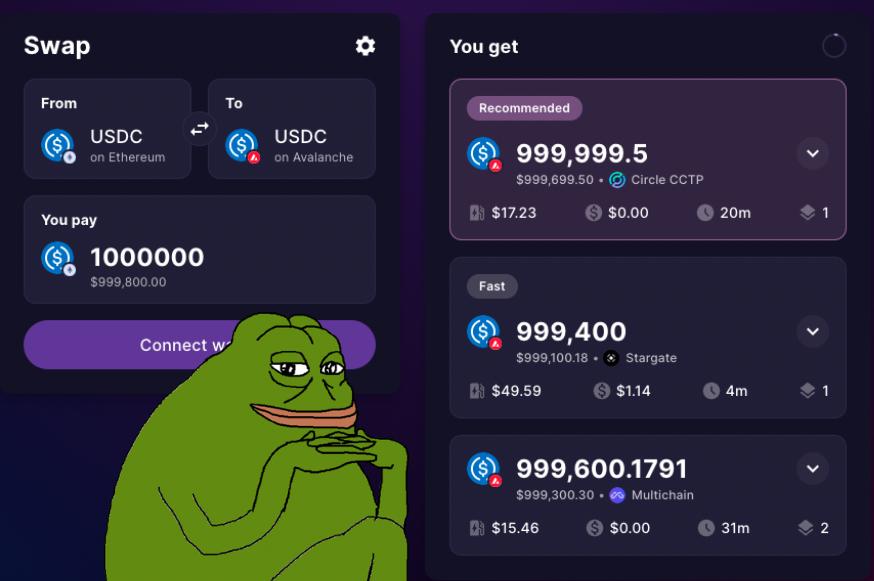
Current Cross-chain bridges employ different design choices and trade-offs between native assets, Liquidity, and security. Circle's CCTP takes capital efficiency to a new level by eliminating the need for Liquidity on either chain.
How do they do it?
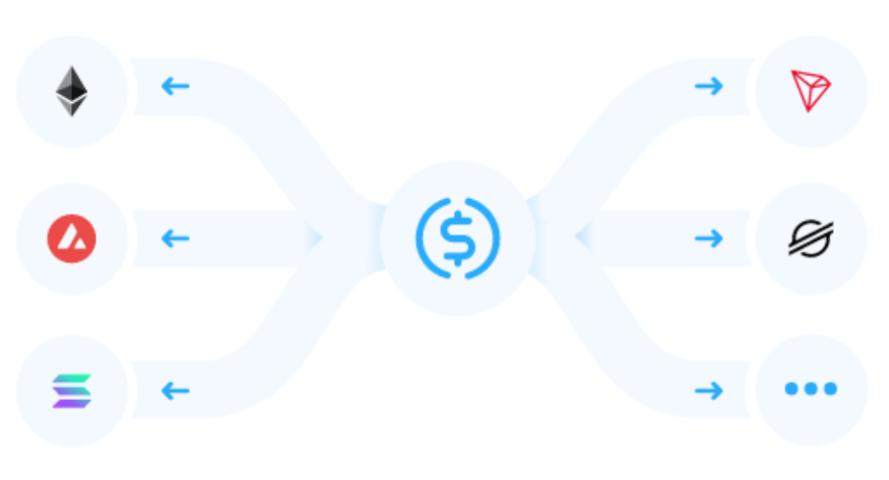
As issuers of native USDC, they can burn and mint USDC on any chain where native USDC is deployed. This is how it works:
i. The user initiates the transfer through the integrated portal, and the USDC is destroyed on the source chain;
ii. Obtain a signed attestation from Circle to confirm the burn transaction and authorize the minting on the target chain;
iii. USDC is minted and sent to the target address.
The most obvious impact is that Circle may monopolize the USDC Cross-chain market . Cross-chain applications currently integrated with other Cross-chain bridges may soon move to Circle (including Radiant, Sushi, etc.) due to cheaper transactions.
Current Cross-chain bridges such as Stargate Finance will struggle to compete in terms of pricing power . This also reinforces USDC’s (already strong) advantage in DeFi as it is the cheapest and lowest slippage token to send Cross-chain.
This is a good thing for the end user, because it is cheaper for the user not to worry about what the Cross-chain bridge is and how to use it, and the Dapp(such as the Cross-chain bridge and Cross-chain protocol) takes care of all the integration.
Currently, Circle has launched the service with some strong partners.