"Ordinals marks the return of builder culture!"
On July 7th, Vitalik Buterin, the founder of Ethereum, praised the development of Ordinals and BRC-20 in the Twitter Space "What Bitcoin Can Learn from Ethereum", thinking that they are "politics of stagnation" in the Bitcoin ecosystem. The counterattack of the ecology has revived a culture of "actual work" belonging to the builders.
It has been 14 years since Bitcoin came out in 2009. During this period, with the addition of miners, the gradual emergence of trading platforms/Lightning Network/RGB/ STX and other platforms and innovations, more and more retailers began to accept Bitcoin payments, and Bitcoin gradually became known to more people.
But from the perspective of Bitcoin's ecology, it has been tepid until Ordinals and BRC20 came out like thunder. A large number of developers poured in, and the OKX Web3 team began to provide support for the development of Bitcoin from a technical perspective. This is the first time that a development team with an exchange background has participated in the construction of the Bitcoin ecological infrastructure . Bitcoin ecology once again returns to the center of the encryption narrative stage.
What is the long-term value of Bitcoin ecology? Who are the "big players" behind? This article will take you to understand the supporters, long-term value and historical context of Bitcoin.
1. Origin of Ordinals
Now when it comes to Bitcoin ecology, Ordinals is inseparable.
In December 2022, software engineer Casey Rodarmor released the NFT protocol "Ordinals". On January 20 this year, the Ordinals protocol released V4, officially introducing NFT to the Bitcoin network through Ordinals and Inscriptions (serial numbers and inscriptions).
Bitcoin NFT is not a new concept. In the past, there were a large number of NFTs on Bitcoin’s second-tier network such as STX, but Ordinals NFT is native to Bitcoin. They work without changing the Bitcoin protocol, do not depend on the second-tier network, and Backwards compatible with the web.
CryptoPunks, born in June 2017, is one of the earliest NFT projects on Ethereum. It is regarded by many investors as Bitcoin in NFT. On the Bitcoin network, it also ushered in its own Punks.
On February 9, 2023, Bitcoin Punks was minted on the Ordinals protocol, and the inscription number was arranged in the first 40K, which is very early. It is worth noting that in early March, the OKX NFT market launched the NFT collection, which also opened the prelude to the ecological intersection of OKX and BTC.
Just as a large number of blue-chip projects have emerged in the Ethereum NFT ecosystem, Bitcoin NFT has also emerged in a very short period of time with a large number of well-known projects, such as TwelveFold, Taproot Wizard, Bitcoin Frogs, etc.
According to the transaction data of BTC NFT on OKX on July 18, the transaction volume of Bitcoin Frogs is in an absolute leading position.
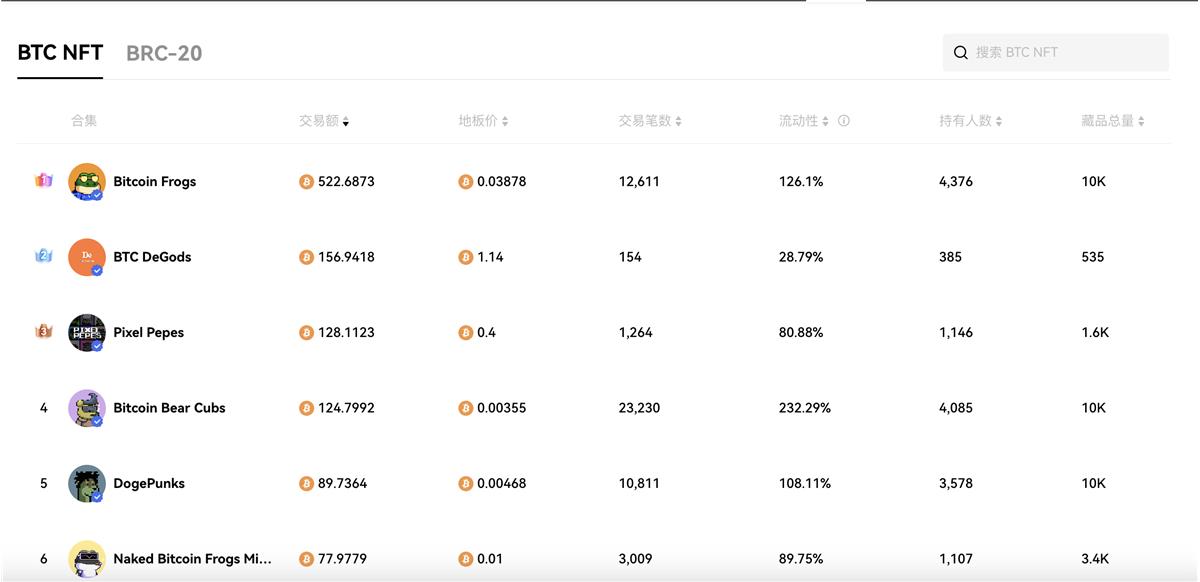
If it is said that Ethereum is popular with Token first and then with NFT , then the Ordinals ecology has taken the opposite path.
Inspired by the Ordinals protocol, Twitter user @domodata created Bitcoin's experimental alternative token standard BRC-20 on March 8, 2023. The first BRC-20 token contract deployed the "ORDI" token, each time Minting is limited to 1,000 coins, with a total of 21 million coins.
Although demodata believes that BRC-20 is just an interesting social experiment, in the eyes of "speculators", this groundbreaking sexy narrative is undoubtedly the best hype target.
Since the beginning of ORDI, various BRC-20 tokens have sprung up. According to the OKX Web3 wallet, as of July 18, 2023, 613 BRC-20 tokens have been launched on the platform.
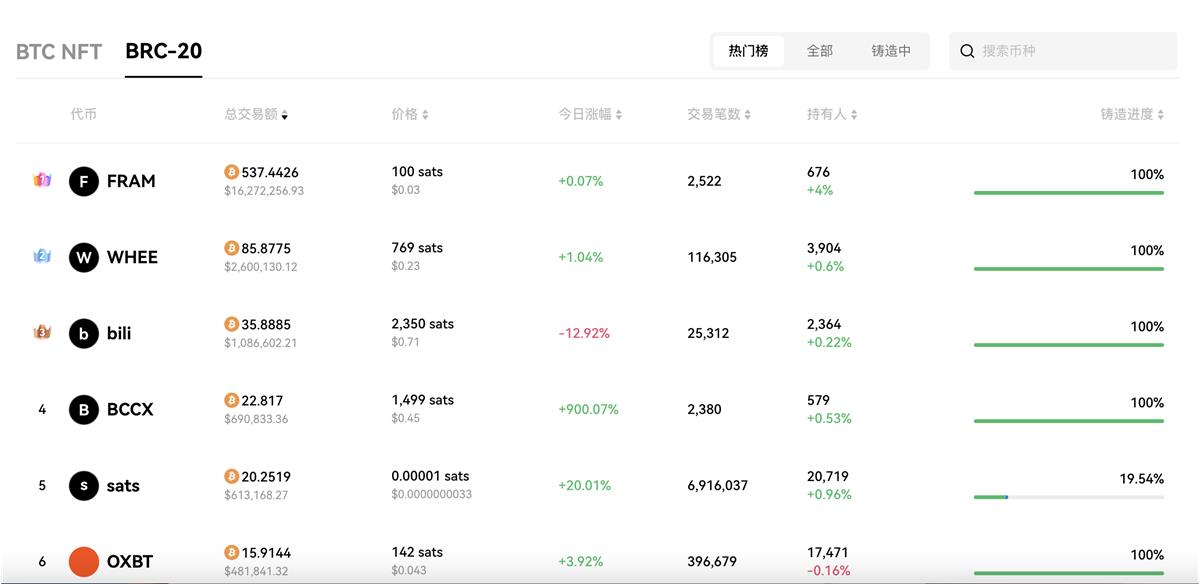
Under the strong market enthusiasm, BRC-20 is also constantly innovating and iterating, and various derivative protocols and standards have emerged one after another.
ORC-20: An improved protocol for BRC-20 developed by OrcDAO to improve the functionality of BRC-20.
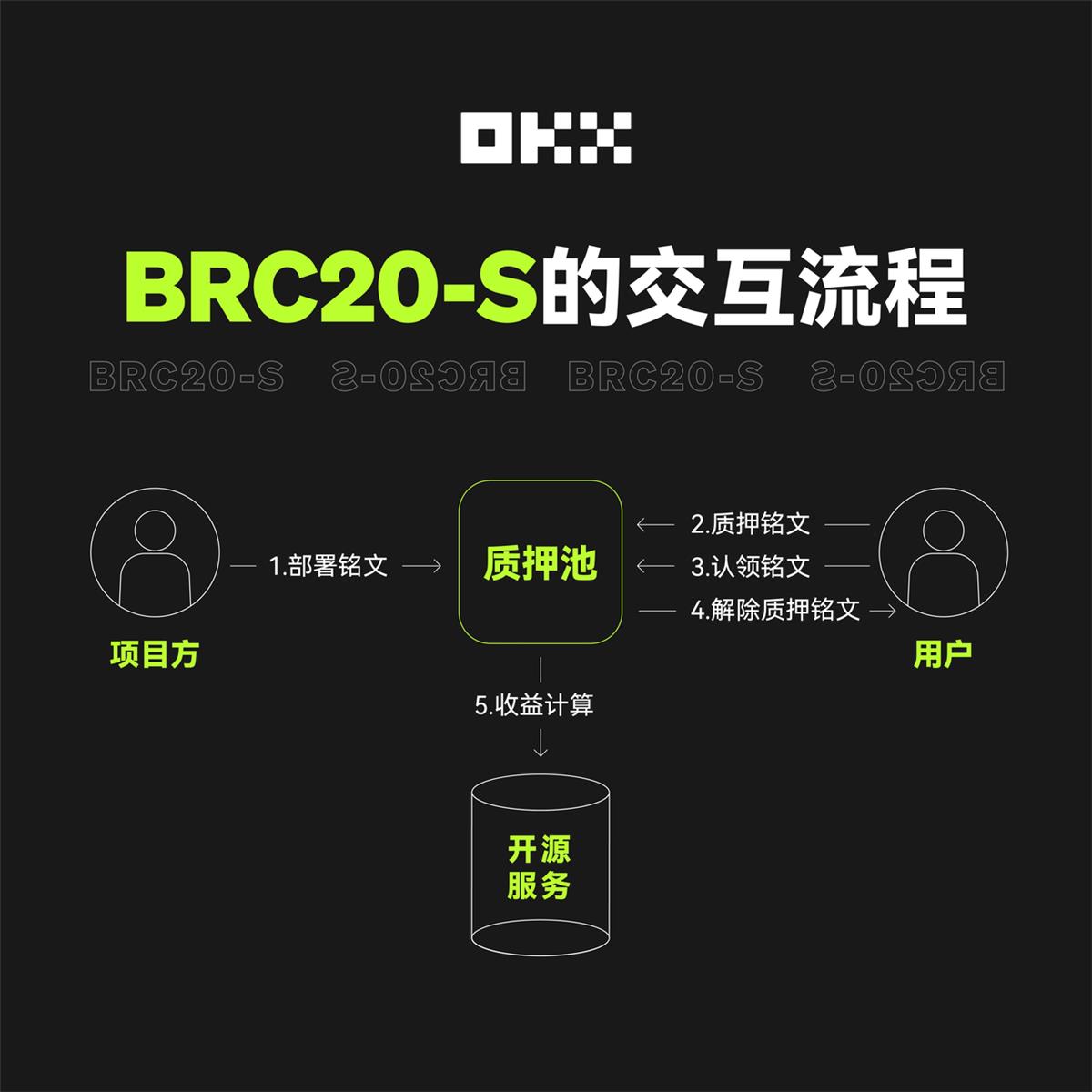
BRC-20S : Proposed by the OKX Web3 team , it is an extended version of the BRC-20 protocol, which introduces equity operation functions such as deposit, casting, and withdrawal. According to the proposal, users could stake their own BRC-20 tokens and Bitcoin, and receive corresponding BRC-20S tokens in return.
BRC-21: Proposed by Alexei Zamyatin, founder of the cross-chain interoperability project Interlay, to introduce fully decentralized cross-chain assets to the Bitcoin network and use them in the Lightning Network.
BRC-721: An experimental standard for issuing non-homogeneous Tokens (NFTs) on the Bitcoin network, and provides more functionality and flexibility by addressing the limitations of native Ordinals NFTs. For example, BRC-721 can support storing images in off-chain services such as IPFS.
2. The "supporters" behind
Behind the increasingly prosperous Bitcoin ecosystem, what forces are building the infrastructure of this new format?
According to the Dune data panel, among the Ordinals ecological trading platforms, OKX/Unisat/Magic eden have occupied the top three positions for a long time. Among them, the OKX Web3 Ordinals market has become the Marketplace with the largest trading volume, accounting for more than 70% of the market share. Due to its policy of exempting handling fees, it also attracted some spam projects, but it still occupied about 40% of the market share after blocking.
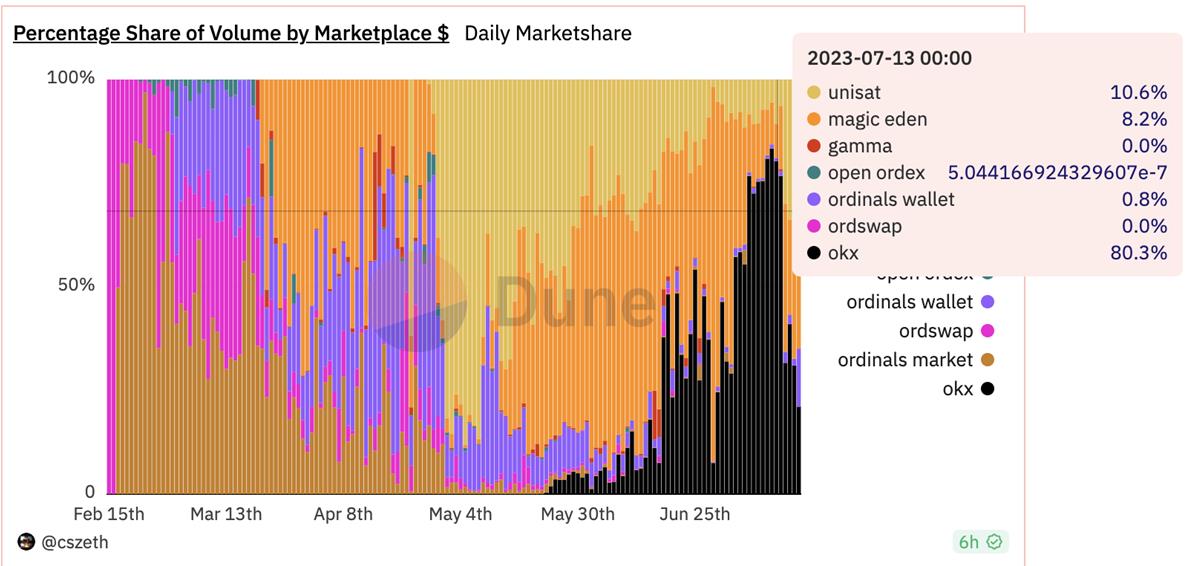
Unisat, the first in the industry.
Because of the emergence of Unisat, it met the needs of BRC-20 transactions and provided a place for liquidity, so that the first wave of BRC-20 tokens such as ORDI exploded, attracting the attention of the entire network.
Looking back, the Unisat team made the right choice to enter the track at that time. It ended when the infrastructure of the Bitcoin ecological market was still barren and bleak. It bet on the incremental market rather than the stock game. .
OKX, catching up from behind, takes root in the ecology.
On May 20th, OKX became the first exchange to list ORDI with a firm offer.
Currently, the OKX Web3 wallet supports BRC-20 trading market, BRC-20 Token transaction, BTC cross-chain Swap, Ordinals inscription and BRC-20 Token casting, Ordinals NFT transaction and other functions, and the BRC20 generation will be officially launched on July 19 The pledge function of coins.
In addition to the construction of infrastructure such as trading tools, OKX Web3 Wallet's support for the Bitcoin ecosystem goes deep into the protocol standard level.
BRC-20S, an extended version of the BRC-20 protocol led by OKX, introduces equity operation functions such as deposit, casting, and withdrawal. Users can stake their own BRC-20 tokens and Bitcoins and get rewarded accordingly.
Ph.D. in economics and Bitcoin ecology enthusiast "BRC-20 Cabbage" believes that OKX's move is to copy DeFi Summer, BRC-20 only has a transfer function, and BRC-20S provides a pledge function, so new projects can be pledged by ORDI and other BRC -20 tokens to distribute project tokens to attract early users.
"OKX's BRC30 (now renamed BRC20-S) agreement did not move BRC-20, nor did it promote it in the name of BRC21. This is a modest attempt. OKX did not forcefully promote the construction of the BRC ecology based on itself , it does not block the way for community developers such as Domo to improve BRC-20, but compatibility provides the possibility of a semi-centralized BRC DeFi implementation, which is the practice of real builders."
From wallet tools, browsers to trading markets, to protocol standards, OKX has become the first trading platform ever to provide technical support for the development of the Bitcoin network.
But all this did not happen overnight. OKX Chief Innovation Officer Jason Lau once said in an interview with the media, “OKX noticed the BTC ecology at a very early stage, and also experienced from discovery, research, not optimistic, internal discussion differences, to 4 At the end of the month, several stages of fully embracing the BTC ecology will begin.”
Why did OKX finally choose to fully embrace the Bitcoin ecosystem?
Jason Lau believes that zero-knowledge proof, MPC multi-signature wallet, and BTC ecology are the three mainstream narratives at present, and the BTC ecological narrative may have the most potential.
"BTC has always been considered digital gold in the past, but based on the Ordinals protocol, users can mint NFTs on the Bitcoin mainnet, and the original data of these NFTs will never be lost, which opens the door for future innovations and possibilities, including BRC The introduction of both -20 and BRC-20-S may make Bitcoin usher in a real explosion in the future."
In addition, Jason Lau also revealed that OKX's Web3 wallet will launch a decentralized liquidity market next, which is an innovation similar to the Lightning Network level. Escrow completes the transaction.
3. What is the value of Bitcoin ecology?
Today, OKX has gradually occupied a leading position in the Bitcoin ecological market. It has become a habit to trade BTC NFT and BRC-20 in the OKX Web3 wallet. However, whether it is BTC NFT or BRC-20, or even Bitcoin Layer2 such as STX, the is faced with many doubts.
In the view of Bitcoin fundamentalists, Ordinals have destroyed the narrative logic of Bitcoin, stuffed a lot of garbage on the main chain, and caused congestion on the chain. Bitcoin should maintain the purity of "store of value".
So, is there any long-term value in building an ecology on Bitcoin?
From the launch of the Ordinals mainnet at the end of January this year, the market seems to have given the answer to this question in half a year. The value of the Bitcoin ecosystem is not based on a group of people arguing on paper, but from the bottom up, by developers and users using code. and on-chain behavior/assets to vote .
The "politics of stagnation" in the Bitcoin ecosystem criticized by Vitalik is, in popular domestic terms, lying flat and waiting for Bitcoin to break through to new highs .
Today, Ethereum has expanded its narrative from smart contracts to "value storage", and it may not be possible to wait for a better tomorrow for Bitcoin.
In our opinion, Bitcoin ecology such as Ordinals is still underestimated, and there are long-term construction and investment opportunities.
1. The most powerful consensus foundation
When we talk about blockchain and cryptocurrency, the first thing that comes to mind is Bitcoin. Whether it is decentralized "cultural orthodoxy" or security, the Bitcoin ecosystem has the broadest consensus foundation, which is precisely the "cultural orthodoxy" "Premium" and the location of the moat are also important points that distinguish it from other ecology.
2. The most powerful capital precipitation
For a new public chain ecology, it is necessary to consider how to "attract investment" and attract foreign funds, but this problem does not exist in the Bitcoin ecology. At present, the market value of Bitcoin exceeds 580 billion U.S. dollars, and more than 6.4 billion U.S. dollars of Bitcoin cross-chain to Ethereum and other public chain ecologies provide nourishment for them. For the Bitcoin ecology, it naturally has the most powerful capital accumulation, and what needs to be considered is how to revitalize the stock assets.
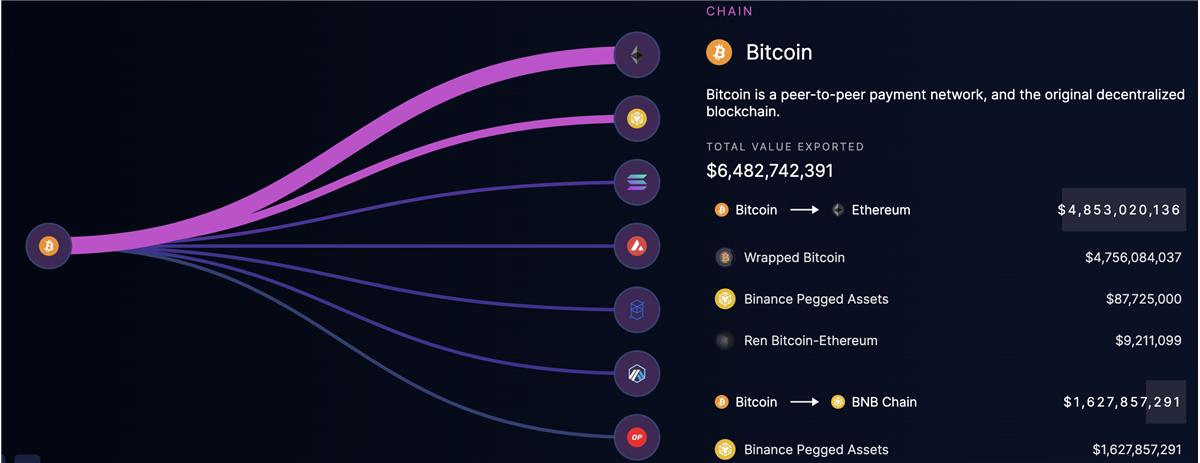
Source: CryptoFlows
3. Urgent needs of the market and industry
In the encryption market supported by expectations, the market needs a new narrative to enter a new sector rotation. When Bitcoin is halved again, Bitcoin miners will face more difficult survival challenges in the future, and the development of Bitcoin ecology can bring a lot of transaction fees, so that miners have sufficient motivation to maintain the security of the Bitcoin network. Satoshi Nakamoto's original idea.
4. The ever-influx developer ecology
Driven by the market prospect and wealth effect, from Ordinals to BTC Layer 2, more and more developers are pouring into the Bitcoin ecosystem, including developers from Solana/ BSV and other ecosystems, as well as the support and construction of the OKX Web3 team.
On July 17, Star Xu even said on social media: "OKX Web3 wallet has started to open source the signature algorithms of all chains. We hope to make a small contribution to the industry."
It is with the efforts of these innovators and builders that Bitcoin's technological development and ecological prosperity will change with each passing day.
On July 19th , there are less than 282 days until the next Bitcoin halving .
After 282 days, the single block reward for Bitcoin mining will be halved to 3.125 pieces, and the Bitcoin ecosystem will usher in a new narrative expectation.
Of course, there are one problem after another before them. For example, because of BRC-20, the Bitcoin network has become extremely congested, and how to expand the capacity of Bitcoin is once again on the table.
Ethereum founder Vitalik Buterin said on Twitter Space, "If we want Bitcoin to be more than just a payment method, it needs a scaling solution like Plasma or ZK Rollup, both of which have been tested on Ethereum ".
BTC has been running on the road of value storage. Compared with the Ethereum ecology, the Bitcoin ecology is still in the exploratory period of crossing the river by feeling the stones. Everything is unknown, and for those who are brave enough, we may be able to give more Tolerance and encouragement.
The encrypted world is a game for the brave that rewards innovation and construction.