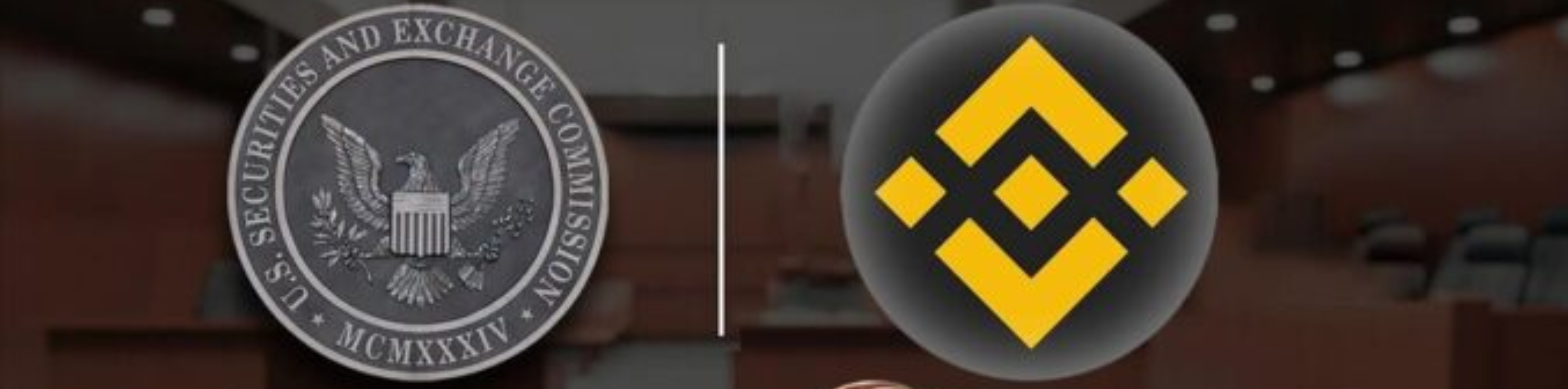
Lawyers for defendants Binance, Binance.US and co-founder CZ strongly deny the relevance of the U.S. Securities and Exchange Commission’s (SEC) summary judgment in the Terra lawsuit and its findings in this case. They added that the SEC is trying to distort the 2021 and 2023 Terraform lawsuits to make implausible arguments.
Binance’s response to SEC Terra’s supplementary authorization In the latest developments in the U.S. SEC’s lawsuit against Binance Holdings, the defendants have filed a joint response to the U.S. SEC’s supplementary authorization notice. The SEC directed the court to focus on orders in the Terraform lawsuit that the parties violated securities laws and that the digital assets mentioned were securities under the Howey Test.
“None of the points raised in the SEC’s notice regarding Terraform II are more consistent than the SEC’s arguments based in SEC v. Terraform Labs Pte. Ltd.” , according to the document. Furthermore, even if the SEC's position is permitted in other circuits, binding precedent in that circuit requires a "post-purchase commitment" and directs courts to apply a test that can "distinguish securities from non-securities."
Binance believes that the SEC’s non-tests used in Terraform I and II made it impossible to distinguish between securities and Pokémon cards. Furthermore, the defendants stated that the court's view of the Howey Test in the Terra litigation was incorrect because it clearly stated that breaking up an investment transaction or plan into multiple contracts still constituted an investment contract.
Furthermore, the SEC's claim that BUSD itself constitutes a security is irrelevant to the judgment in the Terra lawsuit. Additionally, the CFTC claims that BUSD is a commodity subject to the agency’s enforcement arm, contradicting the SEC’s argument.
Binance and Binance.US argue that the staking services offered to investors do not promise to pay any fees, but rather provide services that allow access to third-party blockchain consensus verification mechanisms.
Furthermore, the discussion of Regulation S in the Terraform litigation is irrelevant to this case. Regulation S provides a regulatory safe harbor—it is not intended to determine the extraterritorial scope of securities laws. Therefore, the SEC’s arguments for considering a lawsuit against Terra in this case have nothing to do with BUSD, the digital assets mentioned in this case, and violations of securities laws.