Original author: David C, Bankless
Original translation: Baishui, Jinse Finance
After the Ethereum Dencun upgrade, most L2 fees have dropped and everyone is wondering what will happen next.
The scaling conversation has now quickly turned to the potential next step — Layer 3. Also known as application chains, L3 provides environments tailored for specific communities and use cases, such as enterprise blockchain applications or gaming.
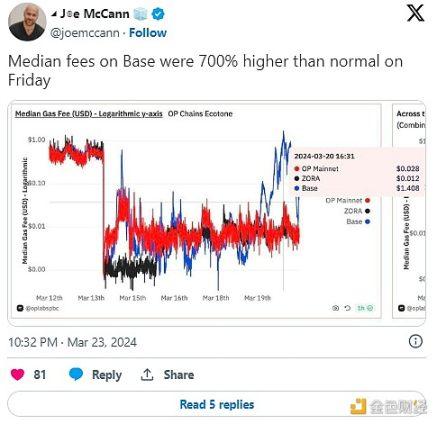
Additionally, while Dencun has generally reduced fees, we have not yet fully overcome this challenge, and gas prices for popular L2s like Base remain an eyesore for many - although we are making progress.
Can L3 solve this problem?
How do we expand from here?
Examining the capabilities supported by L3, currently deployed L3s, and the frameworks available to launch them will provide more information to answer this question.
What does L3 offer?
Expanding from L2 to L3 allows for a more specialized ecosystem to be customized to specific needs, potentially significantly expanding the reach of the blockchain market.
Successful L2s have already established brands for themselves - i.e. Blast is a degen hub, Base is a consumer/social hub, Arbitrum is a DeFi/gaming hub, etc. In turn, the L3s they attract are likely to follow this cultural model, maintaining the on-chain atmosphere and further enhancing the capabilities and reputation of Layer 2.
For example, an L3 on Base might have a certain level of privacy required for handling consumer data or be customized for a specific social use case. Meanwhile, an L3 on Arbitrum could be specialized for gaming.
To this end, Layer 3 provides extensive customizability to enhance these centers and help them scale through:
Reduced Settlement Costs: Settlement costs are significantly reduced, making the development more economically viable.
Areas for experimentation: The customizability of L3 offers the potential for endless experimentation, whether it’s new business models, different virtual machines, data availability solutions, or governance models — something that’s not possible on L1 or L2.
Privacy Enhancement: L3 can become a privacy-centric layer, allowing anonymous transactions or encrypted messaging services and opening the market to enterprise businesses that require this level of privacy.
New Economic Models: L3s could develop new or more powerful economic models where tokens other than ETH could be burned as Gas, potentially increasing the value of that token over time.
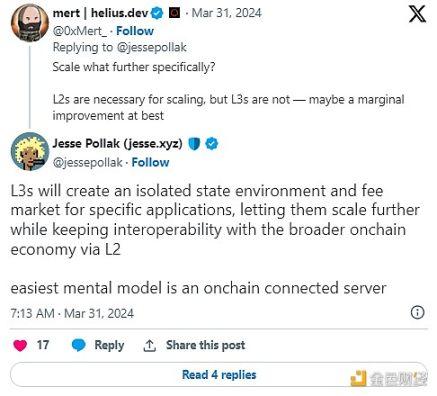
Layer 3 can help evolve and strengthen L2, providing enhanced scalability, reduced costs, and customizable environments tailored for specific applications. This increases the capabilities of Layer 2 and can further establish them as hubs for specific use cases.
What are some examples of Layer 3?
L3 examples demonstrate the benefits of this extended approach by enhancing L2 capabilities for targeted use cases. For example:
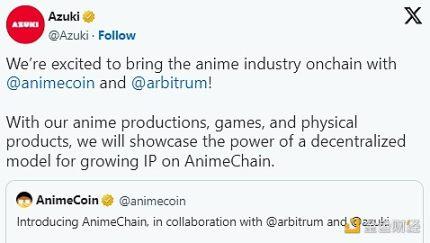
Yuga’s Apechain and Azuki’s Animechain: Both BAYC and Azuki recently announced L3 deployments using Arbitrum’s Orbit, a framework for launching L3s. For BAYC, it enables them to create an environment specifically tailored to their metaverse and gaming pursuits, such as Otherside, while also providing new use cases for their APE token. For Azuki, launching L3 will allow them to build a dedicated network for anime fans and creators. Whether these shifts reflect innovation or attempts to stay relevant remains to be seen.
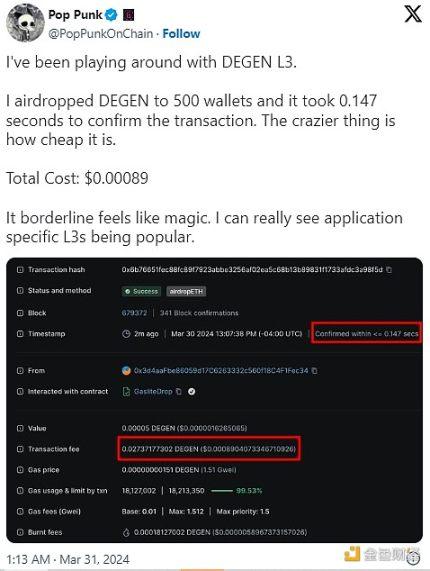
DegenChain and Frame Chain: In January 2024, the DEGEN token was launched on the fully decentralized social network Farcaster, and quickly became a typical feature for Casters to reward quality contributions. DegenChain launched on March 28, introducing a cost-effective L3 solution for scaling all things DEGEN - tips, rewards, competitions, making new meme coins, etc. DegenChain borrows from Arbitrum Orbits and settles on Base, using DEGEN as its Gas token. It has processed more than 500,000 transactions and consolidated Base's reputation as a social and consumer hub.
Likewise, Frame Chain, the OP Stack L3 on Base for developers of Farcaster Frame (mini-apps deployed in Farcaster), offers high throughput, minimal gas costs, and is free for developers! So far, the chain has been used for projects such as token-gated commerce, interactive mini-games, and on-chain competitions, highlighting the usefulness of an environment tailored for such specific use cases.
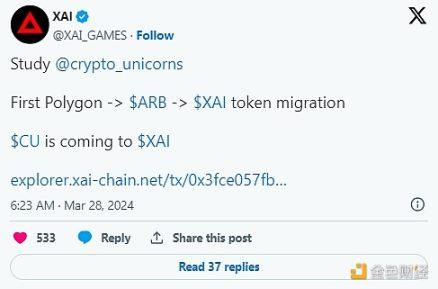
Xai Network: L3 Solution Xai Network was developed with Arbitrum creator Offchain Labs to meet the needs of large-scale Web3 gaming. Its interface simplifies wallet management for gamers and provides developers with enhanced gas and contract capabilities, such as parallel processing of transactions to create high throughput. XAI acts as the network's native token and is used for gas, rewards validators, and as the main currency for purchasing games and in-game assets. These features have helped establish Arbitrum as a Web3 gaming hub (a desire that can be seen in their focus on funding game programs) and attracted popular games like Crypto Unicorns to migrate to their ecosystem.
These chains exemplify how L3 enables or enhances specific use cases, allowing their L2 to scale while carving out their own niche.
What do people use to build L3?
For some time, two things have held back the adoption of Layer 3: demand and standardized infrastructure to deploy them. Let’s look at the leading frameworks that can kickstart L3.
Three of the leading solutions are:
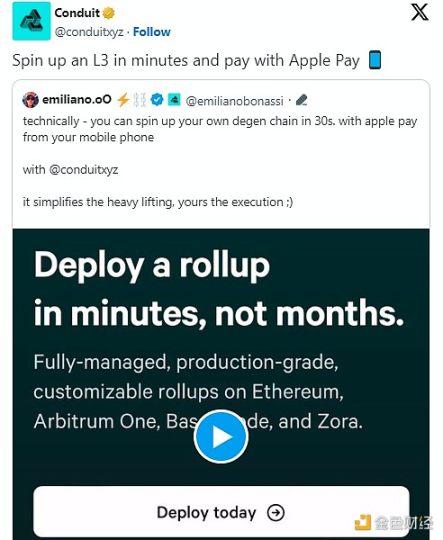
Arbitrum Orbits: Expanding on Arbitrum's L2 foundation, their Orbit chain allows anyone to make a highly customized Layer 3 blockchain. Think of an Orbit chain as a personal highway on Ethereum, capable of handling more transactions than L1 or L2. While building on Layer 2 provides a general scalability solution, Orbit chains can be fine-tuned to specific needs, providing unparalleled scalability and customization. They can also be easily deployed using Rollup tools such as Conduit, making accessibility even easier.
OP Stack: Optimism's OP Stack provides a toolkit for building cheaper and faster Ethereum-compatible blockchains. The advantage of building with OP Stack comes from its standardized framework, so interoperability with other OP Stack-based chains can be achieved immediately, significantly reducing the problems that may arise due to incompatibility or bridging vulnerabilities.
Additionally, while the OP Stack allows people to customize their chains as they wish, if they align with Optimism's "chain law", their ecosystem will be eligible for retroactive funding, airdropping OP into their network. Another advantage of the OP Stack comes from its current adopters, such as Base, the leader in the L2 ecosystem. Building with the OP Stack guarantees composability with these networks, which is a competitive advantage for any chain being developed.
Starknet: Like other frameworks, Starknet is highly customizable and can be adapted to any use case while being extremely cost-effective and fast. Starknet’s solution stands out for two reasons:
L3 built with the SDK uses Starknet’s Cairo. This developer-centric, productive language offers high performance and scalability without sacrificing security.
Starknet L3 uses a specialized sequencer, Madara, to build customizable and efficient application chains. Madara's specific framework further enhances Cairo's capabilities to produce secure, efficient, and adaptable projects. This enables developers to build Layer 3 solutions for specific needs, such as cost-saving DEXs or fast, private trading systems.
Arbitrum Orbits, OP Stack and Starknet Layer 3 provide accessible paths into the L3 ecosystem. They bring unique development tools for creating custom, efficient L3 solutions that synergize with their ecosystems and present unique use cases.
in conclusion
Recent activity has pushed Layer 3 to the forefront of blockchain’s scaling journey, addressing L2 limitations by offering new levels of efficiency, customizability, and user engagement.