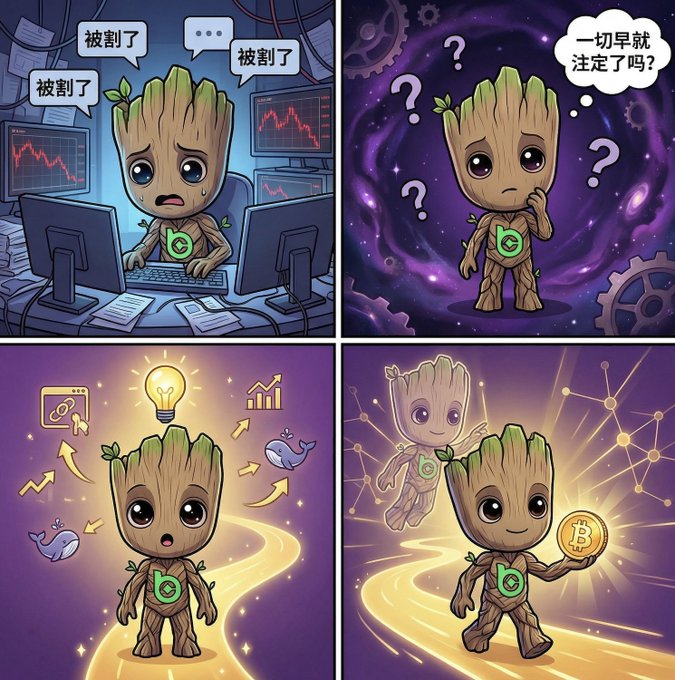
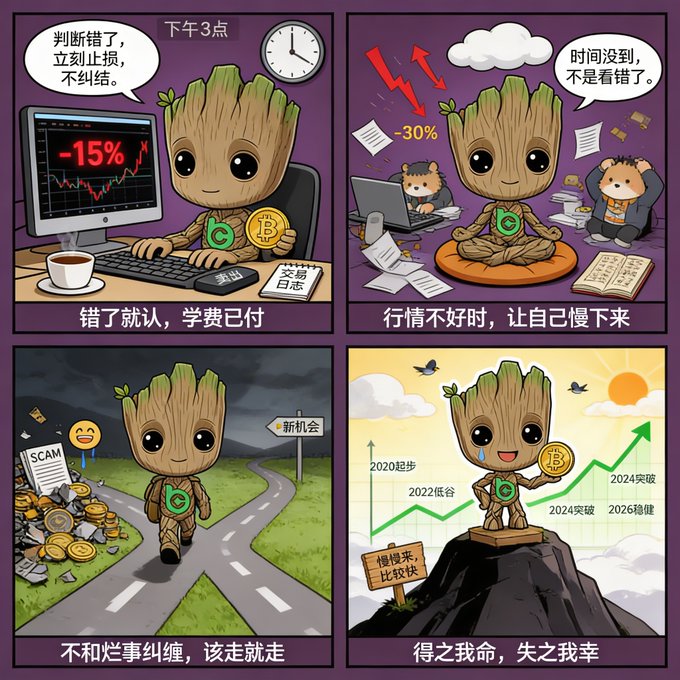
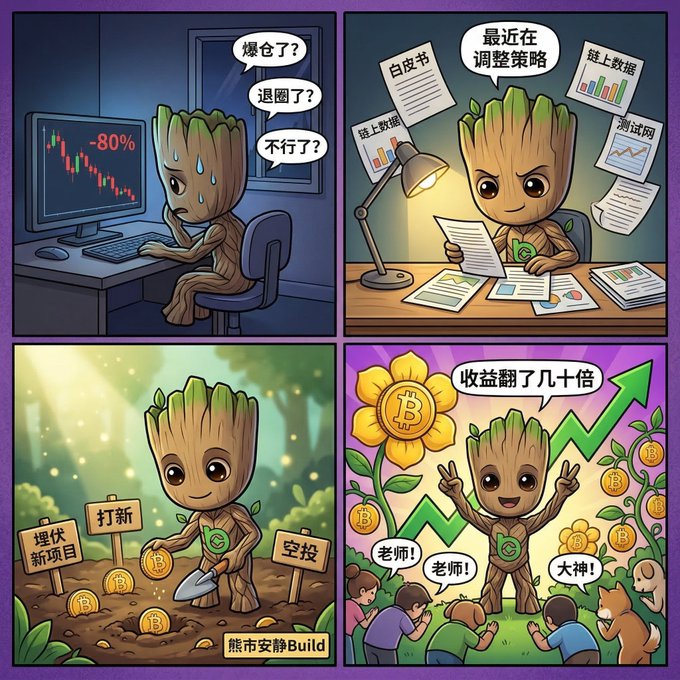
I know someone in a group who was obsessed with blockchain a couple of years ago. He spent every day either reading white papers or studying various "underlying logics".
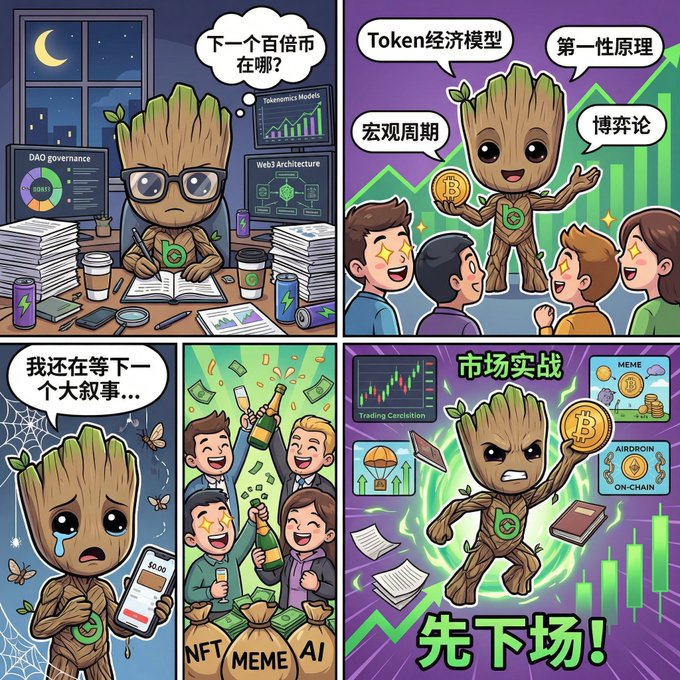
He spoke fluently about token economic models, DAO governance, Web3 narratives, and first principles. Whenever someone in the group discussed a project, he could analyze it for ages, going from narratives to macroeconomic cycles, from liquidity to game theory models.
Back then, everyone thought he was amazing. Until later, I discovered something—he basically never made any money in his account.
I once asked him, "You've researched so many projects, why don't you do them?"
He said something particularly memorable: "I'm still waiting for the next truly great narrative."
While he waited and waited, others had already profited from NFTs, DeFi, MEME, AI, and blockchain games. He was still analyzing.
Later, during a drinking session, he suddenly told me, "Actually, I've discovered something very cruel. Many of the people who make the most money in the crypto don't have as much insight as I do."
He's right. You'll find a strange phenomenon—many people who make money in the crypto don't necessarily understand any complex logic. They probably only do three things: see a project → participate → review the results.
But many "highly cognitively advanced people" remain stuck in the research phase. They spend their days reading research reports, listening to Space, scrolling through Twitter, studying tokenomics, and analyzing narratives. Their minds are full of strategies, but their wallets are never holding anything. 😂
It's like someone who has memorized all the martial arts manuals. They know the Eighteen Subduing Dragon Palms, the Nine Swords of Dugu, and the Lingbo Steps, but have never actually fought anyone.
Then a street thug came up with a brick, and a dozen different countermeasures flashed through his mind. The brick was already hitting his face.
The same applies to the crypto. Reading a hundred articles about airdrop strategies is less effective than actually trading ten projects yourself. Studying a bunch of trading systems is less effective than actually trading for three months.
Instead of spending your days analyzing on-chain data, participate in an on-chain narrative yourself. Because many things you only truly understand through participation.
For example, why some projects are destined to fail, why some memes suddenly become wildly popular, and why some seemingly brilliant narratives fail to attract buyers. These things aren't in the book; they're all in the money lost.
There are really only two kinds of people in the crypto. One kind is looking for the next big thing, and the other kind is digging deep in their own niche.
The first type of person asks every day: Where is the next 100x? AI? RWA? Or a new public chain? They keep switching tracks. Today they're grabbing airdrops, tomorrow they're participating in ICOs, the day after they're chasing MEME, but they don't delve deep into anything.
The second type of person is quite simple; they might only do one thing. Some specialize in on-chain data analysis, some specialize in studying MEME culture, some only do trading, and some only create content.
They worked slowly, taking one, two, or three years. Gradually, they became very valuable within a small circle. Some people trusted them, some were willing to cooperate with them, and some were willing to listen to their information.
This is their base. When the real opportunity arrives, they won't be chasing it; they'll be already standing on the cusp of it.
Many "highly cognitively poor" people lose because they are too smart. They are so smart that they think everything through before acting, try to find the optimal solution for everything, and wait for certainty in everything.
But the reality is that the market only rewards those who do the work, not the smartest people.
Many people always think, "I just haven't had my chance yet." But real opportunities in the crypto are never something you wait for; they come to you while you're doing things.
So I've come to believe more and more in this saying: In this industry, knowledge is very important. But something even more important than knowledge is—getting involved first.
This article is sponsored by @bcgame.