The US government has officially shut down. Here are three major questions about the shutdown, along with fifteen answers!
This is the first US shutdown in seven years and the second during Trump's presidency. The previous one lasted 35 days. How long will this one last? And here are some other questions about the government shutdown!
1. How long will the shutdown last? If Congress wants to resolve the shutdown, how quickly will it take?
1. Resolving a shutdown requires a re-injection of funding to reopen various government departments.
2. Most shutdowns last one to five days, and Congress typically faces political and public pressure to quickly resume operations.
3. Based on the current situation, resolving the shutdown would require the Senate to quickly pass the temporary bill currently in the House of Representatives and send it to the Presidential Office for signature, which could be accomplished in one to two days at the earliest.
4. However, if the Senate needs to amend the bill and send it back to the House for a vote, since the Speaker of the House sent members home yesterday, this would complicate the process and mean a resolution would take at least three to five days. 5. Of course, once major disputes arise between Democrats and Republicans over defense/non-defense issues, border security, healthcare, and education, the situation will be a protracted struggle.
2. What is the economic impact of the US government shutdown?
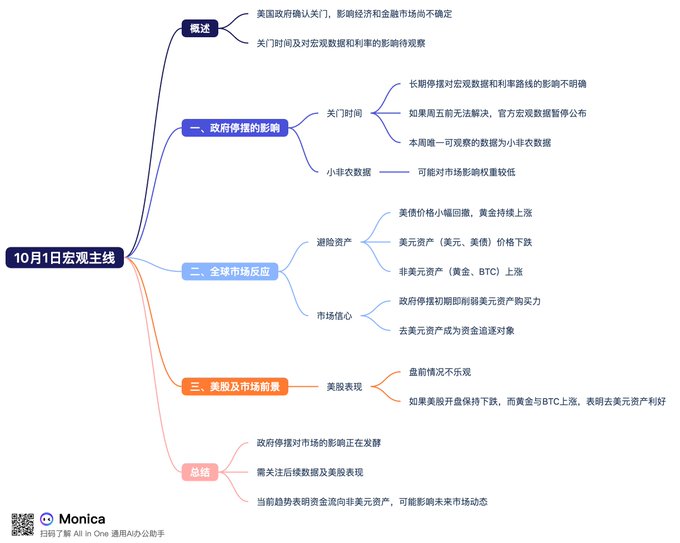
1. First, consider the duration of the shutdown. If it's short-term, the impact will be brief. However, if it lasts for more than a week or even several weeks, it will have a significant impact on the economy and financial market stability.
1) The 35-day shutdown at the end of 2018 resulted in $11 billion in economic losses, of which $8 billion was subsequently recovered, with $3 billion of that loss permanently lost.
2) Mainstream institutions estimate that each week of the shutdown reduces the impact on GDP growth in that quarter by approximately 0.1%-0.2%.
2. A prolonged shutdown could exacerbate temporary government spending, leading to increased government spending in 2026, increased fiscal pressure, and a decline in government creditworthiness. In severe cases, it could trigger a government deficit crisis and debt concerns. 3. A prolonged shutdown could slow economic growth, potentially even leading to a recession. This would further exacerbate inherent risks in the current economy, such as the risk of stagflation and even recession, caused by a rebound in inflation, declining employment, and reduced consumption.
4. A government shutdown would cause more government departments to suspend economic data collection, potentially impacting the Federal Reserve's interest rate decisions in October and December. Some Fed officials have stated that the lack of employment data could affect the Fed's judgment and observations in October, potentially jeopardizing the possibility of further rate cuts in October.
5. If the US government shutdown lasts for more than three weeks, the large number of short-term shutdowns and temporary employment could cause a short-term increase in the accuracy of employment market data, leading to a distorted assessment of the job market and increasing risks in the job market.
3. What is the impact of the US government shutdown on global financial markets?
1. Market concerns about potential economic and financial risks will drive up the prices of gold and long-term US Treasury bonds. At the same time, the conversion of US dollars into US Treasury bonds could put short-term pressure on the US dollar and cause a decline in the index. The market is dominated by risk aversion. Simply put, based on historical data, a short-term shutdown won't have a significant impact on risk markets. However, as time drags on and risk exposure increases, concerns in risk markets will also grow.
2. Risk markets will experience a short-term setback, but whether it will trigger panic remains to be seen. A prolonged government shutdown would shift expectations for October interest rates and reduce confidence in the future economy. The longer the shutdown lasts, the greater the risk in financial markets. This is the early stages of the shutdown.
3. As the market moves past the initial financial risk phase and enters a period of sluggish volatility, we await a turnaround in the government shutdown. If so, risk assets will rebound, but concerns about the subsequent economic and financial impacts remain, especially if the shutdown lasts more than a week. Concerns about the aftermath will inevitably intensify. If there is no turnaround, risk markets will shift from initial concerns to panic. 4. If the US government shutdown extends and its impact widens, it will trigger global economic and financial concerns. The US Treasury bond and the US dollar will then rise. Safe-haven inflows will drive up the US Treasury bond and US dollar prices, especially if the US dollar reverses its initial decline (market supply and demand).
The initial decline in the US dollar will be followed by a shift to global risk aversion, risk aversion, and growth concerns, which will in turn stimulate a rise in the US dollar index.
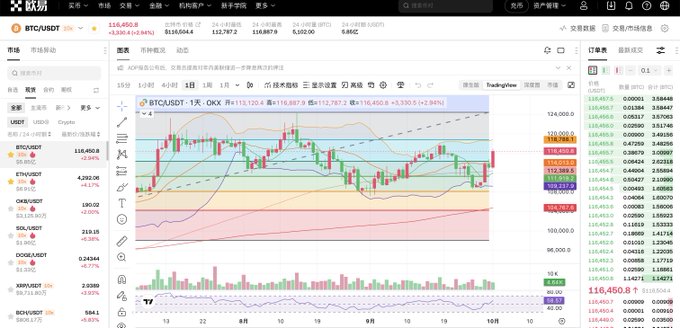
5. If the US government shutdown threatens the US dollar's credit system, triggering a fiscal deficit crisis and the risk of debt default, US dollar assets will come under pressure, benefiting non-US dollar assets. Gold and #Bitcoin will rise, especially BTC, whose safe-haven properties as a hedge against US dollar credit risk will strengthen, leading to a rise in non-US dollar assets.
Of course, a US government shutdown does not necessarily trigger US dollar credit risks such as debt defaults, but the government shutdown itself is a high-risk phase. If a prolonged shutdown is combined with other uncertainties, caution is warranted. Summary:
The government shutdown remains under observation. Short-term risk assets will be more cautious, while safe-haven assets will gradually gain favor. Market risk appetite remains low, so caution is advised.
Whether caution translates to pessimism or panic requires more data or developments to support this. This includes expectations for the duration and scale of the shutdown, as well as its impact on subsequent data, particularly the October interest rate trajectory.
If the shutdown continues until Friday this week, meaning that employment data will not be released, the market may anticipate that the Federal Reserve will refrain from further rate cuts in the absence of such data, potentially exacerbating financial market concerns.
We are currently in Asia and Europe time. It remains to be seen how the US government responds to this matter after US time, as well as how Western media interpret the shutdown.
twitter.com/Cato_CryptoM/statu...