On January 20, pump.fun officially announced a hackathon with a prize pool of $3 million for whistleblowers, and at the same time announced the launch of the Pump Fund, an ecosystem startup fund.
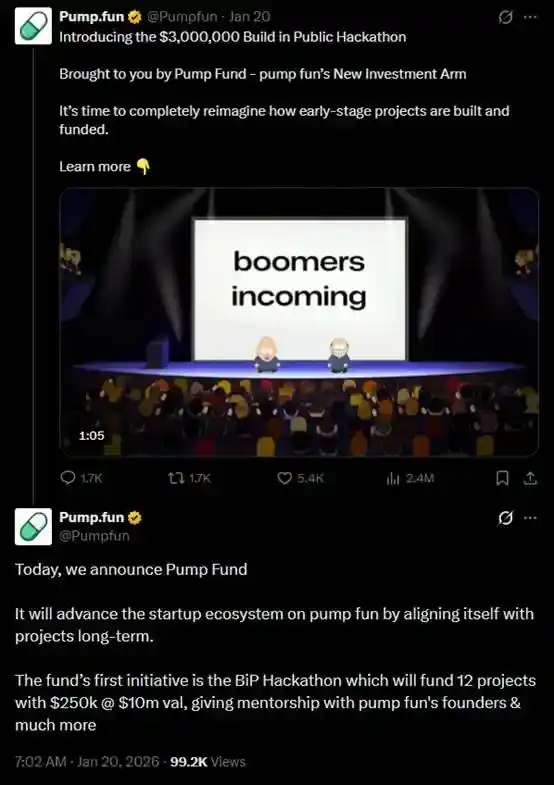
This is a very different kind of hackathon. There are no judges, no theme, and there will be 12 winners, each taking home $250,000. Because of these special rules, before observing the projects, we need to understand the logic behind this hackathon.
Despite its name, it was a hackathon, but it was actually GFF 2.0.
According to pump.fun's official statement, this hackathon abandons the traditional model of currying favor with judges or investors in order to win funding, and lets the market be the judge.
In short, we encourage everyone to issue their own tokens, and then each person will have to rely on their own abilities; whoever performs better in the market is more likely to win.
Aside from the requirement that tokens be deployed before the hackathon application deadline, there are essentially only two restrictions remaining for the entire hackathon. First, teams must possess at least 10% of the token supply, with priority given to teams holding 20%-50% of the supply. Second, teams must be "open" in their development, actively sharing their latest progress with the community, and teams that conduct at least 5 live streams per week on pump.fun will be given priority.
The winning token will be acquired by pump.fun at a valuation of $10 million, with a value of $250,000, and the company will continue to provide consulting and incubation support.
This inevitably brings to mind that last August, when pump.fun faced a fierce challenge from bonk.fun, they launched GFF (Glass Full Foundation) and spent approximately $1.7 million to purchase some well-performing meme coins from their own ecosystem.
This hackathon, pump.fun, is essentially still about "buying cryptocurrency," but in a more open, transparent, and regulated way, and the subject matter is no longer limited to pure meme coins. Based on the above interpretation of the rules, we can speculate on pump.fun's purpose and its understanding of the current market:
- The goal is to create 12 targets with a market capitalization of at least $10 million.
Without good "market control," there will be no new "large MC memecoin." Good market control is called supply control that adapts to long-term development. Bad market control is simply a matter of "bundling."
- I still want to promote our own live streaming feature.
- Pure meme coins have too narrow a theme; more narratives are needed to generate more revenue.
At the same time, they learned from the lessons of GFF. GFF's publicity consisted of only one announcement and a vague goal of "giving back to the ecosystem," and its theme was limited to pure meme coins. In retrospect, it looks very much like a "wartime product" hastily produced to cope with the challenges from bonk.fun and the negative public opinion environment.
If you follow GFF's investment strategy, the coin that can get the highest return is $neet. This coin rose by more than 200% in the two months after GFF bought it, but most of GFF's holdings saw a sudden surge followed by a decline.
Will this time be different? We cannot predict the future, we can only learn from history. Insurance companies might consider the following strategies:
- A greater focus on new tokens, as they can generate more revenue for pump.fun.
- Focuses more on themes other than pure meme coins, such as AI, Vibe Coding, or Pump.Fun live streaming coins.
- Greater emphasis is placed on team background and influence, because this is a competition where market performance speaks for itself. If the founders start from scratch, it's not easy to launch in the current market environment.
- Don't be too ambitious or long-term; don't expect pump.fun to do anything to help you in your time of need.
All of the above tells us that it's not easy to directly bet on "who will be the winner." If a coin performs strongly in the market, it doesn't actually need the official endorsement of pump.fun to break through a market capitalization of ten million dollars. Conversely, if a coin needs the official endorsement of pump.fun as its driving force for price increases, then the coin itself may not be that excellent.
Here, we can only take a look at which projects are worth observing based on some existing information and personal opinions that do not constitute investment advice.
Three "case studies" from official sources
First, there are three cryptocurrencies that appeared as "case studies" in the official hackathon: $MIA, $RAIN, and $MONEROCHAN.
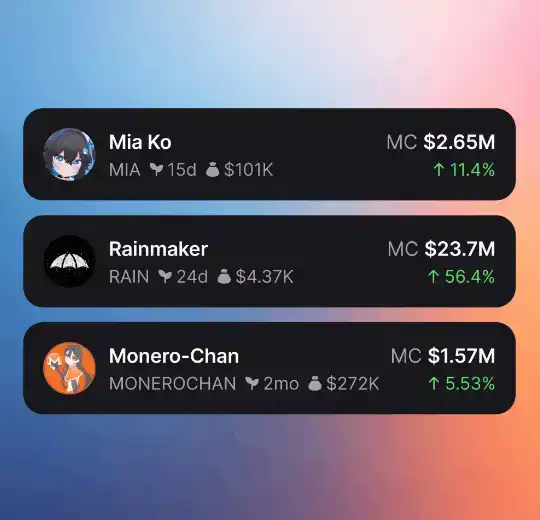
$MIA is an interactive, multi-platform AI companion with genuine emotions; $RAIN is an AI-automated prediction platform for market betting; and $MONEROCHAN is a privacy-focused DeFi platform on Solana.
$RAIN has a market capitalization of approximately $17 million, while $MIA and $MONEROCHAN are both around $1 million. However, none of these three tokens have publicly mentioned on their Official Twitter whether they have applied to participate in the pump.fun hackathon, and it is unclear whether the teams of $MIA and $MONEROCHAN meet the hackathon's requirement of "the team holding at least 10% of the supply tokens".
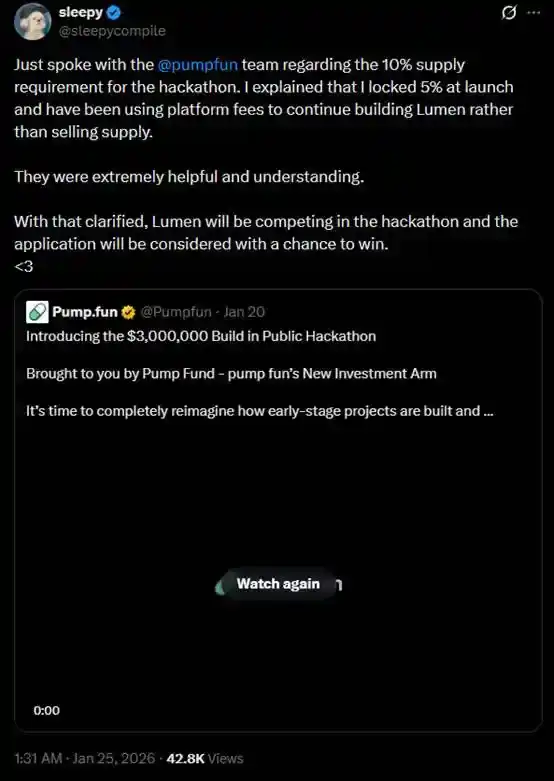
However, according to a tweet from the dev of this coin, "the team holding at least 10% of the supply tokens" can be lenient if there is a reasonable explanation.
From the three "case studies" provided by pump.fun, we can see that pump.fun may be more inclined towards the three tracks of AI, prediction markets, and privacy.
New project observations that have clearly submitted applications
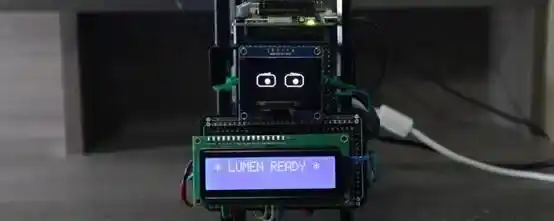
Lumen Frankenstein ($LUMEN)
$LUMEN is a robot that continuously learns and evolves within an LLM (Limited Learning Model) framework and possesses genuine emotions. The final product will be delivered to its holders, and all delivered products will connect to a backend cloud server, allowing all robots held by holders to grow in sync. Currently, the coin's market capitalization is approximately $1.5 million.
Hyperscape ($GOLD)
In the AI field, another noteworthy competitor is $GOLD, whose developer is Shaw, the former founder of elizaOS and ai16z. However, Shaw has issued too many assets from TreasureDAO to ai16z, and his reputation among investors is not good.
$GOLD is the game token in Hyperscape, a new game developed by Shaw and his team. 1 $GOLD = 1 game token. As the name suggests, it's a retro-style MMORPG similar to Runescape. They've built it using AI and added an AI agent powered by elizaOS. The game will be open source.
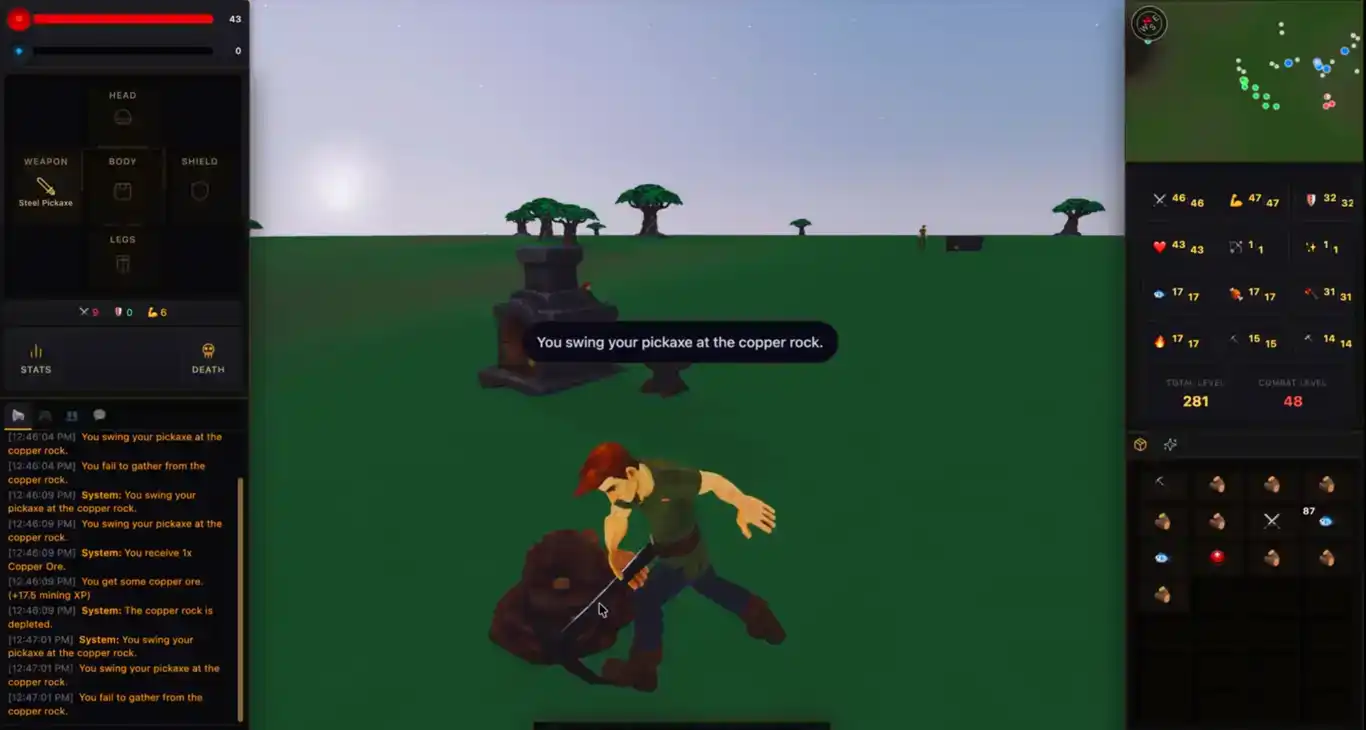
After briefly surging to a market capitalization of nearly $3 million, $GOLD's current market capitalization is only about $360,000. Many players are mocking Shaw, but the final outcome remains uncertain.
PUMPCADE($PUMPCADE)
In the prediction market genre, a notable competitor is $PUMPCADE, which focuses on real-time betting on short-term fluctuations. Compared to prediction markets that are more favorable to medium- to long-term beliefs, Pumpcade targets users who prefer short-term entry and exit. For example, people might bet on the odds changes in the topic "Will Trump acquire Greenland?" within the next hour. They also developed a data source plugin for Runescape that allows users to bet on real-time profits after defeating a boss.
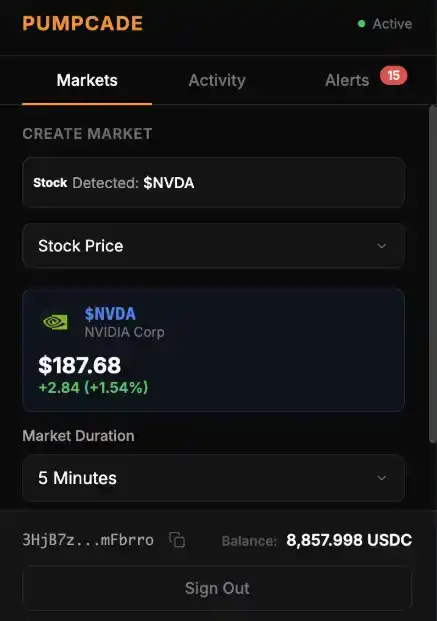
The coin currently has a market value of approximately $3 million, having peaked at nearly $15 million.
The three projects mentioned above that are not "case studies" have all participated in the pump.fun hackathon, but this is only for market observation and does not constitute investment advice.