Compiled & translated by: TechFlow TechFlow

Podcast source: Bloomberg Originals
Original title: How Circular Deals Are Driving the AI Boom
Broadcast date: January 23, 2026
Key points summary
The AI hype is everywhere, but much of it is just a facade. Money is circulating among a few companies that are not yet profitable. If this is a bubble and it eventually bursts, the impact could be far-reaching, affecting everyone.
Many have warned that if AI ultimately proves to be a bubble and bursts, it could have profound consequences for the entire economy. Bloomberg Originals explores the cyclical investment deals between AI companies and how these deals constitute what is known as the “ultimate gamble.”
Summary of key viewpoints
The specific chain of circular investment
- Nvidia plans to invest up to $100 billion in OpenAI, which is also a major customer of Nvidia chips.
- OpenAI leases computing services from Oracle, which is also a customer of Nvidia—creating a closed loop of funding among several companies.
Profitability Dilemma
- Major AI projects such as OpenAI and Anthropic are currently unprofitable, and OpenAI is likely losing money every time a user uses ChatGPT.
- Sam Altman stated that the company expects to break even between 2029 and 2030.
Infrastructure race
- Morgan Stanley estimates that total corporate investment in AI data centers is expected to reach $3 trillion.
- A 1 million-square-foot textile factory was converted into a data center. Upgrading existing facilities could be started in 6 months, while building from scratch would take 2 years.
Lessons from the dot-com bubble
- The dot-com bubble burst in 2000, wiping out approximately $5 trillion globally.
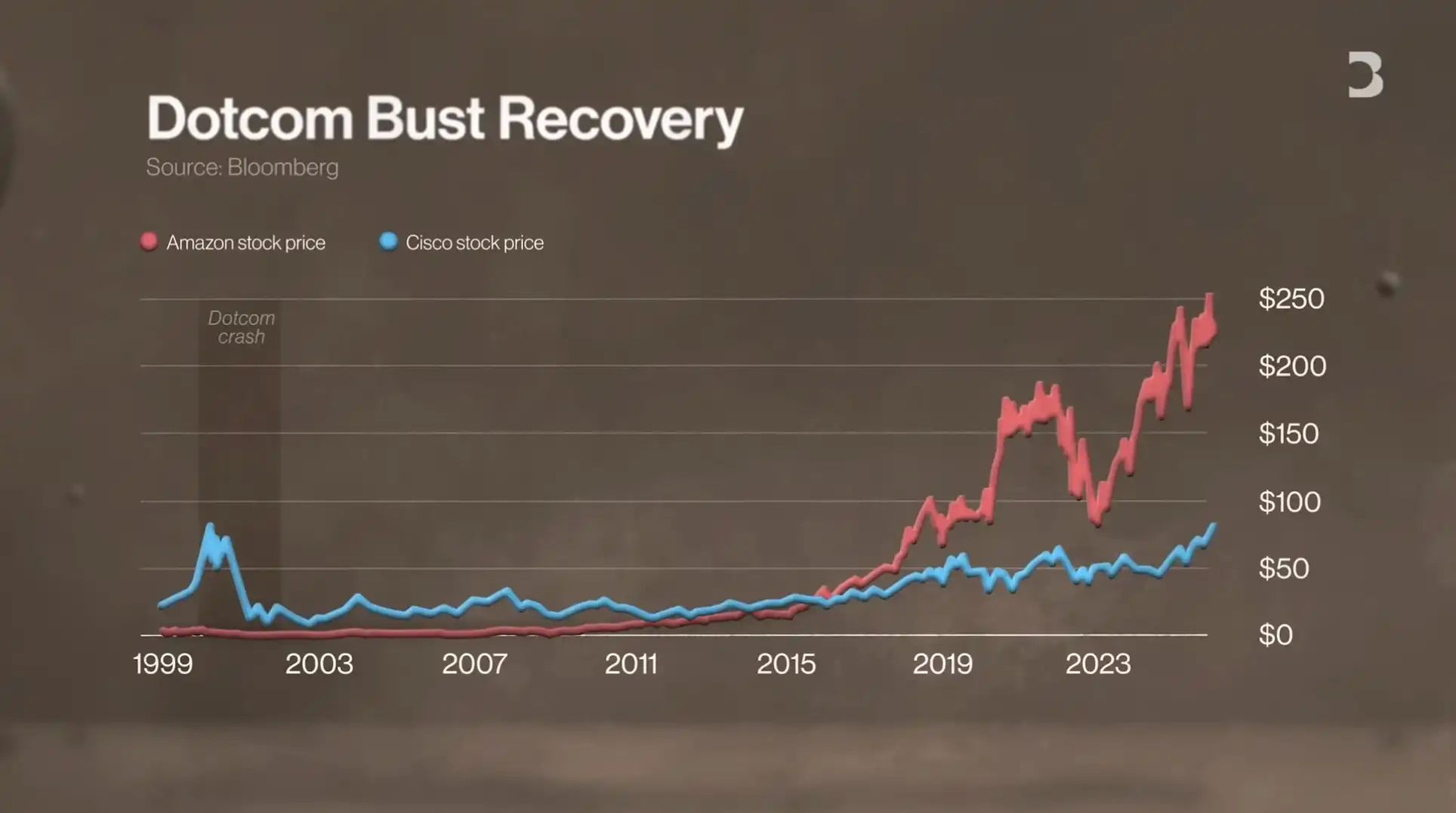
- It took Amazon's stock price eight years to recover to pre-bubble levels, and Cisco took 25 years.
The concern that it is "too big to fail"
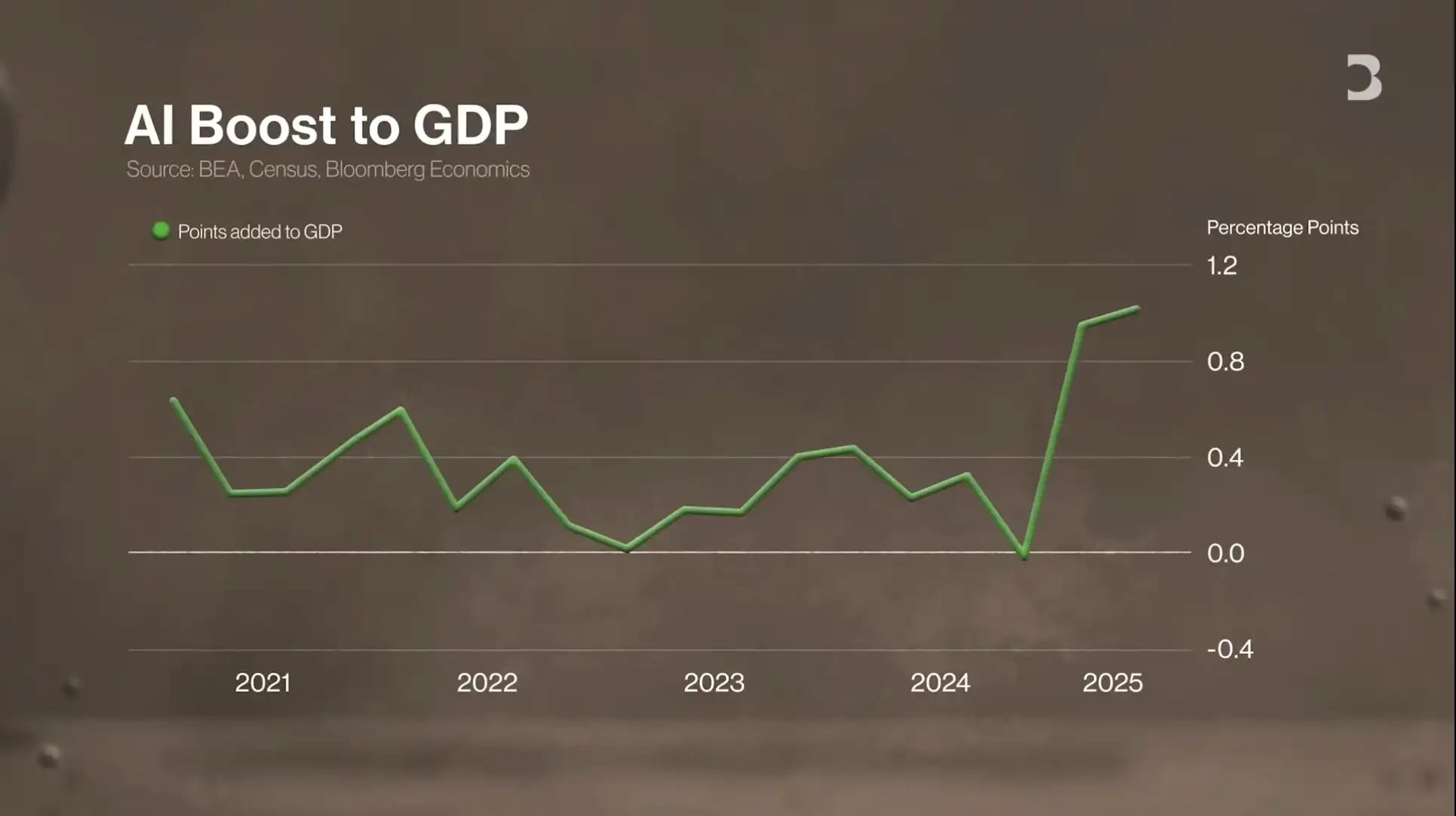
- The AI investment boom has become a significant driver of GDP growth.
- The retirement accounts of ordinary Americans indirectly hold shares in these tech companies, exposing them to risks more broadly than imagined.
- Some worry this could resemble the 2008 financial crisis—where large institutions needed massive financial support to avoid a full-blown economic collapse.
- AI can be considered the biggest gamble Wall Street has ever taken, and Wall Street itself is known for its risk-taking, making this investment the "ultimate gamble."
AI Craze and Circular Investment
Artificial intelligence (AI) is expanding from Wall Street to rural areas of the United States, becoming a core driver of economic development. The market is brimming with confidence in AI's potential, viewing it as an infallible miracle. Investors have very high expectations for AI's growth, with tech giants such as Microsoft, Meta, and Alphabet already investing billions of dollars in related capital expenditures and planning to further increase their investments in the future.
The AI boom isn't limited to software development; it has also spurred infrastructure construction. For example, supporting AI development requires building more data centers while ensuring energy and water supplies. However, this rapidly growing industry has also encountered risks, particularly regarding the flow of funds. A new investment strategy is emerging—revolving investments of up to billions of dollars. For instance, Nvidia plans to invest up to $100 billion in OpenAI, and these massive sums circulate among tech giants, forming a "carousel"-like funding chain.
Nevertheless, the potential of AI remains enormous. Currently, about 80% of American companies have begun using AI, marking the beginning of a structural revolution similar to that of electricity or the internet.
On the issue of bubbles and complex capital flows
While artificial intelligence (AI) possesses enormous potential, its profitability has yet to be fully validated. Today, the biggest concern in San Francisco's tech community is: Are we in an AI investment bubble? If so, how big is it? And what would be the consequences if it bursts? This is a crucial question. We may be entering a new era of AI-driven growth, or we may be facing an unprecedented investment bubble.
The term "circular investment" refers to the flow of funds, products, and services between companies. For example, Nvidia plans to invest up to $100 billion in OpenAI, which is also a major customer of Nvidia chips. This flow of funds also involves other intermediaries, such as Oracle. OpenAI sometimes leases computing services from Oracle, which is itself a customer of Nvidia. This complex flow of funds makes the entire industry resemble an interwoven network, involving numerous well-known companies.
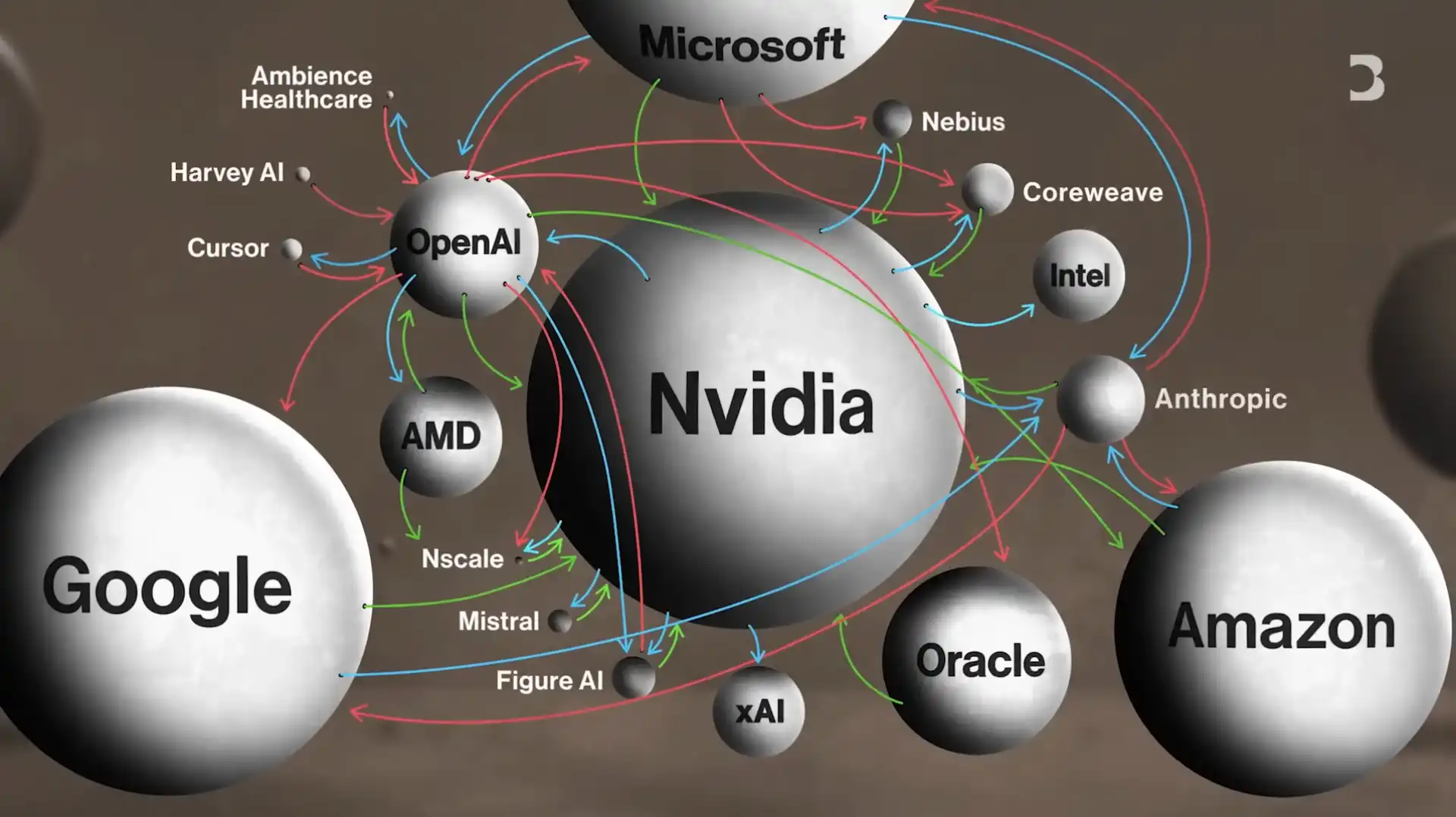
Concerns about industry interdependence and the infrastructure construction race
The frequent flow of funds between these companies, while not inherently problematic, could lead to overexpansion when transaction amounts become too large. The current concern is whether this symbiotic relationship will make the entire system fragile. If one company underperforms or encounters problems, will it affect the stability of the entire industry?
At the same time, massive investments are pouring into data center construction, driving infrastructure expansion across the country. We are experiencing an "arms race" in infrastructure development. For example, while construction spending is trending downward in most industries in 2025, spending on data centers and power plants is increasing. Many companies are acting as "infrastructure builders" for the AI industry, actively investing in these projects. According to Morgan Stanley's latest estimates, total corporate investment in AI data centers is expected to reach $3 trillion.
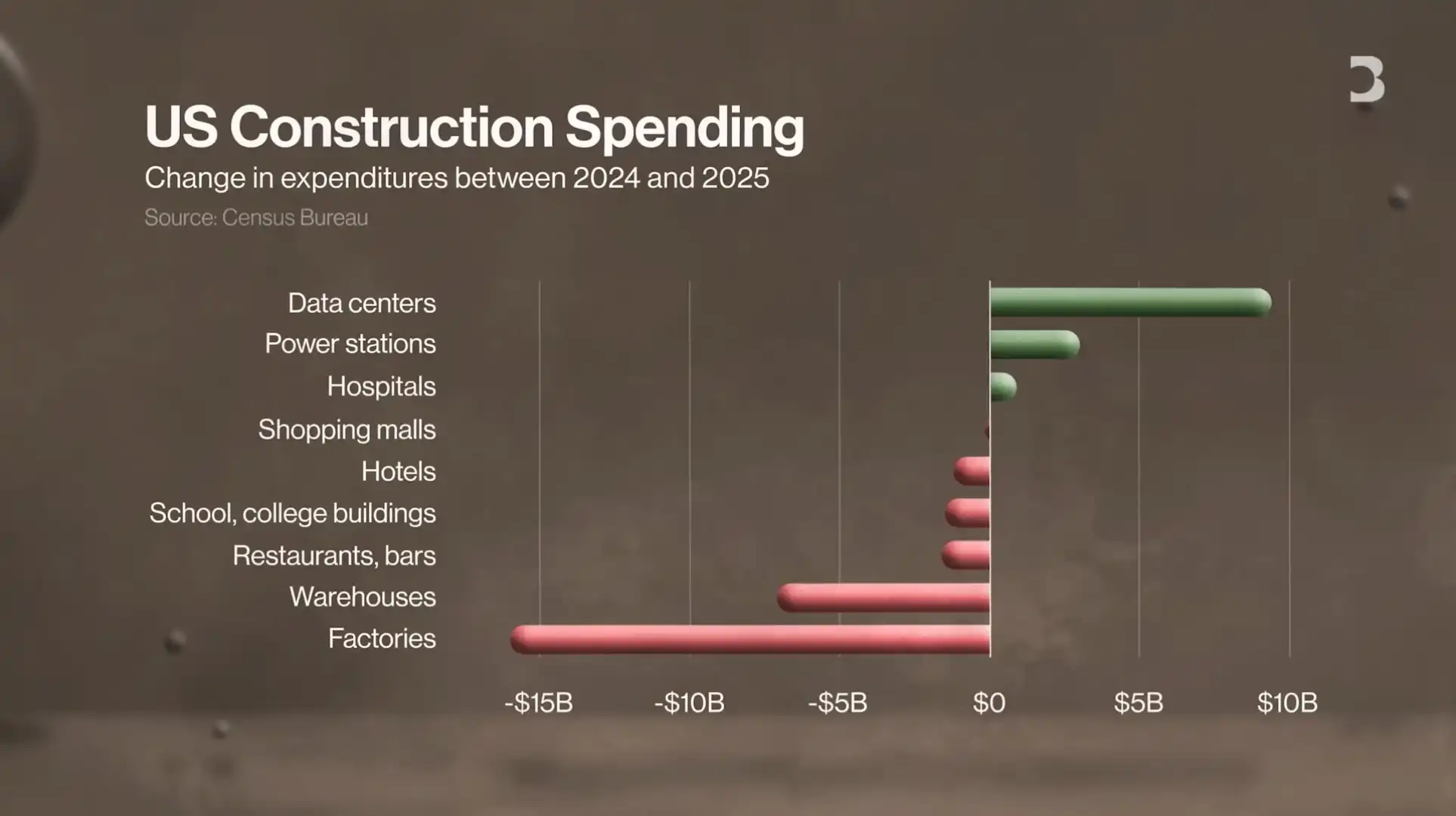
The Data Center Construction Boom: The "Hands and Shovels" of Infrastructure Development
Currently, data center construction is in a phase of rapid development . If your business provides infrastructure and services for data centers, you are in a very advantageous position. Market demand far exceeds supply capacity, funding is ample, and the industry outlook is promising. For example, the facility we are currently in was formerly a textile factory covering approximately 1 million square feet, but it was later converted into a data center.
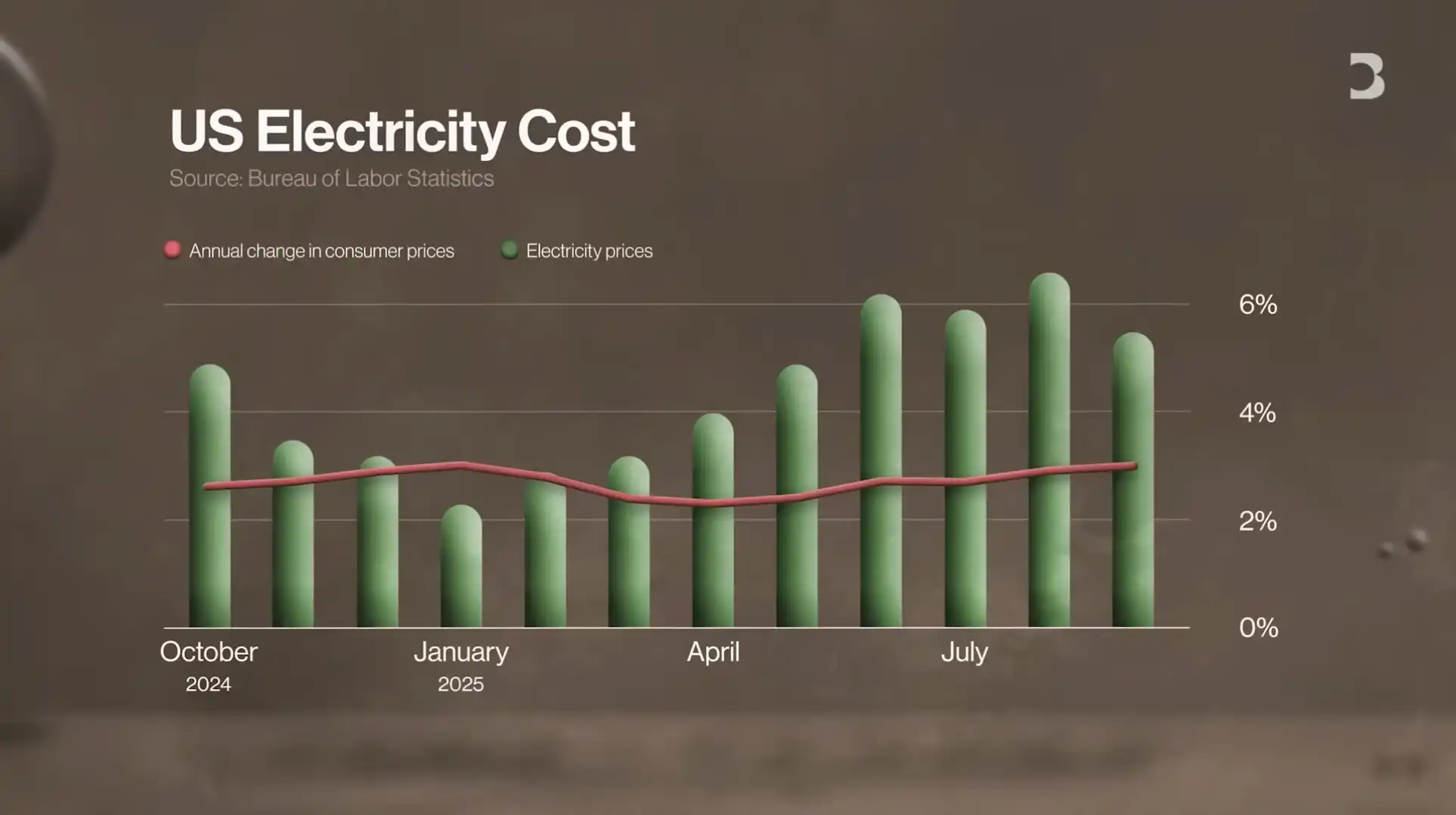
The demand for data centers is virtually endless, encompassing power supply, infrastructure development, and specialized technical support. This demand is unlikely to slow down in the short term. For the artificial intelligence industry, time is of the essence. Being able to get operational within six months by retrofitting existing facilities, rather than spending two years building entirely new infrastructure from scratch, is undoubtedly a better option. Meanwhile, the electricity demand from data centers is driving a rapid increase in utility costs, even exceeding the inflation rate. This is particularly pronounced for utility companies and building-related businesses that specifically supply energy to data centers.
The Profitability Challenge: Challenges and Risks of AI Projects
However, rapidly building data centers doesn't guarantee easy profitability. Data centers require continuous investment to keep the technology running smoothly, otherwise they quickly lose appeal to customers. To date, major AI projects remain unprofitable. For example, OpenAI may incur losses every time a user uses ChatGPT, and companies like OpenAI and Anthropic have yet to achieve profitability.
OpenAI CEO Sam Altman stated that the company expects to break even between 2029 and 2030, but this goal seems challenging given the current massive capital expenditure and the need for further investment in data center construction and computing resources. Concerns are growing about whether these AI startups can sustain such high costs, especially given their commitment to substantial investments in data centers . These data center companies can be seen as a "warning sign" of changing industry demand. A sudden weakening in demand for AI products could impact the entire industry. While all companies currently claim strong demand for AI products, problems will surface once demand declines.
Historical parallels: A comparison between the dot-com bubble and the AI boom
To understand the potential risks of today's AI boom, one need only look back at the dot-com bubble of 2000. At that time, internet companies promised a promising new era, but ultimately led to massive losses. Savings were wiped out, office parks were left empty, and approximately $5 trillion in global value evaporated. Tech stocks were hit the hardest, including many internet companies. Even the most powerful companies took years to recover. Amazon, a famous survivor, took eight years for its stock price to return to previous levels after the bubble burst. Cisco, an infrastructure provider, took a full 25 years to recover its stock price.
There are indeed some similarities between these two booms, such as the phenomenon of cyclical investment trading. The question is whether the AI boom will transcend the normal fluctuations of the general tech industry and have a profound impact on the entire economy.
Economic impact and "too big to fail" concerns
The dot-com bubble dealt a severe blow to the economy, but the impact could be far more profound if the AI boom collapses. The AI investment frenzy has become a significant driver of GDP growth, boosting the US economy amidst tariff and inflationary pressures. However, it has also indirectly exposed ordinary Americans to risk, as many hold shares in large tech companies involved in AI investments in their retirement accounts and other investment accounts.
Does this mean the AI boom is "too big to break"? The current concern is whether these companies have become "too big to fail." Their failure could trigger not only economic problems but also broader repercussions. Some even fear that the situation could resemble the 2008 global financial crisis, when large financial institutions needed massive bailouts to avert a full-blown economic collapse. If the AI boom does indeed collapse, the US economy could face even greater challenges.
Long-term outlook: The future of AI remains optimistic.
Despite the risks associated with the AI boom, many remain confident in its future because technology continues to advance. During the dot-com bubble, many companies invested in laying fiber optic cables, investments that seemed excessive and wasteful at the time, but ultimately these fibers became the foundation of broadband internet. Unused fiber optic cables built in the 1990s later proved crucial to the development of the internet. Similarly, data centers built today, even if experiencing temporary overcapacity, are likely to be fully utilized in the future.
Of course, the development of AI may take longer than expected. During this process, while some strong companies will survive, their valuations may fluctuate significantly. However, AI technology itself will not burst suddenly like a bubble. Although some companies may not withstand the test of the market, the AI industry is not a phantom bubble. It has already developed tangible products and demonstrated enormous potential. It can be said that AI is the biggest gamble Wall Street has ever undertaken, and Wall Street itself is known for its risk-taking; this investment can be considered the "ultimate gamble."